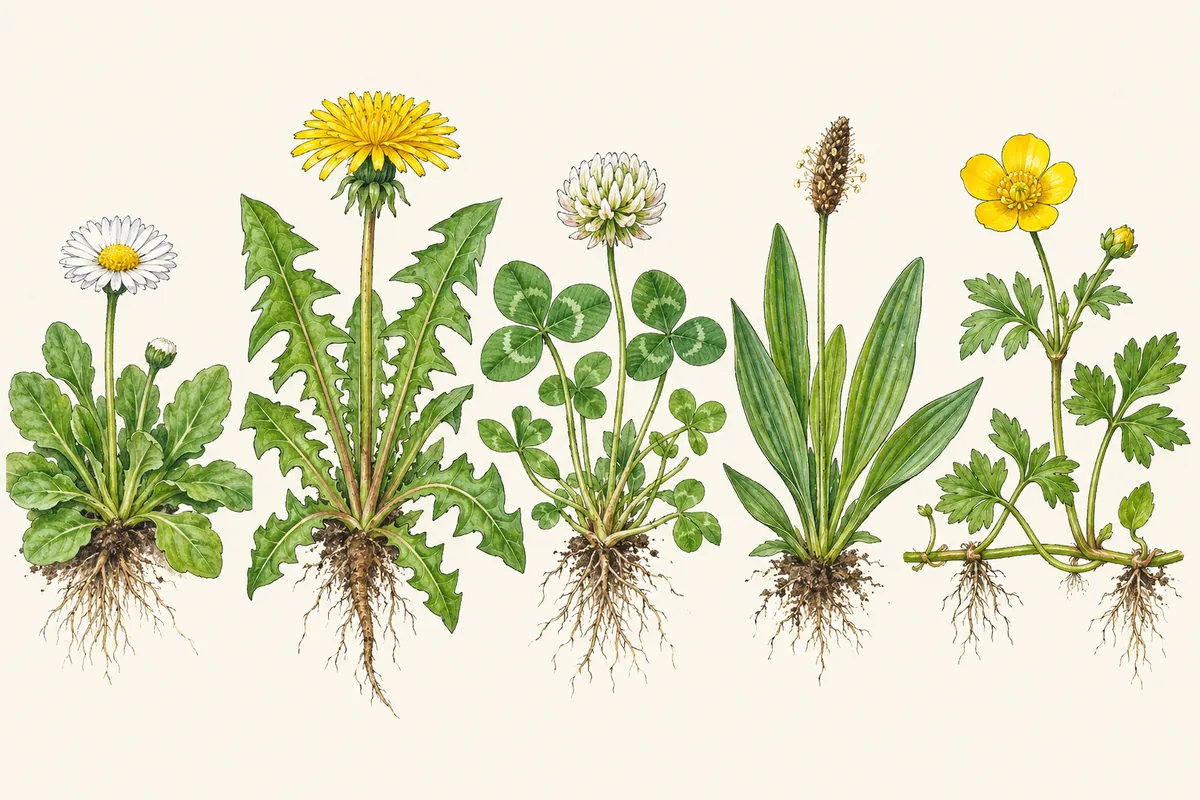
"Weed" is a decision, not a species. The daisies and clover in a lawn are a problem if you want a bowling green, and a free pollinator meadow if you don't. So before deciding how to get rid of lawn weeds, it's worth deciding which ones you actually mind — because the cheapest, quickest option is often to leave them.
In pictures
-
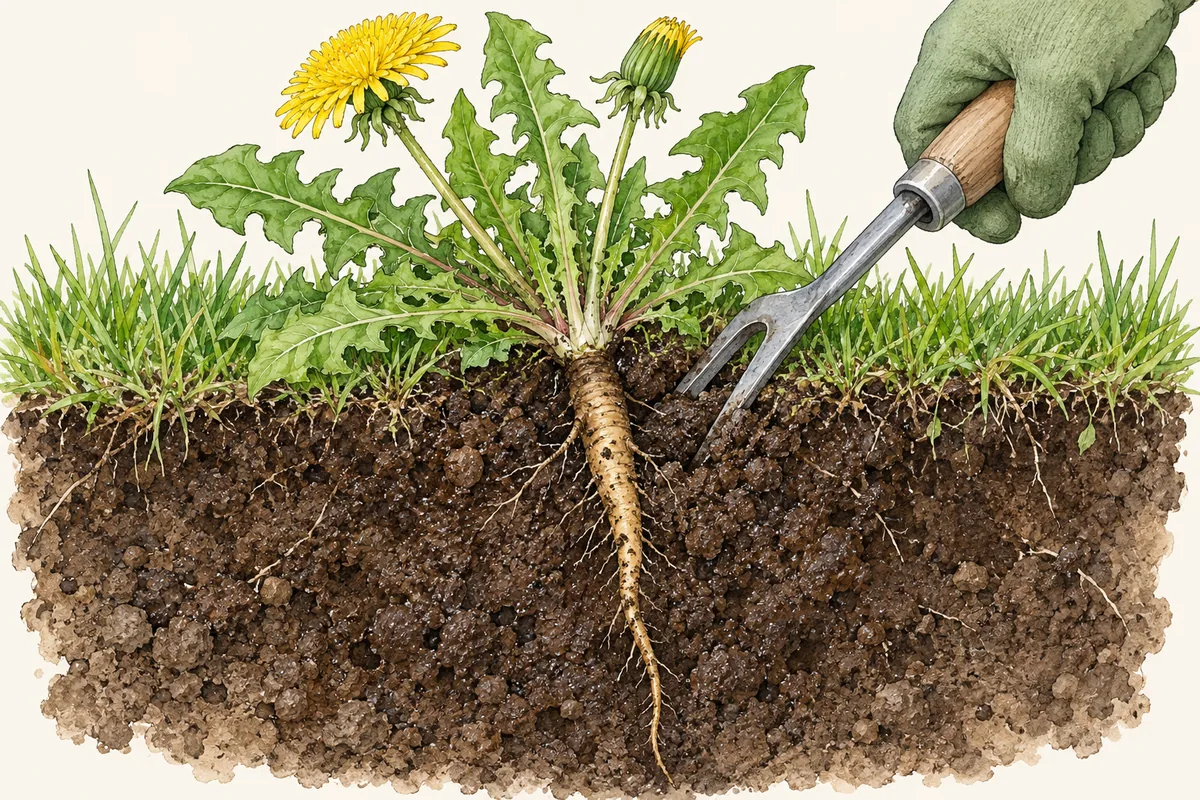
2Lever a dandelion out after rain, taking the whole taproot. -
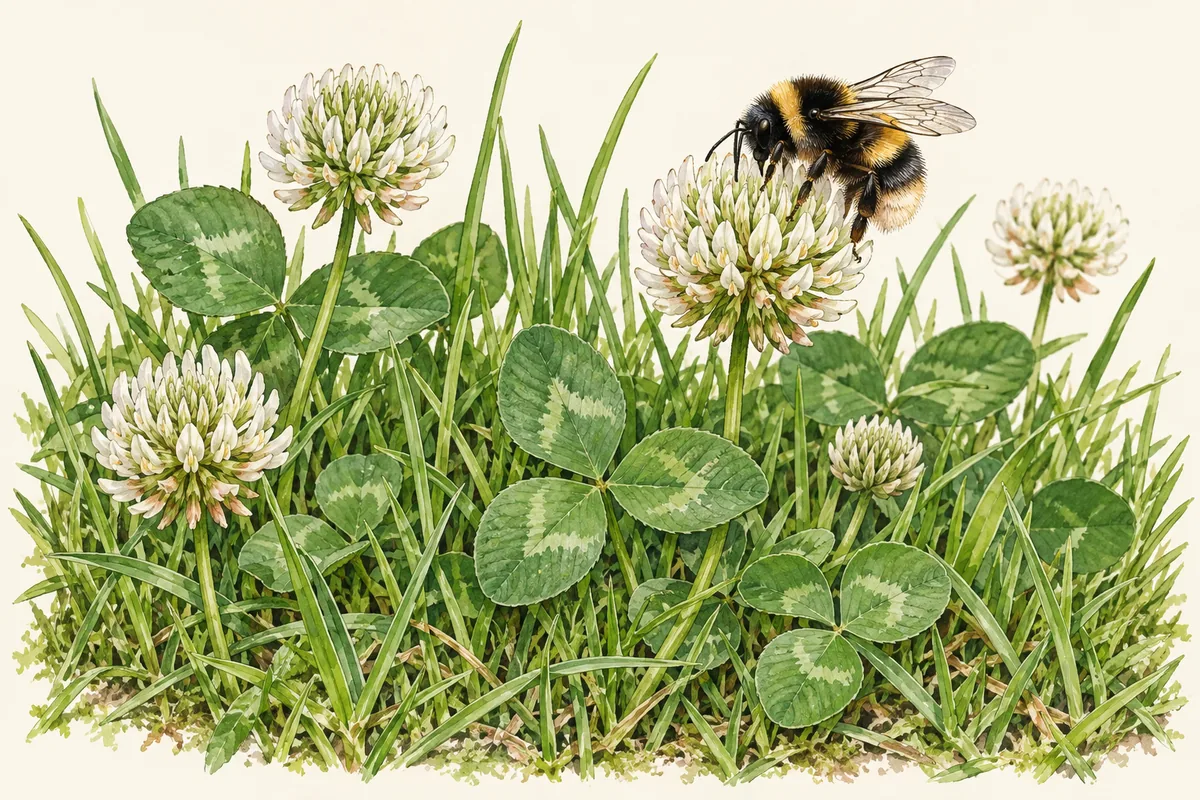
3Clover is drought-tough and loved by bees. -
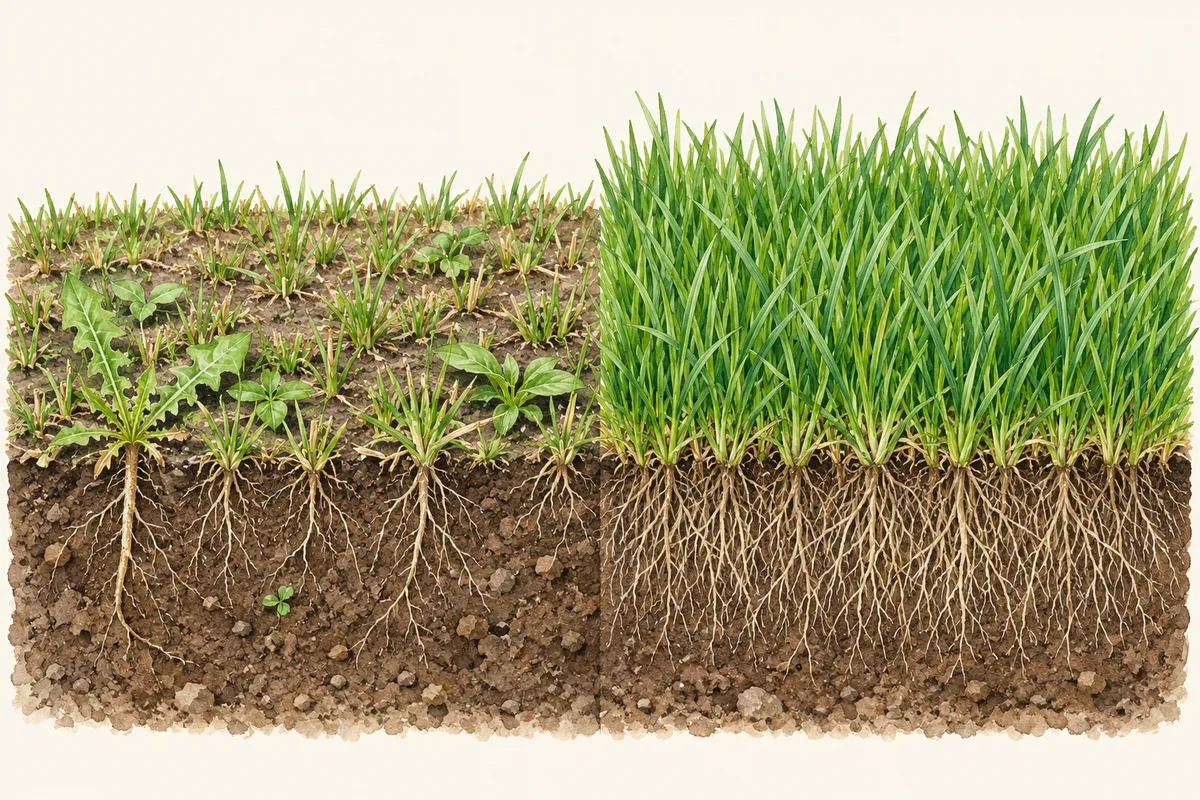
4Weeds move into gaps in thin grass (left). Dense grass crowds them out (right).
01The usual suspects
The RHS's list of common lawn weeds includes clovers, daisy, dandelion, plantain, creeping buttercup, speedwell, yarrow, creeping cinquefoil, field wood-rush, sheep's sorrel, dove's-foot cranesbill and coarse grasses such as couch. (Moss is its own problem — see moss in lawns.)
02Option 1: tolerate them
Many lawn "weeds" are valuable to wildlife:
- Dandelions are an early nectar source for bees.
- Clover stays green in drought and is excellent for pollinators — many gardeners now sow it on purpose.
- Yarrow supports many moth species.
- Creeping buttercup attracts butterflies and hoverflies.
Raising the mower height and mowing a little less often lets them flower. That's a choice, not neglect.
03Option 2: dig them out
For a few weeds, hand removal is quick and permanent enough.
- Wait for moist soil — after rain is ideal.
- Use a narrow tool — a hand fork or a dandelion weeder — and push it in alongside the root.
- Lever out the whole taproot. Dandelions and plantains regrow from pieces left behind.
- Fill the hole with a pinch of topsoil and a few grass seeds.
04Option 3: grow the grass, not the weeds
Weeds move into gaps in thin, stressed grass. The long-term fix is a lawn dense enough to crowd them out:
- Mow higher — weeds like daisies thrive in short-cut lawns.
- Rake up creeping weeds like clover and speedwell before mowing so the blades catch them.
- Cut off flower heads before they set seed.
- Repair bare patches quickly before weeds get there — see fixing patches.
05Option 4: a selective lawn weedkiller
The RHS's view is that non-chemical methods are effective, so there's no need for a weedkiller. If you do choose one:
- Read the label before you buy, and buy the smallest pack that covers the area.
- Spot-treat individual weeds rather than the whole lawn where you can.
- Timing is usually when weeds are small and actively growing and the soil is moist — check the label.
- Typical label restrictions (check yours): not on newly sown lawns for several months; don't mow for a day or so after; and clippings from the first few mowings shouldn't go straight on the compost or into green-waste bins.
- Don't spray in wind, heat, bright sun or drought.
- Keep children and pets off as the label directs.
- Using a lawn-care company? Ask what they've applied.
How we checked this
Every care and safety claim on this page is verified against horticultural and veterinary sources.
Sources: RHS — Weeds in lawns · RHS — Lawn weeds: selecting weedkillers · RHS — Weedkiller damage
Checked 1 October 2026. If our advice ever conflicts with the RHS, believe them and tell us.