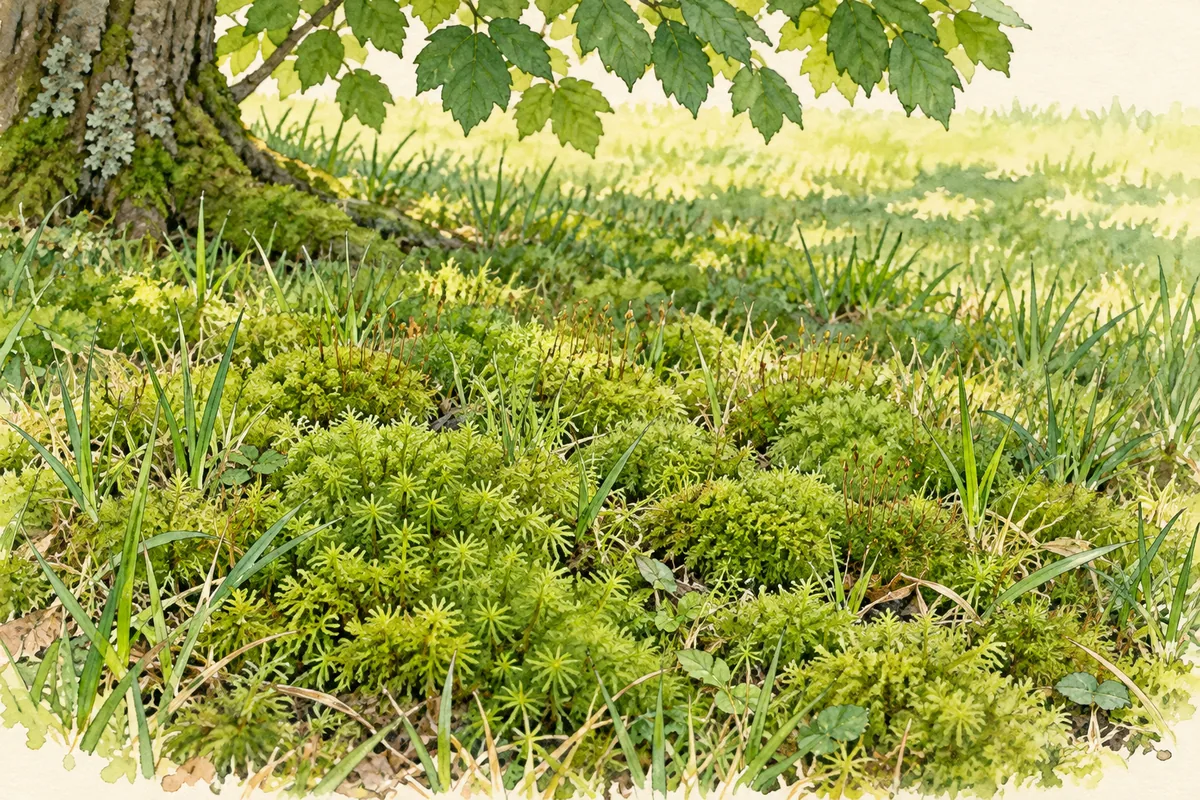
Every spring, garden centres sell a lot of mosskiller. The RHS puts it bluntly: there are no products that kill moss permanently. Moss isn't really the problem — it's the sign of one. It moves in where grass is struggling, and it'll come straight back unless you change whatever made the grass struggle in the first place.
In pictures
-
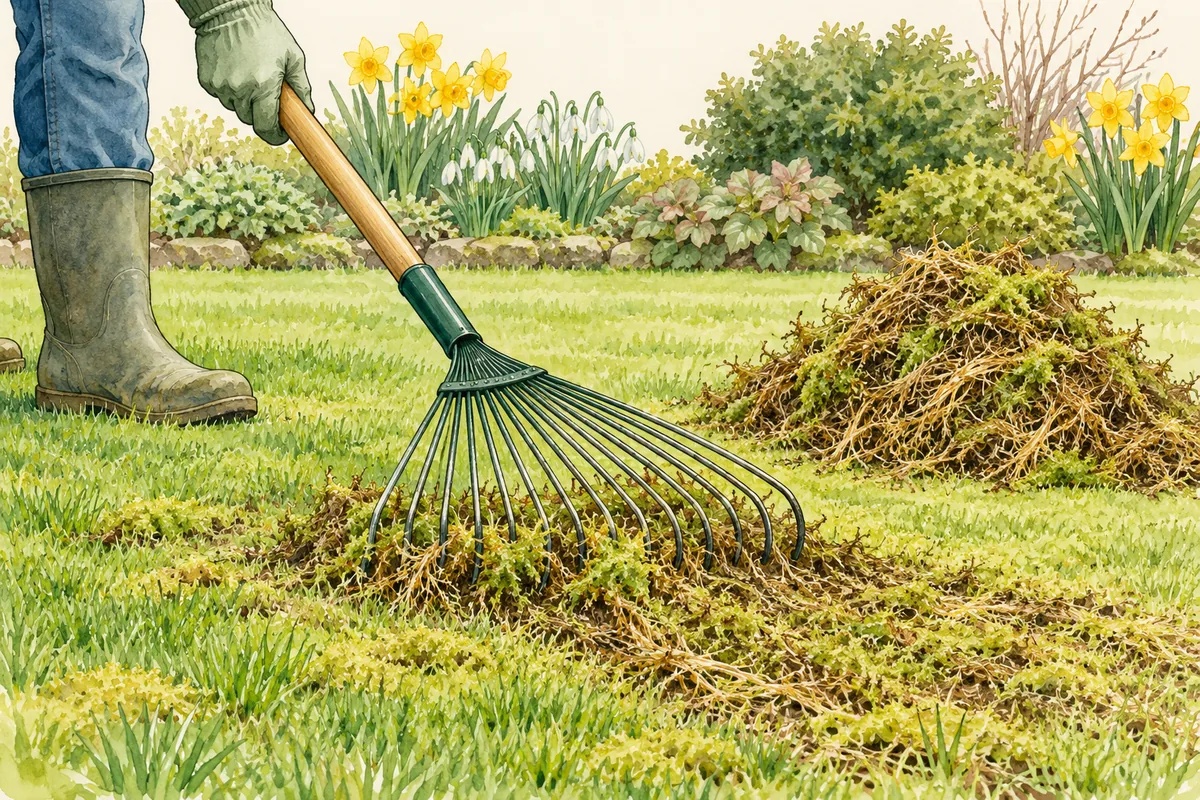
2Scarify in autumn to rake the moss out. -
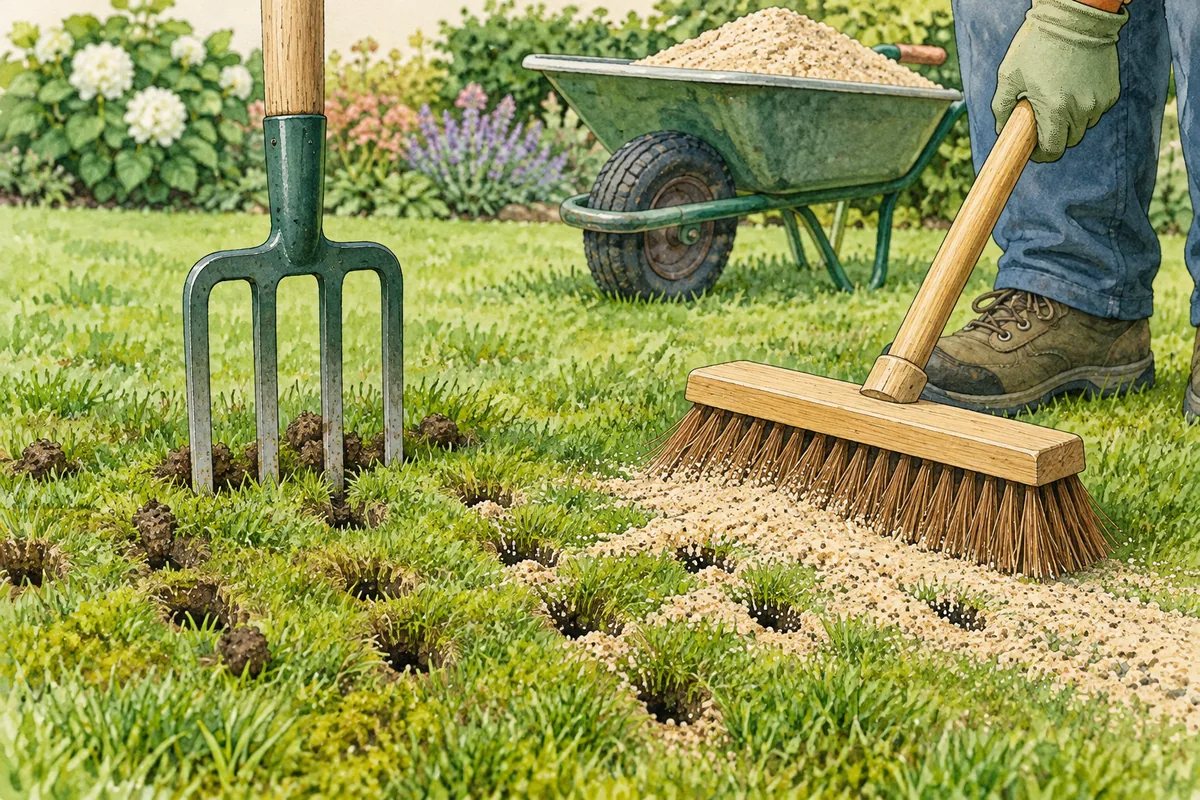
3Spike with a fork and brush sharp sand into the holes. -
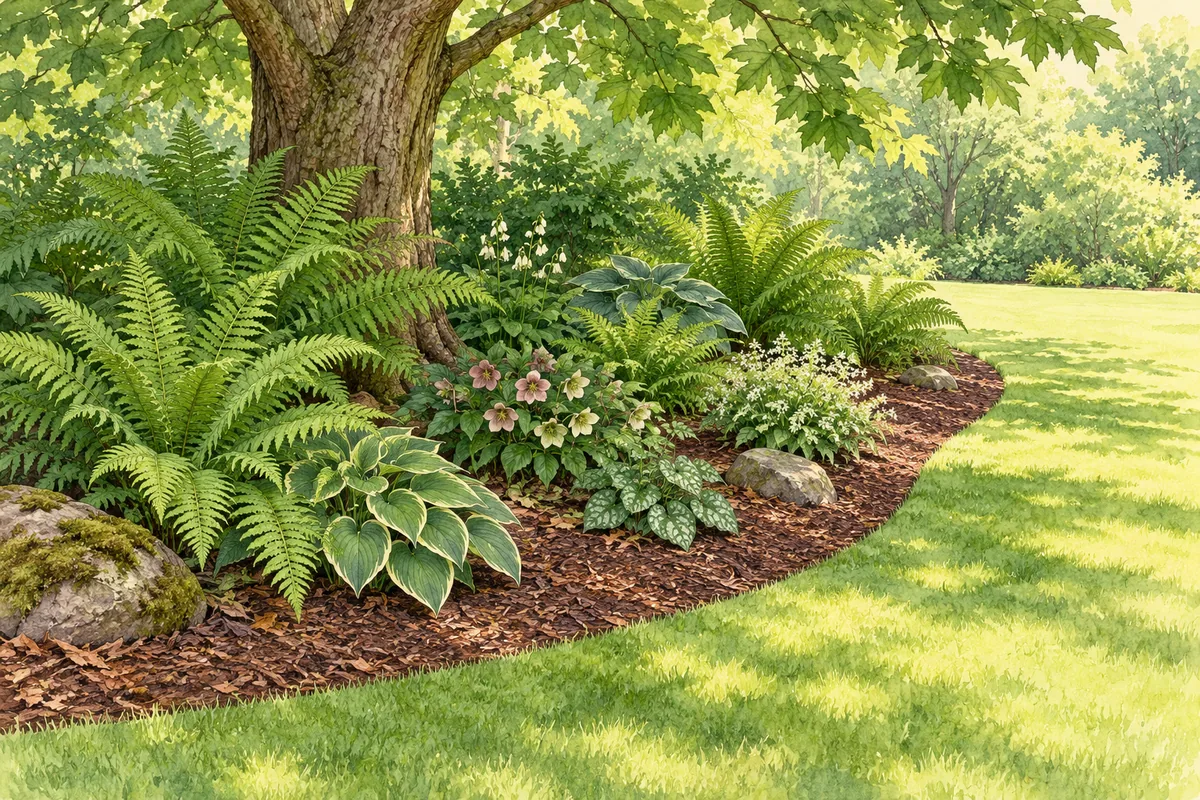
4In deep shade, shade-loving plants beat a constant fight for grass.
01Why moss takes hold
- Shade — grass needs roughly 4–6 hours of sun a day.
- Compacted soil or poor drainage, so the surface stays wet.
- Mowing too short, which weakens the grass.
- Thin, worn or patchy grass, from drought stress or heavy use.
- Acid soil.
02Step by step
- Scarify in autumn. In October or early November, when the grass is growing strongly, rake hard with a spring-tined rake — first in one direction, then across. If you can't see soil between the grass blades, the lawn will benefit. Don't scarify when the soil is waterlogged, very dry or frozen.
- Fix drainage. Spike the lawn with a garden fork, then brush a mix of sharp sand and loam into the holes.
- Re-seed the gaps scarifying leaves behind, so grass rather than moss fills them. See fixing bare patches.
- Raise the mower so the grass grows thicker. See mowing properly.
03Lawns in shade
- Sow a shade mix, high in fescues — or one with more bents for damp shade.
- Mow higher in shade, at about 6–9cm.
- Keep a grass-free circle at least 1m wide around tree trunks.
- Know when to stop. In deep shade grass will always struggle. Shade-loving plants or a mulched area will look better than a constant fight.
04If you do use a mosskiller
- Avoid plain iron sulphate. The RHS says iron (ferrous) sulphate should not be used unless it's part of a proprietary, approved lawn mosskiller. Sulphate of iron sold as a fertiliser doesn't count.
- Never use household remedies — bleach, vinegar, washing-up liquid or baking soda can kill grass and act as broad-spectrum insecticides.
- The RHS suggests a bacteria-based moss remover as an alternative to a synthetic mosskiller.
- Follow the label, and rake out the dead, blackened moss once it has done its work.
- Iron-based products stain paving and decking — keep them off hard surfaces.
Save your money
Skip the mosskiller. The RHS says there's no need for a synthetic one. A spring-tined rake, a fork and a bag of sand do more in the long run.
Don't keep re-seeding deep shade. Change what grows there instead.
How we checked this
Every care and safety claim on this page is verified against horticultural and veterinary sources.
Sources: RHS — Moss on lawns · RHS — Lawns in shade · RHS — Lawn care in autumn
Checked 1 October 2026. If our advice ever conflicts with the RHS, believe them and tell us.