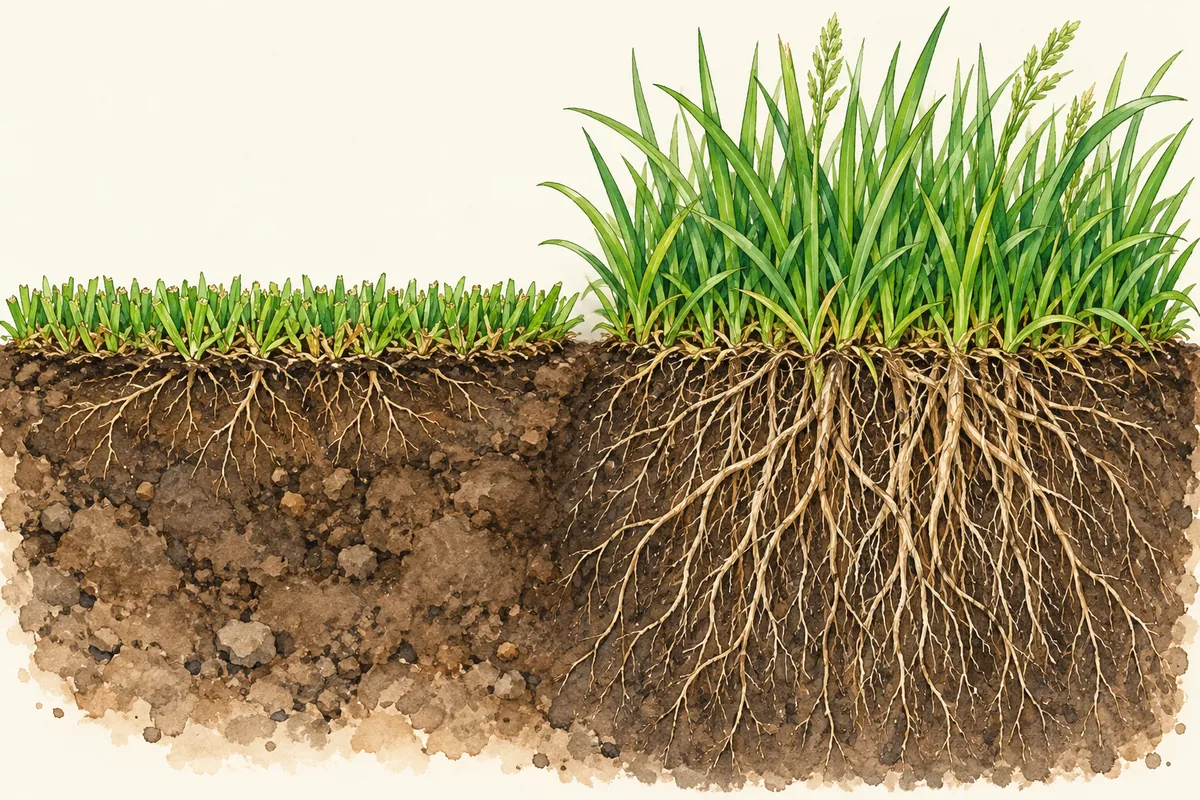
Most lawn problems — moss, weeds, bare patches, a lawn that browns the moment the sun comes out — trace back to one habit: mowing too short. Cutting low looks neat for a day or two, but it weakens the grass and opens the door to everything you then buy products to fix. Get the height and the rhythm right and a lot of other lawn jobs shrink.
In pictures
-
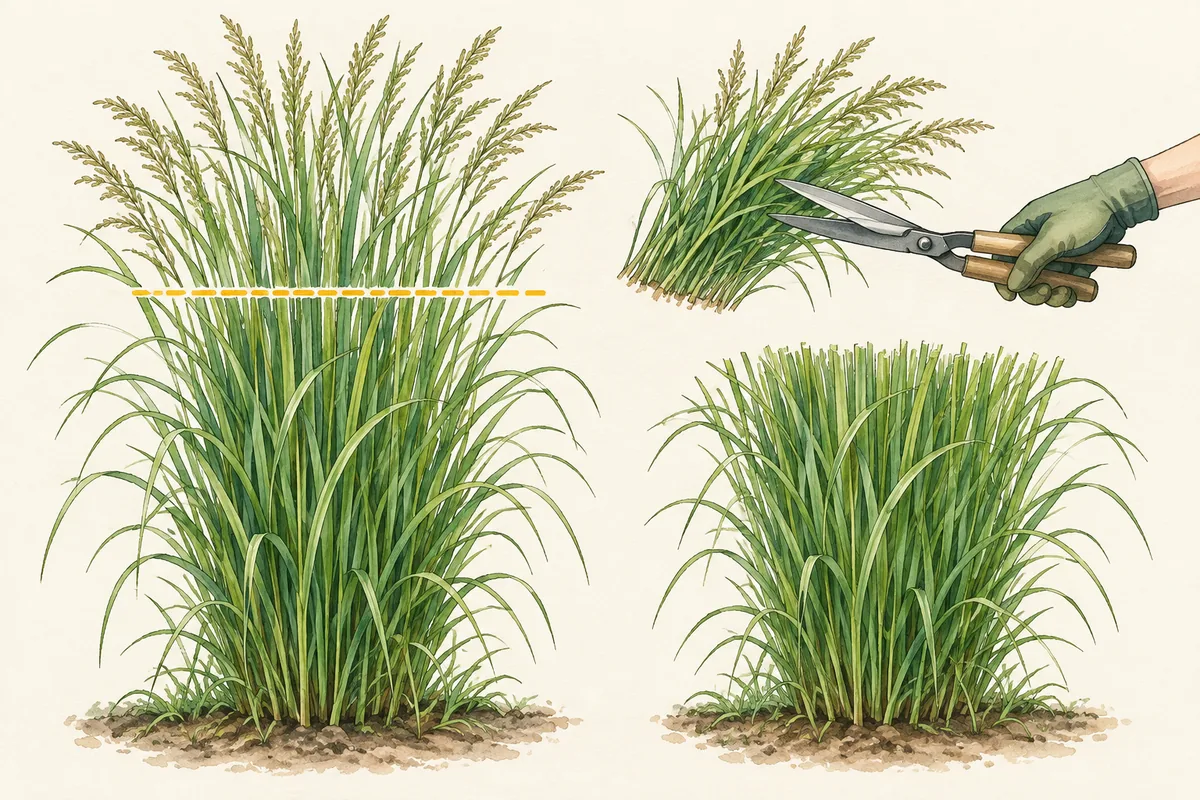
2Never cut off more than a third of the grass height at once. -
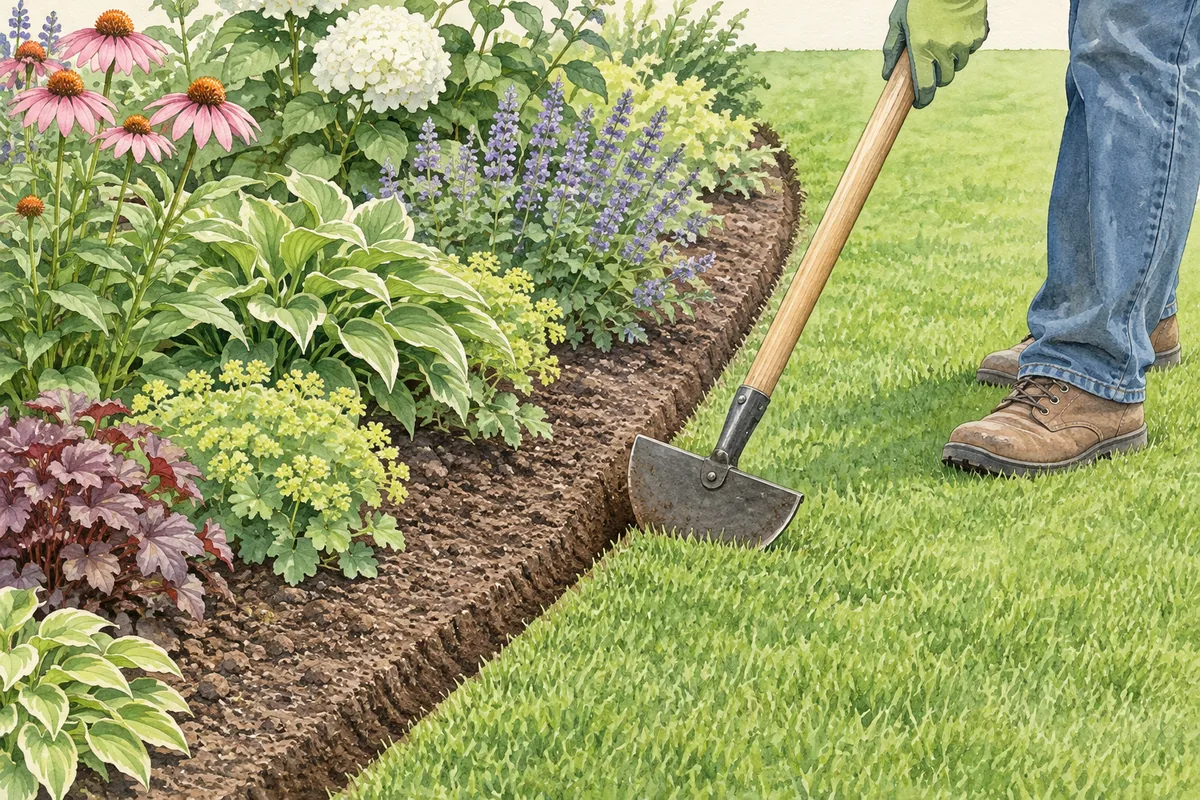
3A half-moon edging iron gives the lawn a crisp edge. -
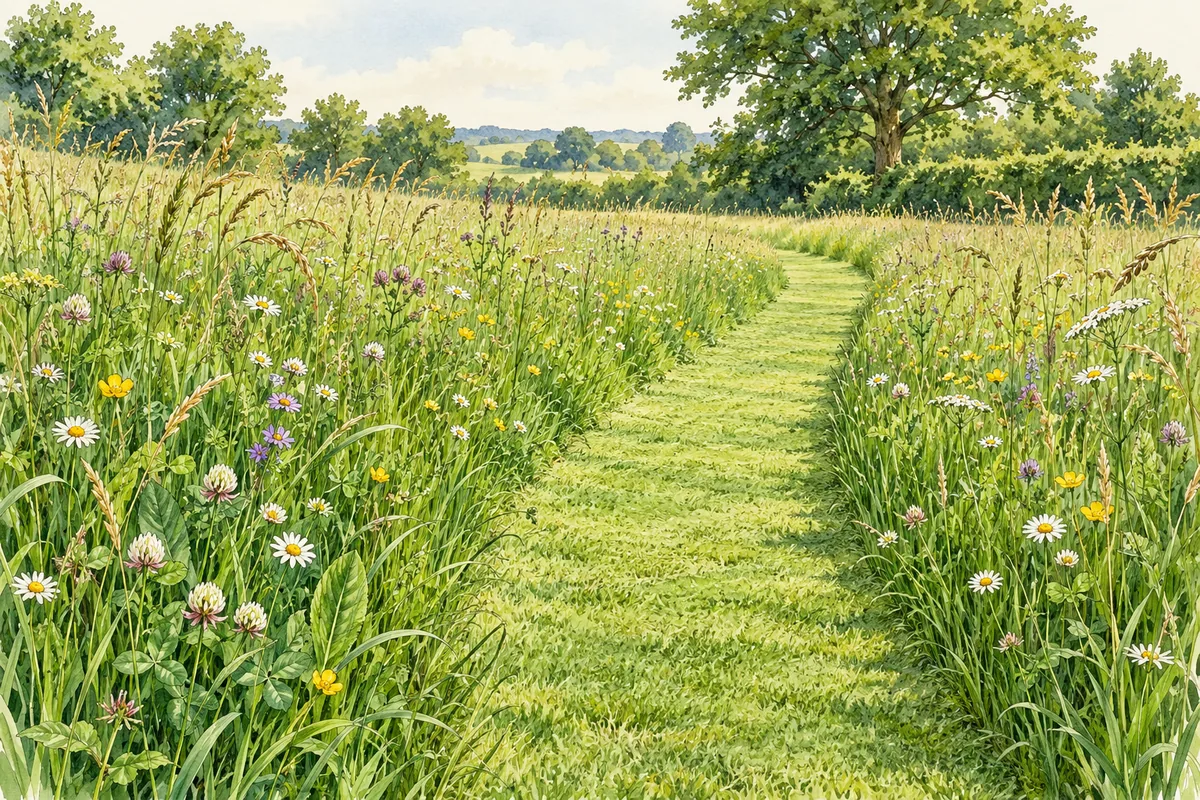
4A mown path through grass left long for wildflowers.
01At a glance
- Ordinary garden lawns: up to about 40mm in spring and autumn; 13–25mm in summer.
- Fine, ornamental lawns: 6–13mm all year — they need far more care.
- How often: weekly or fortnightly in spring and autumn, about weekly in summer, less in drought. Usually not at all in winter.
- The golden rule: never take off more than a third of the grass height in one cut.
02The one-third rule
If the grass is 6cm tall, cut no lower than 4cm. Take more and you shock the plant: it stops growing roots to regrow leaves, and the lawn thins out. If the grass has got away from you, bring it down gradually over two or three cuts a few days apart.
03The first cut of spring
Use the mower's highest setting. You're just tipping the grass, not shaping it — and long spring grass will choke the mower if you go straight in low. Lower the height gradually over the next few weeks.
04In summer and drought
- Raise the cutting height in dry weather. Longer grass shades the soil and roots deeper.
- Mow less often — and stop altogether if the grass stops growing.
- Leave the clippings on in very dry weather. They act as a thin mulch and help hold moisture.
- Don't water an established lawn, however brown it gets. The RHS is clear: the roots are still alive and the grass greens up once rain returns.
05Good habits every time
- Keep blades sharp. A blunt blade tears the grass and leaves ragged, browning tips.
- Don't mow wet or frosty grass. It damages the turf and compacts the soil.
- Edge it. A crisp edge does more for how a lawn looks than any feed. Cut a small "gutter" with a half-moon edging iron or a spade, and trim the overhang with shears.
06Leave some long for wildlife
The RHS supports No Mow May: stop mowing in early May and let the lawn's own wildflowers bloom — ideally leaving it long until at least August for the biggest wildlife benefit. You don't have to do the whole lawn. A strip, a corner or a circle under a tree works, and mowing a neat path through it makes it look deliberate. Even simply mowing the rest once a fortnight rather than weekly helps.
07Mistakes to avoid
- Scalping — cutting so low you see brown stems or soil.
- Taking off more than a third after a holiday.
- Mowing low in a dry spell.
How we checked this
Every care and safety claim on this page is verified against horticultural and veterinary sources.
Sources: RHS — Lawn mowing · RHS — Lawn care for drought · RHS — May: lawns
Checked 1 October 2026. If our advice ever conflicts with the RHS, believe them and tell us.