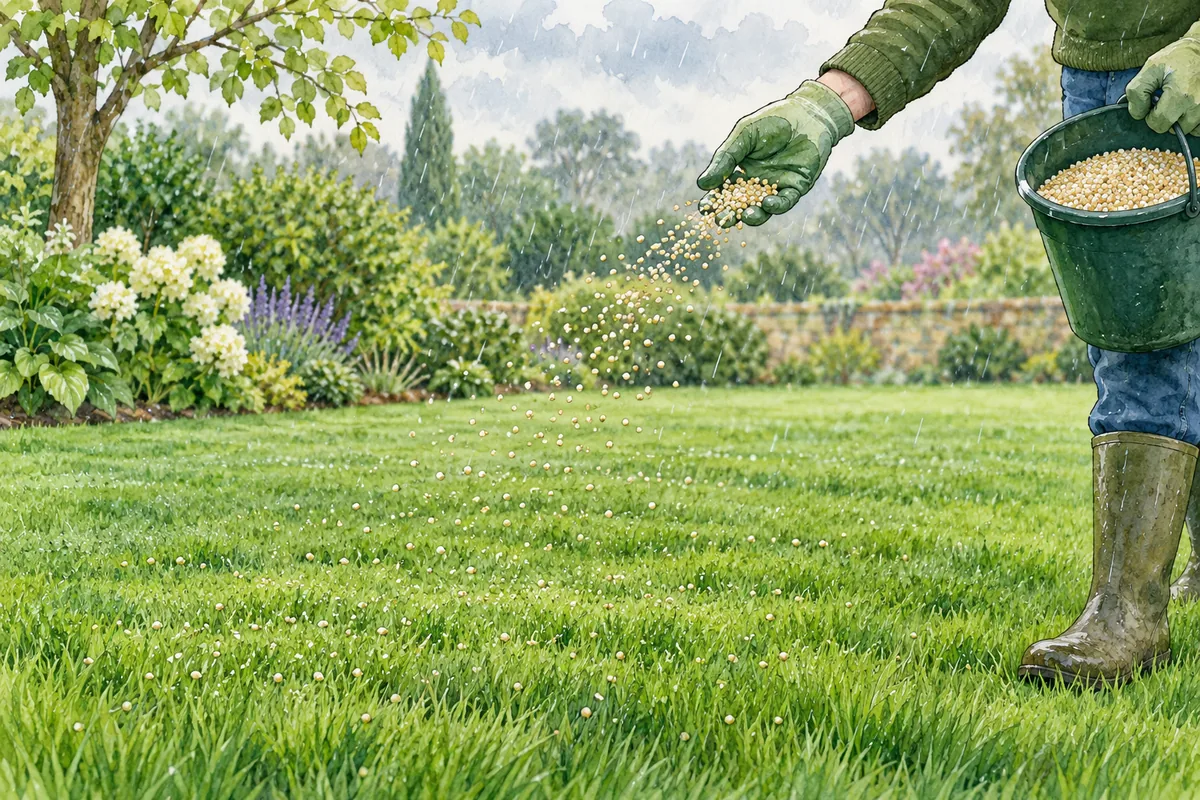
Here's the line you won't see on a box of lawn feed: according to the RHS, most lawns grow perfectly well without being fed. In much of the UK, drought now matters more to a lawn than a lack of fertiliser. So start with the question "does my lawn actually need this?" — and if it does, use the right feed at the right time.
In pictures
-
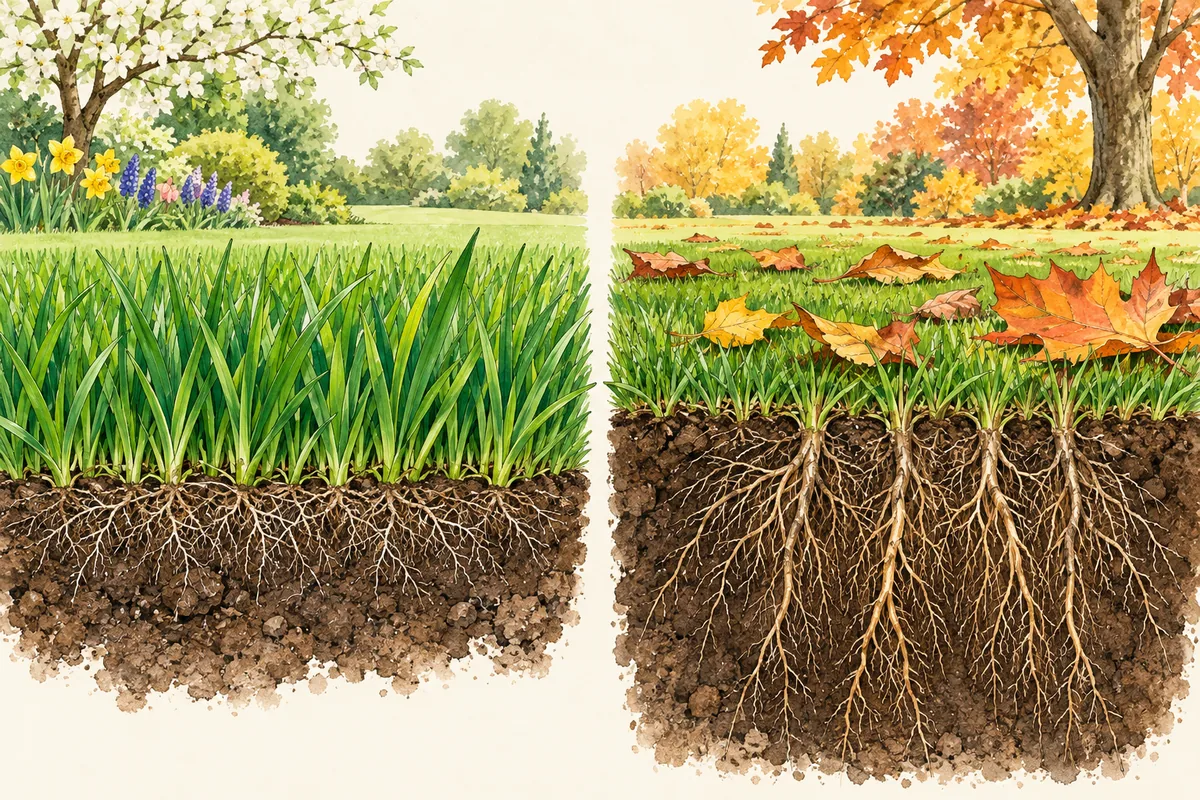
2Spring feed drives leafy growth; autumn feed builds roots. -
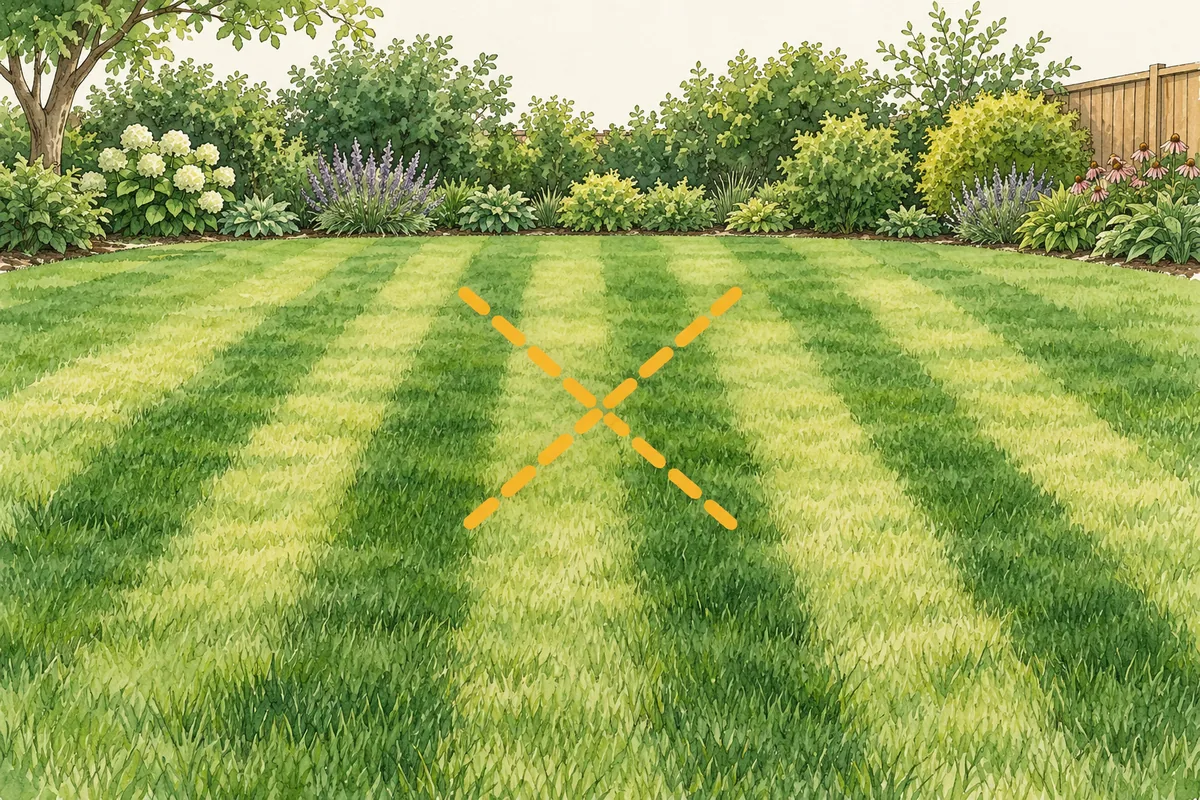
3Uneven spreading shows as stripes — spread half one way, half across. -
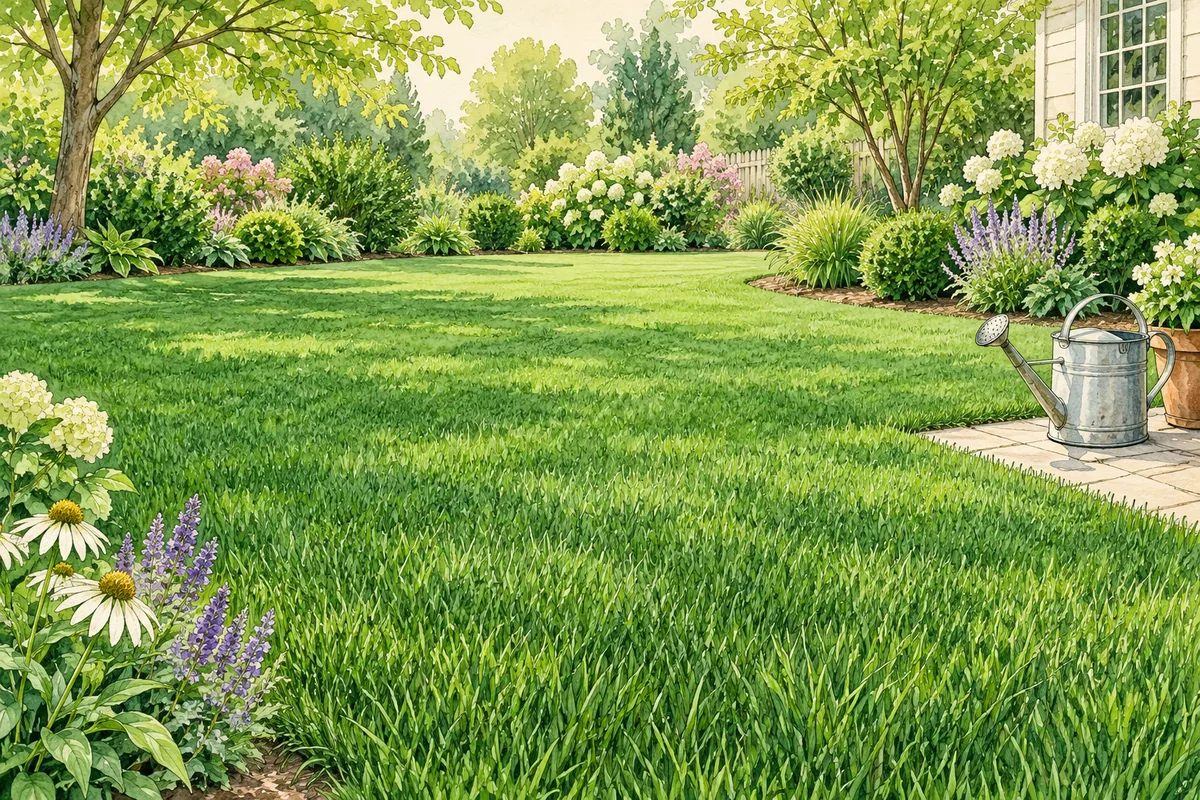
4Most lawns are fine without any feed at all.
01Does your lawn need feeding?
Probably not if: it's reasonably green, dense and growing.
Maybe if: the grass is thin, pale and slow to grow in spring despite reasonable weather, and you've already ruled out the usual causes — mowing too short, shade, compaction or moss.
Most lawns recover from summer wear or drought by themselves, without any feed.
02Spring feed
- When: mid-spring, while the grass is growing actively — usually late March to April.
- How: apply at the rate on the pack, spreading evenly. Do it in cool, moist weather with rain expected, or water it in lightly.
- What it does: encourages leafy growth and colour.
03Autumn feed
- When: September to October.
- What: a product sold specifically as an autumn lawn feed — rich in potassium and phosphorus. This encourages roots and hardiness over winter rather than soft leaves.
- How much: usually about a handful per square metre, or use a calibrated spreader.
- Watering in: apply just before rain. If none falls within about a day, water it in.
04Lawns under trees
Lawns in shade are best fed in autumn, just before the trees drop their leaves. If you feed in early spring instead, use half the rate recommended for lawns in full sun.
05Mistakes to avoid
- Using leftover summer feed in autumn. It contains too much nitrogen, giving lush, soft growth that's vulnerable to disease over winter.
- Feeding a drought-stressed lawn in autumn. The RHS says wait until spring.
- Uneven spreading. It shows as stripes. Spread half the amount up and down, the other half across.
- Ignoring the label. Always follow the manufacturer's rate.
How we checked this
Every care and safety claim on this page is verified against horticultural and veterinary sources.
Sources: RHS — Lawn care in spring and summer · RHS — Lawn care in autumn · RHS — October: lawns · RHS — Lawns in shade · RHS — Lawn care for drought
Checked 1 October 2026. If our advice ever conflicts with the RHS, believe them and tell us.