Robin or Wren?
These two get mixed up constantly. Here is what actually separates them, taken from each bird's own page.
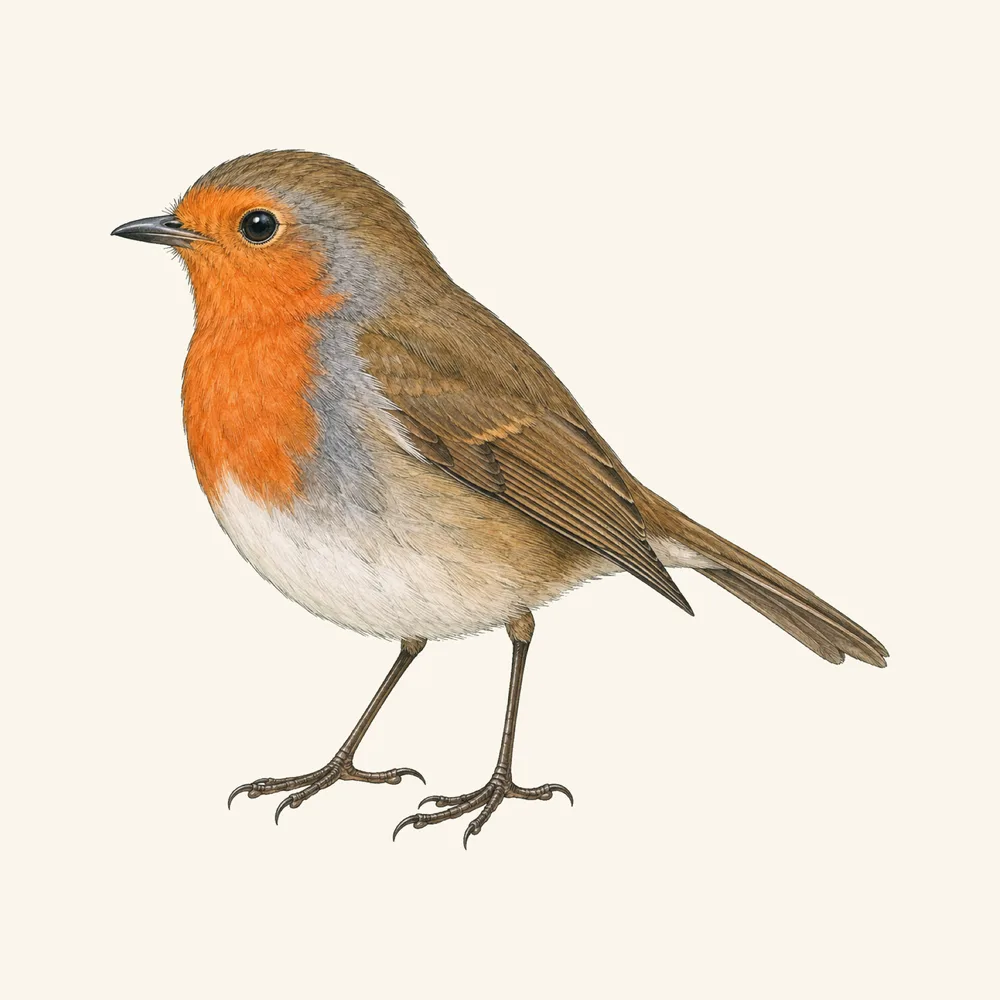
Robin
Erithacus rubecula
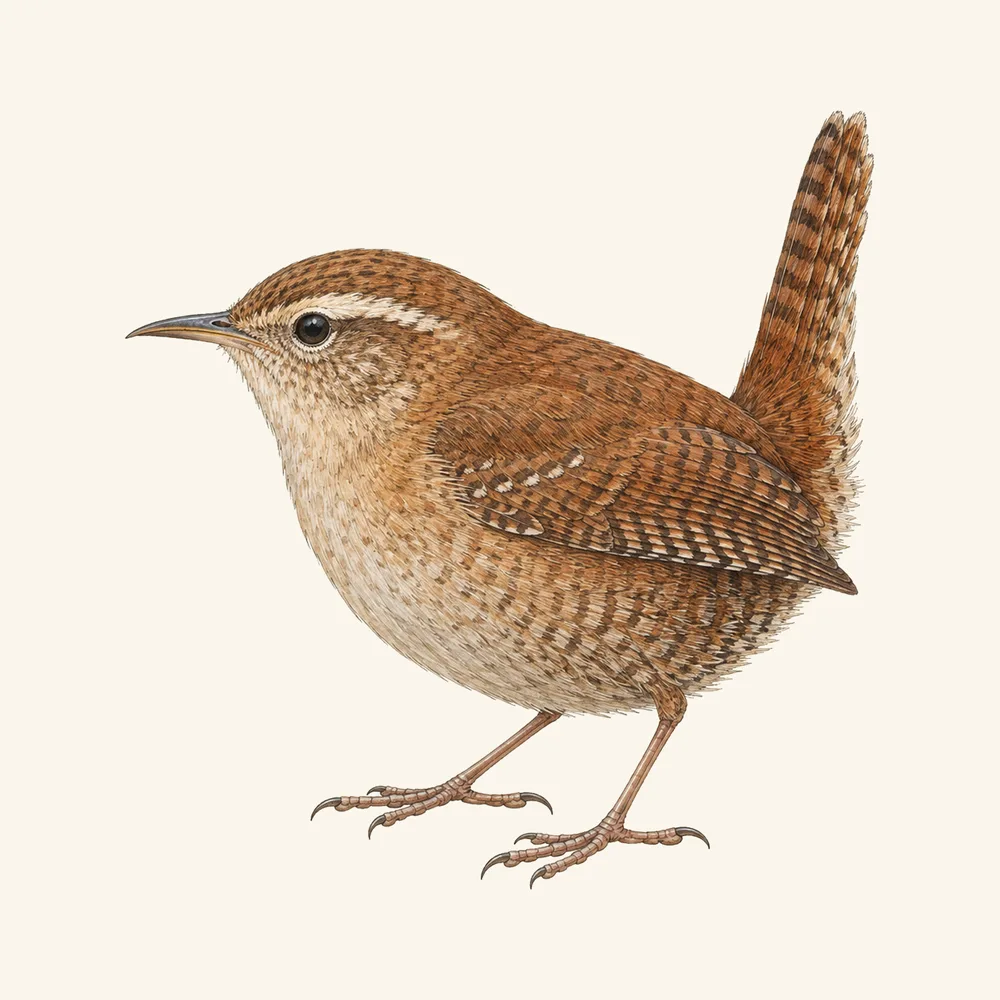
Wren
Troglodytes troglodytes
A young robin in summer is brown and mottled, but it is robin-sized, stands upright on long legs and has a plain face with a large dark eye. A wren is a third of the weight, barred rather than mottled, and never stands tall.
Side by side
| Robin | Wren | |
|---|---|---|
| Size | The reference bird — about 14cm, round-bodied, with a habitually upright stance. | About 9-10cm and roughly 10g — one of the smallest UK birds, far smaller than a robin. |
| Where you'll see it | Low perches, borders and freshly dug soil; on the ground far more than on feeders. | Low and deep in cover: ivy, log piles, hedge bottoms, dry stone walls, compost heaps and sheds. |
| What it eats | Worms, beetles, spiders and other invertebrates; berries and seeds in winter, plus mealworms and suet. | Almost entirely small invertebrates — spiders, beetles and larvae picked out of crevices and leaf litter. |
| When | Resident all year. Territories are held by both sexes through the winter. | Resident all year. Winter is when it is hardest hit and when cover matters most. |
| Status | Green listed | Amber listed |
Still not sure? Describe what you saw and we will rank every garden bird against it — including these two.
Both descriptions are taken from the species pages, which cite the BTO and RSPB. Reviewed 2026-09-20.