Redwing or Song Thrush?
These two get mixed up constantly. Here is what actually separates them, taken from each bird's own page.
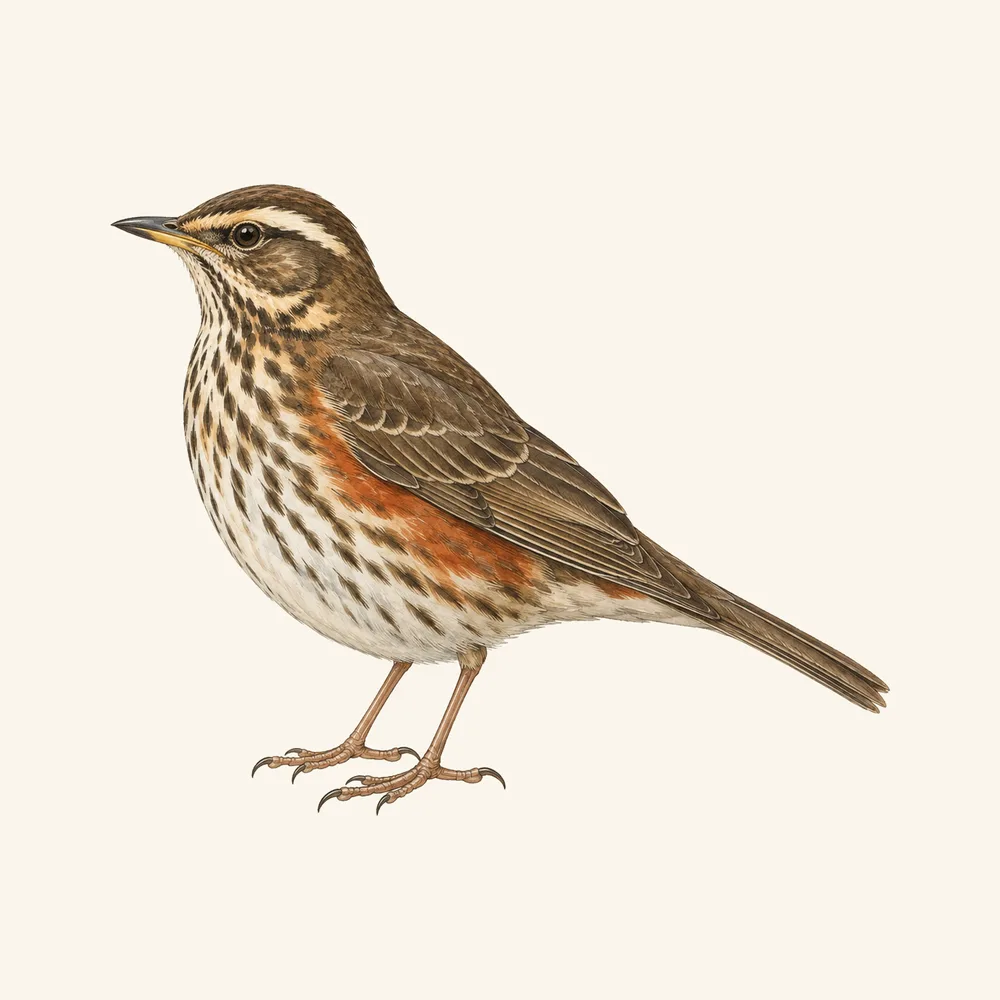
Redwing
Turdus iliacus
The face decides it. A song thrush has a plain face with no eye-stripe and warm buff flanks; a redwing has a bold creamy-white stripe over the eye and a second below the cheek, and rust-red flanks. Both are the same size and shape, so ignore size entirely and look at the head.
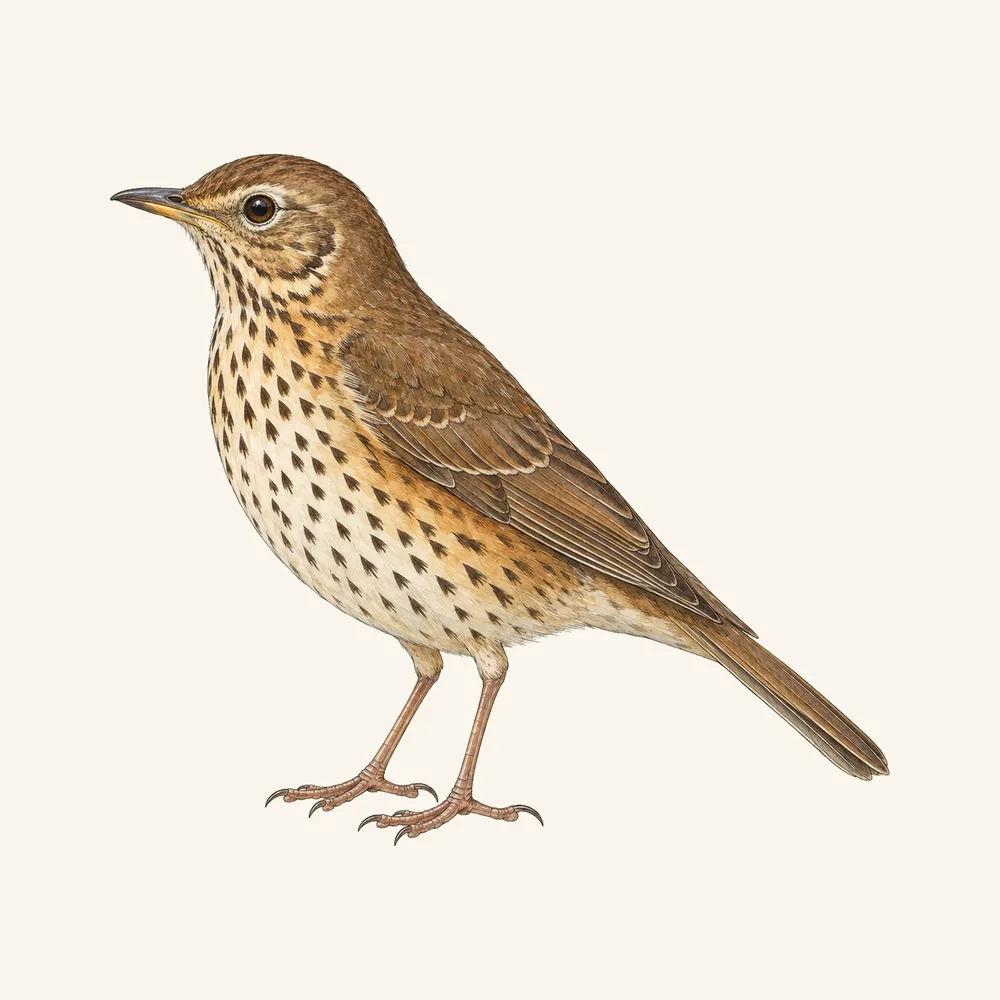
Song Thrush
Turdus philomelos
A winter visitor of similar size and shape, but a redwing has a bold creamy stripe over the eye and rusty-red flanks and underwing. A song thrush has a plain face and buff, not red, along the flanks.
Side by side
| Redwing | Song Thrush | |
|---|---|---|
| Size | Song thrush sized — clearly smaller and neater than a blackbird, and much smaller than a fieldfare. | Smaller than a blackbird, about 23cm, neat and compact with a short tail. |
| Where you'll see it | On lawns and under fruit trees in hard weather, and stripping berries from hedges. Rarely on feeders. | On lawns and borders, and singing from the top of a tree, TV aerial or roof ridge. |
| What it eats | Berries, windfall apples and other soft fruit, plus earthworms and invertebrates from open ground. | Earthworms, snails and other invertebrates; berries and windfall fruit in autumn and winter. |
| When | October to April only. BTO gives an average arrival of 1 October and departure in mid-April. | Resident all year, with song starting as early as late December and peaking in spring. |
| Status | Amber listed | Amber listed |
Still not sure? Describe what you saw and we will rank every garden bird against it — including these two.
Both descriptions are taken from the species pages, which cite the BTO and RSPB. Reviewed 2026-09-20.