Magpie or Pied Wagtail?
These two get mixed up constantly. Here is what actually separates them, taken from each bird's own page.
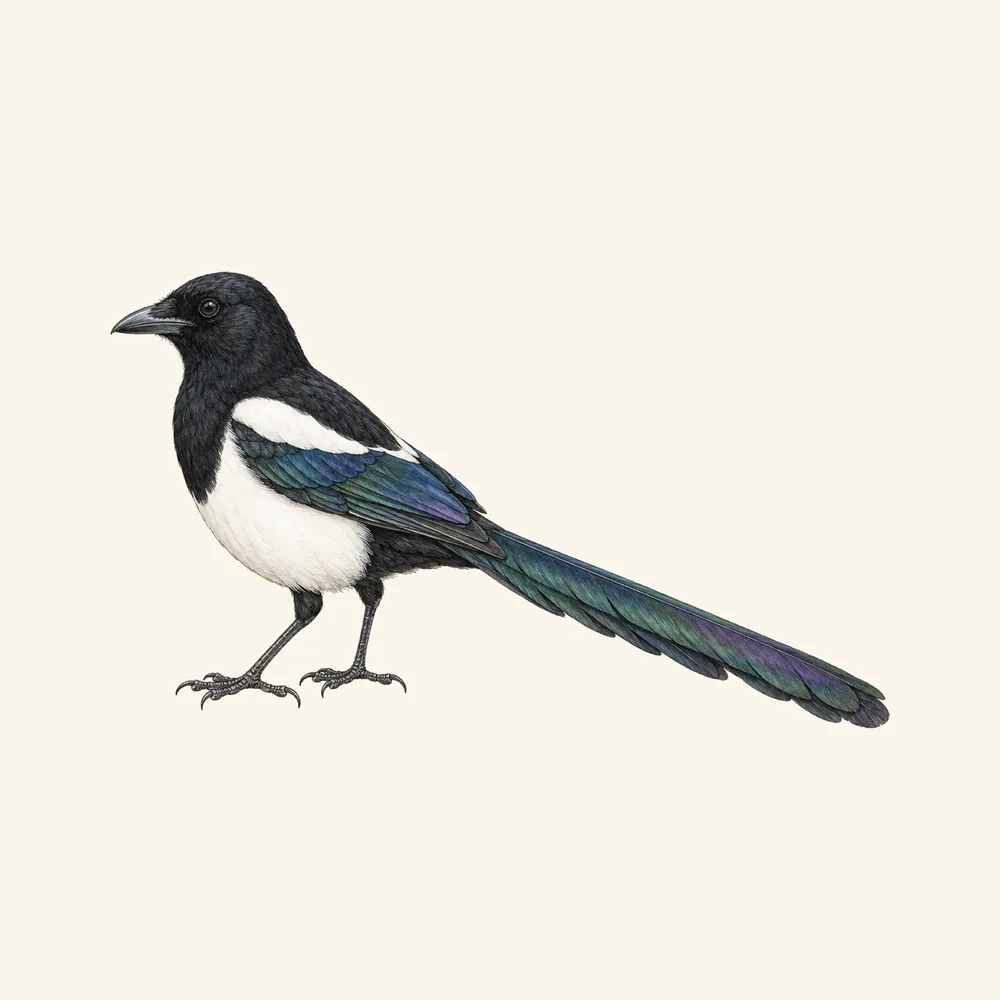
Magpie
Pica pica
Sometimes mistaken for a magpie at distance on a roof or car park because it is black and white with a long tail — but it is tiny, no bigger than a sparrow, runs rather than hops, and pumps its tail constantly up and down. A magpie is the size of a pigeon.
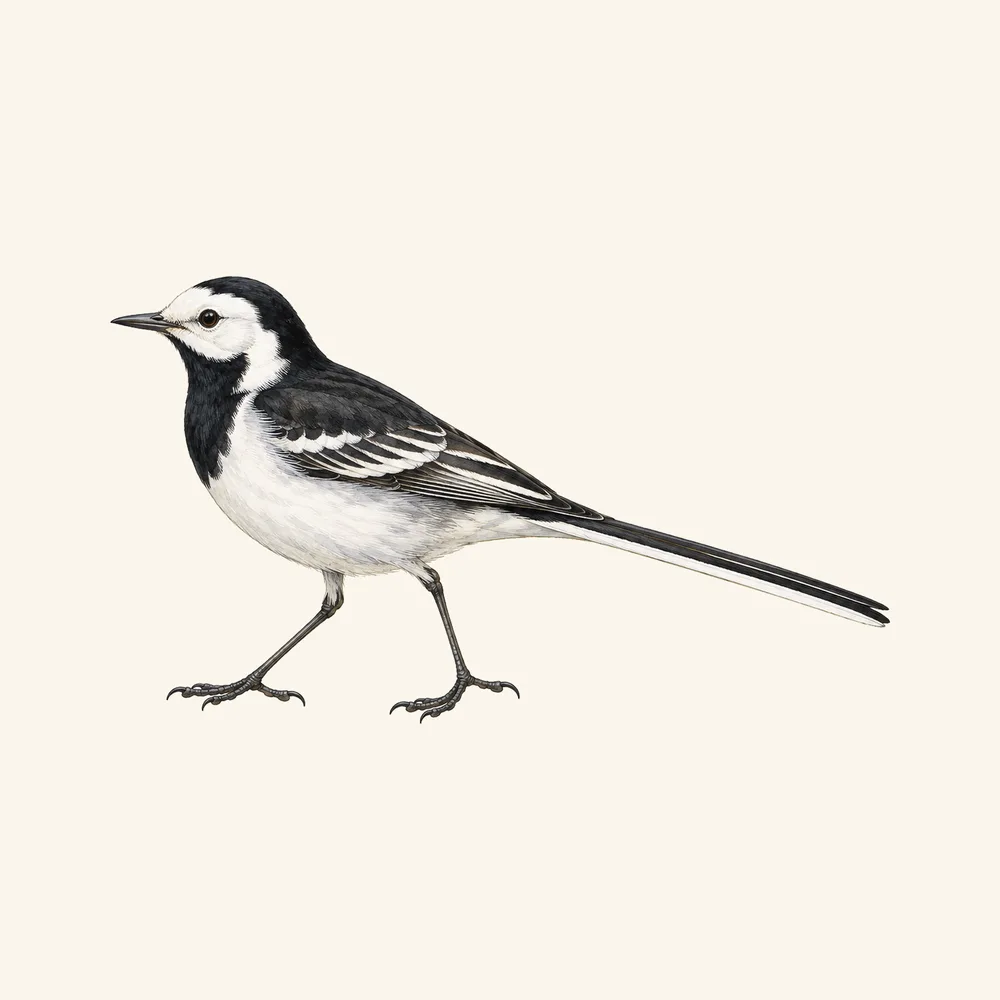
Pied Wagtail
Motacilla alba
Side by side
| Magpie | Pied Wagtail | |
|---|---|---|
| Size | Bigger than a pigeon in total length, though much of that is tail — roughly 45cm nose to tail. | Robin length in the body, but the long tail makes it look bigger — around 18cm overall, and far slimmer. |
| Where you'll see it | Lawns, rooftops, tall trees and roadsides; raids feeders and fat blocks. | Short grass, paths, drives, car parks, flat roofs and the edges of ponds and puddles. Not on hanging feeders. |
| What it eats | Beetles, leatherjackets and worms, carrion, scraps, fruit and grain — plus eggs and chicks in spring. | Insects, particularly flies, taken from open ground or caught in short fluttering chases; some seed in hard weather. |
| When | Resident all year; most conspicuous in late winter when groups display. | Resident all year. In winter birds feed alone by day and gather in large communal roosts at dusk. |
| Status | Green listed | Green listed |
Still not sure? Describe what you saw and we will rank every garden bird against it — including these two.
Both descriptions are taken from the species pages, which cite the BTO and RSPB. Reviewed 2026-09-20.