Jay or Magpie?
These two get mixed up constantly. Here is what actually separates them, taken from each bird's own page.
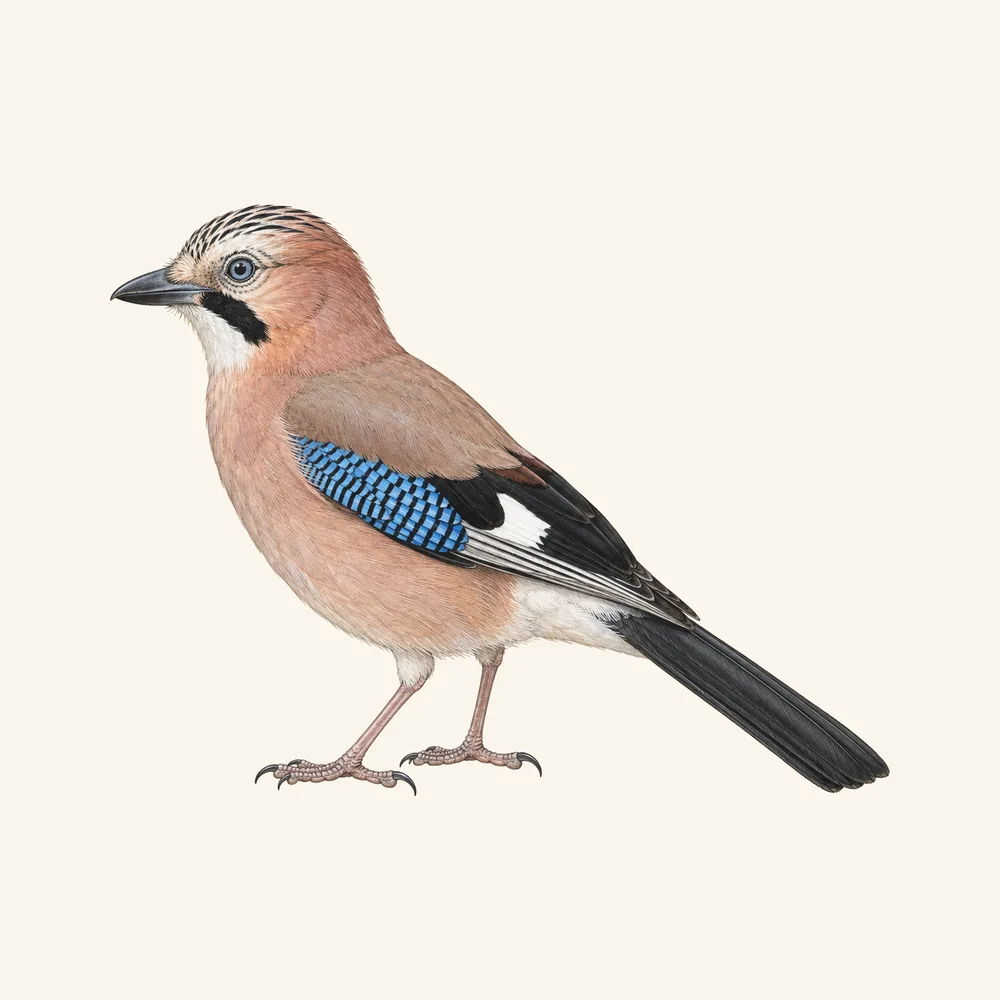
Jay
Garrulus glandarius
Both are showy corvids with a white flash, but a magpie is black and white with an iridescent green-blue sheen and a tail longer than its body. A jay is pinkish-brown with a short black tail, and the white is confined to the rump. In flight the magpie's tail streams behind it; the jay looks stubby and blunt.
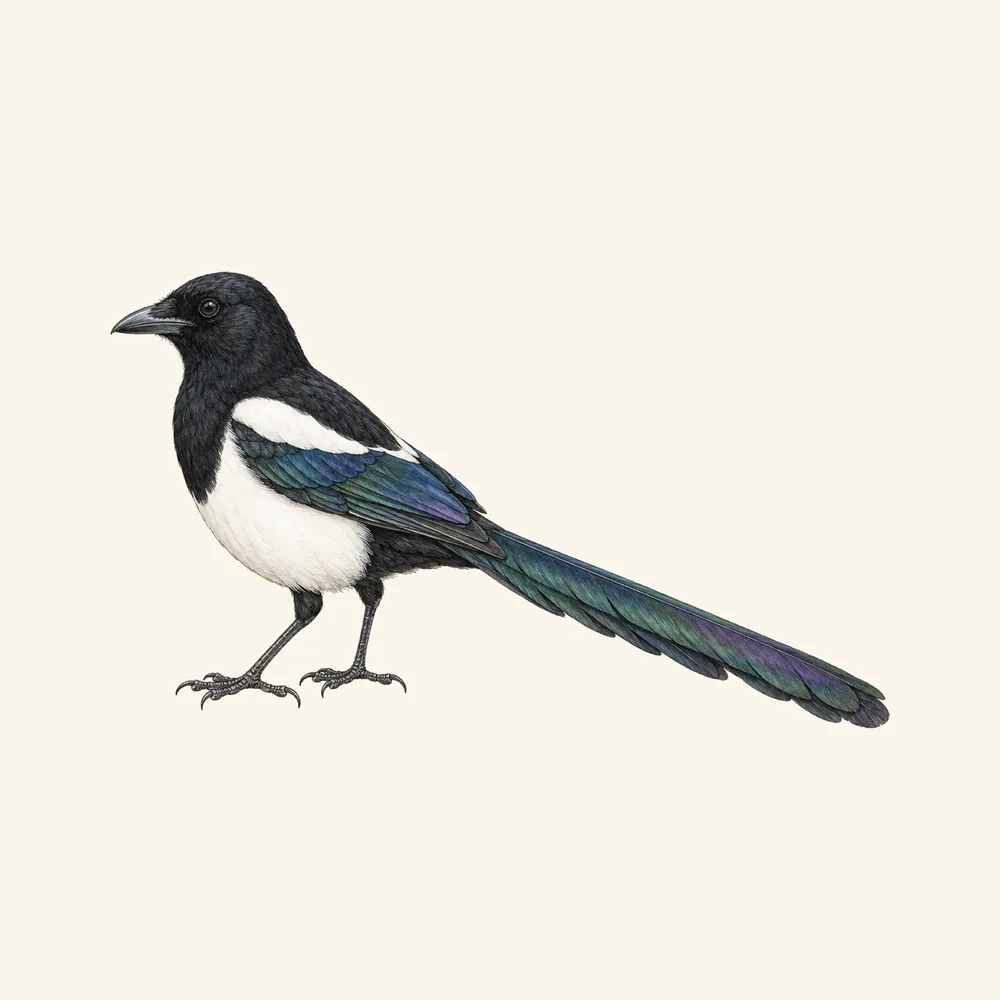
Magpie
Pica pica
Both are noisy, medium-large crows that raid nests, and both flash white. But a jay is pinkish-brown, not black and white, and the white is a bright square rump patch that flares as it flies away from you. It also carries a small panel of sky-blue, black-barred feathers on the wing. If you see a bold white rump on a warm brown bird, it is a jay; a magpie is stark black and white with a tail half as long again.
Side by side
| Jay | Magpie | |
|---|---|---|
| Size | About 35cm with a 55cm wingspan — bigger than a blackbird, slimmer and longer-tailed than a woodpigeon. | Bigger than a pigeon in total length, though much of that is tail — roughly 45cm nose to tail. |
| Where you'll see it | Working along a treeline, or briefly on a lawn burying acorns in October before dashing back to cover. | Lawns, rooftops, tall trees and roadsides; raids feeders and fat blocks. |
| What it eats | Acorns above all, plus insects, seeds and fruit, and sometimes eggs and nestlings in spring. | Beetles, leatherjackets and worms, carrion, scraps, fruit and grain — plus eggs and chicks in spring. |
| When | Resident all year, but overwhelmingly most visible in September and October during the acorn harvest. | Resident all year; most conspicuous in late winter when groups display. |
| Status | Green listed | Green listed |
Still not sure? Describe what you saw and we will rank every garden bird against it — including these two.
Both descriptions are taken from the species pages, which cite the BTO and RSPB. Reviewed 2026-09-20.