Great Spotted Woodpecker or Nuthatch?
These two get mixed up constantly. Here is what actually separates them, taken from each bird's own page.
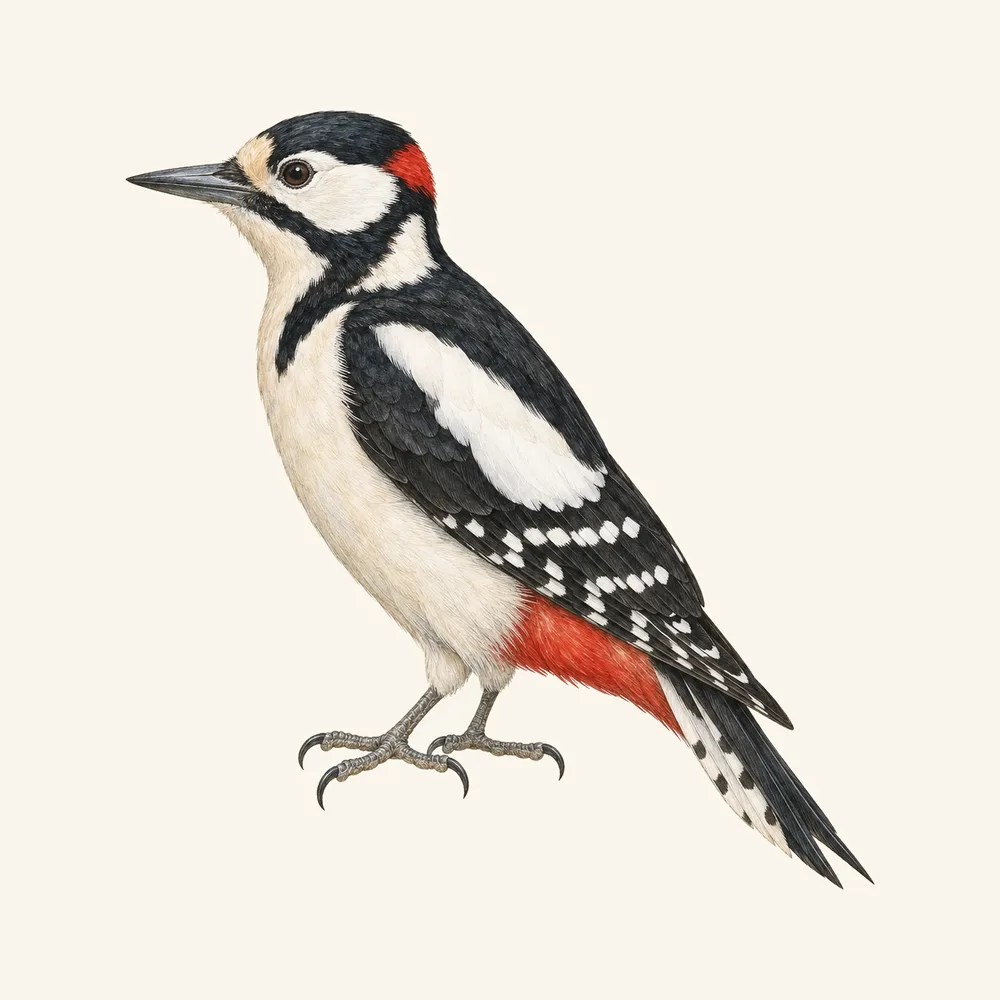
Great Spotted Woodpecker
Dendrocopos major
A nuthatch also works tree trunks and comes to feeders, but it is blue-grey above and orange-buff below with a black eye-stripe, and it is the only garden bird that walks head-first down a trunk. A great spotted woodpecker only ever goes up.
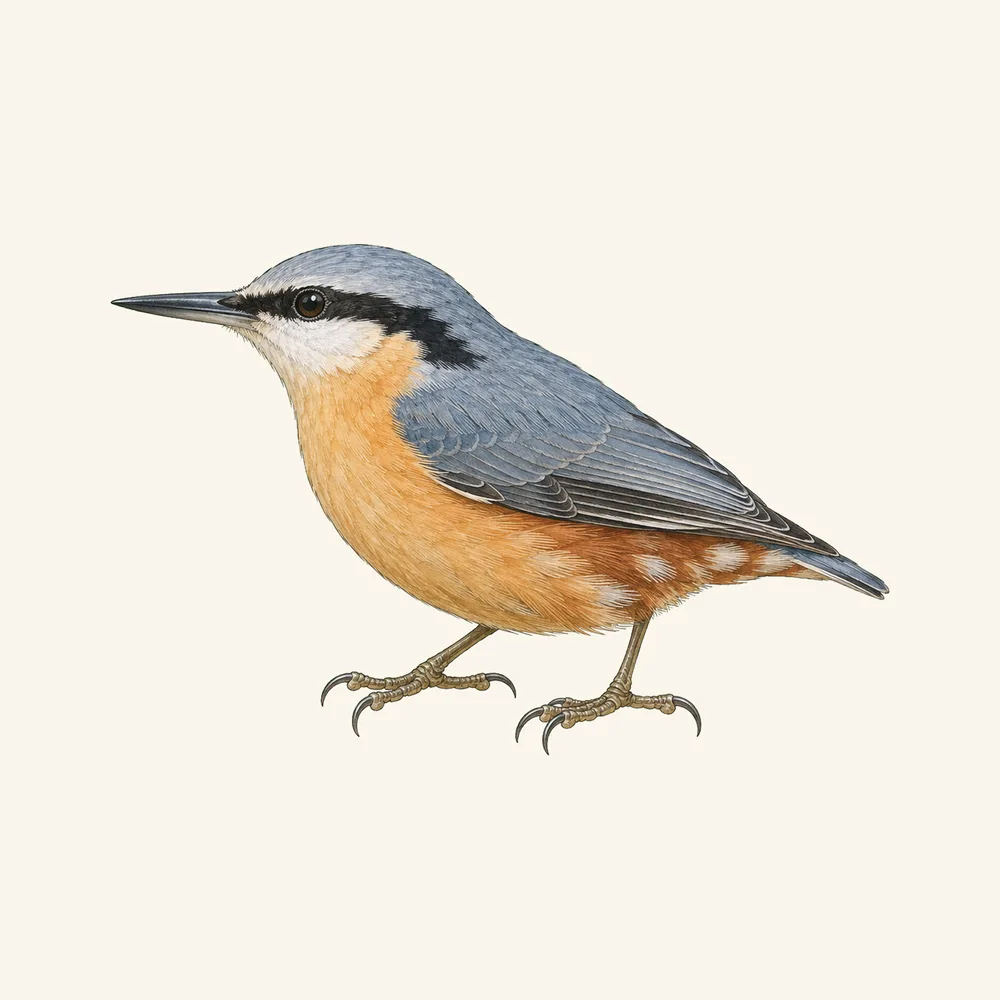
Nuthatch
Sitta europaea
A woodpecker is black and white with bold white shoulder patches and a red vent, and props itself upright on its stiff tail. A nuthatch is plain blue-grey above with no black-and-white pattern at all, and holds itself horizontally or head-down against the trunk with no tail support.
Side by side
| Great Spotted Woodpecker | Nuthatch | |
|---|---|---|
| Size | About blackbird-sized, roughly 23cm, but broader-shouldered and heavier-looking. | About the same length as a robin but stockier and shorter-tailed — roughly great tit sized, with a woodpecker's outline. |
| Where you'll see it | On tree trunks and large branches, and clinging to peanut or suet feeders, usually briefly. | On the trunks and thick limbs of mature trees, and on peanut and sunflower feeders hung near them. |
| What it eats | Wood-boring insect larvae, tree seeds, and — in the breeding season — the eggs and nestlings of hole-nesting birds. | Insects and spiders prised from bark in summer; hazelnuts, acorns, beech mast, sunflower hearts and peanuts from autumn onward. |
| When | Resident all year; drumming from January to May and boldest at feeders in winter. | Resident all year, but far more likely in a garden between October and March when woodland food runs short. |
| Status | Green listed | Green listed |
Still not sure? Describe what you saw and we will rank every garden bird against it — including these two.
Both descriptions are taken from the species pages, which cite the BTO and RSPB. Reviewed 2026-09-20.