Feral Pigeon or Woodpigeon?
These two get mixed up constantly. Here is what actually separates them, taken from each bird's own page.
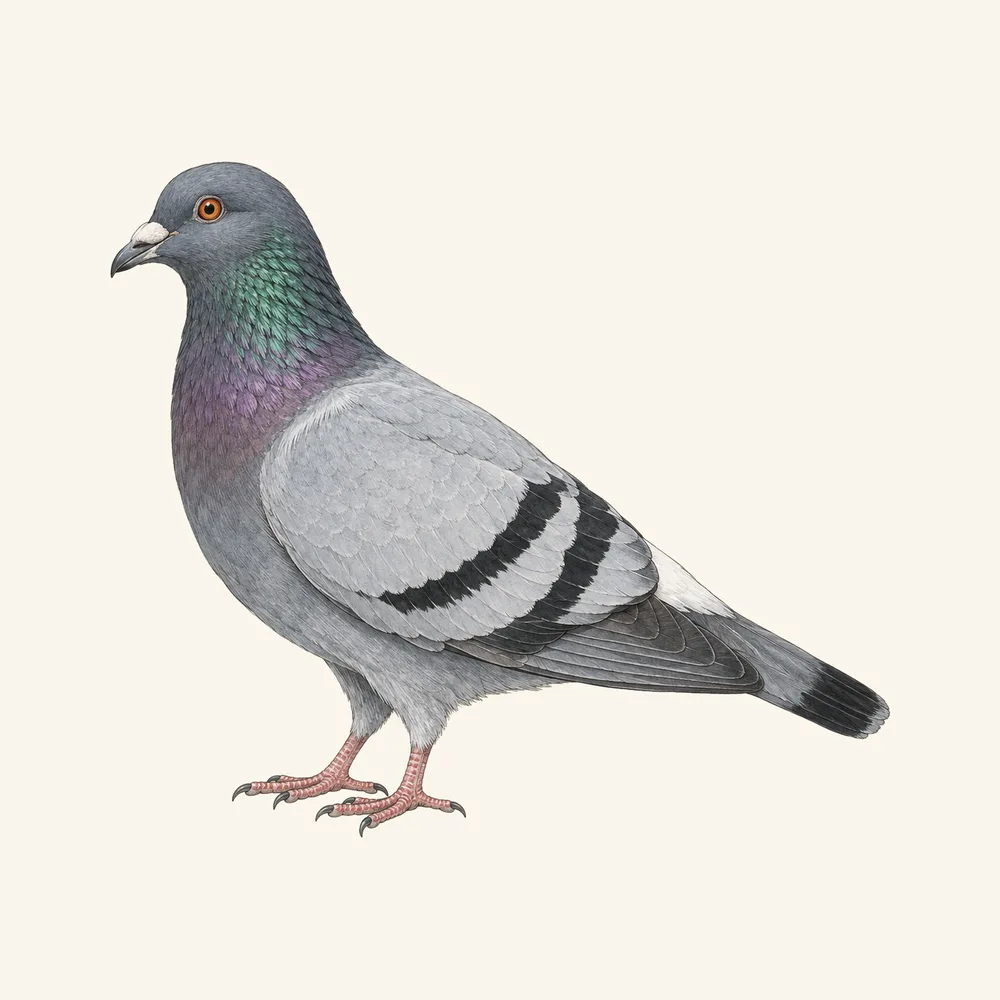
Feral Pigeon
Columba livia
The neck settles it. An adult woodpigeon has a bold white patch on each side of the neck and a broad white band across the wing, obvious in flight. A feral pigeon has no white neck patch and no white wing band; if it shows white at all it is on the lower back. A woodpigeon is also distinctly bigger, rounder and heavier-headed.
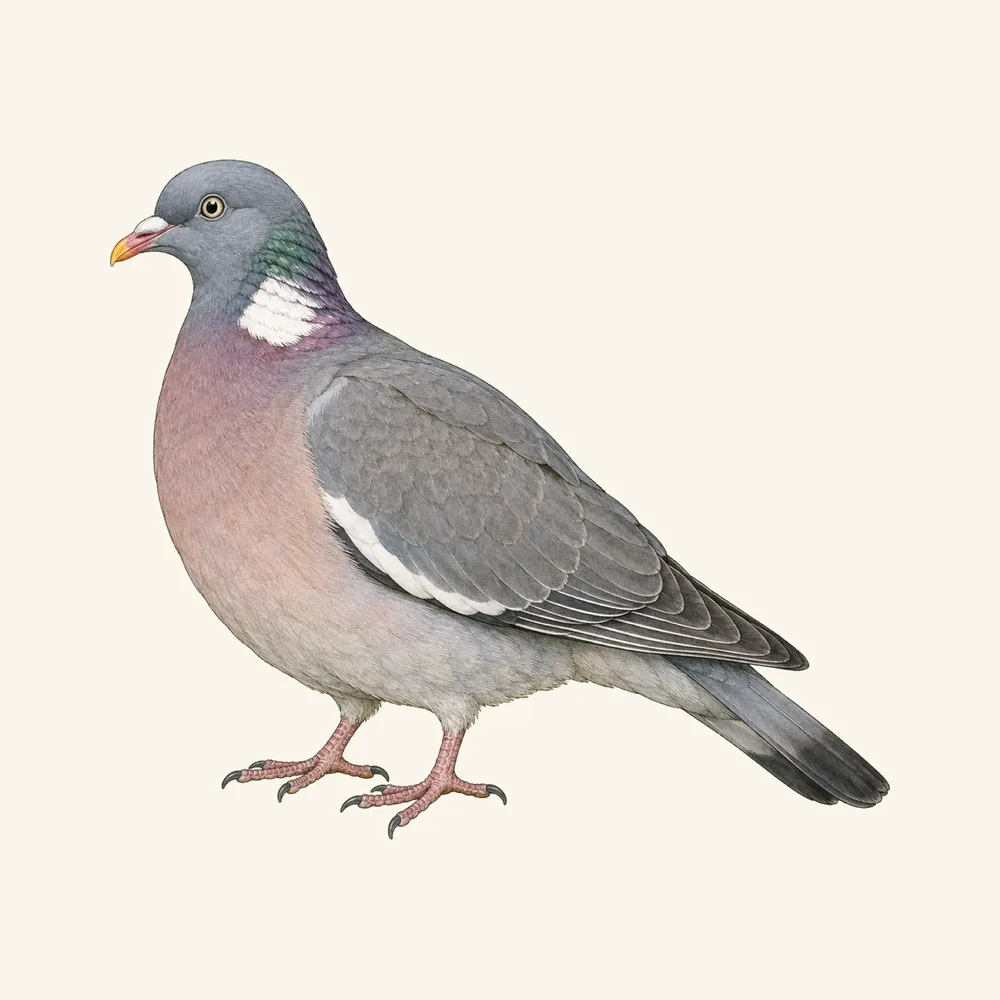
Woodpigeon
Columba palumbus
Feral pigeons vary wildly in colour — chequered, blue-grey, white, rusty — and have no white neck patch. Woodpigeons are all the same colour as each other, and look small-headed by comparison.
Side by side
| Feral Pigeon | Woodpigeon | |
|---|---|---|
| Size | Around 32cm, noticeably smaller and neater than a woodpigeon, with a shorter tail and a more compact head. | The biggest common garden bird at about 41cm — twice a blackbird |
| Where you'll see it | Roofs, ledges, walls, gutters, paving and lawns, and under feeders picking up spilt seed. | Lawns, tree canopies, roof ridges, and under feeders hoovering spillage |
| What it eats | Seeds, grain and scraps taken from the ground; spilt sunflower hearts and dropped bread in towns. | Leaves, buds, seed, grain, berries — and brassicas, to a gardener's cost |
| When | Resident all year, and one of very few UK birds that can raise young in any month if food is steady. | Resident, all twelve months |
| Status | Not assessed as a separate species. BTO BirdFacts covers Feral Pigeon under Rock Dove (Columba livia), which is "Green listed" on UK Birds of Conservation Concern and "Least Concern" on the IUCN Red List. | Amber listed |
Still not sure? Describe what you saw and we will rank every garden bird against it — including these two.
Both descriptions are taken from the species pages, which cite the BTO and RSPB. Reviewed 2026-09-20.