Dunnock or Robin?
These two get mixed up constantly. Here is what actually separates them, taken from each bird's own page.
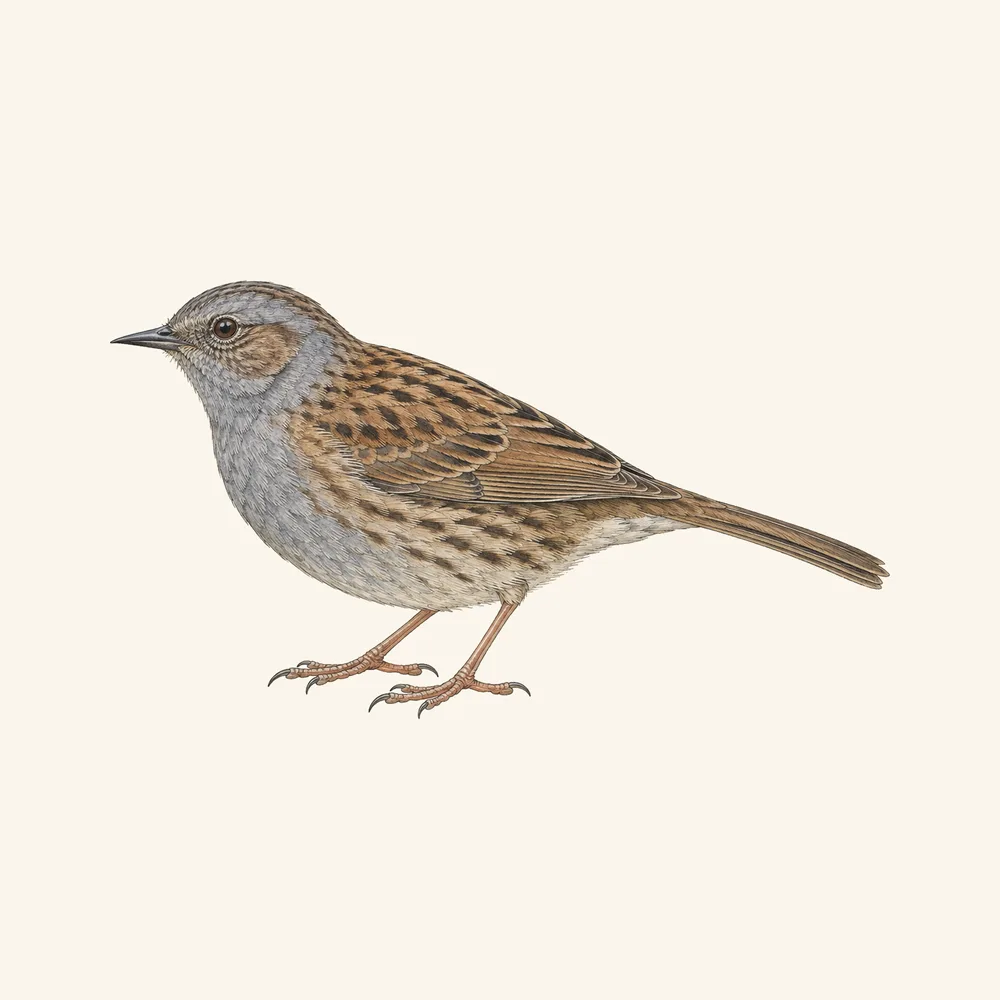
Dunnock
Prunella modularis
Juvenile robins in summer are mottled brown with no red and get mistaken for dunnocks. A young robin still stands tall and upright and has the robin's large dark eye in a plain face; a dunnock stands low and horizontal and is plain grey on the throat and breast with a streaked back.
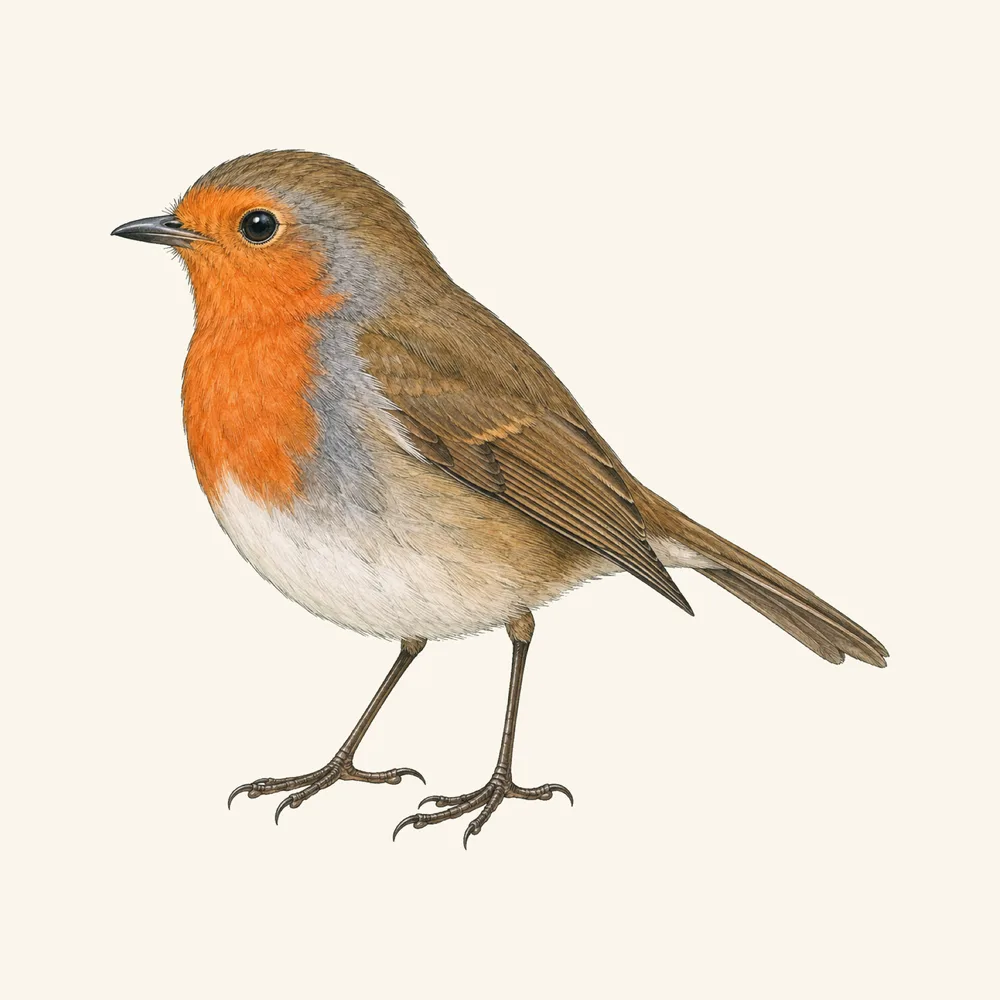
Robin
Erithacus rubecula
A similar size and also shuffling about under the hedge, but a dunnock is grey and streaky brown with no orange anywhere, and has a fine, sharp insect-eater's bill rather than the robin's stubby one. Dunnocks creep along the ground with the body held low; robins stand tall and still between hops.
Side by side
| Dunnock | Robin | |
|---|---|---|
| Size | Almost exactly robin-sized at 14cm, but held lower and flatter, so it looks smaller. | The reference bird — about 14cm, round-bodied, with a habitually upright stance. |
| Where you'll see it | On the ground under hedges, shrubs and feeders; very rarely on the feeder itself. | Low perches, borders and freshly dug soil; on the ground far more than on feeders. |
| What it eats | Small insects, spiders and other invertebrates, plus very small seeds in winter. | Worms, beetles, spiders and other invertebrates; berries and seeds in winter, plus mealworms and suet. |
| When | Resident all year, and one of the few garden birds you can find singing in January. | Resident all year. Territories are held by both sexes through the winter. |
| Status | Amber listed | Green listed |
Still not sure? Describe what you saw and we will rank every garden bird against it — including these two.
Both descriptions are taken from the species pages, which cite the BTO and RSPB. Reviewed 2026-09-20.