Common frog or Smooth newt?
These two get mixed up constantly. Here is what actually separates them, taken from each bird's own page.
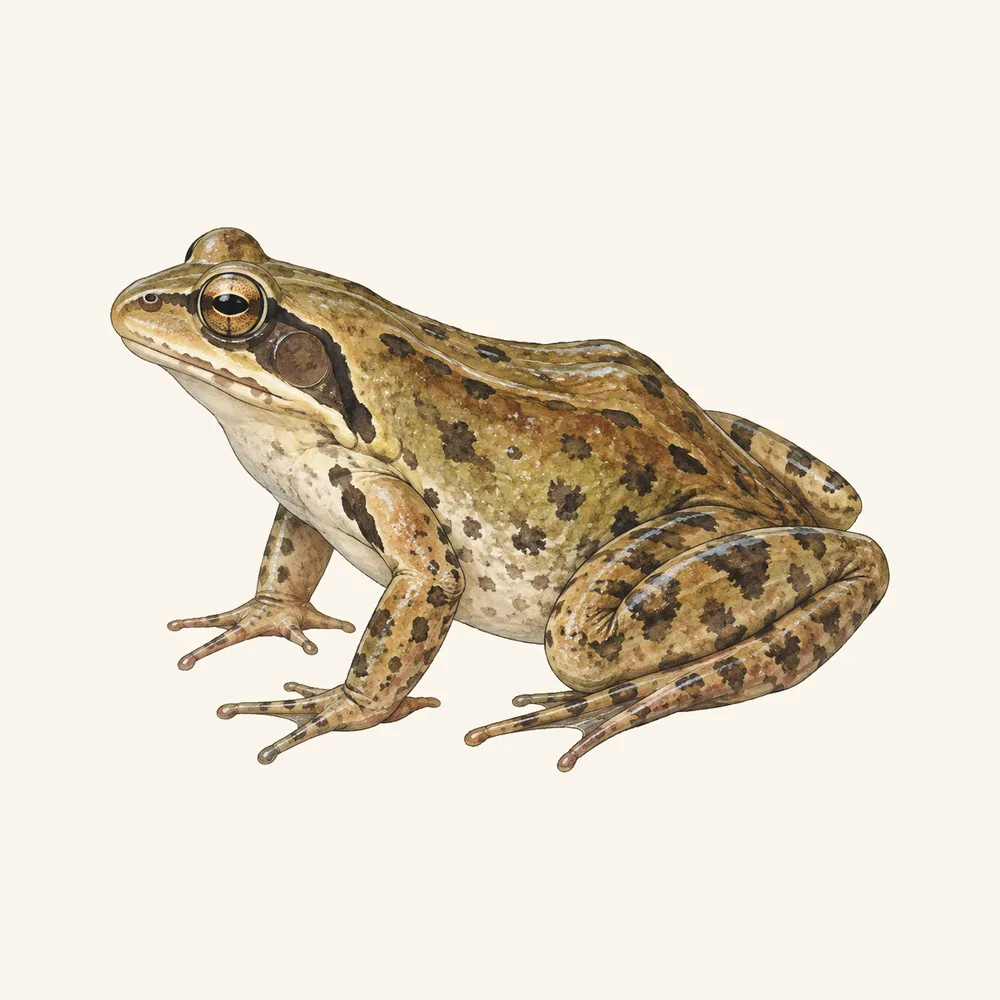
Common frog
Rana temporaria
A newt keeps its tail for life and walks on four legs with a lizard-like body; a froglet leaving the pond has already absorbed its tail and hops. If it has a tail and it hops, look again — you are probably seeing a tadpole part-way through metamorphosis.
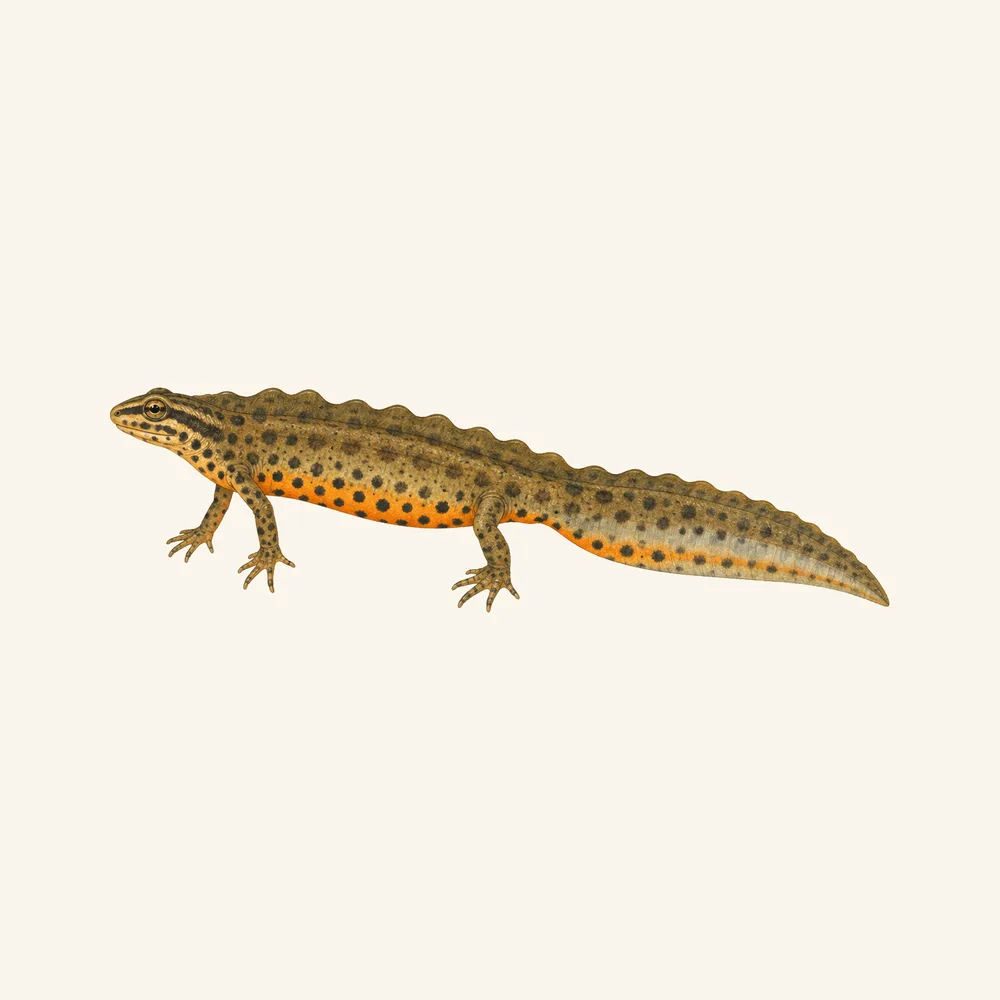
Smooth newt
Lissotriton vulgaris
Side by side
| Common frog | Smooth newt | |
|---|---|---|
| Size | About robin-sized in bulk — an adult is roughly 6-9cm from snout to vent, with long folded back legs. | Adults up to 10cm nose to tail tip (Froglife) — far smaller than a robin, and slimmer than it looks in water. |
| What it eats | Slugs, snails, worms, woodlice, beetles and flies, caught with the tongue. Tadpoles start on algae and move to animal food. | A wide variety of invertebrates — worms, slugs, insect larvae, water fleas — and frog tadpoles in spring. |
| Status | No Great Britain Red List assessment verified for this species. Froglife's concern is with disease — chiefly ranavirus — rather than with a formal Red List category, and the two should not be conflated. | No Great Britain Red List assessment verified for this species. Froglife describes it as widespread throughout Britain and Ireland; we will not convert that into a Red List category we have not seen. |
Still not sure? Describe what you saw and we will rank every garden bird against it — including these two.
Both descriptions are taken from the species pages, which cite the BTO and RSPB. Reviewed 2026-09-20.