Common frog or Common toad?
These two get mixed up constantly. Here is what actually separates them, taken from each bird's own page.
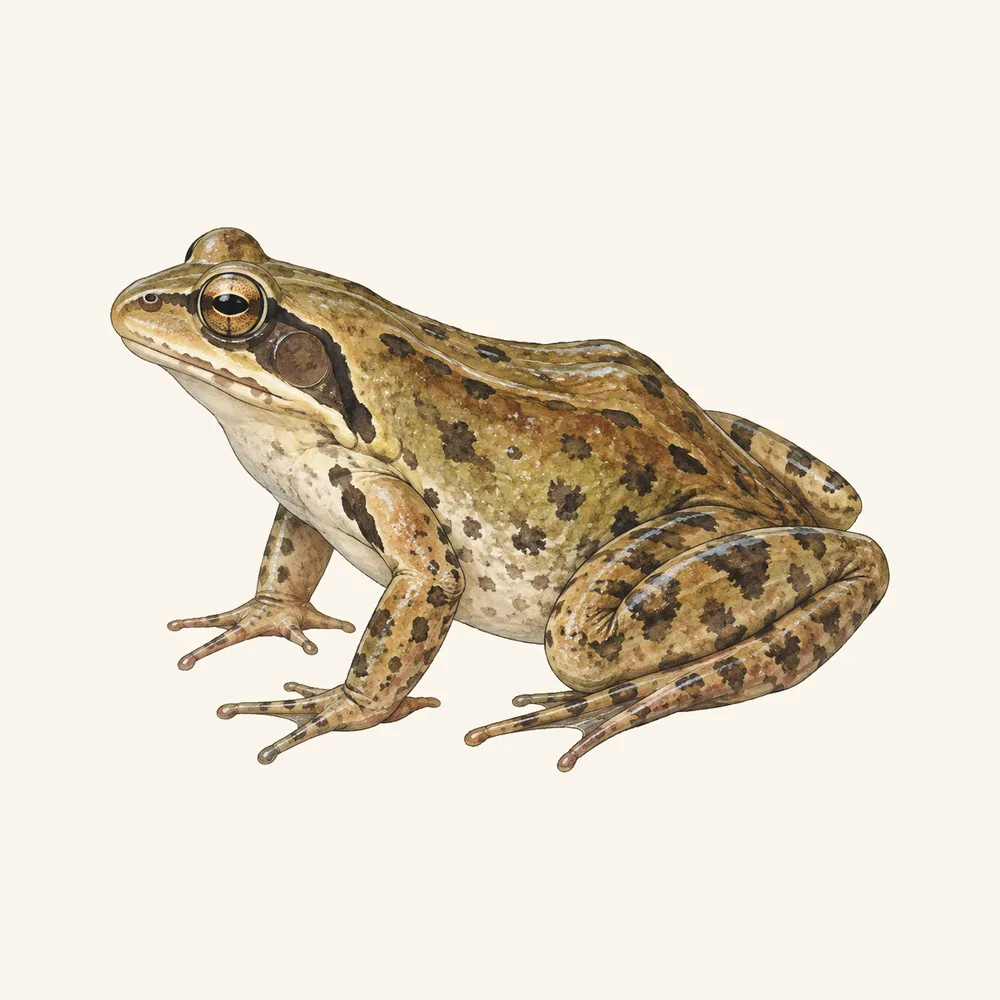
Common frog
Rana temporaria
The clincher is the skin and the gait. A frog has smooth, moist, often shiny skin and moves in long hops; a toad has dry, warty skin and walks or crawls, hopping only reluctantly. In the pond, the spawn settles it beyond argument: frogs lay clumps of jelly, toads lay long double strings wound through plant stems.
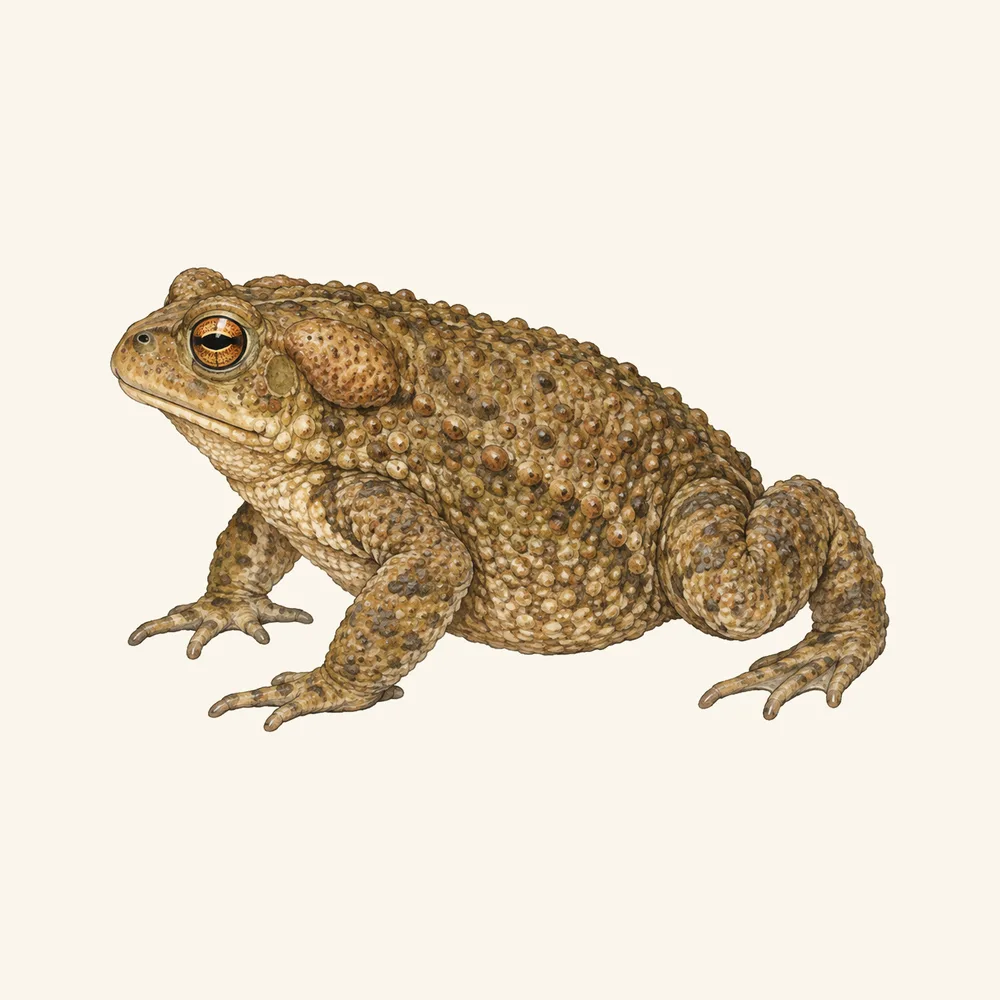
Common toad
Bufo bufo
Skin and movement give it away every time. A toad's skin is dry, matt and warty and it walks; a frog's is smooth, moist and often shiny and it hops in long leaps. Add the eye — a toad's is coppery gold with a horizontal pupil — and the raised parotoid glands behind the toad's eyes, which a frog does not have. In the water, spawn is decisive: strings for toads, clumps for frogs.
Side by side
| Common frog | Common toad | |
|---|---|---|
| Size | About robin-sized in bulk — an adult is roughly 6-9cm from snout to vent, with long folded back legs. | Bigger and heavier than a frog, and bulkier than a robin — females commonly reach 8-13cm and are noticeably larger than males. |
| What it eats | Slugs, snails, worms, woodlice, beetles and flies, caught with the tongue. Tadpoles start on algae and move to animal food. | Slugs, snails, worms, woodlice, ants and beetles — one of the most effective slug predators a garden can host. |
| Status | No Great Britain Red List assessment verified for this species. Froglife's concern is with disease — chiefly ranavirus — rather than with a formal Red List category, and the two should not be conflated. | No Great Britain Red List assessment verified for this species. |
Still not sure? Describe what you saw and we will rank every garden bird against it — including these two.
Both descriptions are taken from the species pages, which cite the BTO and RSPB. Reviewed 2026-09-20.