Collared Dove or Woodpigeon?
These two get mixed up constantly. Here is what actually separates them, taken from each bird's own page.
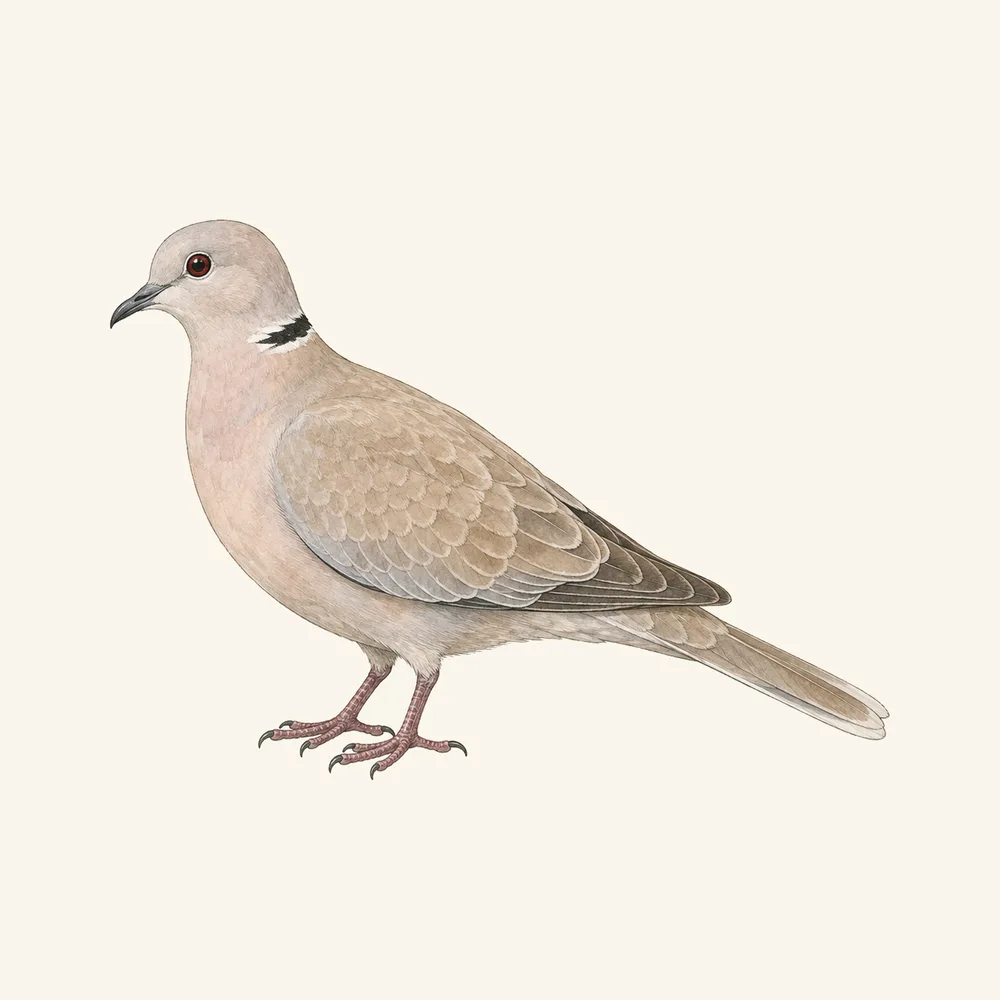
Collared Dove
Streptopelia decaocto
The neck mark decides it. A collared dove has a thin black half-collar across the back of the neck only; a woodpigeon has a bold white patch on the side of the neck with a green and purple gloss. A woodpigeon is also far bulkier, greyer, and shows a broad white band across the wing in flight, which a collared dove never does.
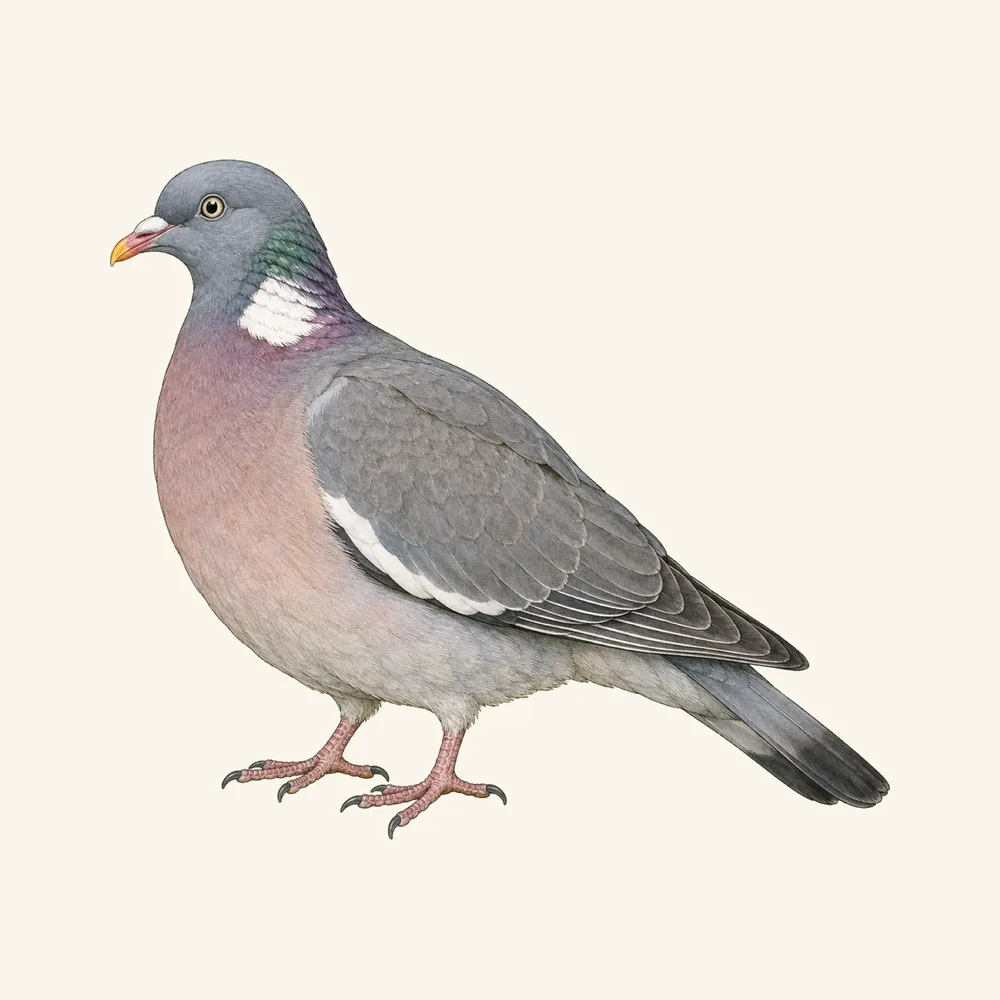
Woodpigeon
Columba palumbus
Much smaller, sandy-buff rather than grey and pink, with a thin black half-collar on the back of the neck and a long tail with white corners. Its call is a monotonous three-note coo-COO-cuk, not the woodpigeon's five.
Side by side
| Collared Dove | Woodpigeon | |
|---|---|---|
| Size | About 32cm — clearly smaller and much slimmer than a woodpigeon, with a longer tail. | The biggest common garden bird at about 41cm — twice a blackbird |
| Where you'll see it | On rooftops, aerials and wires, and on the ground below feeders; often two together. | Lawns, tree canopies, roof ridges, and under feeders hoovering spillage |
| What it eats | Seeds and grain taken from the ground, plus some buds, shoots and berries. | Leaves, buds, seed, grain, berries — and brassicas, to a gardener's cost |
| When | Resident all year; BTO notes that given favourable weather it may nest in any month of the year. | Resident, all twelve months |
| Status | Green listed | Amber listed |
Still not sure? Describe what you saw and we will rank every garden bird against it — including these two.
Both descriptions are taken from the species pages, which cite the BTO and RSPB. Reviewed 2026-09-20.