Bullfinch or Robin?
These two get mixed up constantly. Here is what actually separates them, taken from each bird's own page.
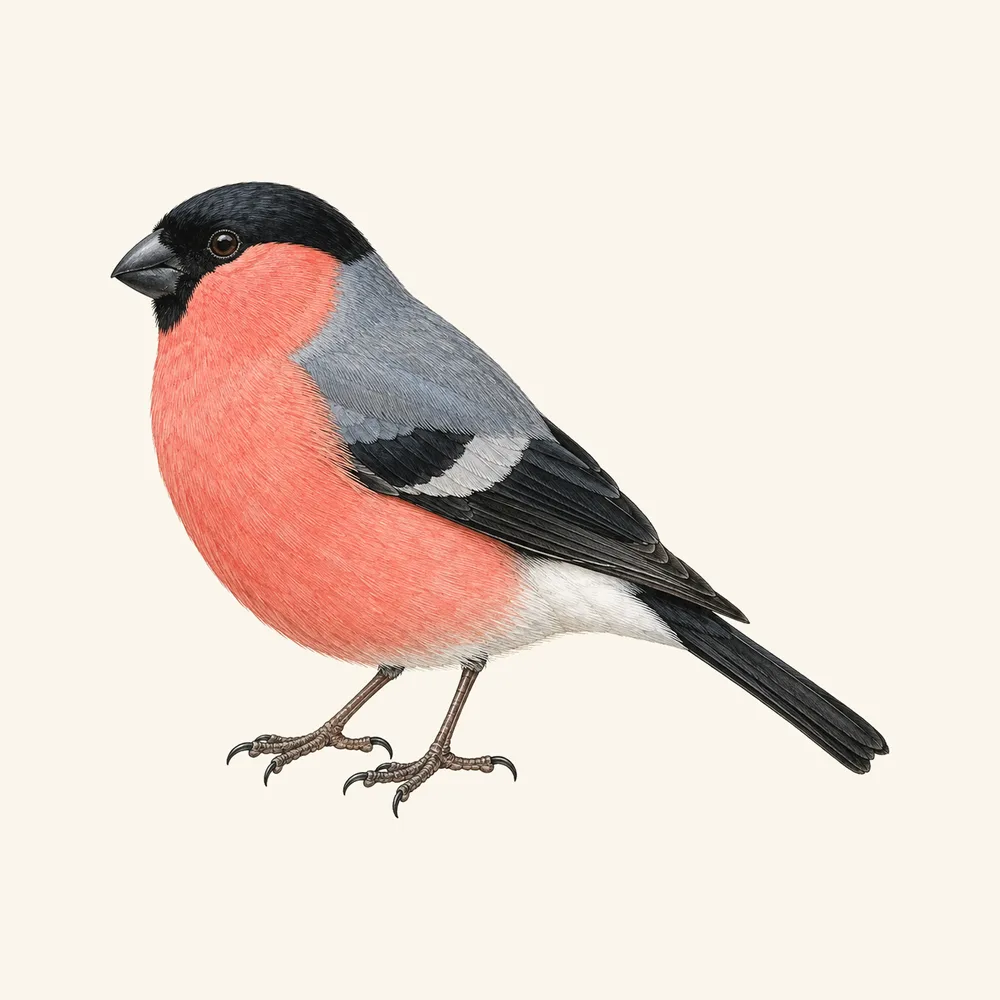
Bullfinch
Pyrrhula pyrrhula
A robin's breast is orange, not pink, and stops at the upper belly; a male bullfinch is deep rose-pink right down the underparts. The robin also has a plain brown head with a big dark eye and a fine bill, against the bullfinch's black cap and thick stubby bill. And a robin has no white rump.
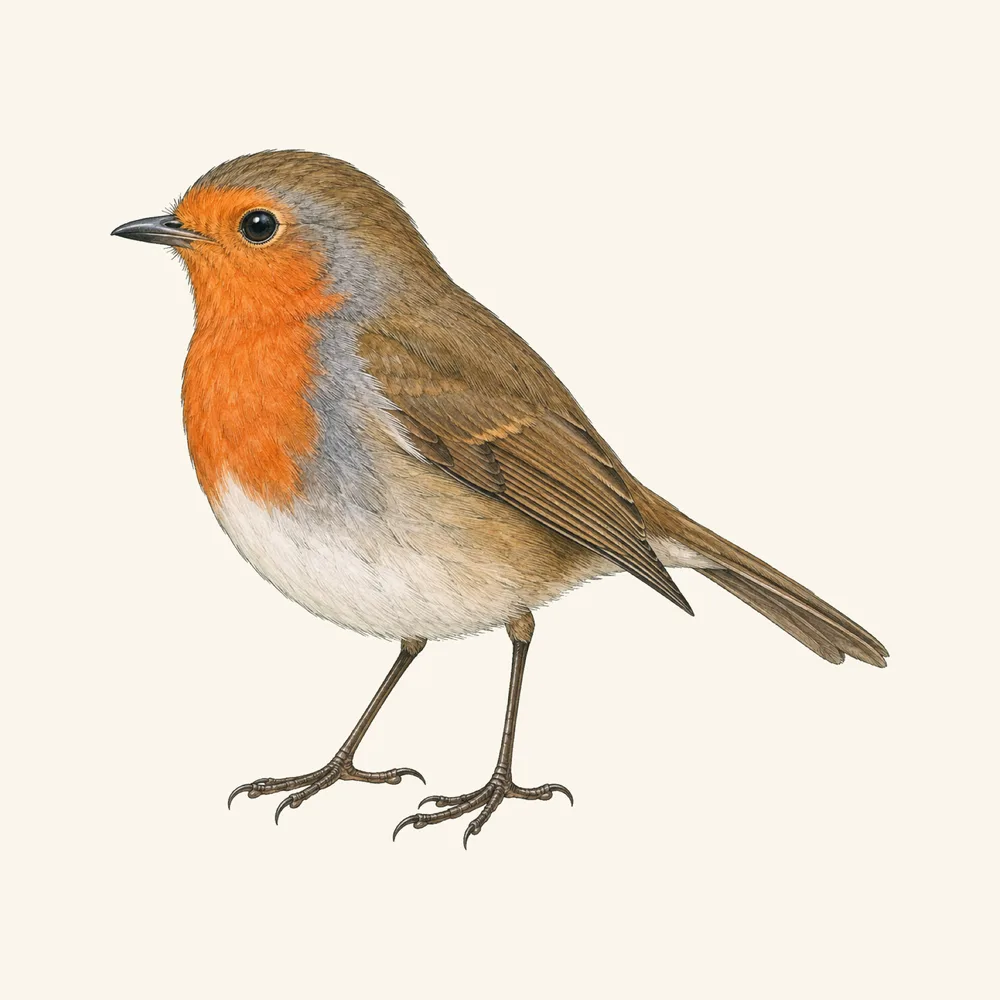
Robin
Erithacus rubecula
A male bullfinch's underparts are a far deeper pinkish-red than a robin's orange, and the red covers the whole breast and belly. It also has a solid black cap and a thick, stubby black bill, and shows a bright white rump as it flies away — a robin shows none.
Side by side
| Bullfinch | Robin | |
|---|---|---|
| Size | A little larger and much heavier-built than a robin — thick-necked, round-bodied, with a stubby bill. | The reference bird — about 14cm, round-bodied, with a habitually upright stance. |
| Where you'll see it | Inside hedges and large shrubs and along woodland edge; occasionally on sunflower hearts, always close to cover. | Low perches, borders and freshly dug soil; on the ground far more than on feeders. |
| What it eats | Seeds of ash, nettle, dock and bramble; tree and shrub buds in late winter and spring; some insects for the young. | Worms, beetles, spiders and other invertebrates; berries and seeds in winter, plus mealworms and suet. |
| When | Resident all year. Most conspicuous in late winter and early spring when feeding on buds. | Resident all year. Territories are held by both sexes through the winter. |
| Status | Amber listed | Green listed |
Still not sure? Describe what you saw and we will rank every garden bird against it — including these two.
Both descriptions are taken from the species pages, which cite the BTO and RSPB. Reviewed 2026-09-20.