Blue Tit or Long-tailed Tit?
These two get mixed up constantly. Here is what actually separates them, taken from each bird's own page.
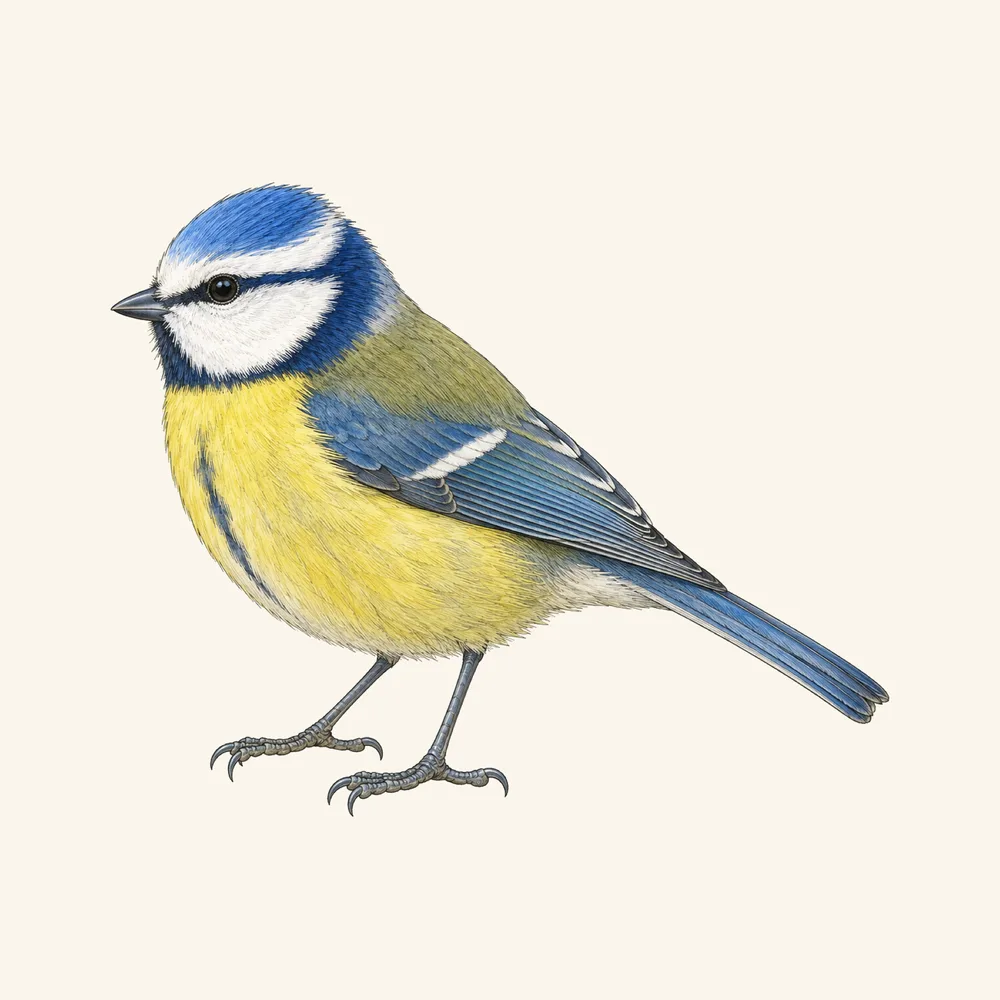
Blue Tit
Cyanistes caeruleus
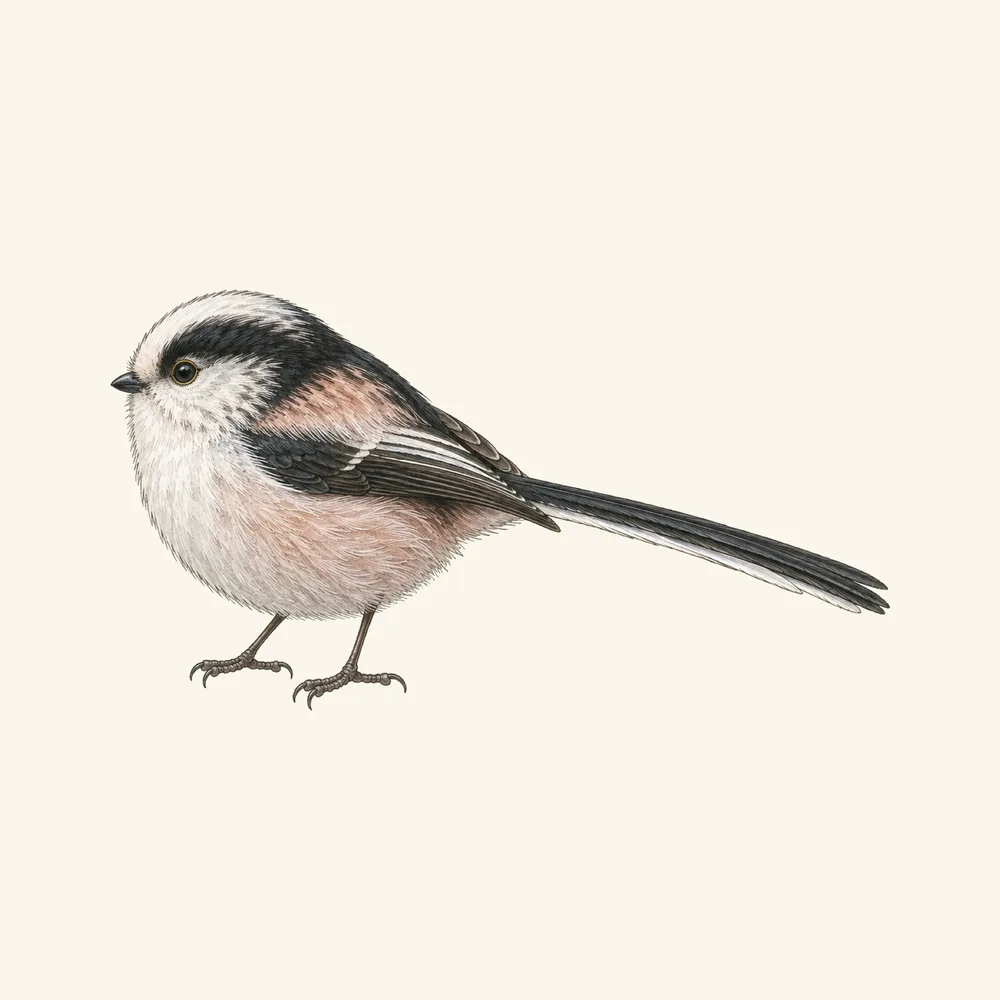
Long-tailed Tit
Aegithalos caudatus
The honest confusion is not the bird but the flock — a party working along a hedge sounds and moves like tits, and long-tailed tits do travel with them. Look at the silhouette rather than the colour: a blue tit is a compact blob with a stub of tail, a long-tailed tit trails a tail as long as the rest of it, and it is white-headed with a black eye stripe rather than blue-capped.
Side by side
| Blue Tit | Long-tailed Tit | |
|---|---|---|
| Size | Smaller than a robin at about 12cm — one of the smallest birds at most feeders | One of Britain's smallest birds — about 14cm total, but over half of that is tail, and the body weighs under 10g. |
| Where you'll see it | Feeders, the outer twigs of trees and shrubs, and any hole it can peer into | Suet and sunflower feeders, hedges and the outer twigs of trees; almost never on the ground. |
| What it eats | Insects and caterpillars in summer; seeds, nuts and fat in winter | Insects, spiders and moth and butterfly eggs; increasingly suet and sunflower hearts in winter. |
| When | Resident, all twelve months | All year, but flock visits to gardens peak from October to March. |
| Status | Green listed | Green listed |
Still not sure? Describe what you saw and we will rank every garden bird against it — including these two.
Both descriptions are taken from the species pages, which cite the BTO and RSPB. Reviewed 2026-09-20.