Blackbird or Starling?
These two get mixed up constantly. Here is what actually separates them, taken from each bird's own page.
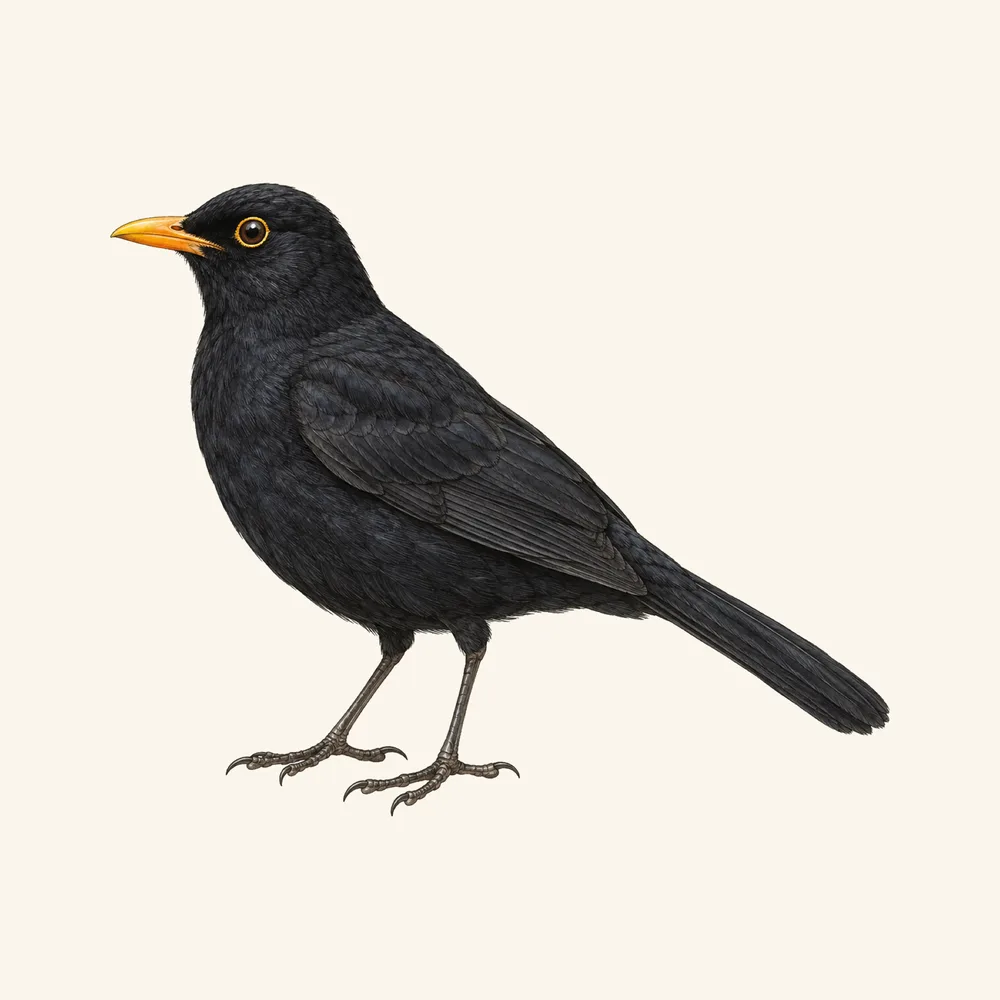
Blackbird
Turdus merula
Movement first: a blackbird hops and pauses, a starling walks continuously. Then the tail — long on a blackbird, short and triangular on a starling. In good light the starling shows green and purple gloss and pale spangles; the male blackbird is matt black with a yellow eye-ring.
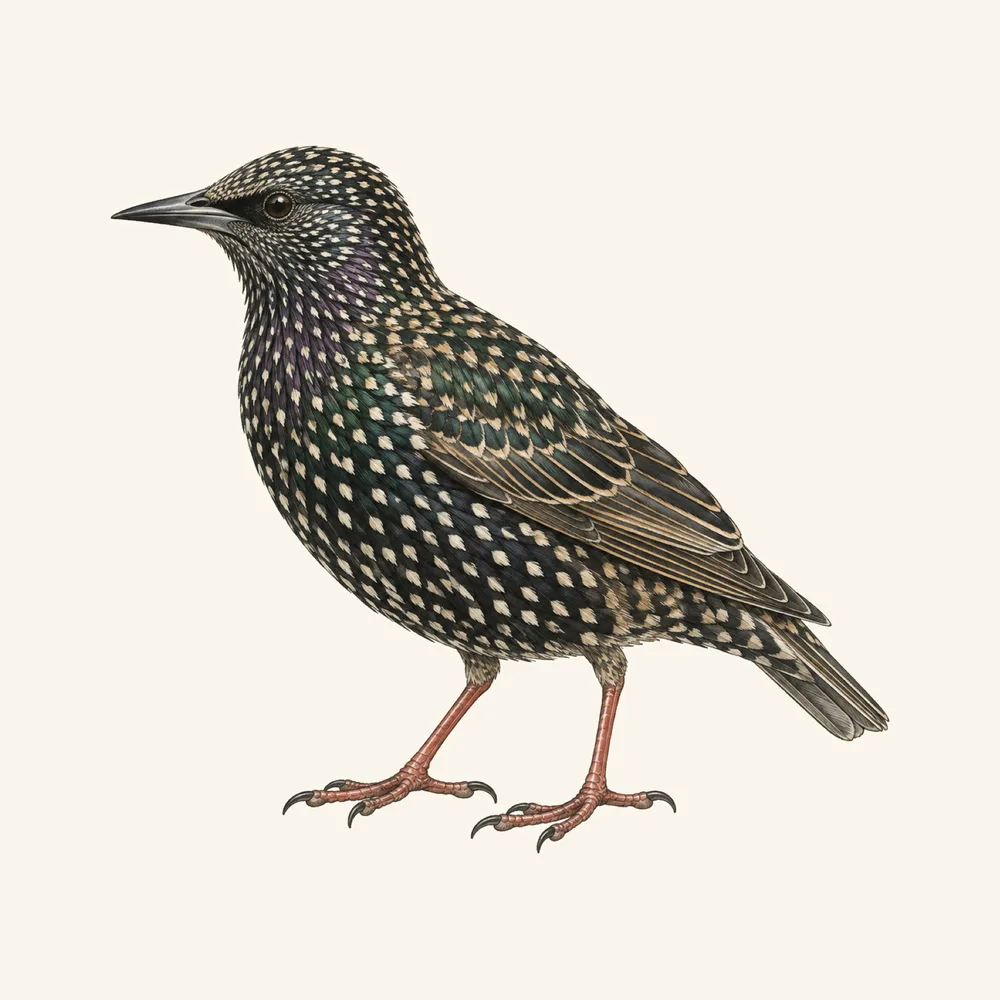
Starling
Sturnus vulgaris
Watch how it moves on the lawn. A starling walks, steadily and busily, and has a short triangular tail. A blackbird hops, pauses, cocks its long tail and listens. Close up the starling is spangled and glossy green-purple; a male blackbird is matt black with a yellow eye-ring.
Side by side
| Blackbird | Starling | |
|---|---|---|
| Size | About 25cm — the reference bird other species get measured against | Blackbird-sized at about 21cm, but shorter-tailed and more upright |
| Where you'll see it | On the lawn, under hedges, in leaf litter, and on the ground below feeders | Probing a short lawn, on rooftops and aerials, mobbing the fat feeder |
| What it eats | Earthworms and insects in spring; berries and windfall fruit in autumn | Leatherjackets and other soil grubs; fruit, suet and seed the rest of the year |
| When | Resident, all year, with continental birds joining in winter | Resident, all year, with continental birds swelling numbers in winter |
| Status | Green listed | Red listed |
Still not sure? Describe what you saw and we will rank every garden bird against it — including these two.
Both descriptions are taken from the species pages, which cite the BTO and RSPB. Reviewed 2026-09-20.