Blackbird or Fieldfare?
These two get mixed up constantly. Here is what actually separates them, taken from each bird's own page.
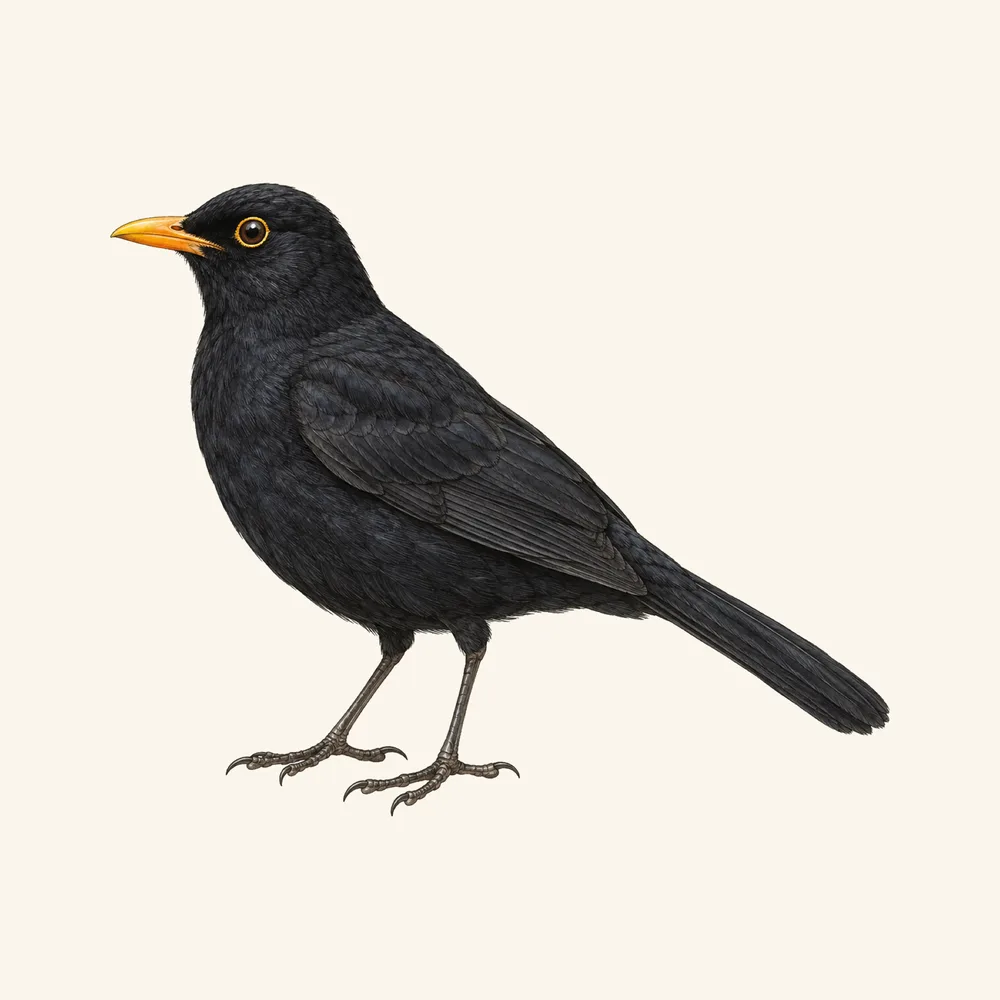
Blackbird
Turdus merula
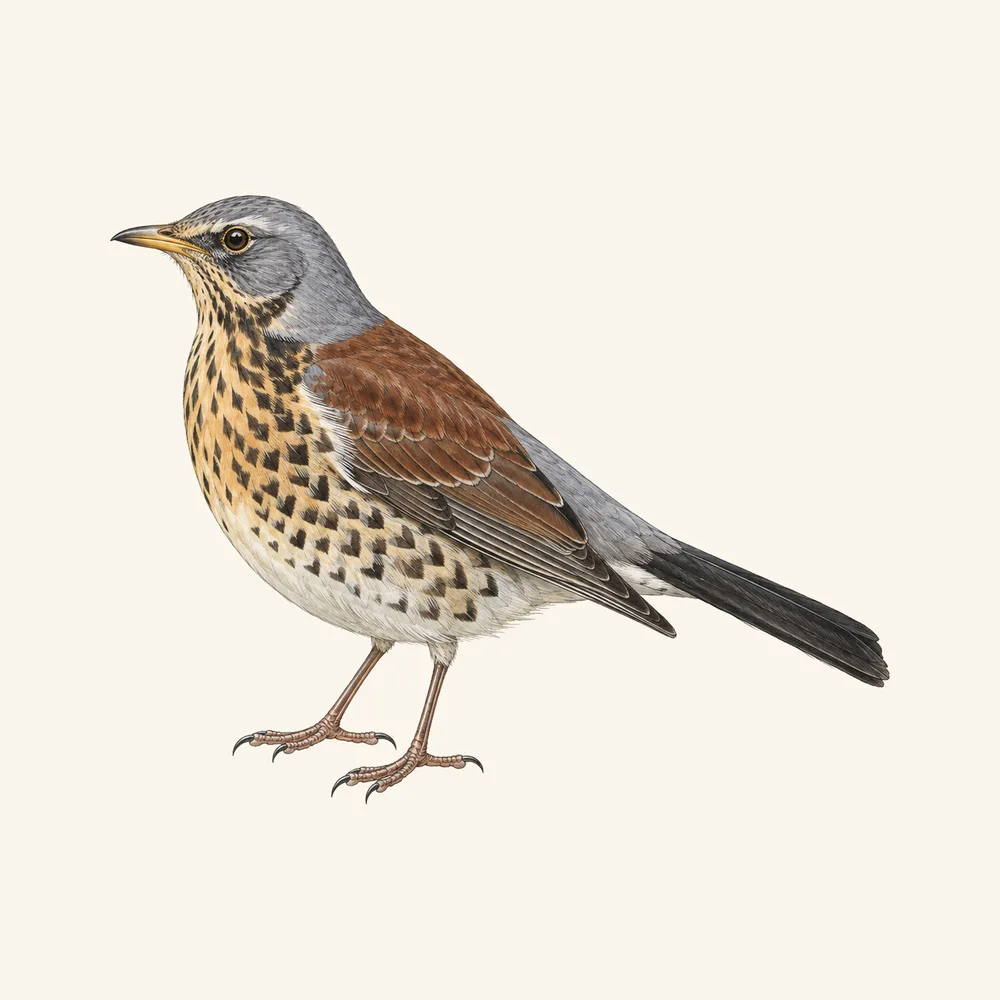
Fieldfare
Turdus pilaris
A female blackbird is plain dark brown with faint mottling, a dull yellowish bill and no grey anywhere. A fieldfare is boldly patterned, with a blue-grey head and rump against a chestnut back, and black chevrons on an ochre breast. Fieldfares also arrive in flocks; blackbirds in gardens are usually singles or pairs.
Side by side
| Blackbird | Fieldfare | |
|---|---|---|
| Size | About 25cm — the reference bird other species get measured against | Larger than a blackbird — the biggest thrush most gardens will see, and noticeably long-winged and upright. |
| Where you'll see it | On the lawn, under hedges, in leaf litter, and on the ground below feeders | On lawns, playing fields and under fruit trees in cold weather, and stripping berried hedges. Not a feeder bird. |
| What it eats | Earthworms and insects in spring; berries and windfall fruit in autumn | Berries and windfall fruit above all, plus earthworms and invertebrates taken from open, unfrozen ground. |
| When | Resident, all year, with continental birds joining in winter | October to April only. BTO gives arrival on eastern coasts in early October and peak numbers November to March. |
| Status | Green listed | Red listed |
Still not sure? Describe what you saw and we will rank every garden bird against it — including these two.
Both descriptions are taken from the species pages, which cite the BTO and RSPB. Reviewed 2026-09-20.