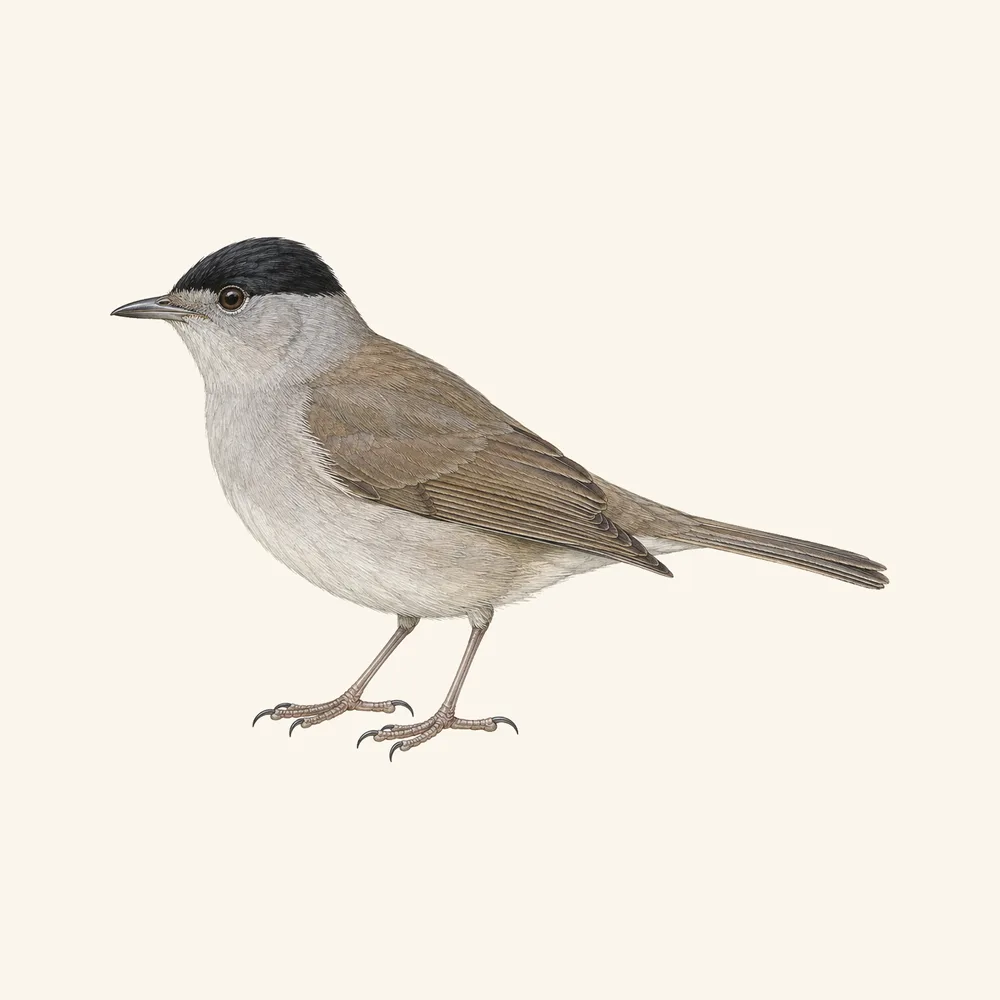
Blackcap
Sylvia atricapilla
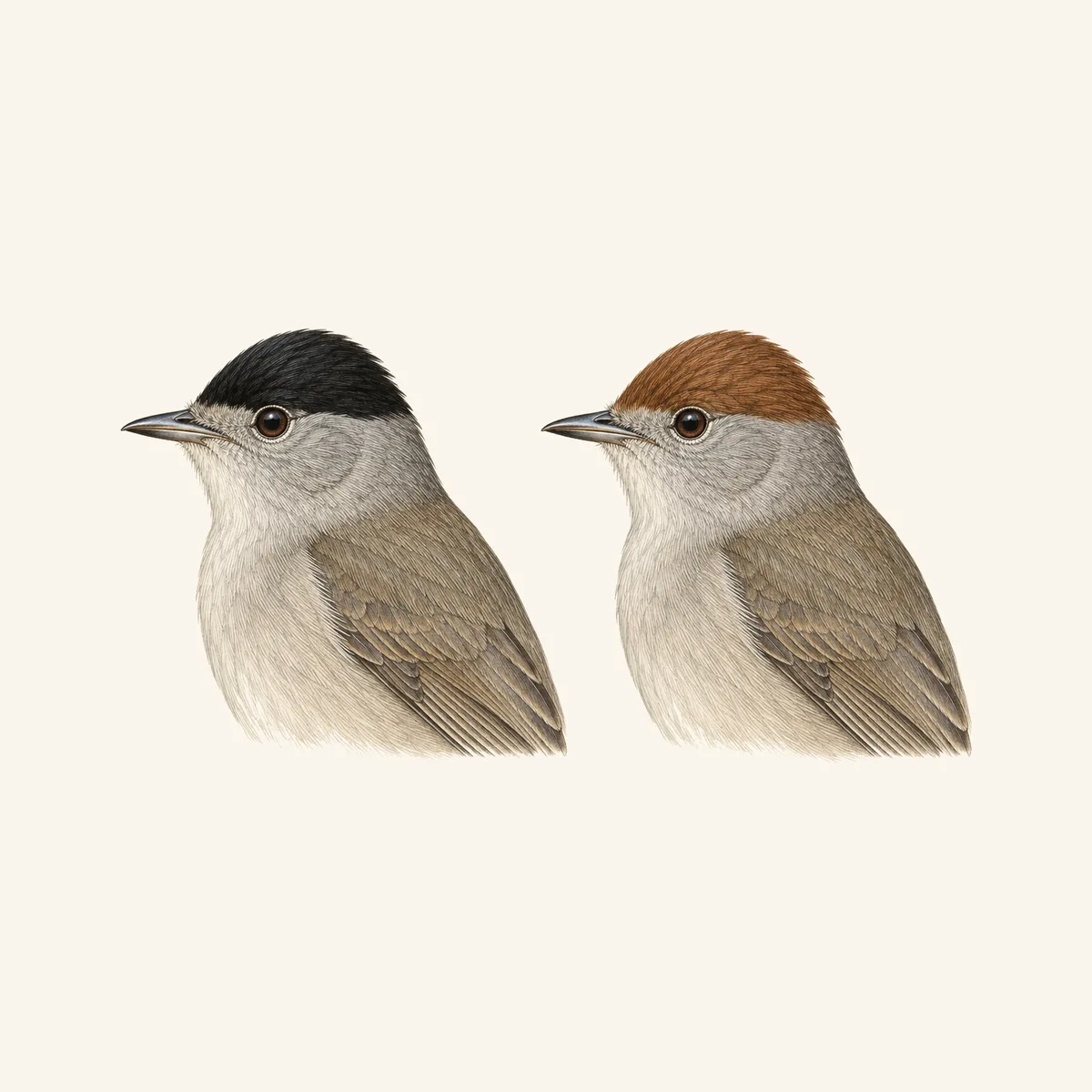
A grey warbler with a neat cap — black on the male, red-brown on the female. Increasingly spends the winter in UK gardens.
In many gardens
Widespread as a breeding bird from April, singing from cover rather than showing itself. A separate, smaller population winters here, and BTO records garden numbers peaking in late January or February.
Green list
Not currently of conservation concern in the UK.
Birds of Conservation Concern 5 records this species as “Green listed”, with a UK population trend of +371% (1967 to 2024). BTO states that blackcap abundance in the UK has increased consistently since the late 1970s across all habitats, with an extraordinary acceleration of the upward trend between 2008 and 2013. Source.
- Wildlife and Countryside Act 1981, section 1 — It is an offence to intentionally kill, injure or take any wild bird, or to take, damage or destroy the nest of any wild bird while that nest is in use or being built, or to take or destroy its eggs. law
At a glance
-
Size
Robin-sized but slimmer and longer-tailed, with a flatter head and a much finer bill.
-
Where you'll see it
Inside dense shrubs, hedges and ivy; at fat blocks and berrying shrubs in winter, rarely out in the open.
-
What it eats
Insects and caterpillars in the breeding season; berries, fruit, fat and suet from autumn through winter.
-
When
Breeding birds arrive around April and leave in autumn; a different set of birds arrives from central Europe to winter here.
-
Nests
A flimsy cup low in brambles, ivy or dense shrubs. Will not use a nestbox of any kind.
-
Song
A fast scratchy chatter that opens out into a loud, pure, fluting finish — the reason it is called the northern nightingale.
Not to be confused with
- Female Blackcap reported as a separate bird — The single commonest blackcap error in UK gardens. The female's cap is red-brown, not black, and people reasonably assume a bird called a blackcap must have a black one. Everything else matches the male exactly: same size, same plain grey body, same sharply cut cap edge level with the eye, same fine bill. Juveniles of both sexes also have the brown cap. If a grey warbler has a crisply defined chestnut beret, it is a female blackcap.
- Marsh Tit and Willow Tit — Both have black caps, which is where the confusion starts, but the cap extends down over the nape and they have an obvious black bib under the bill. A blackcap has no bib, and its cap stops neatly at eye level. The tits also have pale buff flanks and a stubby seed-eater's bill, against the blackcap's uniform grey and needle-fine bill.
- Garden Warbler — The song is genuinely similar and this catches experienced birders out. The plumage does not: a garden warbler is entirely plain, a featureless warm olive-brown with no cap at all. If you can see a cap of any colour, it is not a garden warbler. Garden warblers are also scarce in gardens despite the name, and never appear at feeders.
Through the year
Spring
Males sing from dense cover from April. Do not cut hedges, brambles or ivy now — blackcap nests sit low in exactly that material and are very easily destroyed.
Summer
Feeding young on caterpillars deep inside shrubs. Leave a section of hedge and the bramble at the back of the garden uncut.
Autumn
Breeding birds leave for the Mediterranean through September and October, while birds from central Europe begin arriving to winter here. Leave berries on ivy and holly.
Winter
Garden numbers peak in late January and February. Keep a fat block going and leave any windfall apples where they lie.
Feeding
Takes: fat blocks and suet cakes, windfall and halved apples, berries from ivy, holly and other shrubs, sunflower hearts, taken less readily than fat.
Blackcaps are fruit and fat specialists, not seed eaters, and they are startlingly aggressive over a fat block — a single wintering blackcap will monopolise it and chase off blue tits, robins and even starlings. Suet and fat balls are fine year-round in small amounts under current RSPB guidance, while seeds and peanuts are paused from 1 May to 31 October. Two feeding points rather than one will let other species get a share. Berrying shrubs and fallen apples do more for a wintering blackcap than anything you can buy.
The female is not a different bird
If you report one garden bird wrongly this year, it will probably be this. The male blackcap has a glossy black cap; the female's is a warm red-brown, and so is a juvenile's. Because the name says black, a brown-capped bird gets logged as something else entirely — most often a marsh tit or an unidentified warbler. Everything but the colour is identical between the sexes: the same neat, sharply cut edge to the cap ending level with the eye, the same plain grey body with no streaking or wing bars, the same long tail and fine, pointed bill. In a garden in January the pair will often turn up at the same fat block within minutes of each other, and side by side the shared shape is obvious. Learn the cap edge rather than the cap colour and the problem disappears.
Two different populations, going opposite ways
The blackcaps in your garden in June and the blackcaps in your garden in January are, as a rule, not the same birds. Our breeding birds arrive in April and leave for the Mediterranean and North Africa in autumn. They are replaced from about October by blackcaps that bred in central Europe — BTO names Germany and central Europe as the source — which used to winter around the Mediterranean and now come north-west to Britain instead. BTO records garden numbers peaking in late January or February, and links the shift to the food British gardeners put out, noting that the birds have become increasingly associated with the provision of supplementary food in British gardens over recent decades. It is one of the clearest cases of garden feeding visibly altering a bird's migration, and it is still in progress.
What actually helps, month by month
In summer, nothing you buy. Blackcaps nest low in brambles, ivy and dense shrubs and feed their young on caterpillars, so the useful contribution is an uncut corner and a hedge you leave alone between March and August. Check before you cut, every time — it is an offence to destroy a nest in use or being built, and a low, flimsy blackcap cup is very easy to miss. In winter the priorities flip to fat and fruit. A suet block, halved apples, and any berries left on ivy, holly or cotoneaster will hold a wintering blackcap through a cold snap. One caveat on the cotoneaster: it is listed on Schedule 9 of the Wildlife and Countryside Act 1981 in England and Wales, so while growing it in a garden is perfectly lawful, planting it in the wild is an offence — and birds eating the berries are exactly how it gets there. If your garden backs onto open country, holly or ivy does the same job without the argument. Ivy is the standout: it flowers late and fruits in the very weeks blackcaps need it, and is also where they will roost.
A small bird with a bad temper
Wintering blackcaps are notoriously quarrelsome at feeders, well out of proportion to their size. One bird will claim a fat block as a territory and spend much of the day driving other birds off it, including species considerably larger than itself. This is worth knowing for two reasons. First, it explains why your other garden birds may suddenly be using the feeders less — the answer is sitting in the hedge two metres away. Second, it argues for spreading provision out: two or three separate fat blocks on opposite sides of the garden, rather than everything clustered at one station, means the blackcap cannot guard them all. The same rotation also follows RSPB hygiene advice, which recommends moving feeders to a different spot each week and cleaning them weekly.
Plant this for it
- apple Windfall apples left under the tree are among the most reliable winter foods for a blackcap, and the tree's insects and caterpillars feed the young in summer.
- clematis A dense clematis on a fence gives the low, tangled cover blackcaps nest in and roost in, which is the one thing no feeder can supply.
Guides
How we checked this
- BTO BirdFacts: Blackcap
- RSPB: Blackcap
- RSPB: Our latest guidance on what and when to feed garden birds
- Wildlife and Countryside Act 1981, section 1
Checked against the sources above. Reviewed on 2026-09-20. Legal position checked 2026-09-20.