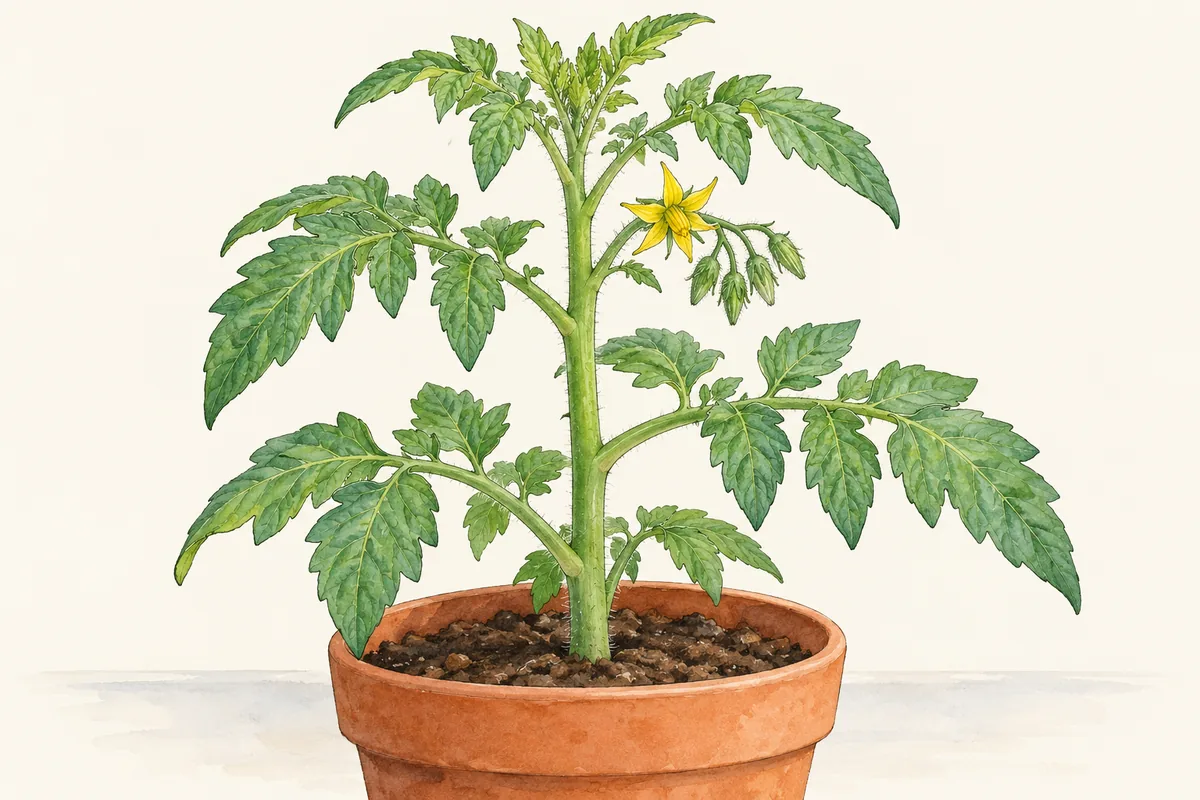
Tomatoes are quick. That's the thing most people get wrong about them. They don't need the long head start that chillies do, and a tomato sown in January spends three months getting tall, pale and fed up on a windowsill. Sow them at the right time and the whole job is easier.
In pictures
-
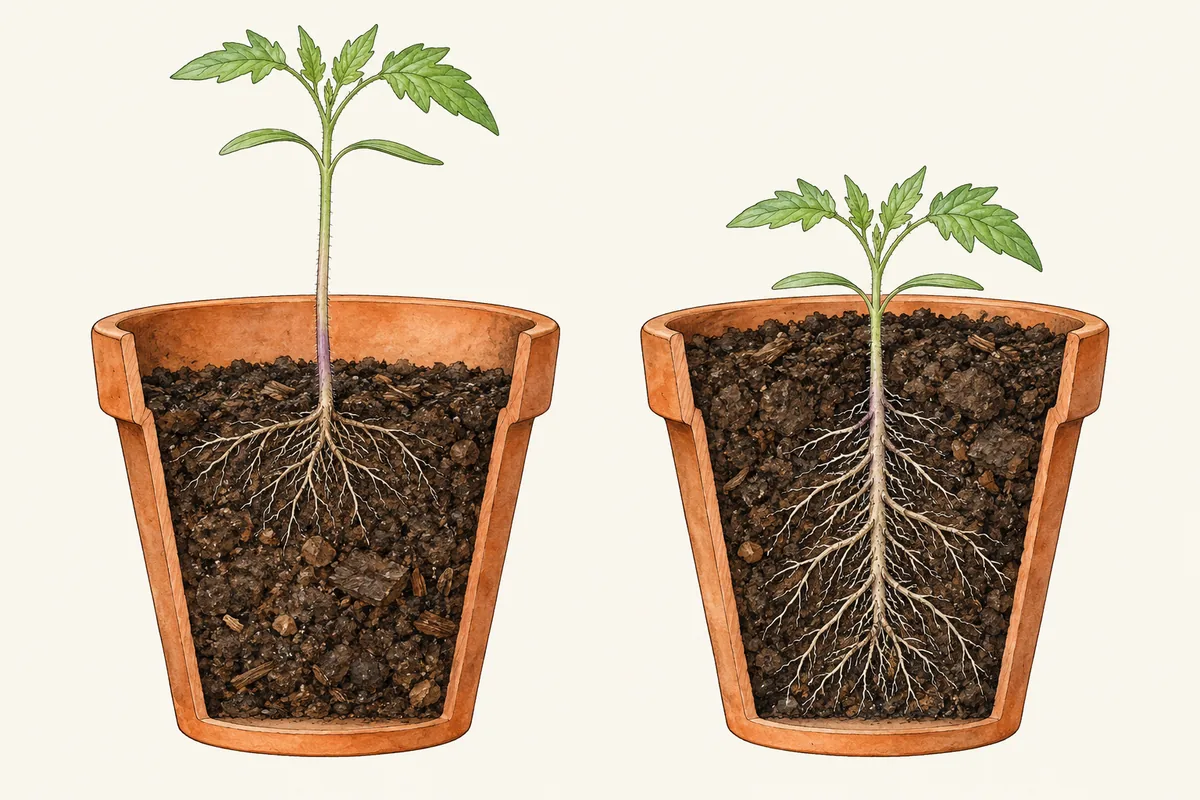
2A leggy seedling (left) replanted deeper so the first leaves sit just above the compost (right). -
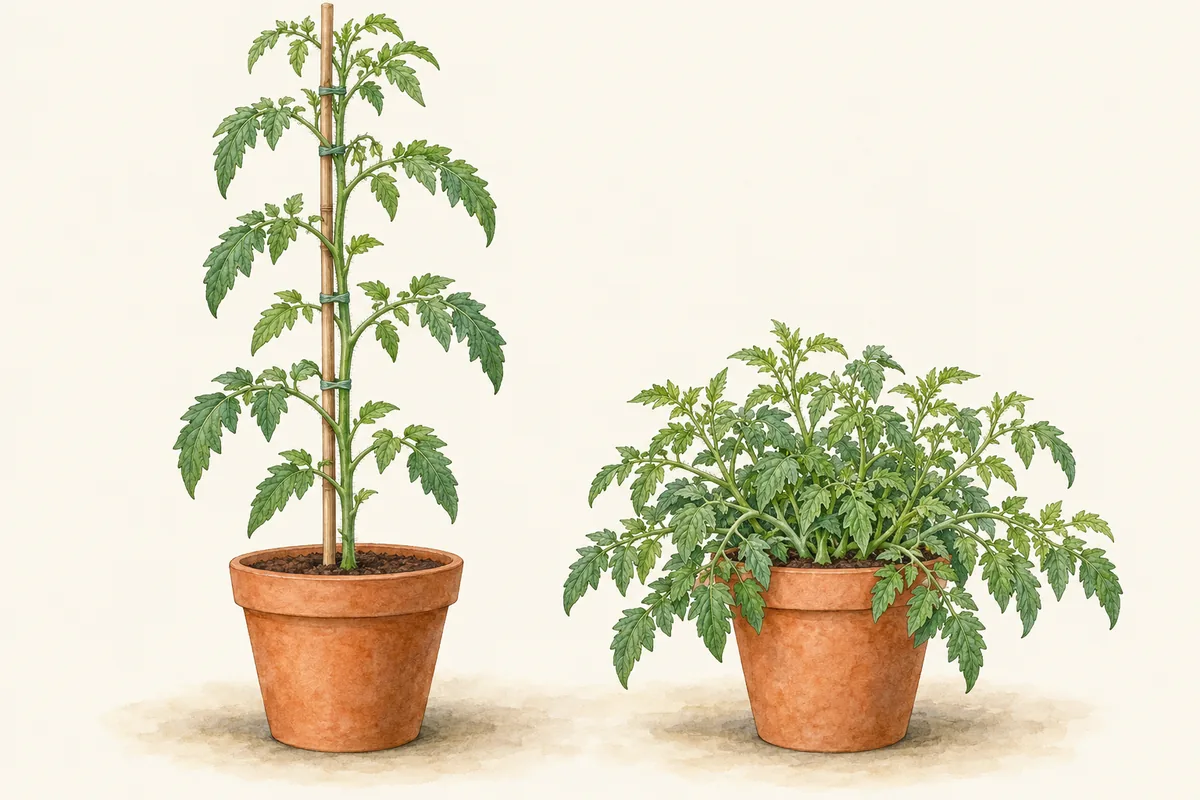
3Cordon (left): one tall stem tied to a cane. Bush (right): compact and branching, no support. -
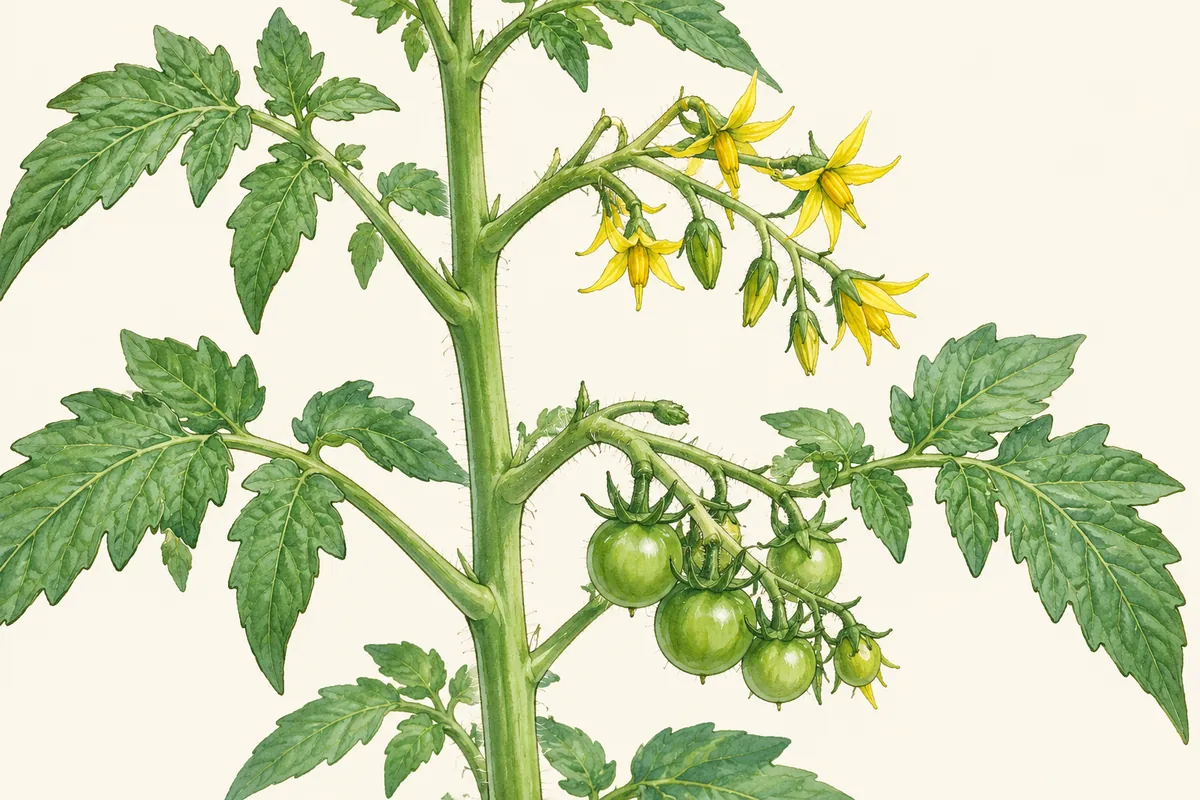
4The first truss setting fruit, the next one still in flower — time to start feeding.
01At a glance
- Sow for a greenhouse crop: late February to mid-March.
- Sow for outdoors: late March to early April.
- Germination: about 18°C. Seedlings usually show within a fortnight.
- Grow on at: at least 16°C, in as much light as possible.
- Plant out: early summer, once temperatures are reliably above 16°C.
- First feed: when the first fruits start to swell.
02When to sow
The RHS gives late February to mid-March for plants that will live in a greenhouse, and late March to early April for plants going outside. Its own advisers lean later still, suggesting you wait until the end of March, because young plants can't go into a cold greenhouse or outdoors until summer and early sowings go leggy while they wait.
If in doubt, sow later. A sturdy April seedling beats a stretched February one.
03Sowing and germination
- Sow into small pots, modules or a seed tray of peat-free seed compost.
- Keep at about 18°C. A heated propagator works. So does a warm windowsill with a clear plastic bag over the pot.
- Uncover as soon as the seedlings appear, and move them into the brightest spot you have. Light is what keeps them short and stocky.
The RHS is honest that windowsills are not ideal but can be made to work. Use the sunniest one in the house.
04Pricking out: bury the stem
Once the seedlings have a couple of true leaves, move each one into its own pot or module of peat-free multi-purpose compost. Hold it by a leaf, never the stem.
Here is the tomato's party trick. If a seedling has gone leggy, replant it deeper, so the first pair of leaves sits just above the compost. It turns a wobbly seedling into a stable one.
Keep them at 16°C or above. After about a month they should be ready for their final position.
05Potting on, and when to stop
A 9cm pot is the usual home for a young tomato plant. It's tempting to keep moving it into bigger pots, but RHS advisers suggest the opposite: keeping plants in 9cm pots until they start to flower nudges them into flowering earlier, while over-generous treatment can delay it.
That gives you the signal for the next step. Wait for the first flower to open before planting into the final position. Tomatoes planted before that can grow very tall before they start flowering.
06Cordon or bush: know before you plant
- Cordon (indeterminate) tomatoes are tall and vigorous. They need a tall cane or a vertical string, regular tying in, and their side-shoots removed.
- Bush (determinate) tomatoes are compact and need little maintenance. Trailing types will even grow in a hanging basket. They are the easiest kind to grow.
It's on the seed packet. It matters now because it decides the support you put in at planting.
07Planting out
Greenhouse plants can go into their final home once that first flower opens. Outdoor plants have to wait for early summer, when temperatures are reliably above 16°C, and need hardening off first. The RHS allows two to three weeks for that. Our guide to hardening off and planting out covers how.
- Plant deeply again, with the first set of leaves just above the soil.
- In the ground: 45–60cm apart.
- In pots: one cordon per 30–45cm pot.
- In growing bags: two plants per standard bag.
- Put the support in at planting for cordons.
08The first truss, and the first feed
A truss is a cluster of flowers, then fruit. Hold off on feeding until the first fruits start to swell, then give a high-potassium liquid feed every 10–14 days. Feed earlier and you grow leaves.
From here on it's side-shoots, watering and stopping the plant at four trusses outdoors or seven under glass. That's all in July on the plot.
How we checked this
Every care and safety claim on this page is verified against horticultural and veterinary sources.
Sources: RHS — How to grow tomatoes · RHS — Fast tomatoes · RHS — Greenhouse growing and planting out tender crops · RHS — How to prick out seedlings into modules · RHS — Hardening off tender plants · RHS — How to grow chilli peppers
Checked 3 October 2026. If our advice ever conflicts with the RHS, believe them and tell us.