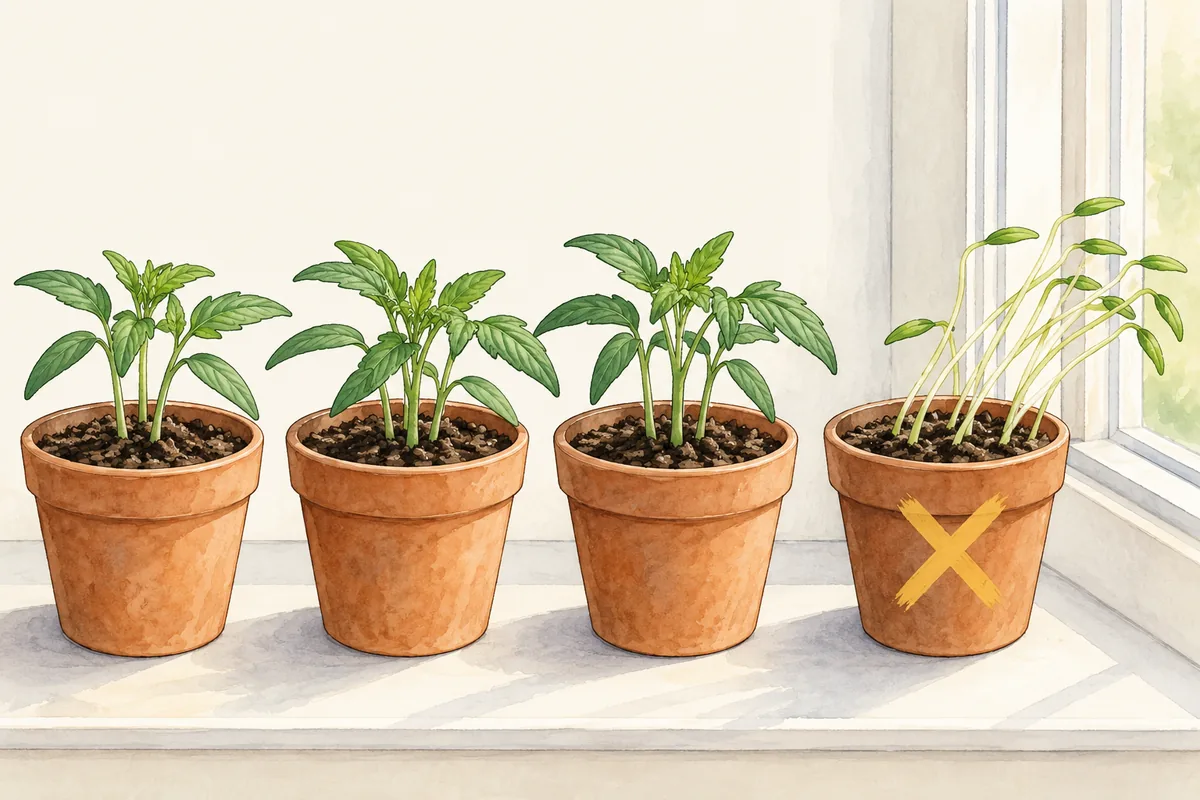
The commonest mistake with indoor sowing is doing it too soon. A February windowsill is warm enough to germinate almost anything and too dim to grow it well, so seedlings stretch towards the glass and go thin and leggy. Then they sit indoors for weeks, because tender plants can't go outside until the frosts have finished. A few crops do need that long run-up. Most don't.
In pictures
-
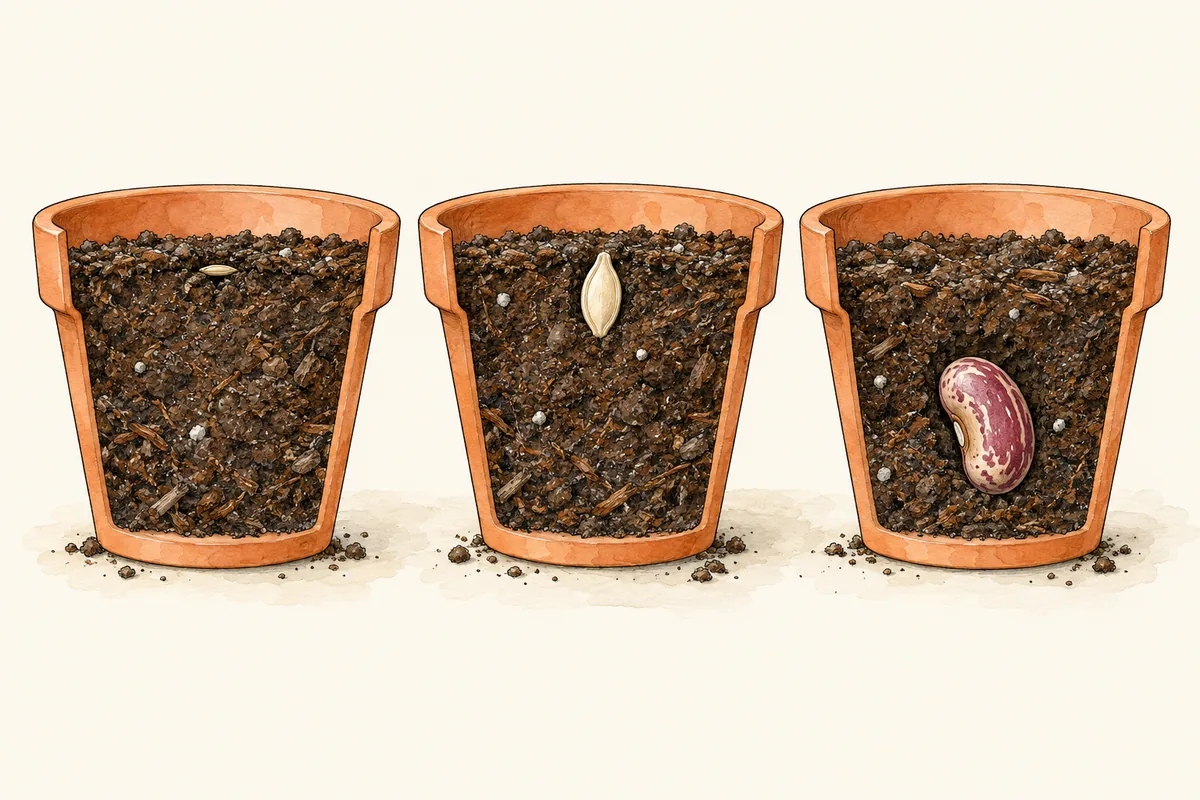
2Sowing depth: fine seed barely covered, a courgette seed on its edge, a runner bean deepest. -
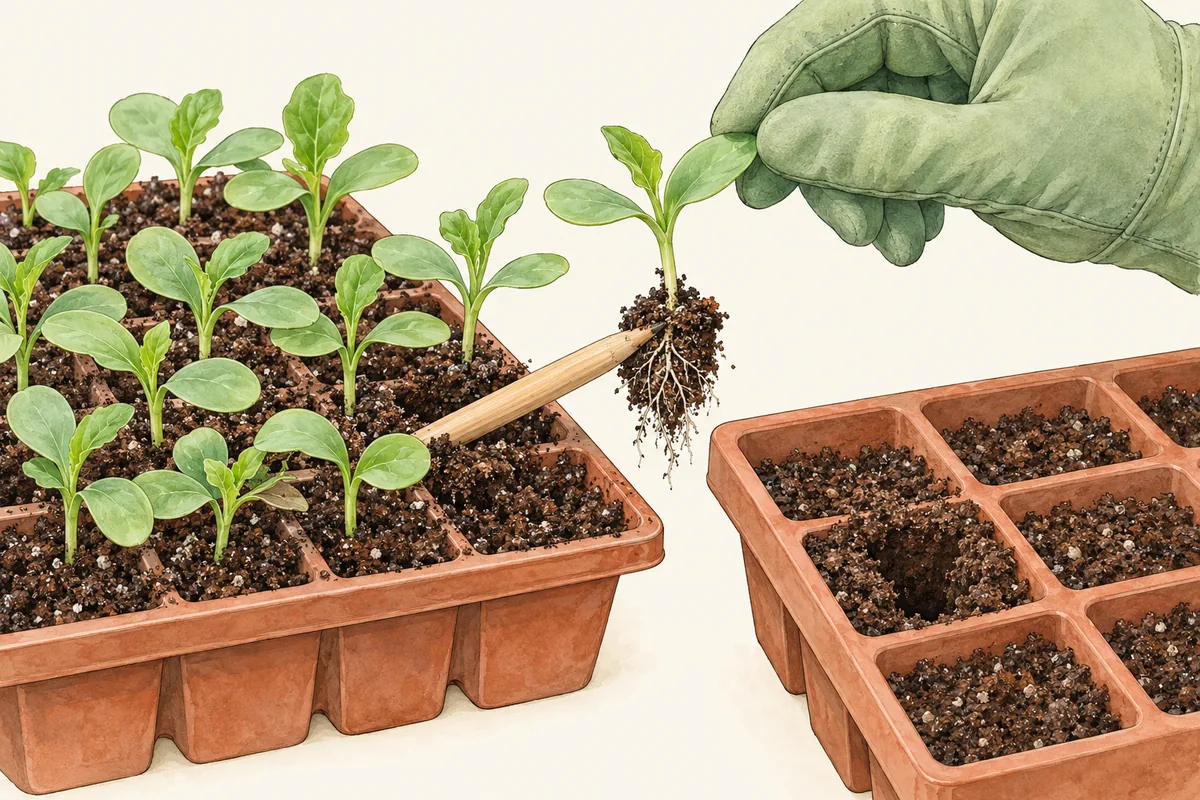
3Pricking out: hold the seedling by a leaf, never the stem, and lever the roots up with a pencil. -
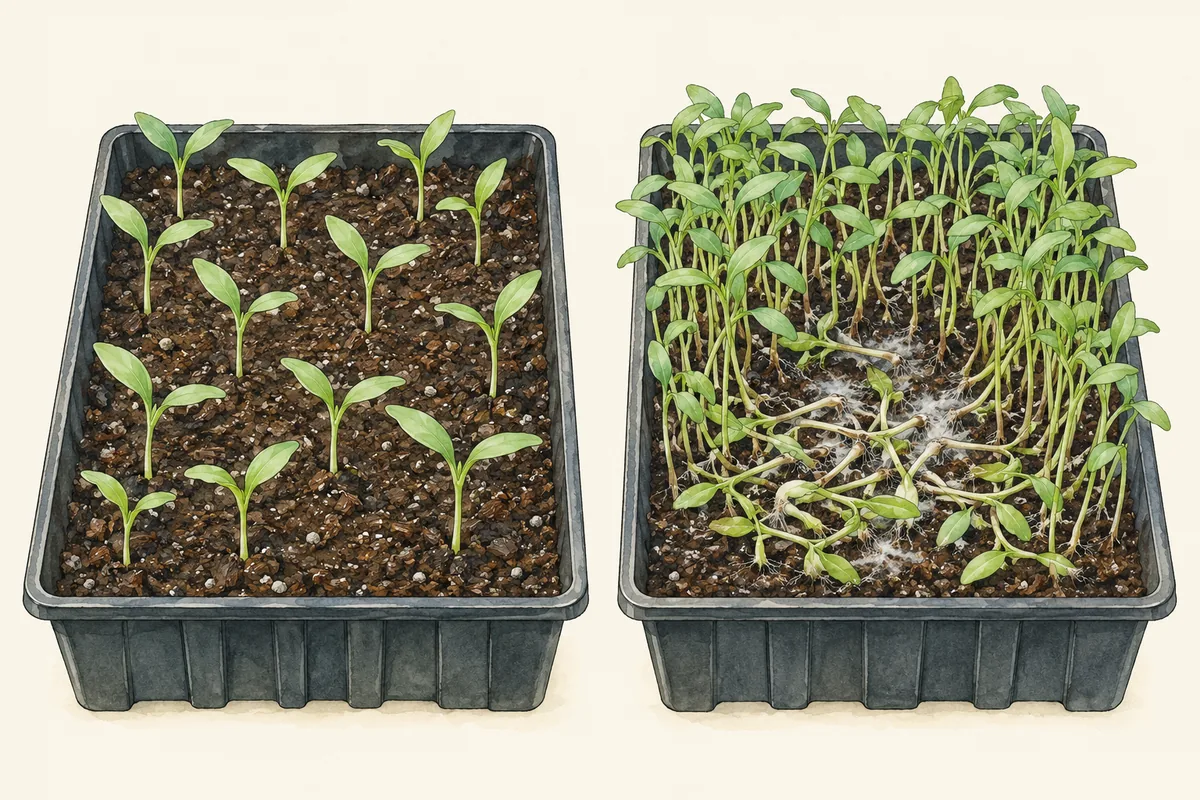
4Thinly sown seedlings stay healthy (left). Crowded ones collapse at the base with damping off (right).
01At a glance
- Start early, with heat: chillies and aubergines, then tomatoes.
- Hold back until mid-April or May: courgettes, squash, runner beans, sweetcorn.
- Germination temperature: around 18°C for most seeds; about 21°C for chillies and aubergines.
- Sowing depth: cover with no more compost than the depth of the seed, unless the packet says otherwise.
- Kit: peat-free seed compost, clean pots or trays, a clear cover, labels, your brightest windowsill.
02What genuinely needs an early start
These are slow crops that need a long season, so the early sowing earns its keep.
- Chillies: sow from late winter to mid-spring. They are slower than tomatoes, and RHS growers sow them from early February to early March. They need about 21°C to germinate.
- Aubergines: from February if they'll spend their life in a greenhouse, early March if they're going outdoors. They need at least 21°C to germinate and at least five months from sowing to harvest.
- Tomatoes: late February to mid-March for a greenhouse crop, late March to early April for plants going outside. About 18°C does it.
03What to leave till later
These grow fast, hate the cold and gain nothing from weeks on a windowsill. Sow them a few weeks before they can go out, and no sooner.
- Courgettes: April or early May, one seed per 7.5cm pot, on its side, 13mm deep.
- Squash: mid- to late April, sown the same way.
- Runner beans: mid-April to May, one bean per small pot or deep module, 5cm deep.
- Sweetcorn: mid- to late spring, singly in deep pots or modules, 2.5cm deep.
All four go outside in late May or early June, once the risk of frost has passed. Courgettes, squash and beans can also be sown straight into the ground around then, with no windowsill involved.
04How to sow
- Fill clean pots or trays with peat-free seed compost, or sieved peat-free multi-purpose, and firm it gently.
- Sow thinly. Crowded seedlings are the ones that rot.
- Cover lightly with sieved compost, usually no more than the depth of the seed. Big seeds follow the depths above.
- Water gently, label, and cover with a propagator lid, a sheet of glass or a clear plastic tray to keep the moisture in.
- Keep warm and bright. A south- or west-facing windowsill is ideal.
- Take the cover off as soon as seedlings appear, and give them as much light as you can. That is what stops them going thin and leggy.
Keep the compost moist but never saturated. Once chillies are up, the RHS suggests growing them on a little cooler, at 16–18°C, in bright light.
05Damping off
This is the one where a tray of healthy seedlings collapses overnight, often under a whitish fuzz. It is a disease caused by several fungi and fungus-like organisms, and it thrives in high humidity, still air and thickly sown trays. There are no fungicides available to gardeners for it, so prevention is everything.
- Use fresh bought compost, not homemade.
- Use new pots and trays, or disinfect old ones.
- Sow thinly and don't overwater.
- Water with mains water if you can.
- Ventilate. Lids off once the seeds are up.
06Pricking out
When seedlings are big enough to handle, move each into its own pot or module before they crowd one another.
- Water the tray first.
- Lever each seedling out from below with a dibber, pencil or plant label, easing the root free.
- Hold it by a leaf, never the stem. A seedling can spare a leaf. A pinched stem is the end of it.
- Lower it into a hole so it sits up to its leaves, firm gently and water in.
Plants raised indoors then need two to three weeks of hardening off before they live outside.
How we checked this
Every care and safety claim on this page is verified against horticultural and veterinary sources.
Sources: RHS — How to sow seeds indoors · RHS — How to grow chilli peppers · RHS — How to grow aubergines · RHS — How to grow tomatoes · RHS — Fast tomatoes · RHS — How to grow courgettes · RHS — How to grow squashes · RHS — How to grow runner beans · RHS — How to grow sweetcorn · RHS — Damping off · RHS — How to prick out seedlings into modules · RHS — Artificial lighting for indoor plants · RHS — Greenhouse growing and planting out tender crops · RHS — Vegetables in greenhouses · RHS — Hardening off tender plants
Checked 3 October 2026. If our advice ever conflicts with the RHS, believe them and tell us.