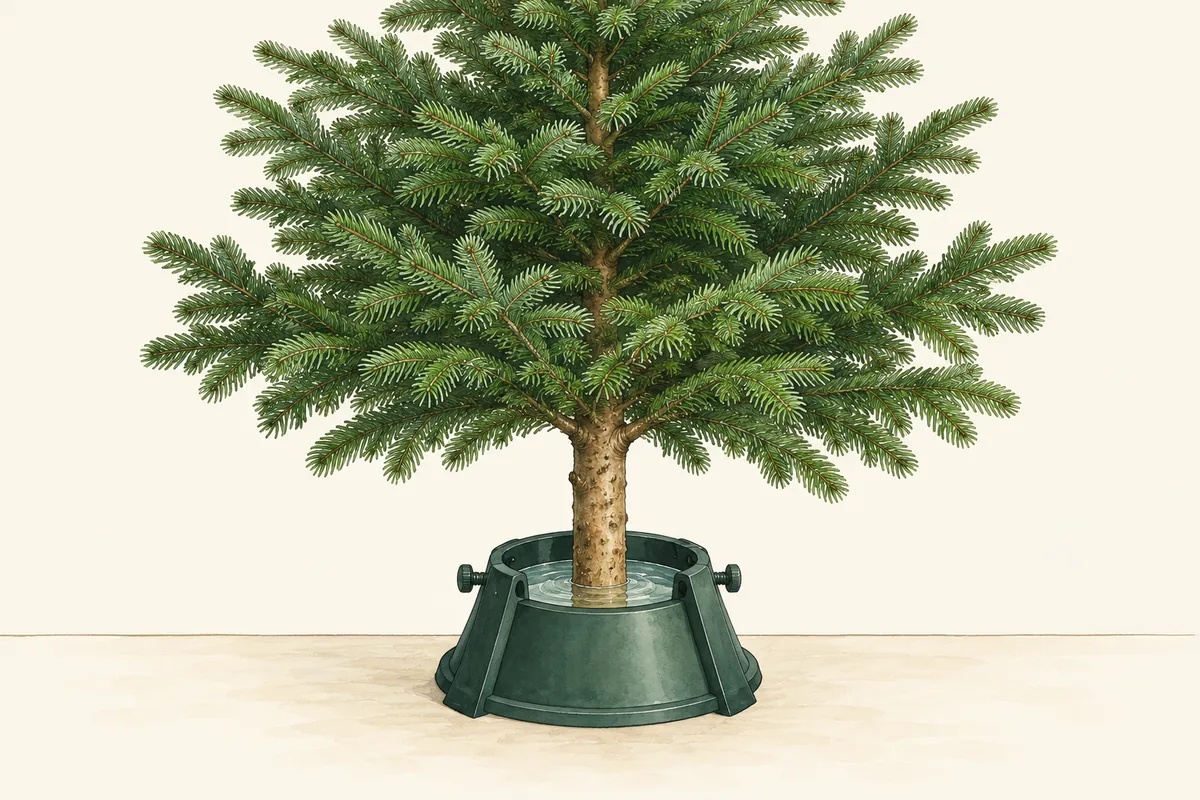
A real Christmas tree is a large cut flower. Treat it like one and it will hold its needles into January. Treat it like furniture and it will be bald by Boxing Day.
Pet owners get a second worry on top: is the tree poisonous? The short answer from the vets is that the tree is a low risk in the amounts pets usually eat. Several things hanging on it and standing next to it are worse.
In pictures
-
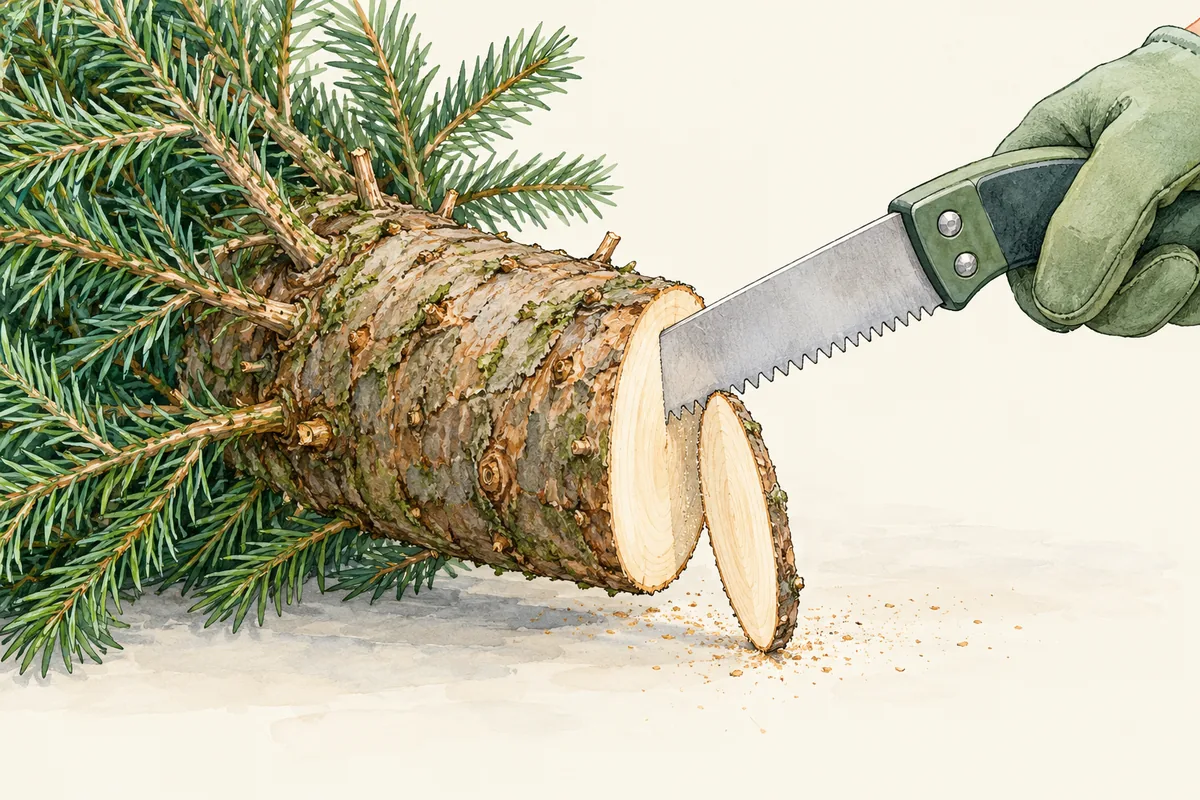
2Saw a thin slice off the base before it goes in the stand. -
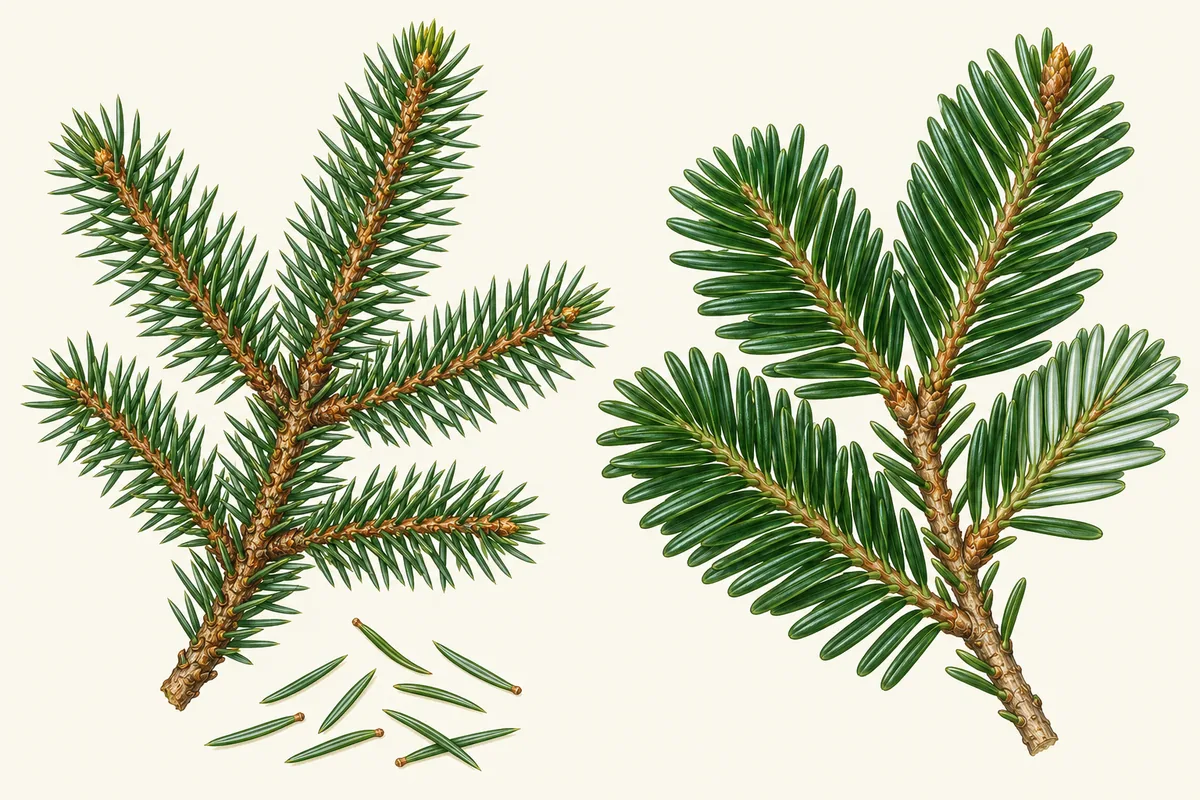
3Norway spruce (left) drops its needles; Nordmann fir (right) holds them. -
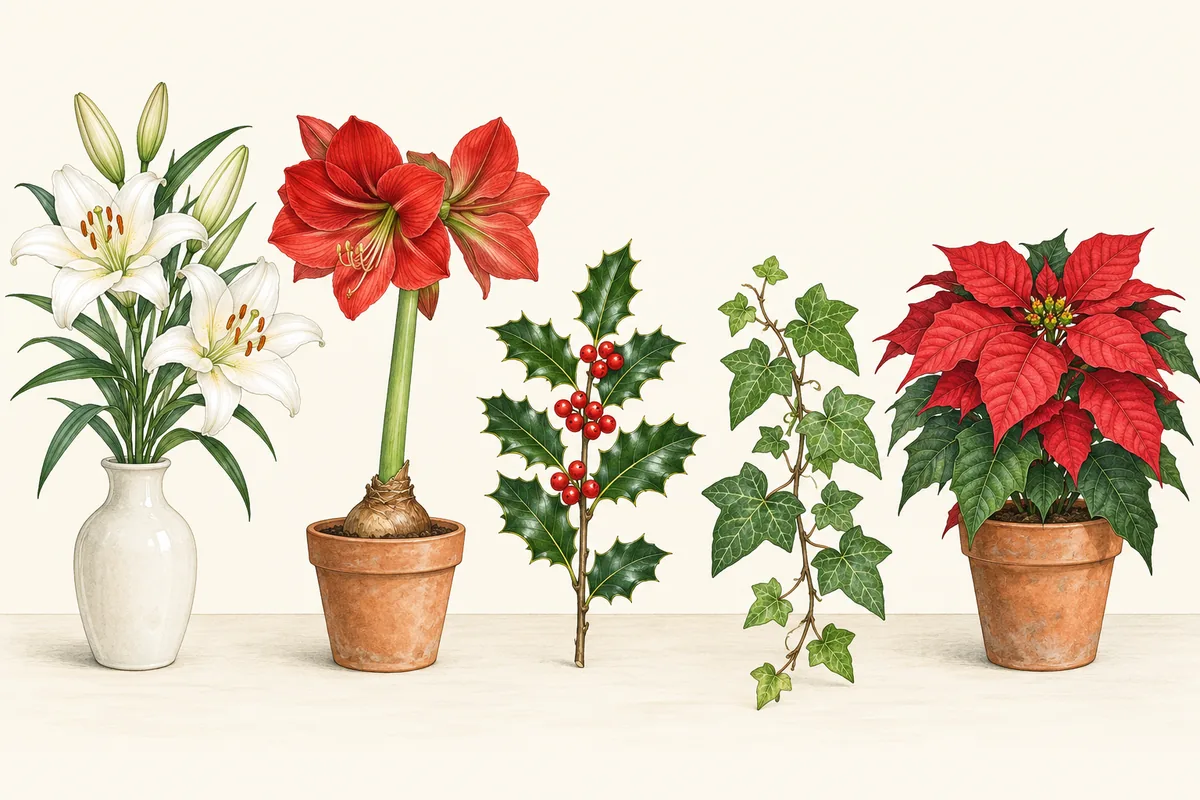
4The real hazards: lilies, amaryllis, holly, ivy and poinsettia.
01At a glance
- Cut: saw a slice off the trunk base before the tree goes in its stand.
- Water: plain water, checked every day.
- Position: well away from radiators and fires.
- Pets: needles and tree water usually cause a mild upset, though needles can also injure the mouth or gut. Lilies, tinsel, chocolate decorations and salt dough are the real hazards.
02Choosing: needles or scent
- Norway spruce. The traditional tree, with a good scent. The RHS calls it quick to drop its needles.
- Nordmann fir. Dark green needles that are very slow to drop, and a higher price. Forestry England adds that the foliage is soft and the branches take heavier decorations.
- Fraser fir. Good needle-holding and a lovely fragrance, according to the RHS.
- Blue spruce. Holds its needles better than Norway spruce.
- Lodgepole pine. Described by the growers' association as a low needle-drop tree if kept well watered.
Check freshness before you pay. Forestry England's test is that the needles should be flexible and green. Needles that snap mean the tree is already drying out.
03Keeping a cut tree alive
- Saw the base. The RHS says to take 2.5cm off the bottom of the trunk. Forestry England says half an inch is enough to remove the hardened sap that blocks water uptake. Either way, do it just before the tree goes into water.
- Use a stand that holds water. Pick a sturdy one with a well you can reach easily.
- Top it up daily. Forestry England says a tree can drink two to three pints a day.
- Keep it away from heat. A fire or radiator causes excessive moisture loss and needle drop.
With that care, the RHS expects a cut tree to last about four weeks.
04Pot-grown trees, honestly
There are two kinds, and the label matters. A container-grown tree has lived in its pot. A containerised tree was dug up with its roots and plunged into one.
- Bring it in late. The RHS suggests the weekend before Christmas.
- Take it out early. No more than 12 days indoors, and sooner if it looks unhappy.
- Don't expect it to last for ever in a pot. The RHS says Christmas trees grown on in pots may only live a few years, because they are not suited to long-term pot life. Planting it out in the garden is the other option. Remember that it wants to become a full-sized conifer.
05The tree and your pets
The Veterinary Poisons Information Service rates Christmas trees as low toxicity.
- Needles. Eating them may cause a mild stomach upset, and VPIS notes they can cause a blockage or physical injury because some are sharp. Charities also warn about needles lodging in paws. Sweep up daily.
- Oils. Sources differ. VPIS rates Christmas trees as low toxicity, and Blue Cross calls the oils mildly toxic to cats and not highly toxic to dogs. The PDSA is more cautious, warning that swallowing a large amount of the oils can affect the liver or kidneys. So a few chewed needles is usually a mild upset, but a pet that has eaten a lot of the tree warrants a call to the vet.
- Tree water. The ASPCA calls it a breeding ground for bacteria that could cause nausea, diarrhoea or stomach upset. Cover the stand.
- Toppling. Cats Protection advises a sturdy base, or weights, to stop the tree going over.
06What is hanging on it
These come from the same veterinary sources, and they are the ones that end in surgery.
- Tinsel and ribbon. Swallowed, they can block the gut. Cats Protection says this is sometimes fatal.
- Glass baubles. They shatter, and the shards cut mouths and paws. Cats Protection advises against glass altogether.
- Lights and cables. Chewed wires risk electric shock. Switch off at the mains when you are out.
- Chocolate decorations. Chocolate is poisonous to dogs and cats. Keep it off the tree.
- Salt dough ornaments. The Animal PoisonLine warns that their high salt content can cause vomiting, diarrhoea, lethargy and tremors, and in serious cases fits and kidney failure.
07The plants next to it
We cover these fully in the poinsettia myth. The short version, worst first:
- Lilies. Lethal to cats, including the pollen and the vase water. Dogs get only a mild stomach upset. If you have a cat, keep lilies out of the house.
- Yew. Sometimes cut for wreaths. Deadly if eaten by dogs, cats, horses, livestock and people.
- Amaryllis. Toxic to cats and dogs if eaten, with the bulb the most concentrated part. Worth a call to the vet.
- Holly. Toxic to cats and dogs if eaten. Usually drooling, vomiting and diarrhoea, and the spiny leaves can hurt the mouth.
- Ivy. Toxic to cats, dogs and people if eaten, causing similar stomach upset. The sap irritates skin.
- Mistletoe. VPIS considers European mistletoe low toxicity, with the berries causing stomach upset. US sources, which mostly describe American mistletoe, also list effects on the heart and circulation after larger amounts.
- Poinsettia. Mildly toxic and much exaggerated. The sap irritates the mouth and skin.
If your pet has eaten any of these, take the plant away, don't try to make them sick, and ring your vet or the Animal PoisonLine on 01202 509000.
08Afterwards
The RHS suggests shredding the tree yourself or using a local collection scheme. Defra adds that you can break it up for the compost bin, and that a potted tree can go into the garden.
How we checked this
Every care and safety claim on this page is verified against horticultural and veterinary sources.
Sources: RHS — Christmas trees: types and care · Forestry England — Five top tips for Christmas tree care · Forestry England — The expert's guide to choosing the right Christmas tree · British Christmas Tree Growers Association — Choose the right Christmas tree for you · GOV.UK (Defra) — Recycle or replant your tree for a greener Christmas · Veterinary Poisons Information Service — Festive plants · Animal PoisonLine — Christmas guide · Blue Cross — Christmas dangers for dogs · Blue Cross — Keep your cat safe at Christmas · PDSA — Dangerous Christmas decorations · Cats Protection — Cats at Christmas · RSPCA — Christmas dangers for pets · ASPCA — Holiday safety tips
Checked 3 October 2026. This is general guidance, not veterinary advice — if in doubt, ring your vet or the Animal PoisonLine straight away.