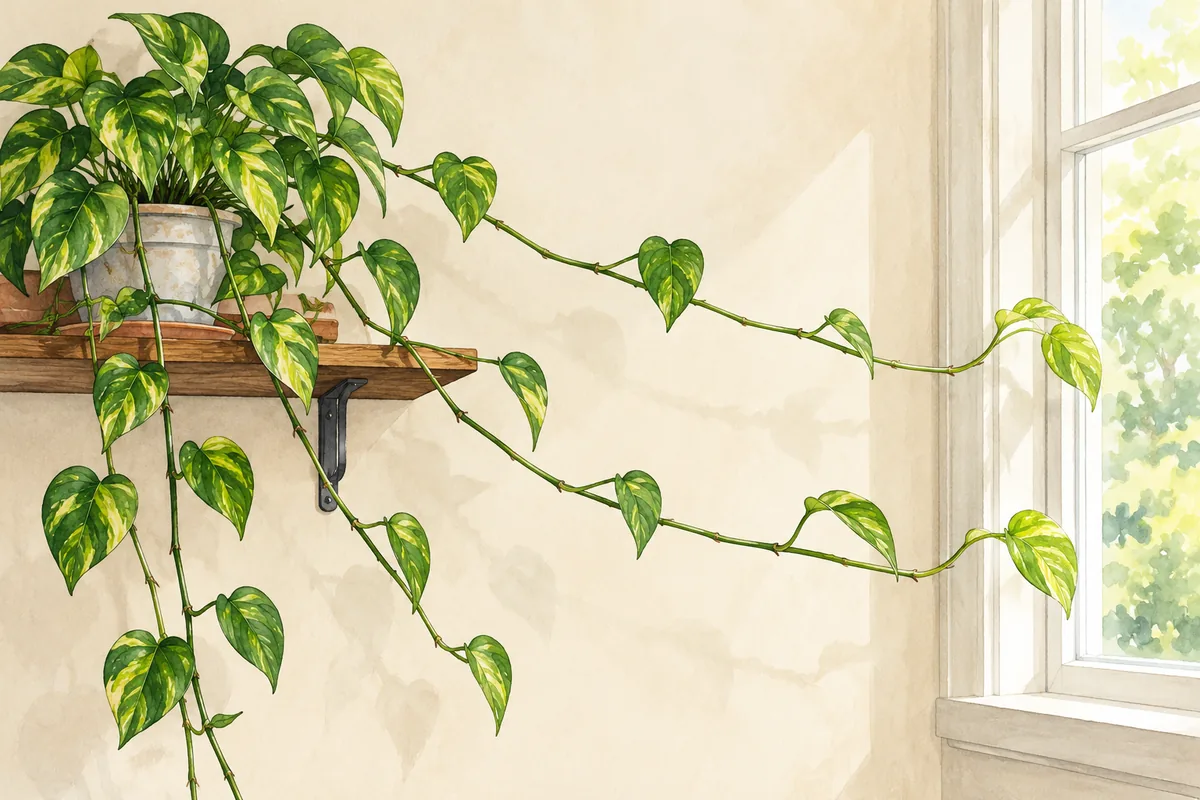
A leggy houseplant — long bare stems, leaves spaced far apart, everything leaning one way — is telling you something before it's asking for a prune. Cut it back without changing anything and it'll grow back exactly as leggy. So the order matters: light first, secateurs second.
In pictures
-
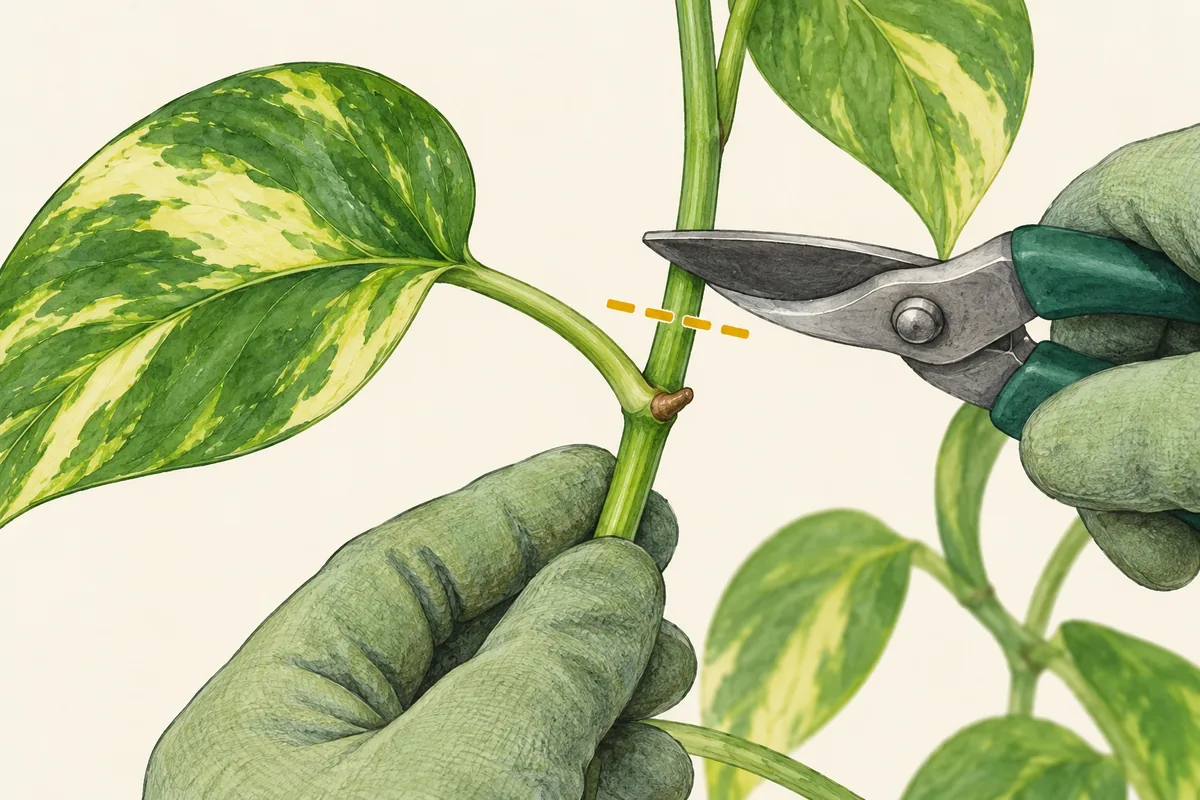
2Cut just above a leaf joint (node), where new shoots will grow. -
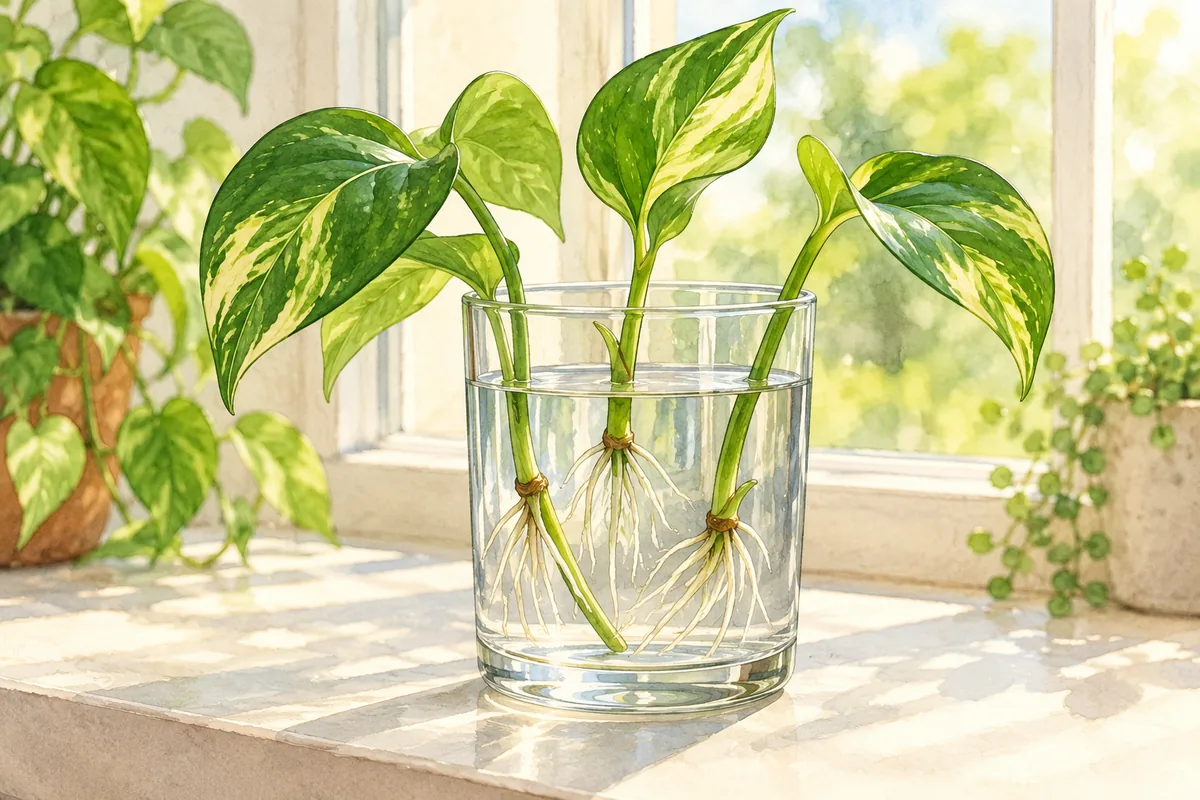
3Pothos cuttings root from the nodes in a glass of water. -
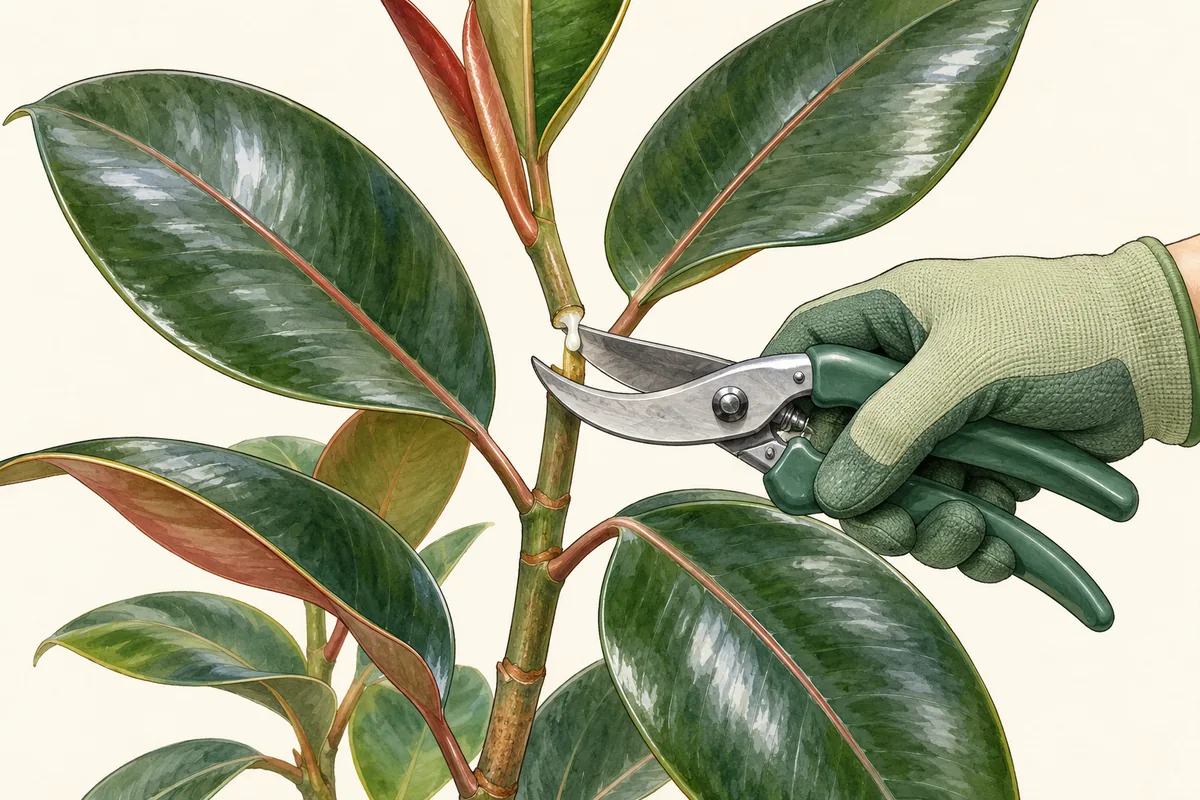
4Wear gloves: rubber plants bleed a milky sap.
01Step 1: fix the light
Weak, spindly growth and pale leaves mean the plant isn't getting enough light. In winter especially, move plants closer to a south- or west-facing window, and dust the leaves so they can use the light they get. Not sure what your window offers? See what "bright indirect light" actually means.
02Step 2: prune at the right time
- When: late winter or spring, as the plant comes into active growth.
- Tools: clean, sharp scissors or secateurs; gloves for plants with irritant sap (see below).
03Step 3: cut above a leaf joint
- Decide on the shape. Which stems are too long or bare?
- Cut each one just above a leaf or leaf joint (node). New shoots grow from the joints — cut halfway between two and you leave a dead stub.
- Pinch out shoot tips on trailing and bushy plants such as tradescantia to make them branch.
- Don't strip off leaves that are still mostly green — the RHS says it slows recovery.
04Step 4: root the cuttings
Most trailing plants root easily. Pothos cuttings root in a glass of water in bright light, or you can pin a stem down into a pot of compost until it roots (layering). Pot them back into the parent to make it fuller, or give them away.
05Don't prune these
- Palms (kentia, parlour palm): the RHS says no special pruning is needed. Remove old, dead leaves by cutting, not pulling. Don't cut the top off a palm.
06Sap: wear gloves
- Figs (rubber plant, weeping fig, fiddle-leaf fig): the RHS advises gloves when pruning — the sticky white sap may irritate skin.
- Euphorbias such as the pencil cactus: the sap can irritate eyes and skin. Wear gloves, long sleeves and eye protection.
- Pothos: wear gloves when taking cuttings.
Check each plant's profile for its full safety flags before pruning where children or pets can reach the trimmings.
07Mistakes to avoid
- Pruning without moving the plant. It'll just stretch again.
- Cutting between nodes.
- Pulling off palm fronds.
How we checked this
Every care and safety claim on this page is verified against horticultural and veterinary sources.
Sources: RHS — How to help a poorly houseplant · RHS — How to grow epipremnum · RHS — How to grow ornamental figs · RHS — Indoor palms · RHS — Sun-loving euphorbias
Checked 1 October 2026. If our advice ever conflicts with the RHS, believe them and tell us.