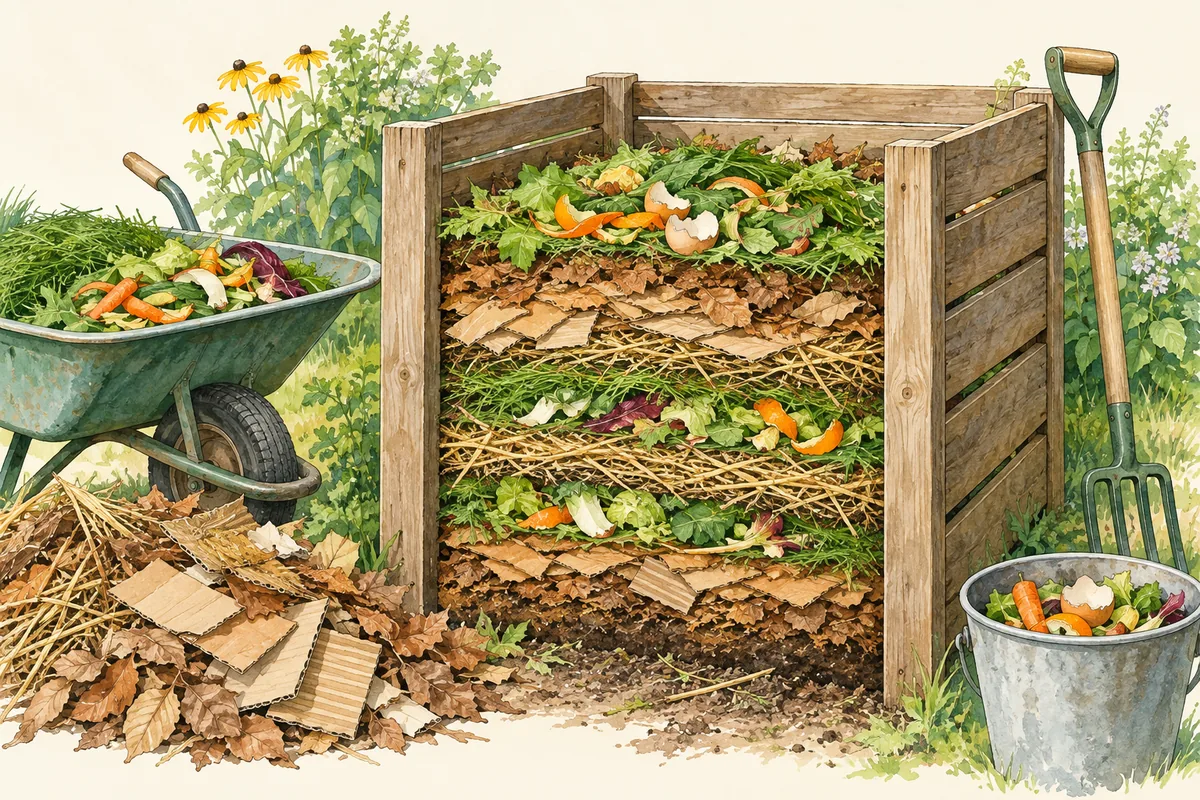
Most compost heaps that fail fail in one of two ways: a slimy, smelly mess (too much grass, too wet) or a dry pile that hasn't changed in a year (too much woody stuff, too dry). Both have the same fix — the balance of what goes in. Get that roughly right and a heap will rot without any products or fuss.
In pictures
-
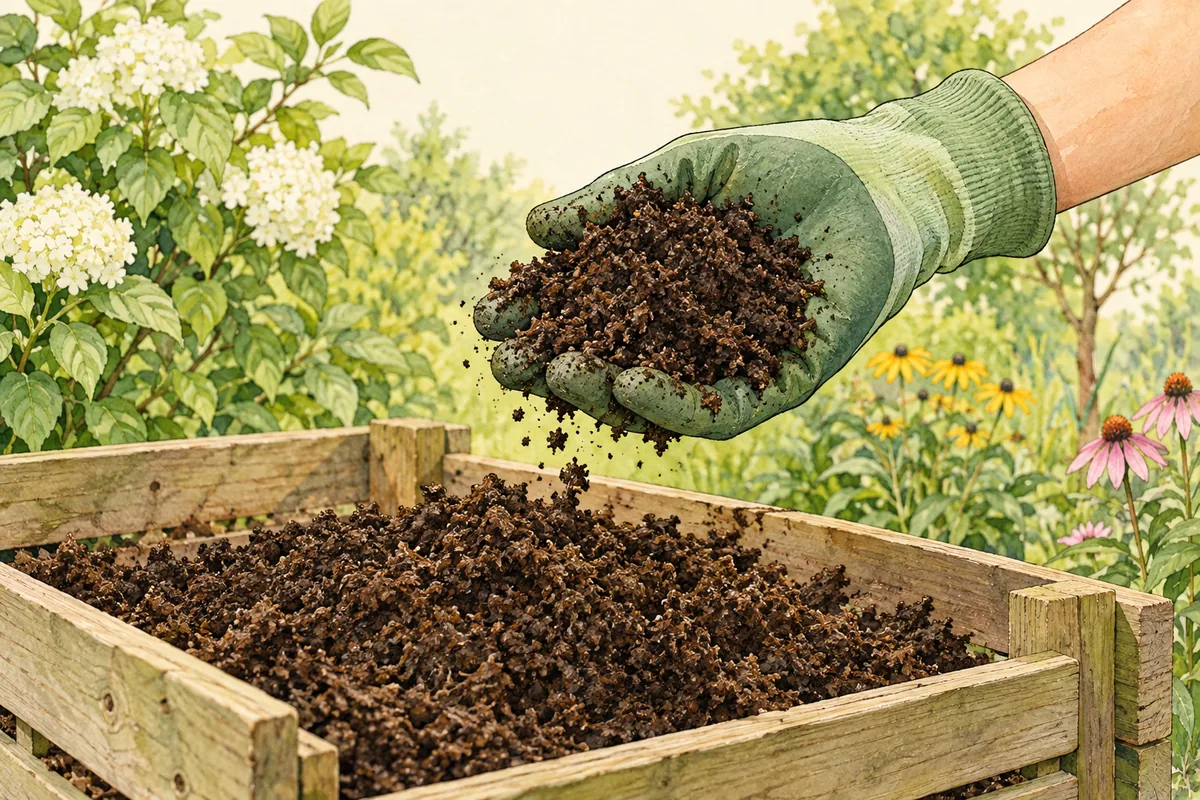
2Finished compost: dark, crumbly and smelling of woodland. -
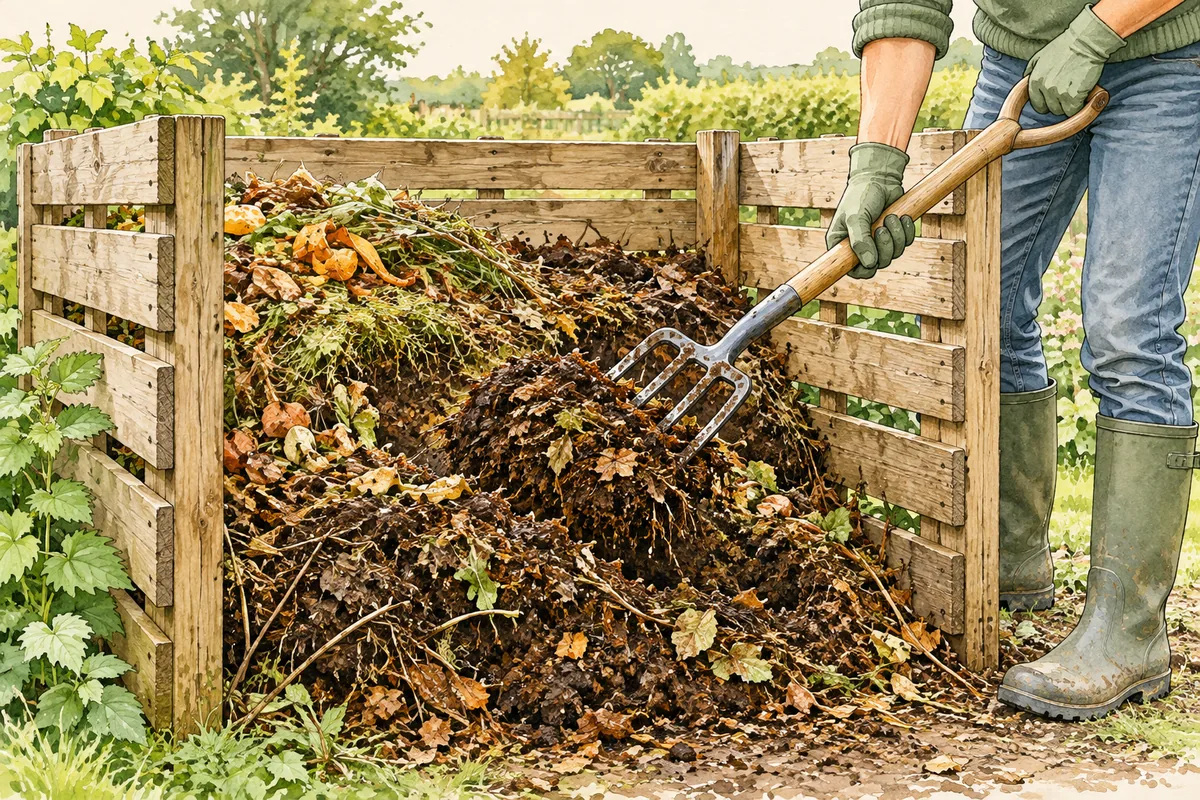
3Turn the heap a few times a year if you can. -
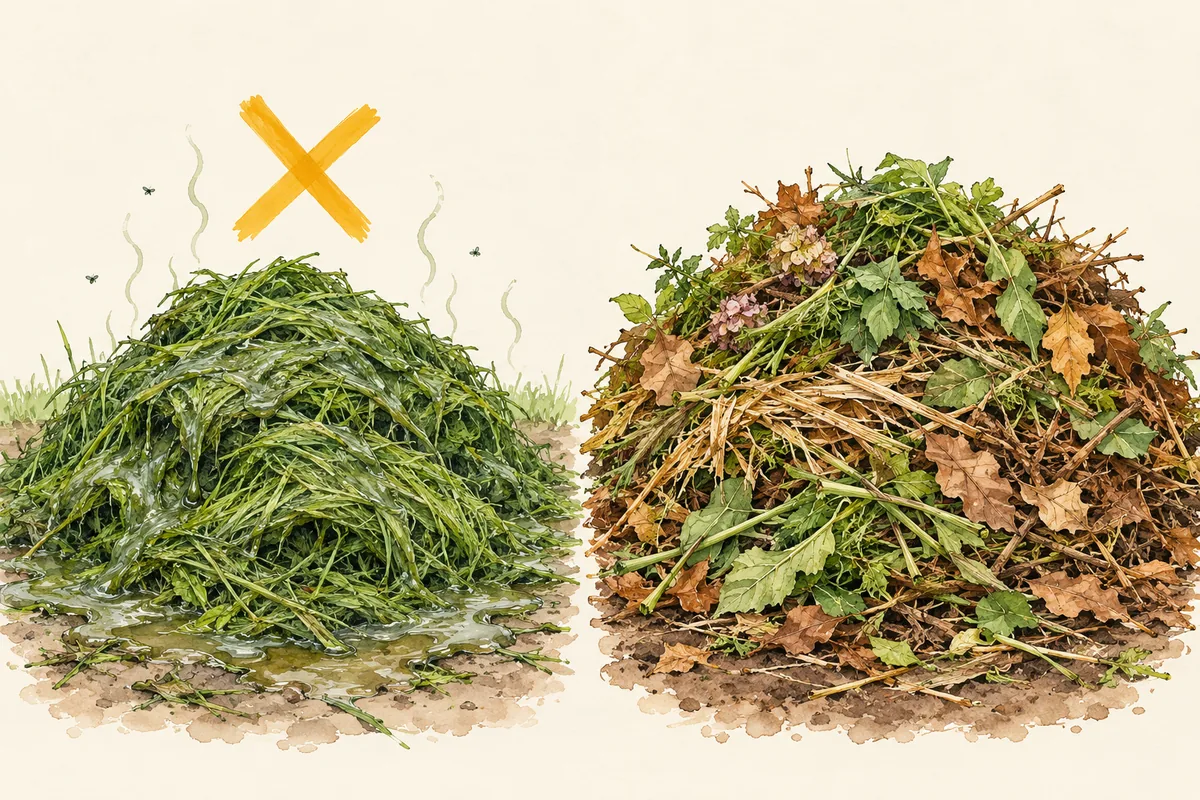
4All grass goes slimy (left). A mix of greens and browns rots well (right).
01At a glance
- The mix: roughly 25–50% soft green material and 50–75% chopped woody brown material.
- Moisture: like a wrung-out sponge.
- Time: anywhere from six months to two years.
- Where: a sheltered spot in partial or full shade.
02Greens and browns
Greens (soft, wet, nitrogen-rich): grass clippings, annual weeds, vegetable and fruit peelings, spent crops, soft prunings.
Browns (dry, woody, carbon-rich): shredded prunings, dead stems, straw, cardboard and paper (scrunched or torn up).
03What never goes in
- Cooked food, meat, dairy and oily foods — they attract vermin.
- Roots of perennial weeds like bindweed and ground elder — rot them first in a bucket of water or a sealed bag, or put them in the council green-waste bin.
- Diseased plants — council green waste.
- Invasive plants such as Japanese knotweed — never put them on a home heap. Check your council's disposal rules.
- Clippings from a lawn treated with weedkiller, until the label says it's safe.
- Some clippings need care for other reasons — see which clippings are safe to compost.
04Step by step
- Chop or shred long stems and woody material first — it rots much faster.
- Mix as you go. Layer greens and browns, or mix them, rather than dumping a whole lawn's clippings in one go.
- Keep it moist. Water it in dry weather; cover it if it's getting waterlogged.
- Turn it a few times a year if you can, to let air in. If you can't, it will still compost — just more slowly.
- Harvest from the bottom. It's ready when it's dark brown, crumbly and smells like damp woodland.
05Troubleshooting
- Slimy and smelly? Too much green, too wet. Add browns — scrunched cardboard is ideal — and turn.
- Dry and nothing's happening? Too much brown. Add greens, water it and turn.
How we checked this
Every care and safety claim on this page is verified against horticultural and veterinary sources.
Sources: RHS — Composting · RHS — Four steps to perfect compost · RHS — Composting for schools · RHS — Weedkiller damage
Checked 1 October 2026. If our advice ever conflicts with the RHS, believe them and tell us.