Most houseplants cope with your holiday better than you'd think. The RHS says most will tolerate a few days' absence without suffering; it's absences of more than a week that need a plan. That plan costs almost nothing, and most of it is moving pots about the house the night before you leave.
In pictures
-
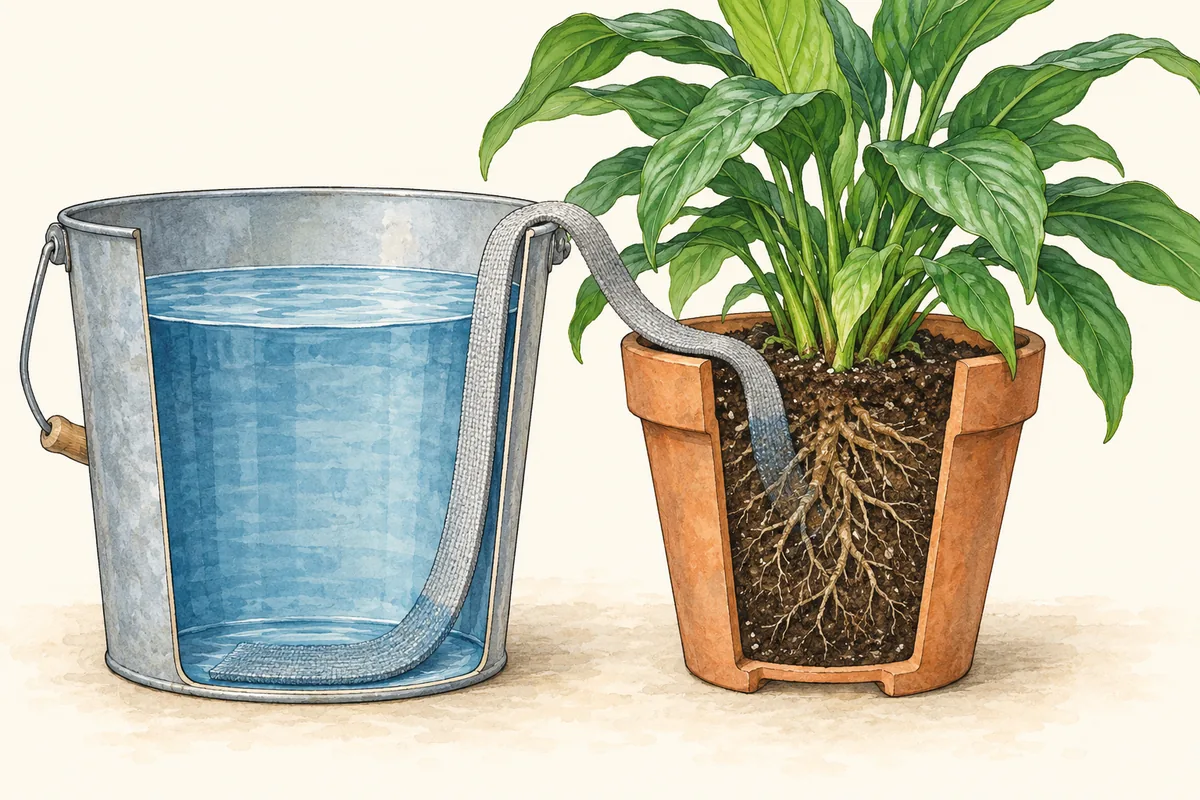
2A wick for one big plant: one end in the bucket, the other in the compost. -
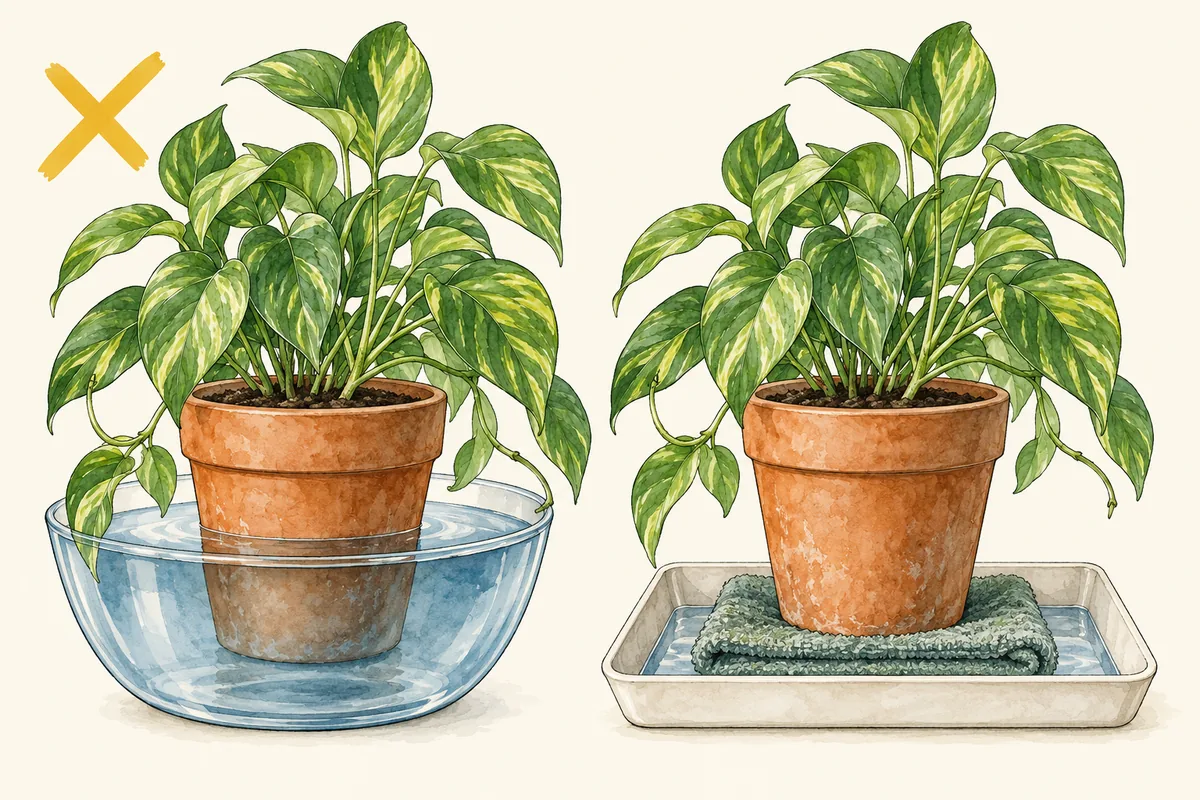
3Not standing in water (crossed out) — stand the pot on a wet towel instead. -
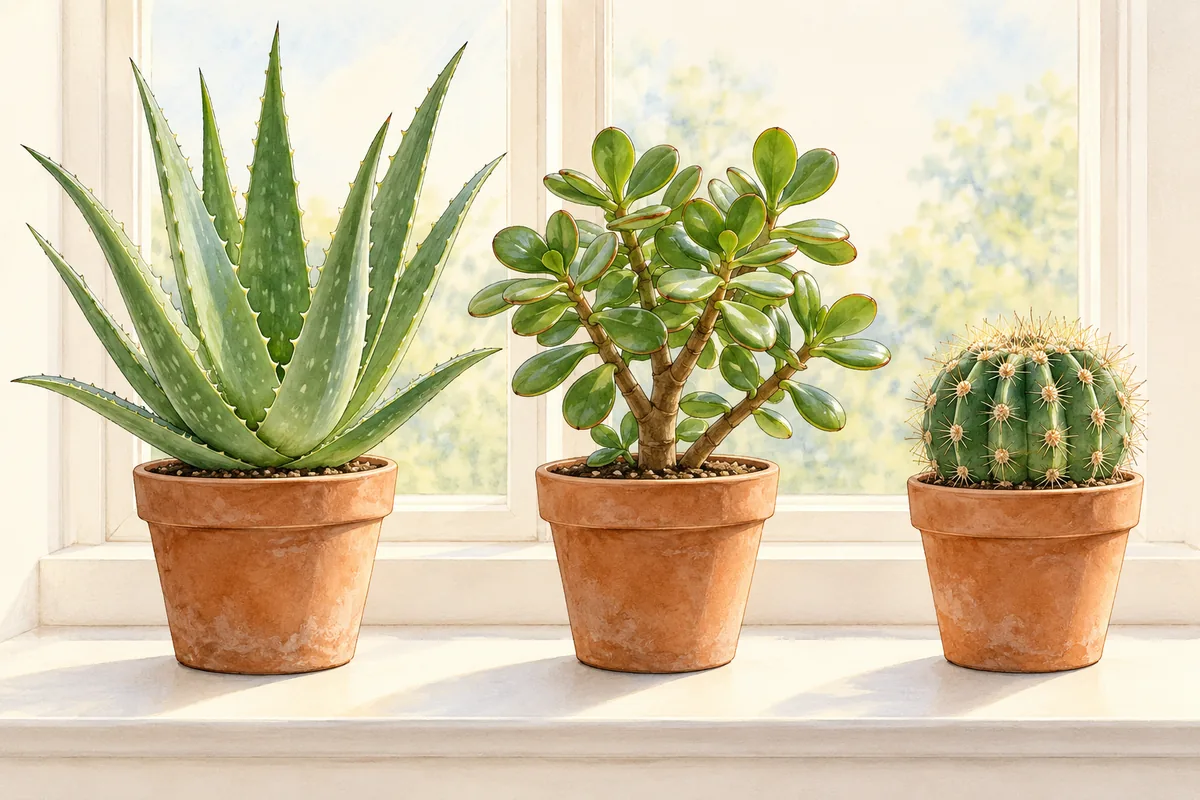
4Cacti and succulents: leave them where they are.
01At a glance
- Up to a week: water thoroughly and move plants out of the sun. That's usually enough.
- One to two weeks: add capillary matting or a wick for the thirsty plants.
- Longer than a couple of weeks: the RHS suggests asking a trusted neighbour, friend or relative.
- Cacti and succulents: leave them alone.
02The night before you go
- Water thoroughly. Soak the compost until water runs from the drainage holes, then let the pot drain. You want it moist, with nothing left standing in the saucer.
- Move plants off the sunny windowsill. A cooler room, or a spot back from a bright window, slows down how fast the compost dries. This one step does more than any gadget.
- Group them together. It's easier to set up one watering system for a huddle of pots than a dozen separate ones.
- Leave the succulents where they are. More on them below.
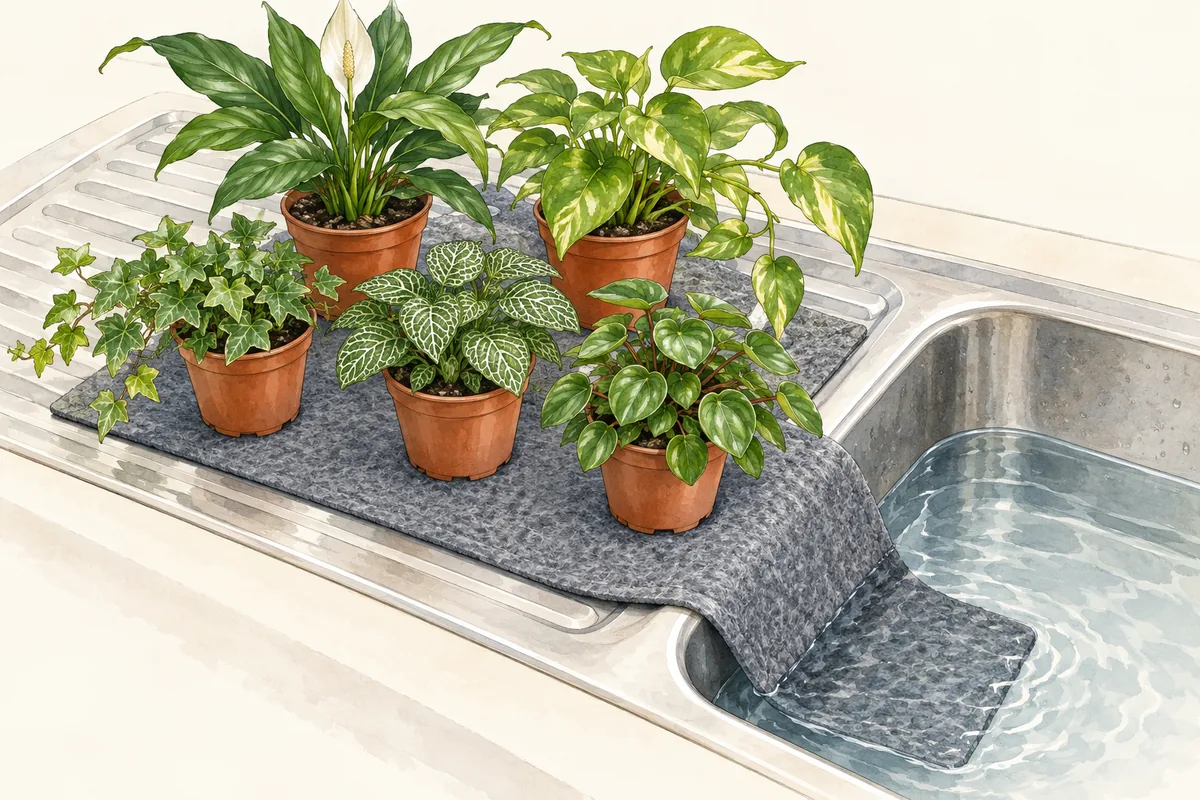
03Capillary matting on the draining board
This is the RHS's method for a group of small pots, and it works.
- Lay a sheet of capillary matting on the draining board, or on a surface beside the bath.
- Drape one end into the sink or bath and fill that with water.
- Wet the matting, then stand the pots on it. The base of each pot needs good contact with the mat, so this suits plastic pots with drainage holes, lifted out of their decorative covers.
- Water clay pots well first. The RHS notes terracotta needs a thorough watering before it will start drawing water up from the mat.
No matting? The University of Florida's gardening service describes the same idea with old towels: a few centimetres of water in the bath, towels laid in it, pots stood on top. The pots sit on wet fabric. They don't sit in the water.
04A wick for one big plant
A large plant won't fit on the draining board, so bring the water to it.
- Fill a large container with water and stand it beside the pot.
- Cut a strip of capillary matting as a wick. Cotton cord also works.
- Push one end to the bottom of the reservoir and tuck the other firmly into the compost.
The RHS lists the two ways this fails: the reservoir is too small and runs dry, or the wick slips out of the pot. Use a bigger container than you think you need and bury the wick end properly.
05Upturned bottles and spikes
A bottle of water upended into the compost, with or without a screw-on spike, releases water slowly. It can work, but it's the least predictable method here. Push one into dry compost and it empties very quickly, and nobody can tell you how long yours will last in your pot. If you want to use one, set it up a few weeks before you go and time it.
06Cacti and succulents need nothing
The RHS makes one exception to all of the above: cacti and succulents, which tolerate longer periods without water. Give your aloe vera and jade plant a normal watering if they're due one, and go. The snake plant is in the same camp — BBC Gardeners' World counts it among the plants that cope without water for two or three weeks.
07What not to do
- Don't stand pots in deep water for a fortnight. It feels generous. It fills every air space in the compost and rots the roots — see overwatering. The RHS warns that waterlogging while you're away also invites grey mould.
- Don't rely on a plastic bag for two weeks. A clear cover or bag over a plant holds moisture in, but the RHS says it's for short absences only, with canes holding the bag off the leaves. Keep a covered plant well out of the sun.
- Don't trust an untested system. Whatever you choose, run it for a few days while you're still at home.
- Don't panic about a dry plant when you get back. The RHS notes that plants left dry at the roots are more prone to powdery mildew and red spider mite, so check the leaves, water well and move on.
How we checked this
Every care and safety claim on this page is verified against horticultural and veterinary sources.
Sources: RHS — Houseplants: holiday care · RHS — Houseplant cacti and succulents: growing guide · BBC Gardeners' World — Holiday care for house plants · University of Florida IFAS — Vacation plant care · University of Saskatchewan — Watering houseplants while on vacation · Homes & Gardens — What are plant watering globes?
Checked 3 October 2026. If our advice ever conflicts with the RHS, believe them and tell us.