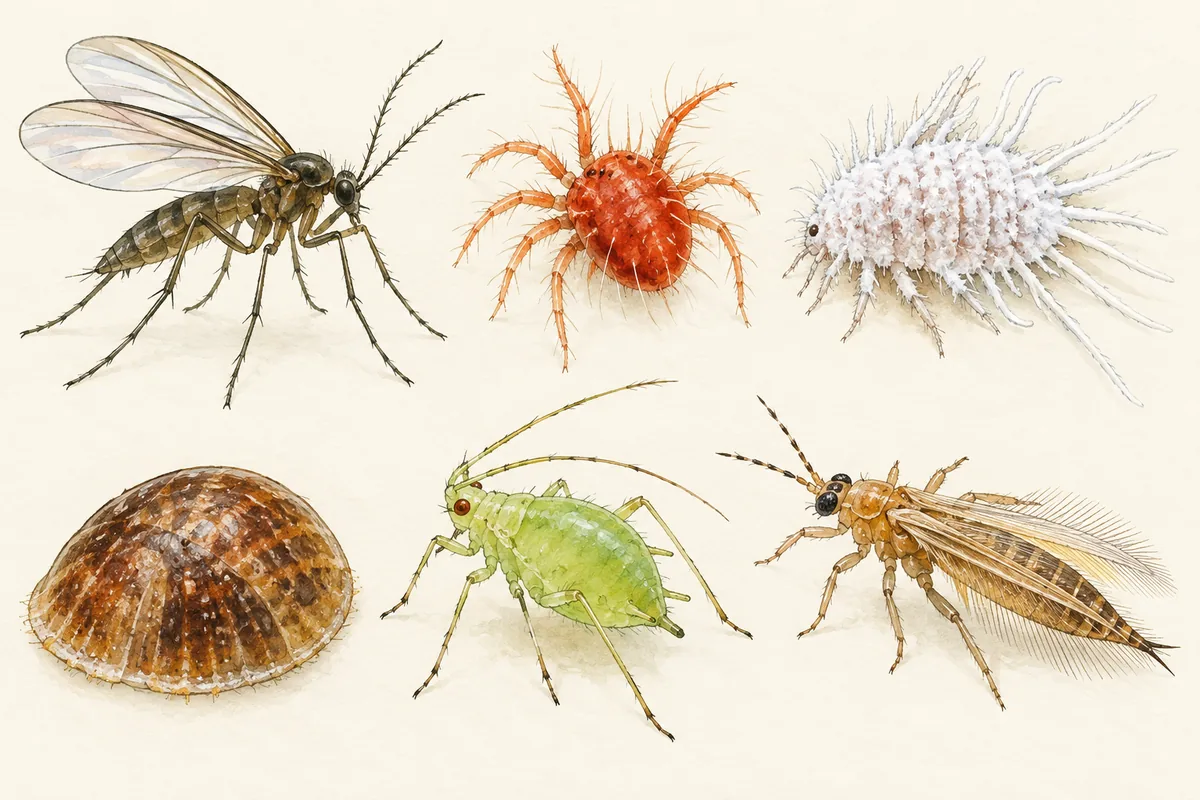
Most houseplant pests arrive on a new plant, or move in because conditions favour them — wet compost for fungus gnats, warm dry air for spider mites. So the best control is usually the cheapest: inspect new plants, quarantine them, and change the conditions that let pests thrive. Here's how to tell what you've got.
In pictures
-
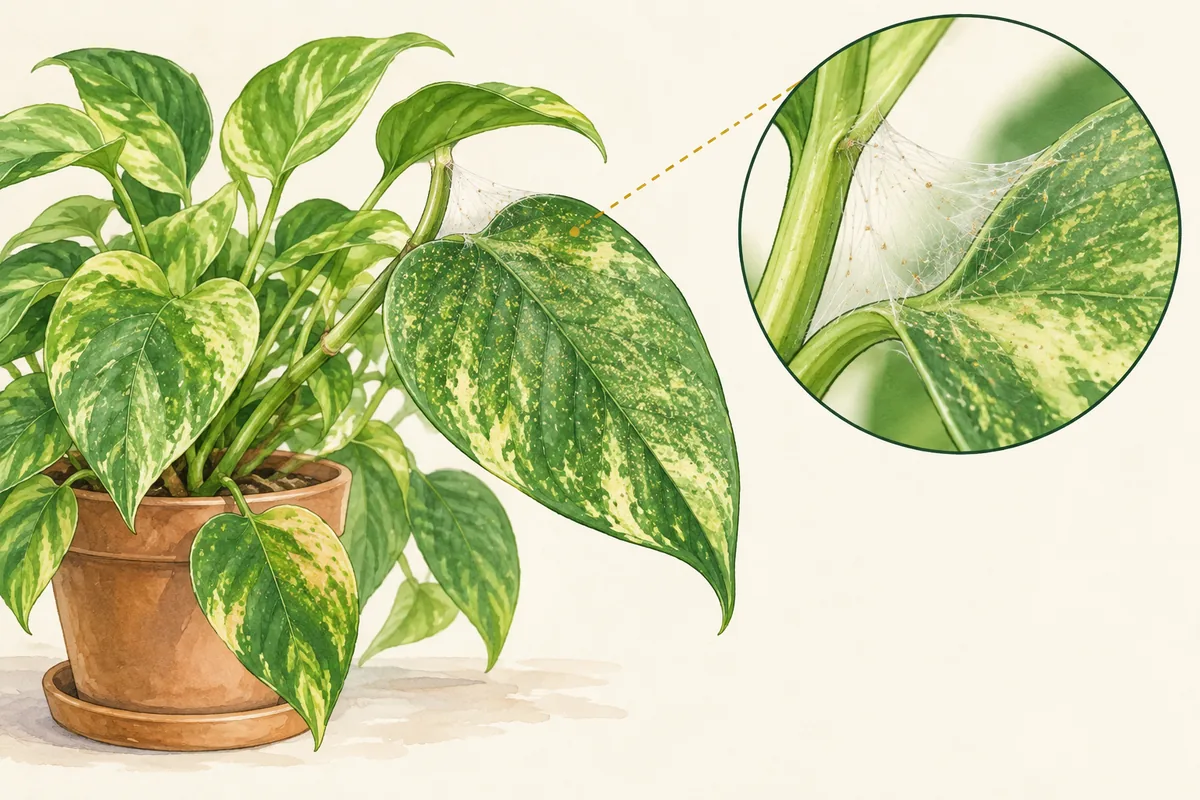
2Red spider mite: fine mottling on the leaves and silk webbing. -
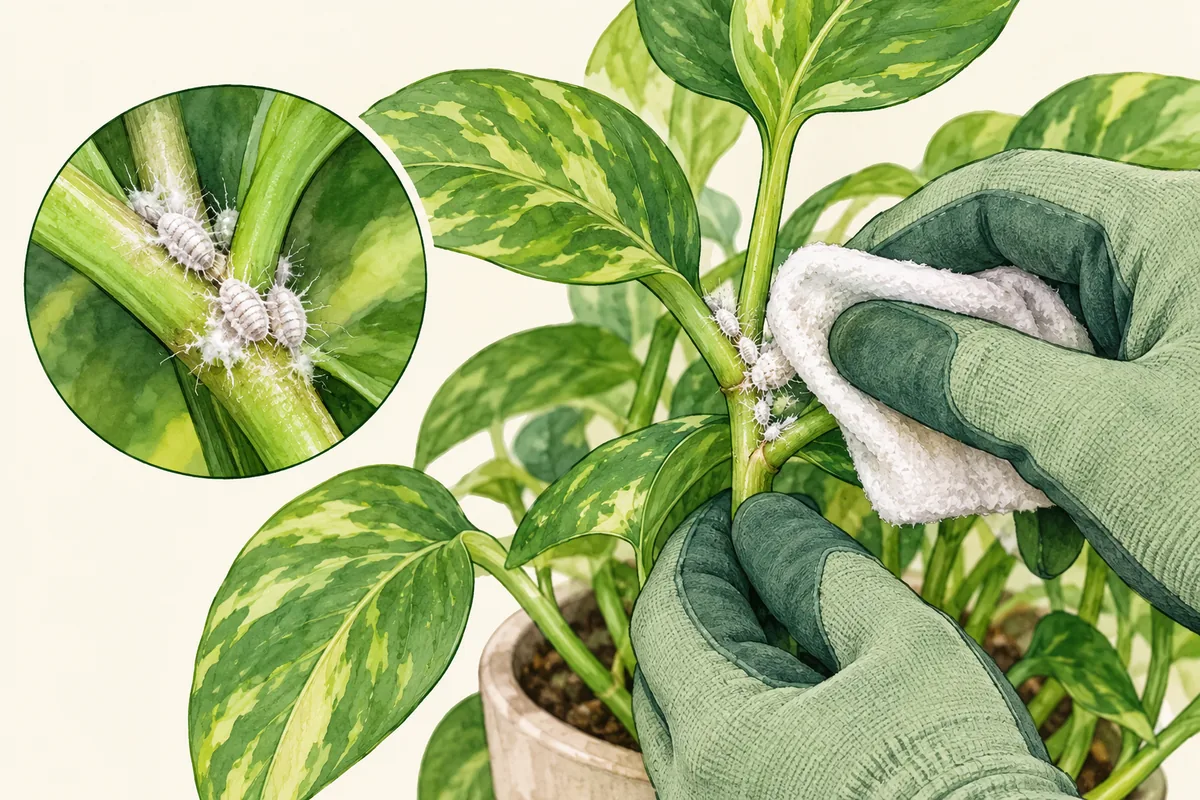
3Wipe mealybugs off with a damp cloth. -
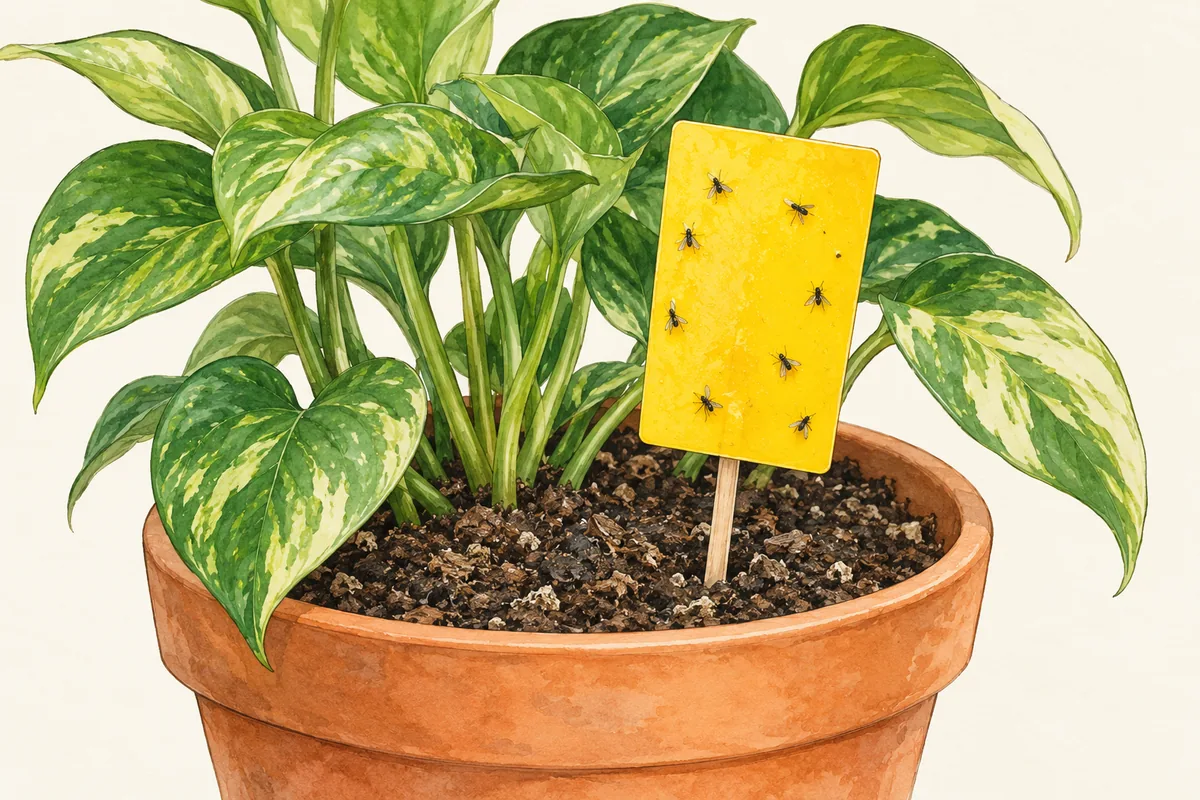
4Yellow sticky traps catch adult fungus gnats.
01Fungus gnats (sciarid flies)
- What you see: small dark flies, 3–4mm, flitting around the compost.
- Do they matter? The adult flies don't damage plants. The larvae mostly eat decaying matter, and only harm seedlings and soft cuttings.
- Why: constantly wet compost.
- Fix: let the compost dry out more between waterings; use yellow sticky traps for the adults; top the compost with grit. Biological controls include the nematode Steinernema feltiae and predatory mites. See overwatering.
02Red spider mite
- What you see: fine pale mottling on the upper side of leaves; fine silk webbing in bad infestations.
- Why: warm, dry air. They're worst from March to October.
- Fix: misting helps but won't control them on its own. The predatory mite Phytoseiulus persimilis is very effective — release it early, before numbers build.
03Mealybugs
- What you see: fluffy white wax in the leaf joints, sticky honeydew, black sooty mould.
- Fix: wipe off small colonies. The ladybird Cryptolaemus montrouzieri and parasitic wasps control them, but need warmth (most effective May to September). For a heavily infested plant, the RHS notes binning it can be easier than treating it.
04Scale insects
- What you see: small shell-like bumps on stems and under leaves, plus sticky honeydew.
- Fix: scrape them off by hand; light infestations can be tolerated.
05Aphids
- What you see: clusters of small green or black insects on shoot tips; curled leaves; white cast skins.
- Fix: squash or wipe off colonies by hand.
06Thrips
- What you see: dull or silvery leaves with tiny dark, varnish-like spots.
- Fix: biological controls such as predatory mites and the bug Orius laevigatus.
07Prevention
- Check new plants carefully, including under the leaves.
- Quarantine them for a few weeks, so any eggs or young pests have time to show up before they spread.
- Check every plant when you water.
- Don't mix biological controls with pesticides — the pesticide kills the predators.
Save your money
The RHS doesn't recommend pesticides for houseplants. A damp cloth, a sticky trap and drier compost fix most problems.
Sometimes binning is cheaper. A badly infested, inexpensive plant isn't worth treating for months.
How we checked this
Every care and safety claim on this page is verified against horticultural and veterinary sources.
Sources: RHS — Indoor plants: sap-feeding insects · RHS — Fungus gnats (sciarid flies) · RHS — Glasshouse red spider mite · RHS — Mealybug
Checked 1 October 2026. If our advice ever conflicts with the RHS, believe them and tell us.