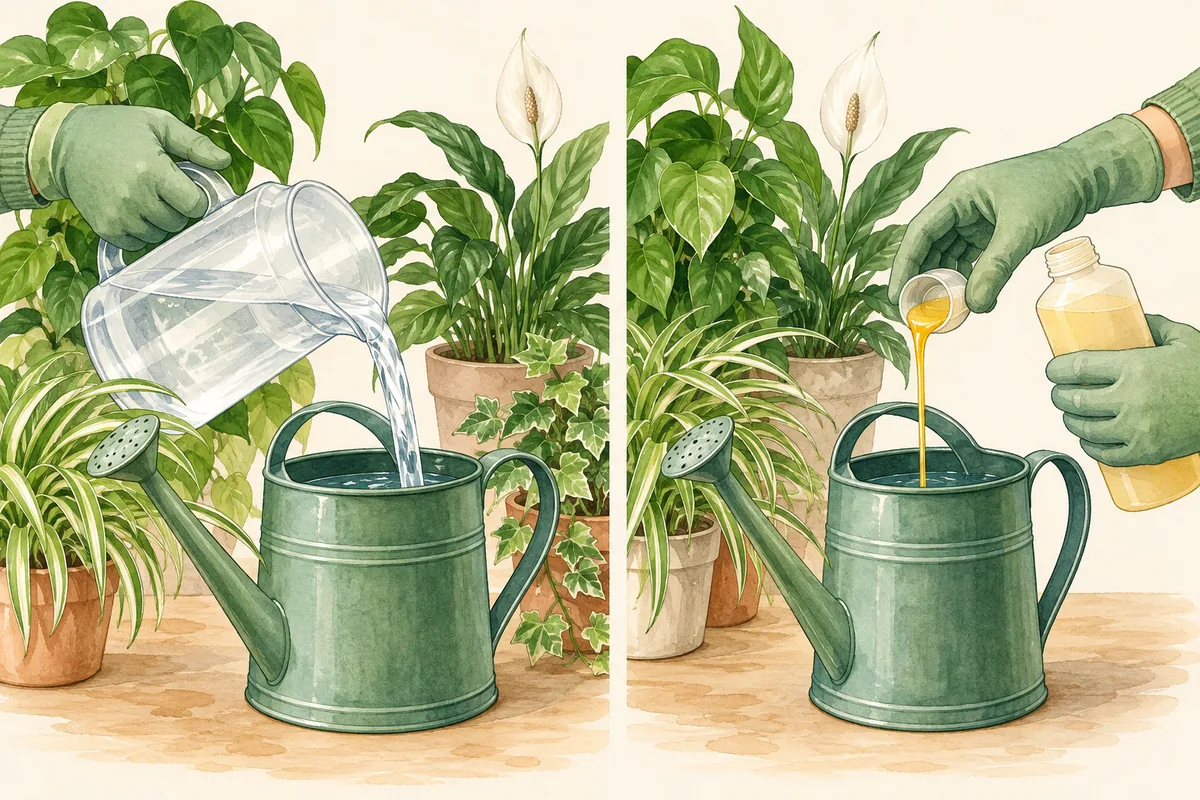
Houseplants in pots can't go looking for nutrients — once the compost is used up, they depend on you. But more feed isn't better. Too much, at the wrong time, does more harm than too little. The rhythm is simple: feed while the plant is growing, and back off when it isn't.
In pictures
-
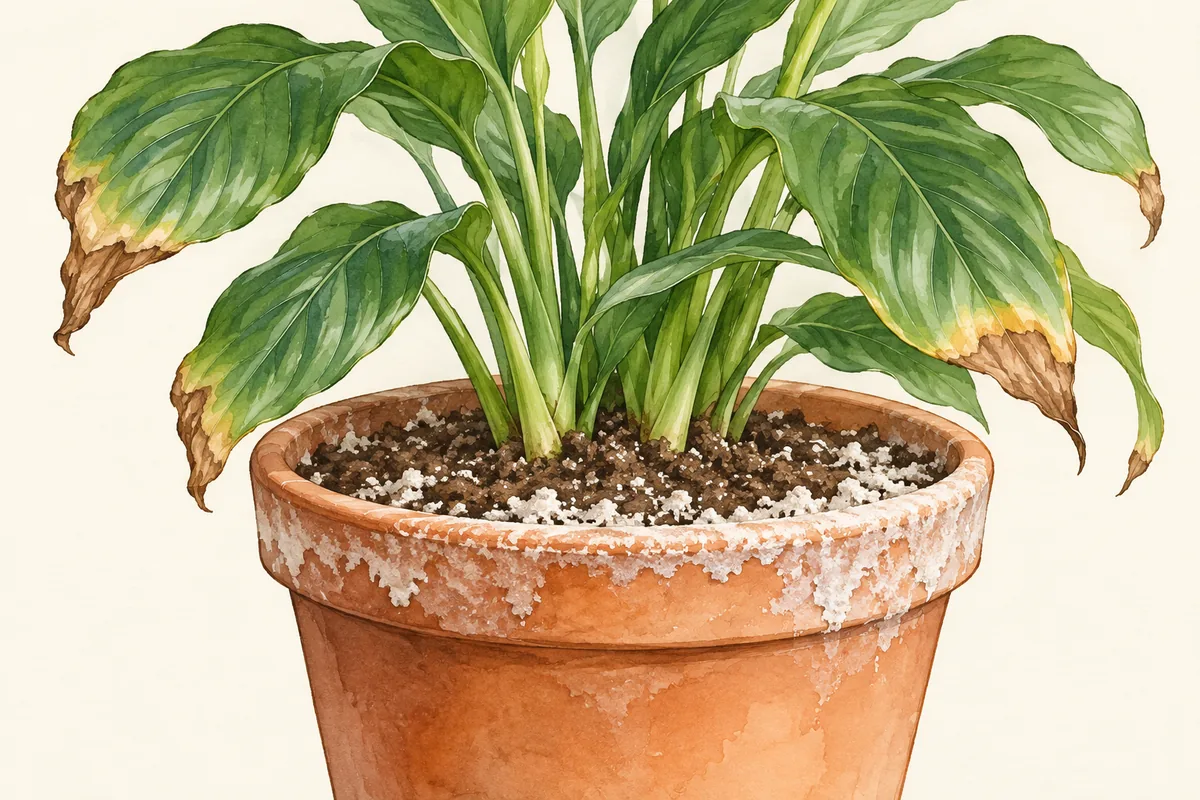
2White crust and brown tips are signs of overfeeding. -
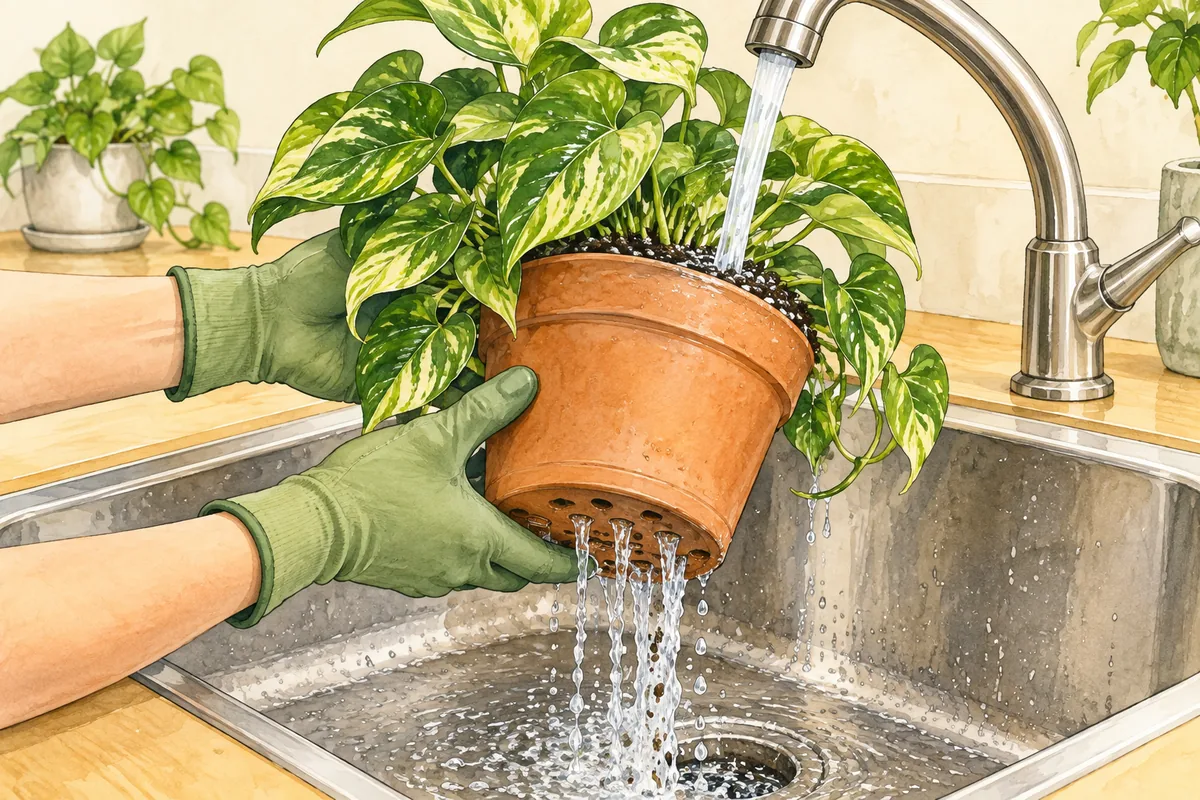
3Flush the compost through with plain water to clear excess salts. -
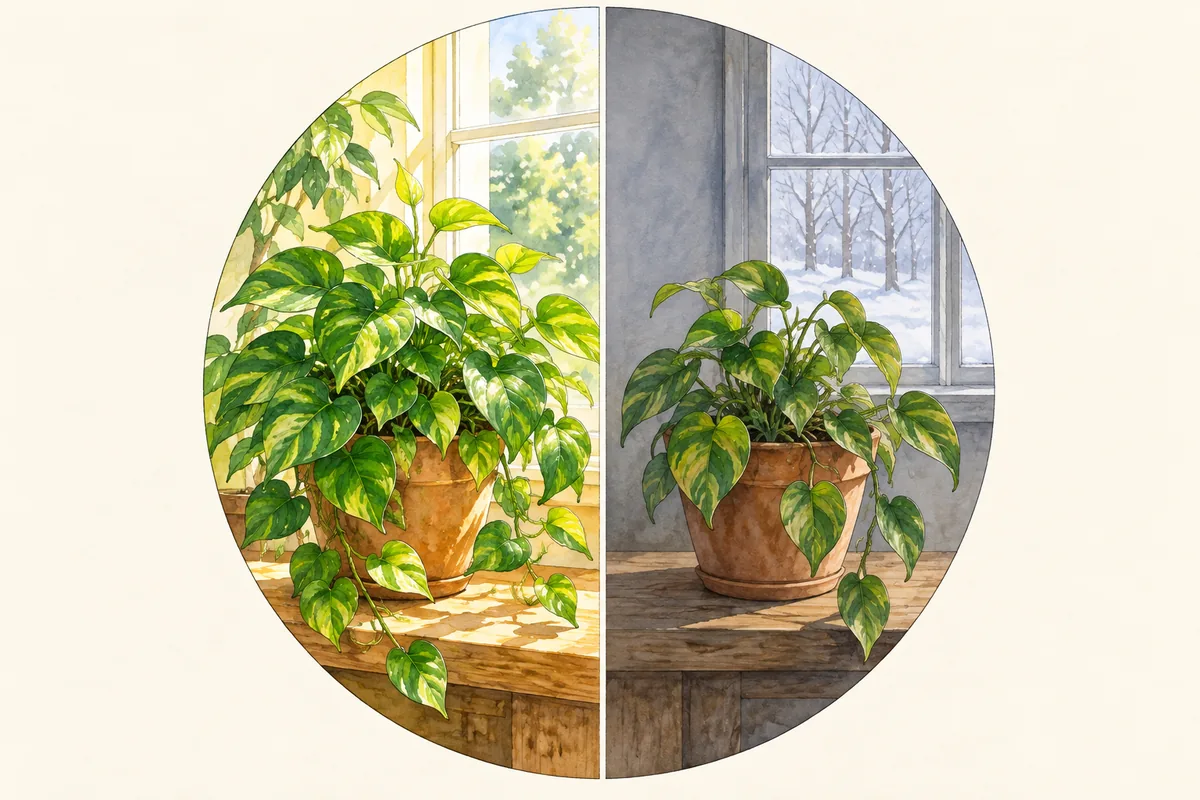
4Feed while plants are growing (left); ease right off in winter (right).
01At a glance
- When: the growing season, roughly March to October.
- How often: a liquid feed once or twice a month — or a quarter-strength feed at every watering.
- Winter: once a month at most, or not at all. In low light, plants can't use it.
- Golden rule: never feed onto dry compost. Water first.
02Which feed?
- Foliage plants (most leafy houseplants, such as spider plants): a balanced or higher-nitrogen houseplant feed.
- Flowering plants (such as the peace lily in flower): a feed higher in potassium and phosphorus — a tomato feed works.
- Cacti and succulents (such as aloe vera): sparingly, in the growing season only.
- Orchids (such as the moth orchid): a specialist orchid feed, used weakly.
- Acid-loving plants: an ericaceous feed.
03Step by step
- Water the plant first so the compost is moist.
- Dilute the feed exactly as the label says — or weaker. Never stronger.
- Pour it onto the compost, not over the leaves.
- Write the date on your calendar or the pot label, so you don't double-dose.
04Signs you're overfeeding
- A white crust on the compost surface or the pot rim.
- Brown, crispy leaf tips and edges.
- Soft, sappy growth that pests love — the RHS notes too much nitrogen gives exactly this.
The fix: flush the compost through with plenty of plain water, letting it drain fully — or repot into fresh compost.
Save your money
One general liquid houseplant feed covers most foliage plants. A tomato feed covers most flowering ones.
A specialist cactus feed is optional. An ordinary houseplant feed, used sparingly, does the job.
Orchids are the one plant group where a specialist feed is worth having.
Feeding less often saves money and plants.
How we checked this
Every care and safety claim on this page is verified against horticultural and veterinary sources.
Sources: RHS — How to grow houseplants · RHS — How to feed plants · UConn Extension — Fertilizing houseplants
Checked 1 October 2026. If our advice ever conflicts with the RHS, believe them and tell us.