
The old autumn ritual — cut every perennial to the ground and leave the border bare — has gone out of fashion, and for good reasons. Standing stems and seedheads give winter structure, feed birds, shelter insects and protect some plants' crowns from frost. The RHS treats both autumn and spring cutting as valid. The skill is knowing which plants go now and which wait.
In pictures
-
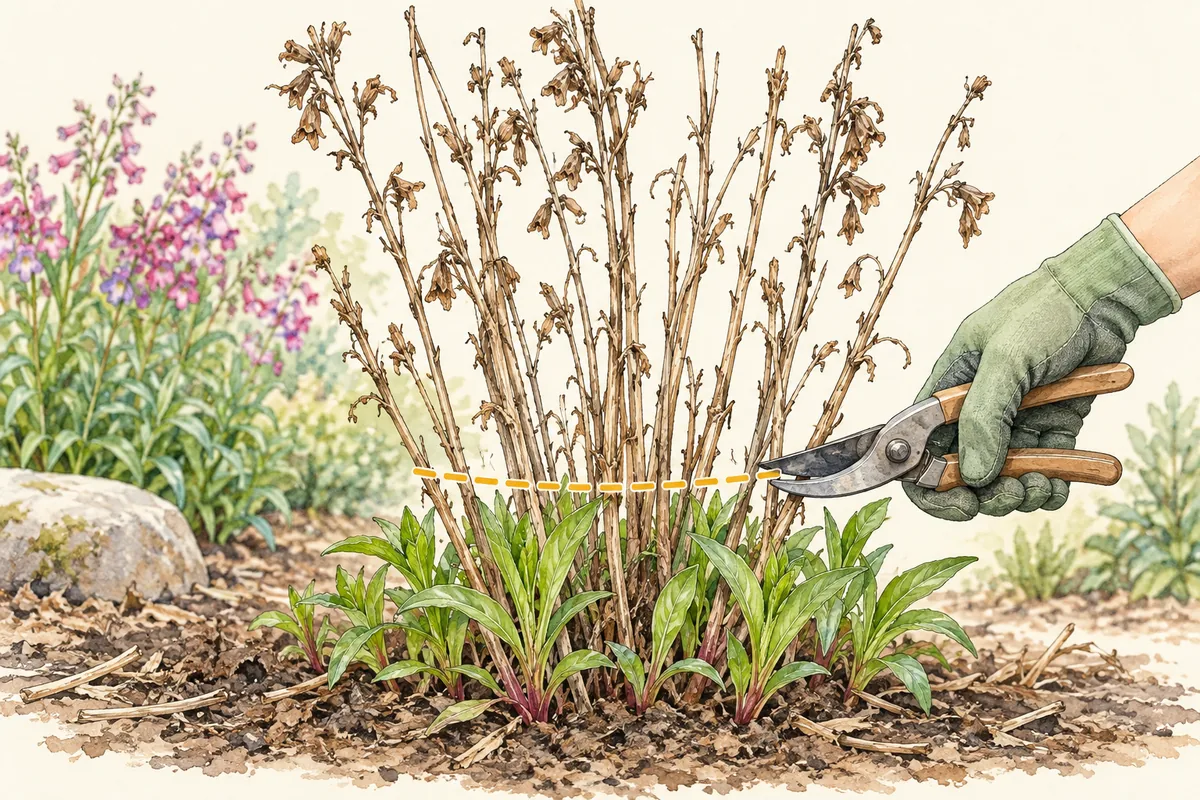
2Penstemons in spring: cut the old stems just above the new shoots. -
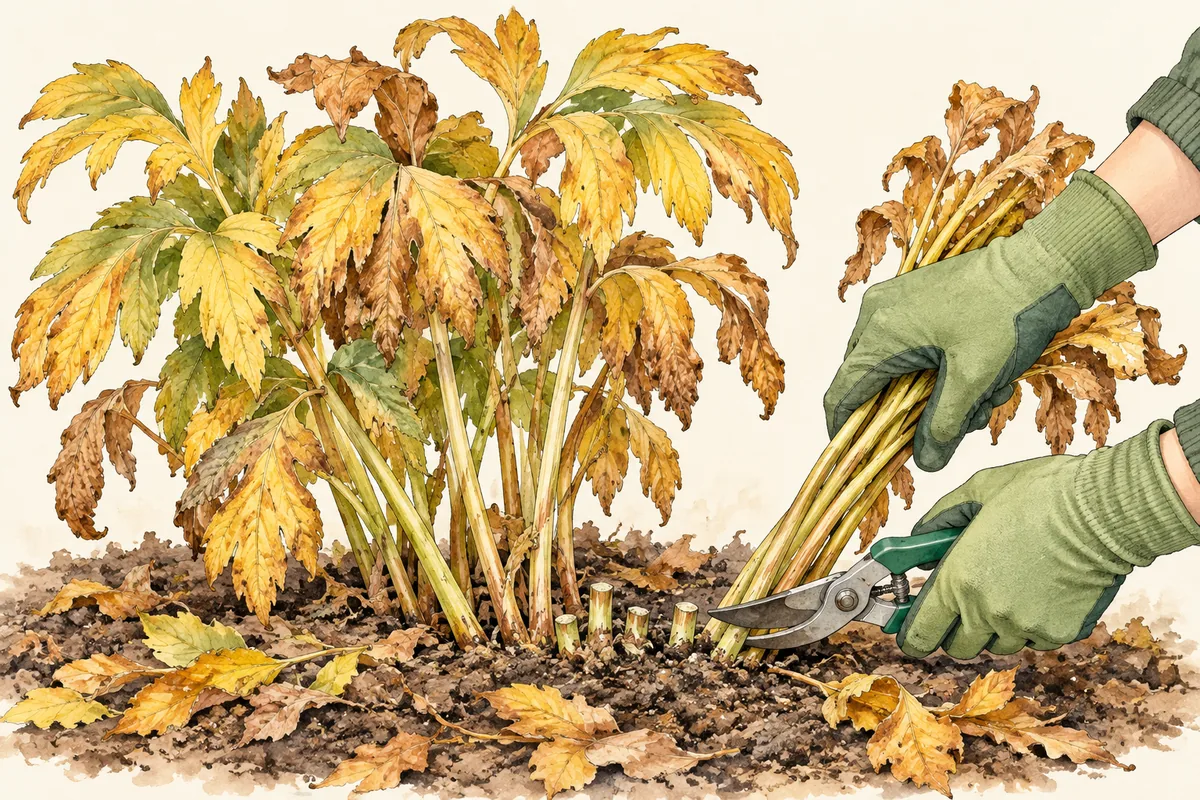
3Peonies can be cut to the ground in autumn. -
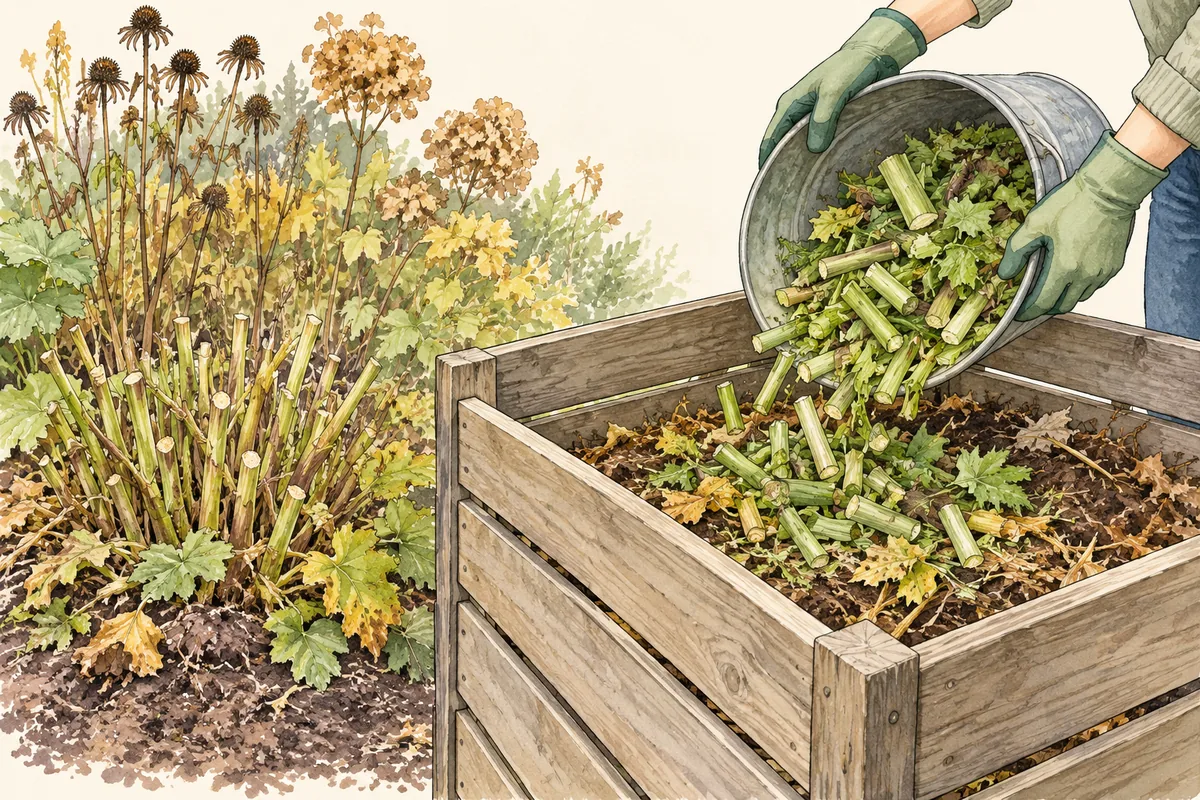
4Chop healthy stems up before they go on the compost.
01Cut in autumn
- Anything collapsed, soggy or rotting — it won't look good and can harbour disease.
- Anything with diseased foliage — and keep it off the compost heap.
- Plants whose leaves come from below ground, such as crocosmia and peony: cut to soil level.
02Leave standing until spring
- Good-looking seedheads — eryngium, grasses, sedums. They look good with frost on them and feed birds.
- Borderline-hardy perennials — penstemons and tender salvias. The old stems protect the crown from frost. Wait until the risk of frost has passed, usually April or May.
- Evergreen perennials — some kniphofias and sedges. Just tidy dead leaves.
03Go gently
Plants already showing new shoots at the base, such as asters and sedums, get cut back less hard so you don't damage the new growth.
04Spring cutting: step by step
- Start from March for most perennials.
- Look before you cut. Find the new shoots at the base first.
- Cut old stems down to just above the fresh growth, without damaging it.
- Grasses: see ornamental grasses — deciduous ones are cut down, evergreen ones are only combed.
05What to do with the debris
Healthy material goes on the compost heap — chopped up, it rots faster. Diseased material goes in the council green-waste bin.
How we checked this
Every care and safety claim on this page is verified against horticultural and veterinary sources.
Sources: RHS — Perennials: cutting back · RHS — Ornamental grasses: cutting back
Checked 1 October 2026. If our advice ever conflicts with the RHS, believe them and tell us.