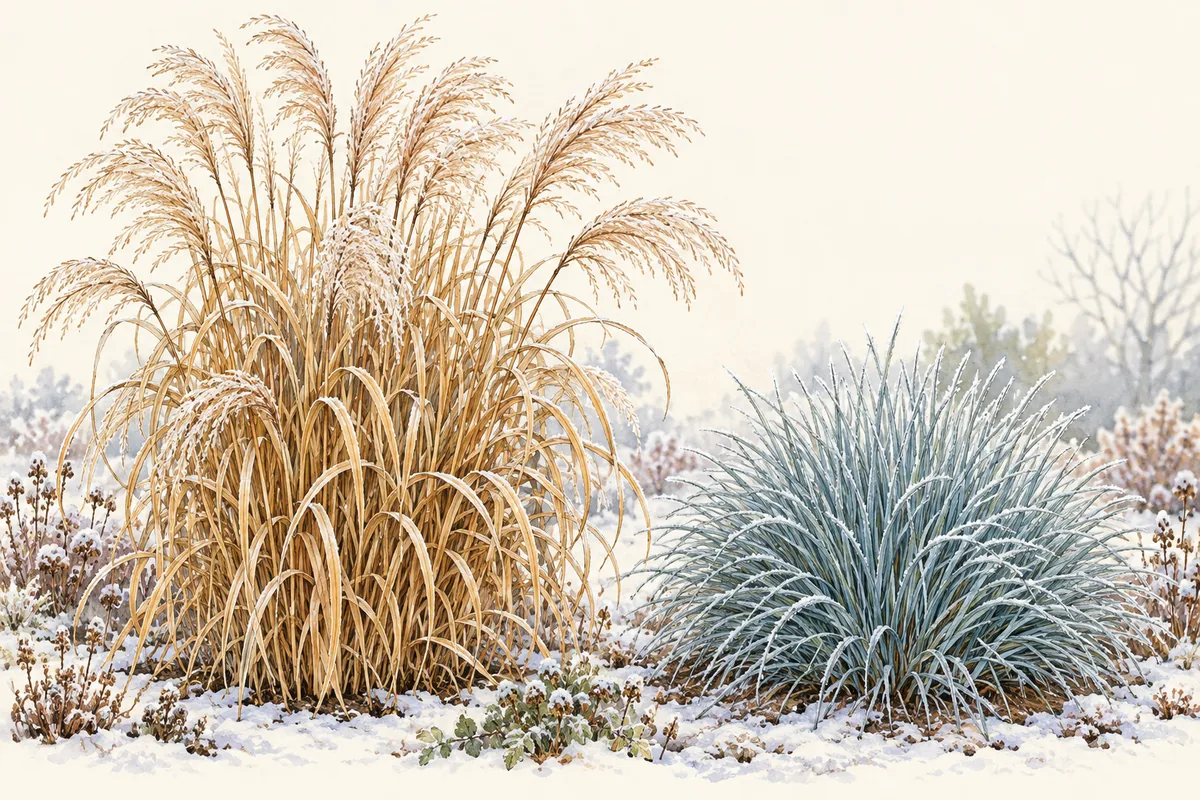
Ornamental grasses are low-maintenance, but they're not no-maintenance — and the one annual job depends entirely on which kind you have. Cut an evergreen grass to the ground the way you would a deciduous one and it may sulk for a year or not come back at all.
In pictures
-
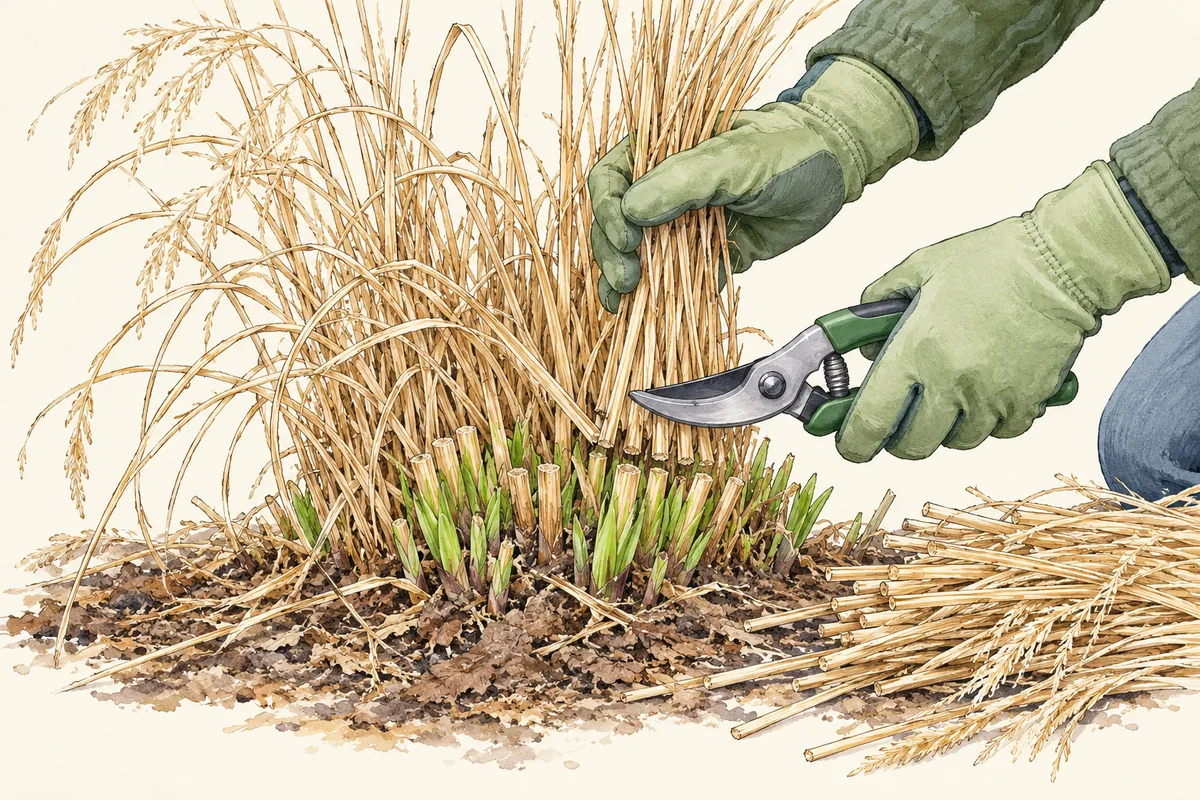
2Cut deciduous grasses low in spring, just above the new shoots. -
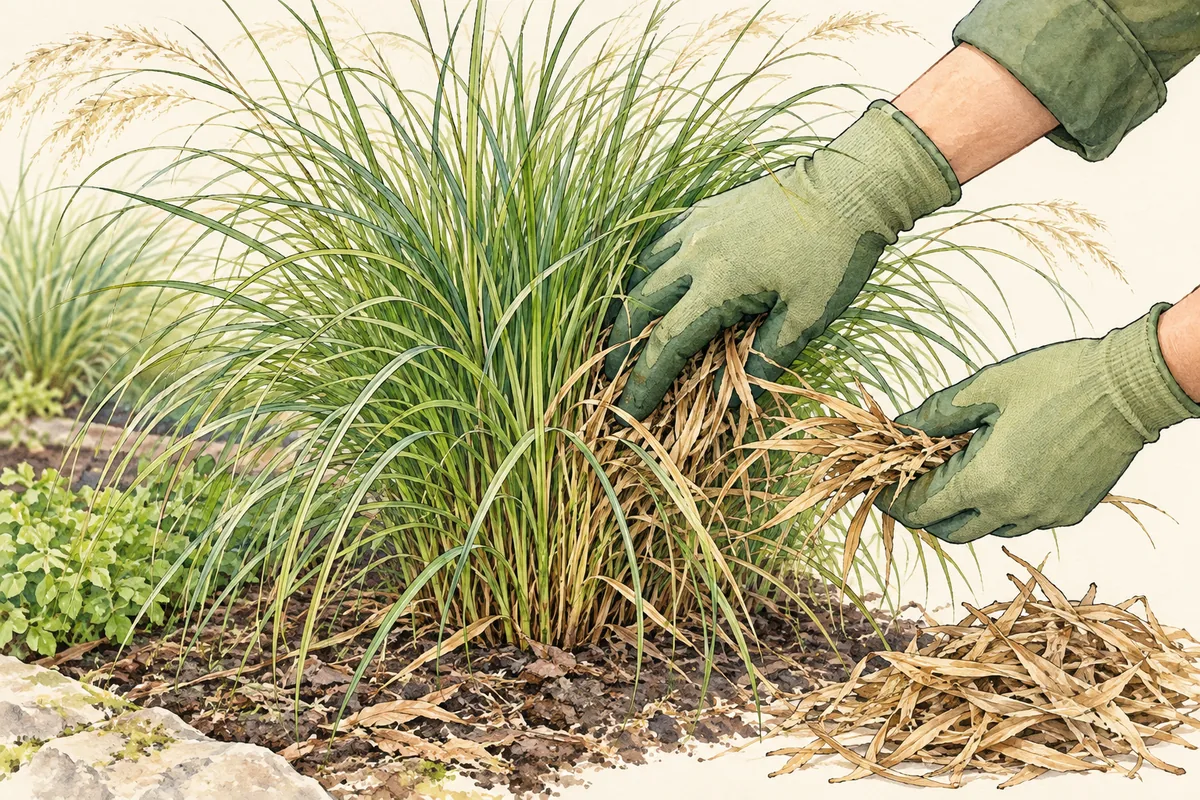
3Evergreen grasses: comb out the dead leaves — don't cut.
01First: deciduous or evergreen?
- Deciduous grasses turn straw-coloured in autumn and stay that way all winter. Miscanthus, calamagrostis, molinia, panicum and most pennisetums are in this group.
- Evergreen grasses keep some green or blue colour through winter. Stipa, carex, festuca and many sedges are in this group.
02Deciduous grasses: cut down
- Leave them standing over winter. They give structure and movement, the seedheads feed birds, and the dead foliage shelters insects and protects the crown from cold.
- Cut back in late winter to early or mid spring, before the new growth gets going.
- Wait longer for the late starters: miscanthus from mid-March to April, and Pennisetum orientale not until late April.
- Cut as low as you can without damaging the new shoots coming through.
03Evergreen grasses: comb out
- Don't cut them hard — they don't always respond well.
- Comb out dead leaves with gloved fingers or a rake.
- On dense tufts such as Festuca glauca, pull dead leaves out from the base.
Pampas grass is the exception: it can be cut hard in early spring — with eye protection and thick gloves.
04Dividing grasses
Big clumps go bare in the middle and can be split, but timing matters:
- Cool-season grasses (carex, calamagrostis, deschampsia, festuca, molinia, stipa): late winter to early spring.
- Warm-season grasses (miscanthus, panicum, pennisetum): late spring, once they're growing.
05Safety
Many grasses have sharp leaf edges. Wear gloves — and eye protection for pampas.
06Mistakes to avoid
- Cutting deciduous grasses in autumn. You lose the winter display and the crown's protection.
- Hard-pruning evergreen grasses.
- Dividing warm-season grasses too early, before they're growing.
How we checked this
Every care and safety claim on this page is verified against horticultural and veterinary sources.
Sources: RHS — Ornamental grasses: cutting back · RHS — How to grow ornamental grasses
Checked 1 October 2026. If our advice ever conflicts with the RHS, believe them and tell us.