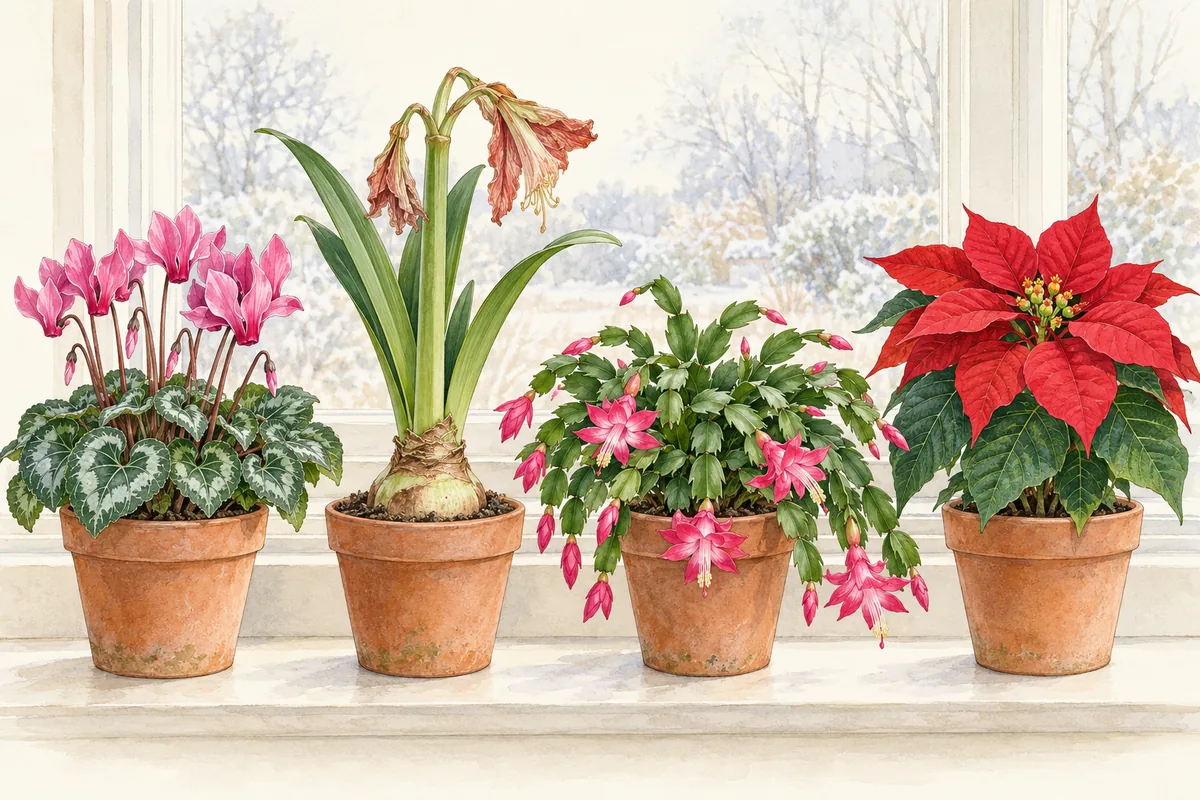
By Twelfth Night the Christmas plants are looking tired and the question is whether to keep them. Three of the four are easy to bring back, and they all want the same thing: a cooler room than you'd guess, and a rest. The fourth is a project.
In pictures
-
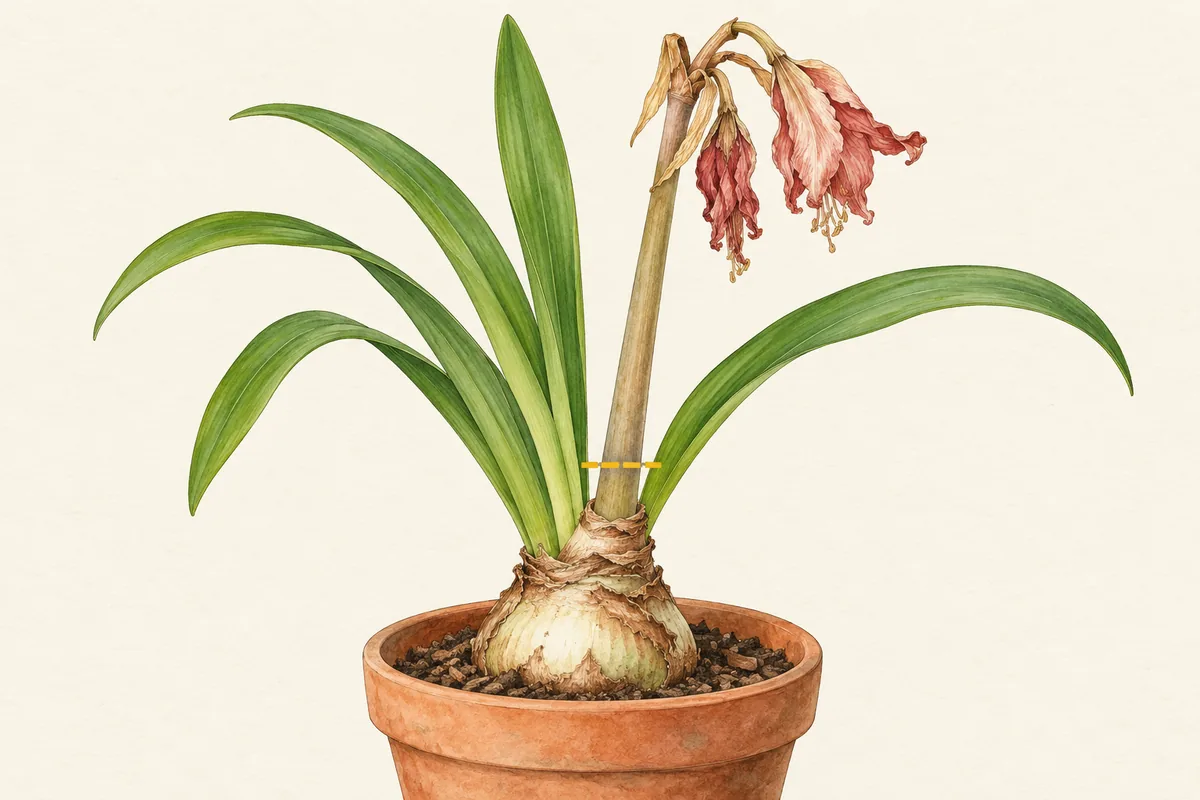
2Amaryllis: cut the spent flower stalk at its base and keep every leaf. -
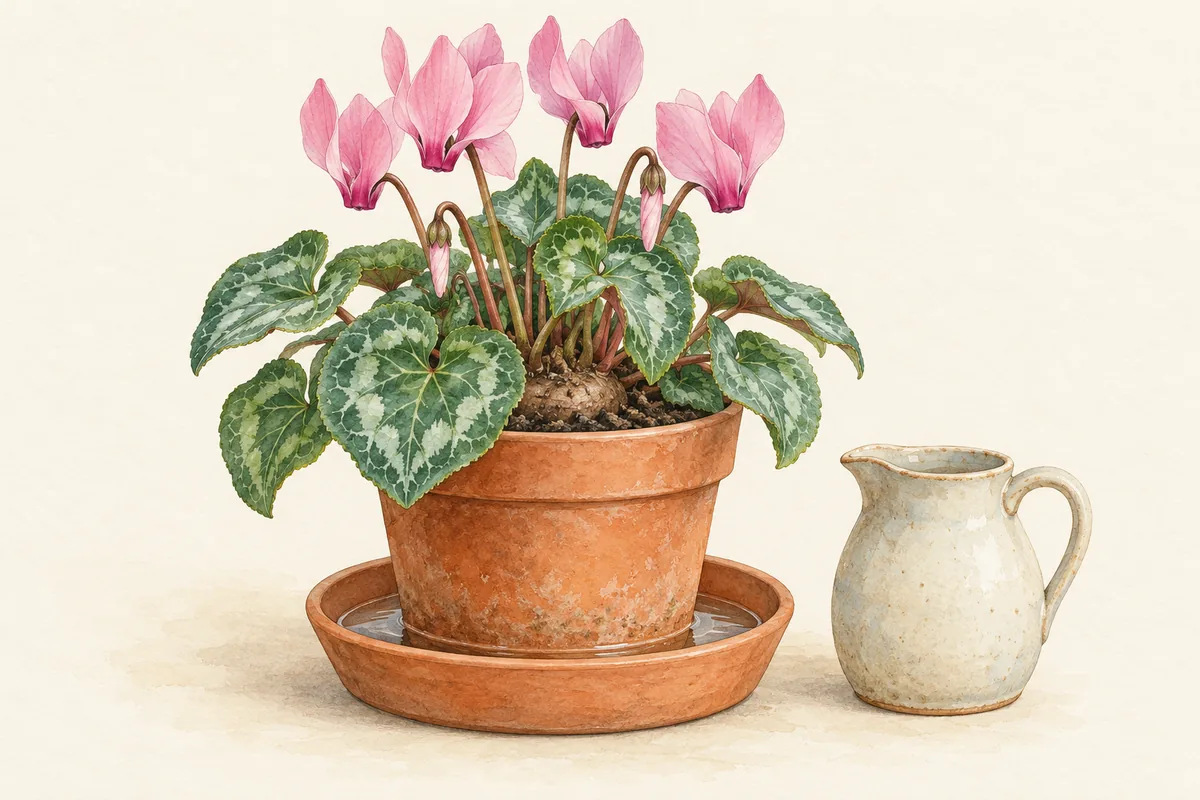
3Water cyclamen from below: fill the saucer, then tip away what's left. -
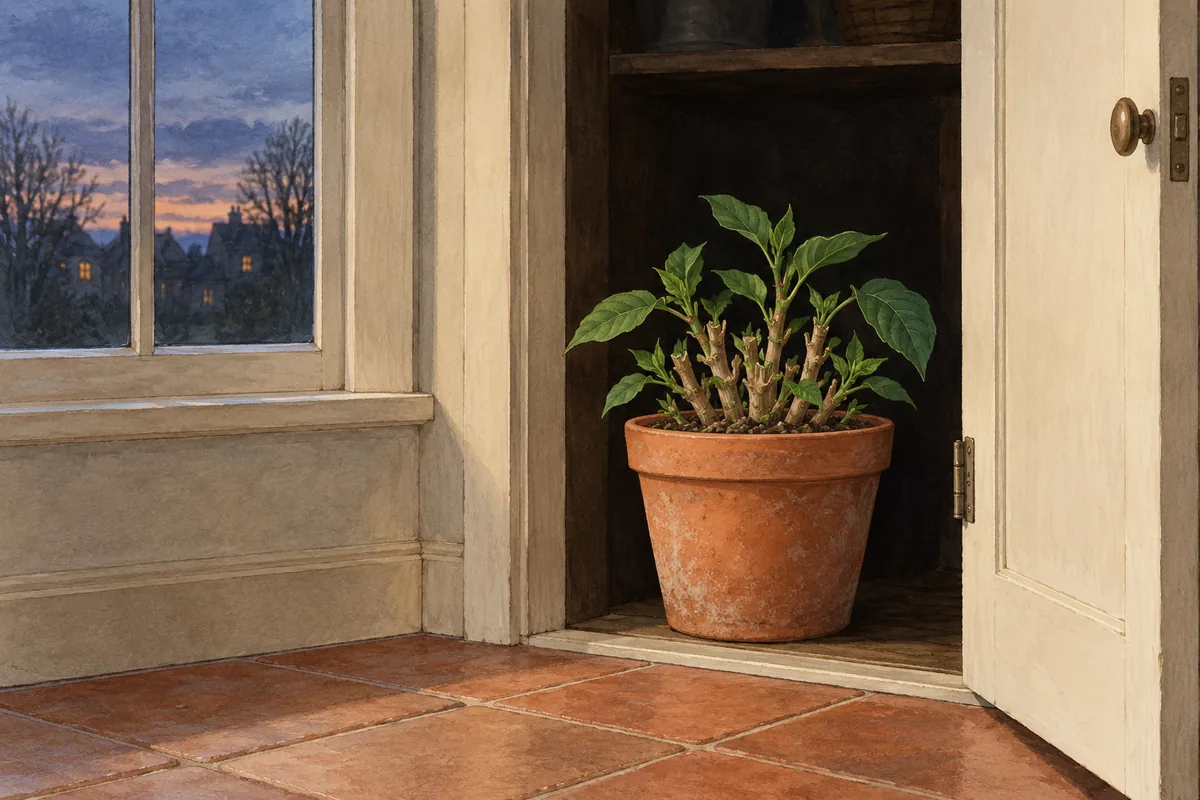
4Poinsettia in autumn: twelve hours of darkness every night to colour up again.
01At a glance
- Cyclamen: cool room, water from below, let it go dormant in summer.
- Amaryllis: cut the stalk, keep the leaves, feed all summer, cool rest from late September.
- Christmas cactus: two cool rests a year. The autumn one sets the buds.
- Poinsettia: possible, but it needs 8–10 weeks of strictly short days.
Several of these carry safety flags for pets. Each plant's profile, linked below, sets out who is at risk and how; our poinsettia myths article puts the festive plants in order of real concern.
02Cyclamen
The florist's cyclamen dies of kindness: a warm room and water poured over the top.
- Keep it cool. The RHS gives around 10–15°C, in bright light away from direct sun and heat sources. A warm sitting room is the wrong place.
- Water from below. Pour water into the saucer, let the plant drink for up to half an hour, then tip away what's left.
- Err on the dry side. The RHS says the odd drying-out does less harm than overwatering. Yellowing leaves are often a sign of too much water.
- Remove spent flowers by twisting the stem and giving it a sharp pull.
After flowering: keep watering and feeding until the leaves yellow, then reduce watering. Keep it dry while dormant, somewhere cool for the summer. When it stirs again in early autumn, replace the top few centimetres of compost and resume regular watering.
03Amaryllis
An amaryllis (properly Hippeastrum) is usually binned with its leaves still green. Those leaves are what feed the bulb for next winter's flowers.
- Cut the spent flower stalk to the base. Leave every leaf.
- Keep watering, and feed weekly with a balanced liquid feed.
- Give it a summer of growth. The RHS suggests outside or in a greenhouse, shaded from scorching sun and watered regularly.
- In late September, move it somewhere well lit but cooler — about 13°C — for eight to ten weeks.
- After that rest, cut the remaining old leaves to 10cm above the neck of the bulb, replace the top 2.5–5cm of compost, and bring it back into warmth.
It only needs repotting every two or three years, between January and March. If it doesn't flower, the RHS's usual suspects are drying the bulb off too early, too much shade, or too little water the previous summer.
04Christmas cactus
The Christmas cactus is the easiest keeper here. It wants two cool rests a year, at 12–15°C.
- Late January to late March: the rest after flowering. Move it somewhere cooler and let the top few centimetres of compost dry between waterings. Never let it dry out completely.
- April to September: growth. Normal room warmth (18–20°C), regular watering, a liquid houseplant feed. It can spend summer outside in a sheltered, shady spot.
- Mid-September until buds appear: the second rest. Cool again, less water, and the naturally shortening days. This is what triggers flower buds.
No flowers? The RHS points to a room above 18°C in autumn, or artificial light after dark. A cool spare room where the lights stay off in the evening is ideal.
Buds dropping? Usually fluctuating temperatures — too hot by day, too cold by night — or overwatering.
For a bushier plant, twist off the outer segments of the strongest shoots after flowering.
05The poinsettia, if you must
Keeping a poinsettia alive is easy enough: bright light out of direct sun, a minimum of 13–16°C, and water only when the compost surface feels dry. Getting the red back is the hard part. The red "petals" are bracts, and they only colour after weeks of short days. The RHS regime:
- April: prune hard, to about 10cm, and keep at around 13°C. The milky sap can irritate skin and eyes, so wear gloves.
- Early May: repot.
- Summer: grow on at 15–18°C.
- From late September: 8–10 weeks of short days. After twelve hours of daylight, cover the plant or move it to a dark room. Every single day.
- Throughout: a steady 18°C or so, which it needs to colour up well.
That is a daily job for two months or more. If that sounds like a hobby, enjoy it. If it sounds like a chore, compost the plant in February without guilt.
How we checked this
Every care and safety claim on this page is verified against horticultural and veterinary sources.
Sources: RHS — Christmas-flowering houseplants · RHS — January: greenhouse, conservatory and houseplants · RHS — Cyclamen persicum · RHS — Hippeastrum · RHS — How to grow Christmas cactus · RHS — How to grow poinsettias · BBC Gardeners' World — How to grow indoor cyclamen
Checked 3 October 2026. If our advice ever conflicts with the RHS, believe them and tell us.