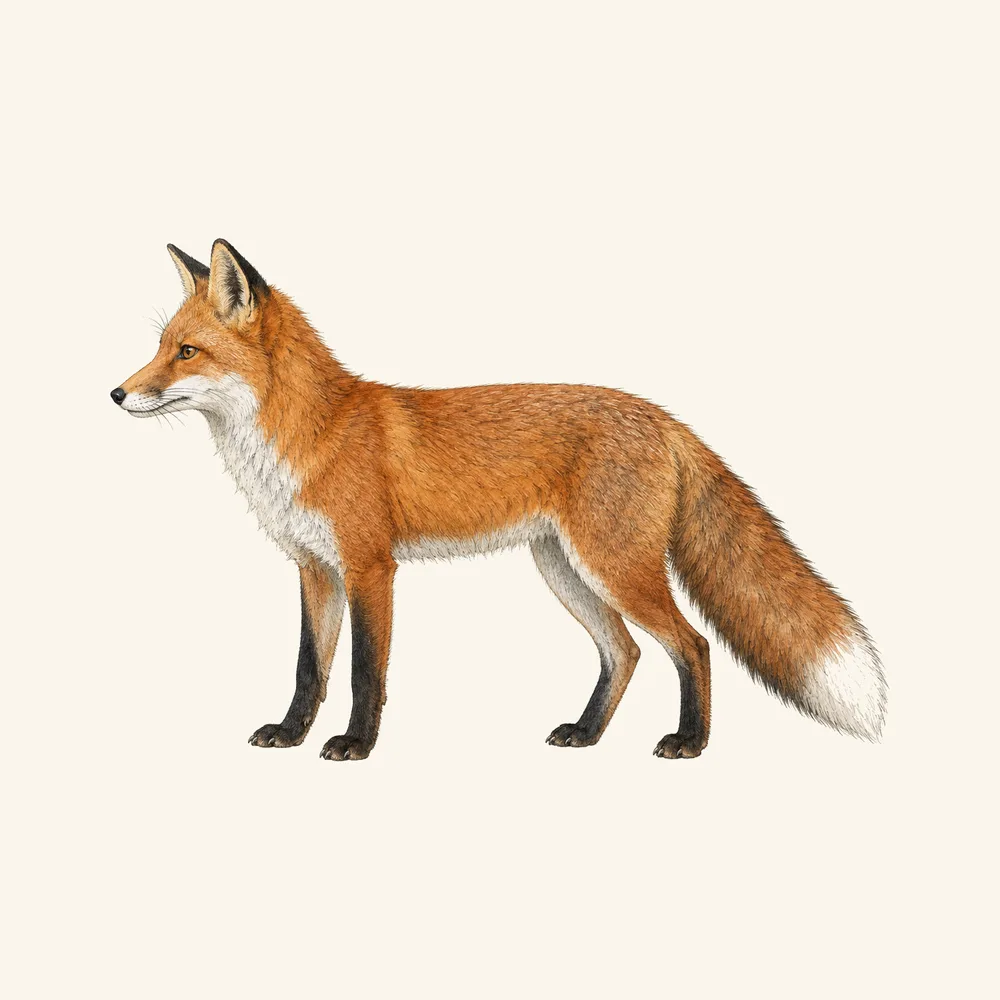
Red fox
Vulpes vulpes
Britain's most-complained-about garden visitor, and one of its least harmful. What it eats, and why hand-feeding is the line.
In many gardens
Widespread across mainland Britain and thoroughly at home in towns and gardens. The Wildlife Trusts describe the red fox as widespread but absent from the Channel Islands, the Isles of Scilly, the Scottish islands and the Isle of Man. The RHS position is that "foxes largely need to be tolerated in gardens and can be considered part of the biodiversity".
Not assessed
No conservation assessment exists for this species. That is not the same as being fine.
No assessment scheme records this species as “No Great Britain Red List assessment verified for this species. The Wildlife Trusts describe its conservation status simply as "Common".”. Source.
- Wild Mammals (Protection) Act 1996, section 1 — "If, save as permitted by this Act, any person mutilates, kicks, beats, nails or otherwise impales, stabs, burns, stones, crushes, drowns, drags or asphyxiates any wild mammal with intent to inflict unnecessary suffering he shall be guilty of an offence." This applies to the fox as it does to any wild mammal, and it is the instrument that makes most home-made deterrents and DIY control a criminal matter. law
At a glance
-
Size
Much bigger than a robin. Body 62-72cm with a 40cm tail, weighing 5-7kg — smaller and lighter than most people guess, being mostly fur.
-
Active when
Mainly nocturnal and crepuscular, but urban foxes are often seen in daylight, which is normal and not a sign of illness.
-
What it eats
Small mammals, birds, frogs and earthworms, plus berries and fallen fruit; urban foxes scavenge discarded food.
-
Where it shelters
An underground burrow system called an earth, often under a shed, decking or a dense shrub in a quiet corner.
-
Breeding season
Mating peaks in January; cubs are born around March and emerge above ground from about four to five weeks old.
-
Status
No verified Great Britain Red List assessment. The Wildlife Trusts describe the species as common and widespread.
Not to be confused with
- Fox cub — In late spring people report cubs as something else entirely, or assume they are abandoned. A cub is chocolate-brown and woolly rather than rust-red, with a short, thin, dark tail and a blunt puppyish face. It is almost never orphaned — the vixen is usually nearby and away foraging.
- Domestic cat — At night and at a distance the body size is genuinely similar. A fox holds its tail low and straight behind it as it trots, with a level back and a long-legged gait; a cat carries its tail up or curled and moves in a more crouched, stop-start way. The white tail tip settles it.
- Muntjac deer — Reported as foxes in suburban gardens surprisingly often, because both are russet, dog-sized and seen in headlights. A muntjac has cloven hooves, a hunched back, no bushy tail and browses standing still at shrubs; a fox has a long brush and a low, purposeful trot.
Through the year
Spring
Cubs are born around March and appear above ground in April and May, often playing on a lawn in daylight. They are not abandoned — leave them alone, and put off decking and shed work if an earth is underneath.
Summer
Cubs disperse from late summer. This is when lawn digging peaks, as young foxes cache food and hunt chafer grubs and leatherjackets. Water in hot weather is more use than food.
Autumn
Foxes take fallen fruit and blackberries readily, and territories start to shift as young animals move out. Secure bins and clear windfalls you do not want dug over.
Winter
The noisy season: mating peaks in January, and the vixen's scream that wakes the street is courtship, not distress. Nothing needs doing.
What a fox actually does to your garden
Less than its reputation suggests. The three real complaints are digging, fouling and noise. Digging is usually one of two things: caching, where a fox buries surplus food in a lawn or soft border and returns for it, or hunting chafer grubs and leatherjackets in turf — in which case the fox is the symptom and the grubs are the cause. Fouling is territorial marking, most of it left deliberately on prominent spots like molehills, lawn edges and the top of a border. The noise is seasonal and peaks in January. Set against that, the RHS notes that foxes eat earthworms and insects including chafer grubs, and its overall position is that "foxes largely need to be tolerated in gardens and can be considered part of the biodiversity". The one genuine risk worth naming is to pet rabbits and guinea pigs kept outdoors: a wooden hutch with a thin mesh door is not fox-proof, and heavy-gauge weldmesh with a bolt is.
The feeding question, answered honestly
Most gardening sites either recommend feeding foxes enthusiastically or refuse to discuss it. Neither is useful. The RSPCA's position is that responsible feeding is acceptable, and there is no law against it. The conditions are what make it responsible. Never hand-feed: a fox that learns to approach a person for food loses the wariness that keeps it alive, and becomes the animal a neighbour reports. Put out a small amount in the same discreet spot rather than a pile by the back door, and clear the remains — uneaten food is what brings rats, and rats are what turn a tolerant street into an intolerant one. The RSPCA says grapes and raisins are toxic to foxes and should never be offered. Cooked bones splinter; chocolate is toxic. And a fox that is fed regularly still hunts, scavenges and roams: you are adding a snack to its night, not taking responsibility for it.
If you would rather they moved on
There is one honest answer and it is the boring one: remove the food. Foxes go where there are calories. Secure bin lids with a bungee or use a bin store, stop spilt bird food accumulating under feeders, clear windfalls, take in pet food bowls overnight and pick up dropped scraps after a barbecue. Compost heaps should be enclosed rather than open if they take cooked waste. Do nothing else without thinking hard about the law: the Wild Mammals (Protection) Act 1996 makes it an offence to mutilate, beat, crush, drown, burn or asphyxiate any wild mammal with intent to inflict unnecessary suffering, and that catches a good deal of what gets suggested on forums. Blocking an earth while cubs are inside is exactly the kind of act that provision exists for. Removing a fox from a garden also achieves very little in the medium term, because the territory does not stay empty — another fox simply takes it.
Plant this for it
Guides
How we checked this
- RSPCA — Foxes in the garden
- The Wildlife Trusts: Red fox
- RHS: Foxes in the garden — tips for coexistence
- Wild Mammals (Protection) Act 1996, section 1
Checked against the sources above. Reviewed on 2026-09-20. Legal position checked 2026-09-20.