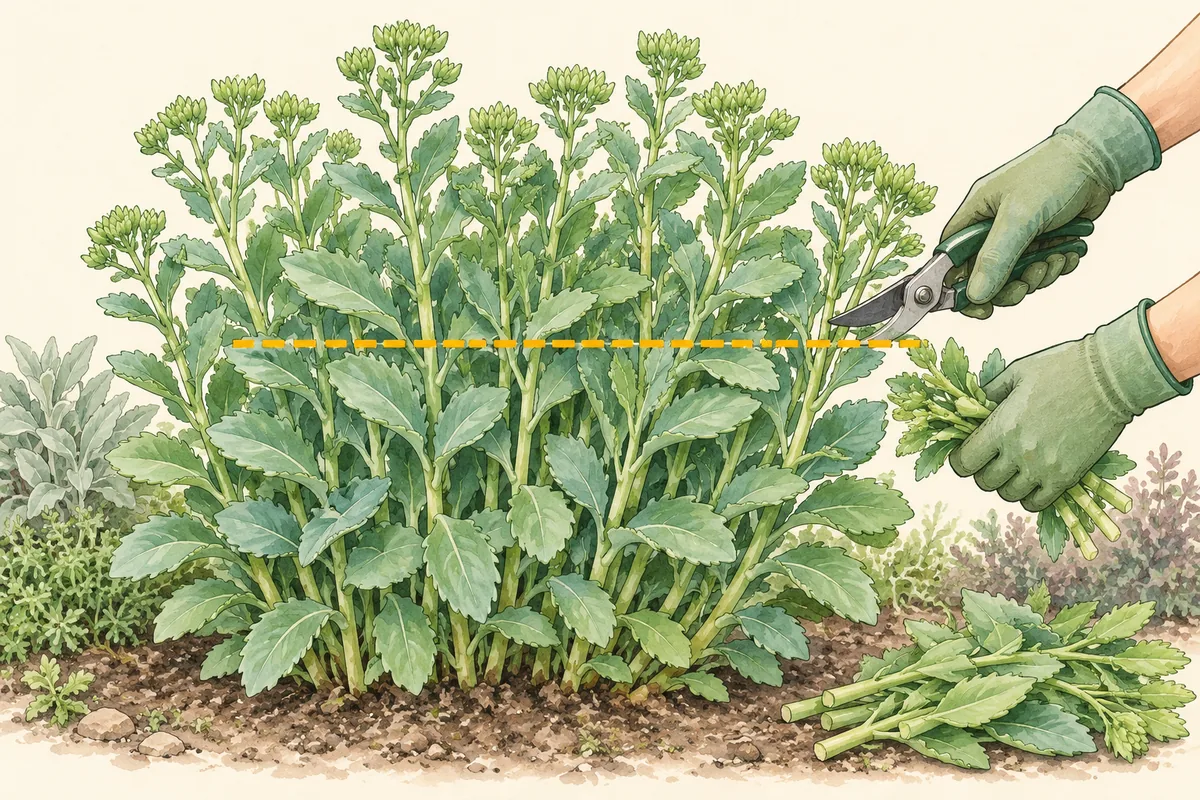
The Chelsea chop is named after its timing — around the RHS Chelsea Flower Show in late May — and it sounds brutal: cutting back perennials just as they're getting going. But on the right plants it gives you shorter, sturdier clumps that don't flop, more (if smaller) flowers, and a later display that carries the border into autumn.
In pictures
-
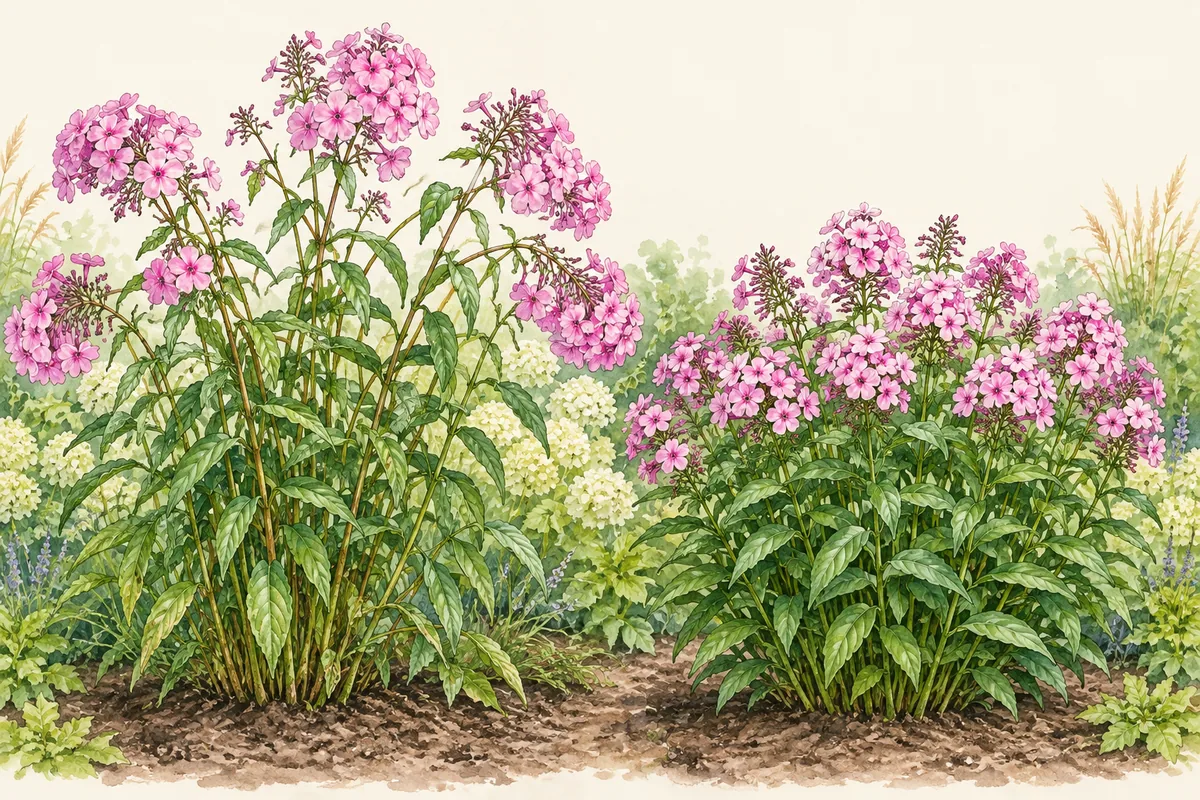
2Unchopped (left) is tall and floppy; chopped (right) is shorter and bushier. -
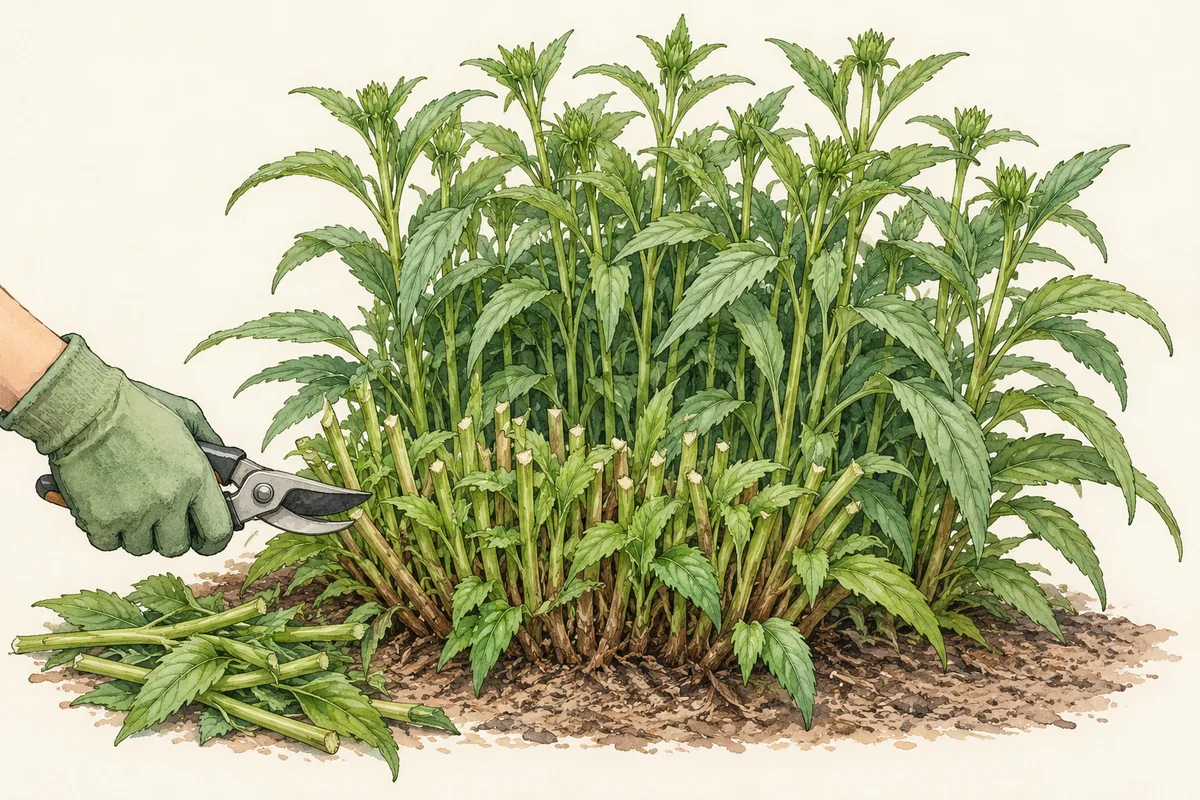
3Chop just the front half to stagger flowering.
01At a glance
- When: usually late May or early June.
- How much: cut clumps back by a third to a half.
- Tools: shears or secateurs.
- Result: shorter, less leggy plants that need less staking, with more, smaller flowers, a little later.
02Which plants
The RHS names these as suitable:
- Echinacea purpurea (coneflower)
- Helenium
- Phlox paniculata
- Hylotelephium (the tall sedums)
- Solidago (goldenrod)
- Cota tinctoria (golden marguerite, formerly Anthemis)
The RHS says many other summer- and autumn-flowering perennials respond in a similar way — but trying it on an unsuitable plant can cost you a year's flowers. If you're not sure, test it on one stem or one clump first.
03Step by step
- Pick your plants. Only late-flowering perennials — never spring or early-summer flowerers.
- Cut each stem back by a third to a half, just above a leaf.
- Feed and water afterwards to help the regrowth.
04Two clever variations
- Spread the season: chop only some of the clumps. The unchopped ones flower first; the chopped ones follow.
- Stagger one clump: cut just the front half of the stems. The front flowers later and lower, hiding the back's bare legs and extending the show.
How we checked this
Every care and safety claim on this page is verified against horticultural and veterinary sources.
Sources: RHS — Chelsea chop
Checked 1 October 2026. If our advice ever conflicts with the RHS, believe them and tell us.