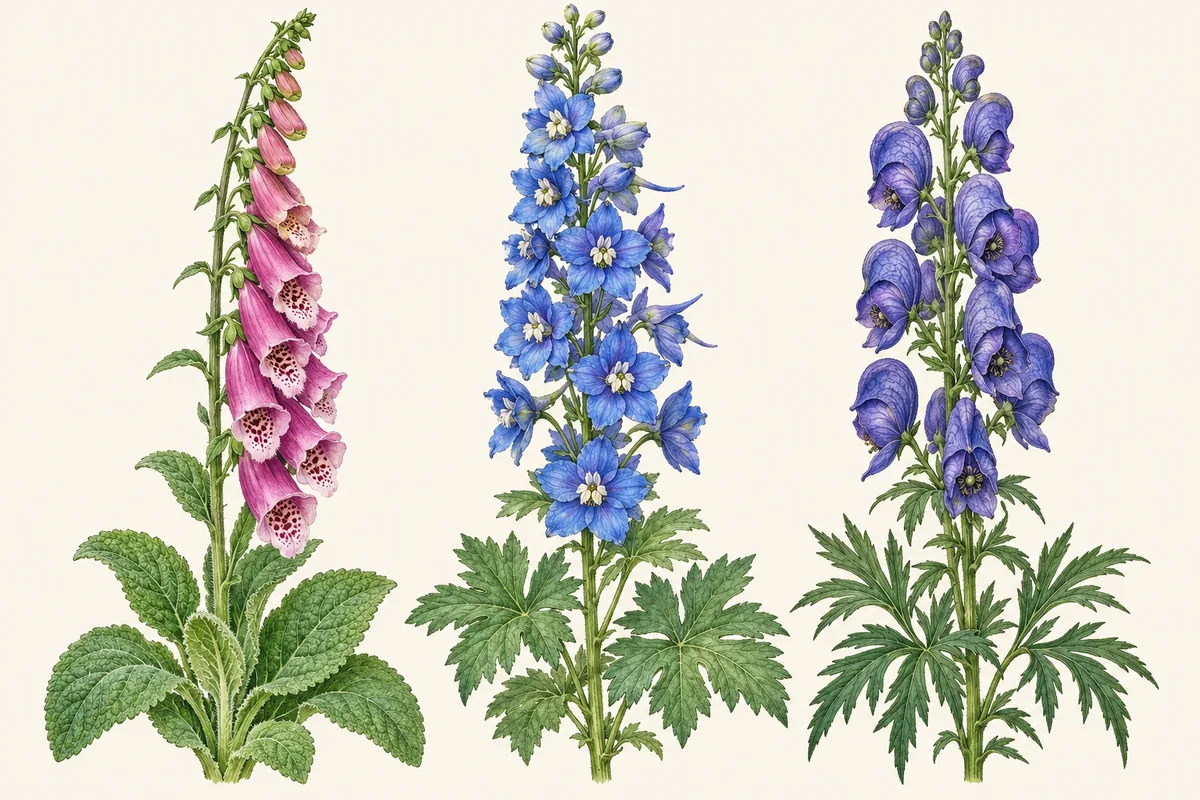
Some of the best plants in a British summer border are poisonous. Foxgloves, delphiniums, laburnum and monkshood have been grown in cottage gardens for generations. The RHS puts it plainly: serious poisoning by plants is very uncommon in the UK, and the risk from garden plants is generally low.
Low is not zero. These seven are the ones worth knowing by name, because the right precaution differs from plant to plant. One of them needs gloves. One has pods a child could mistake for peas. One does much of its damage as a pile of clippings.
In pictures
-
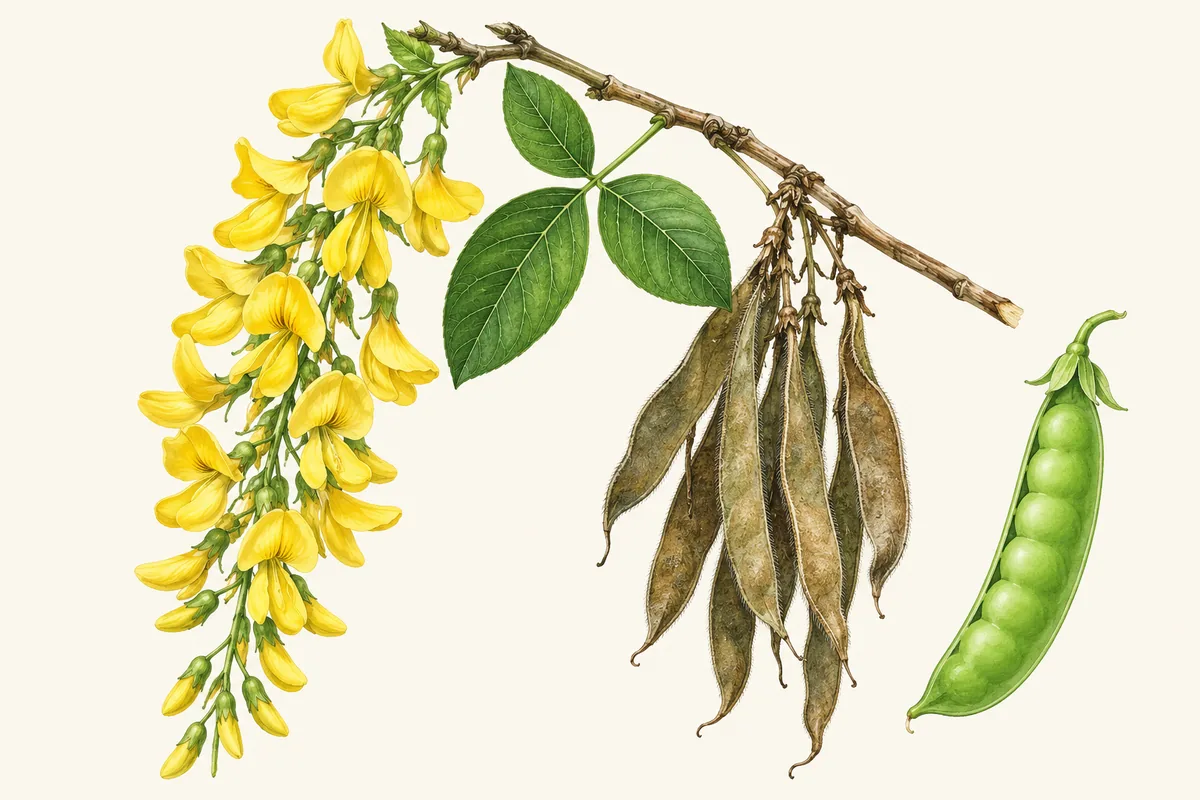
2Laburnum: leaves in threes, and bunches of pods that can look like pea pods (right). -
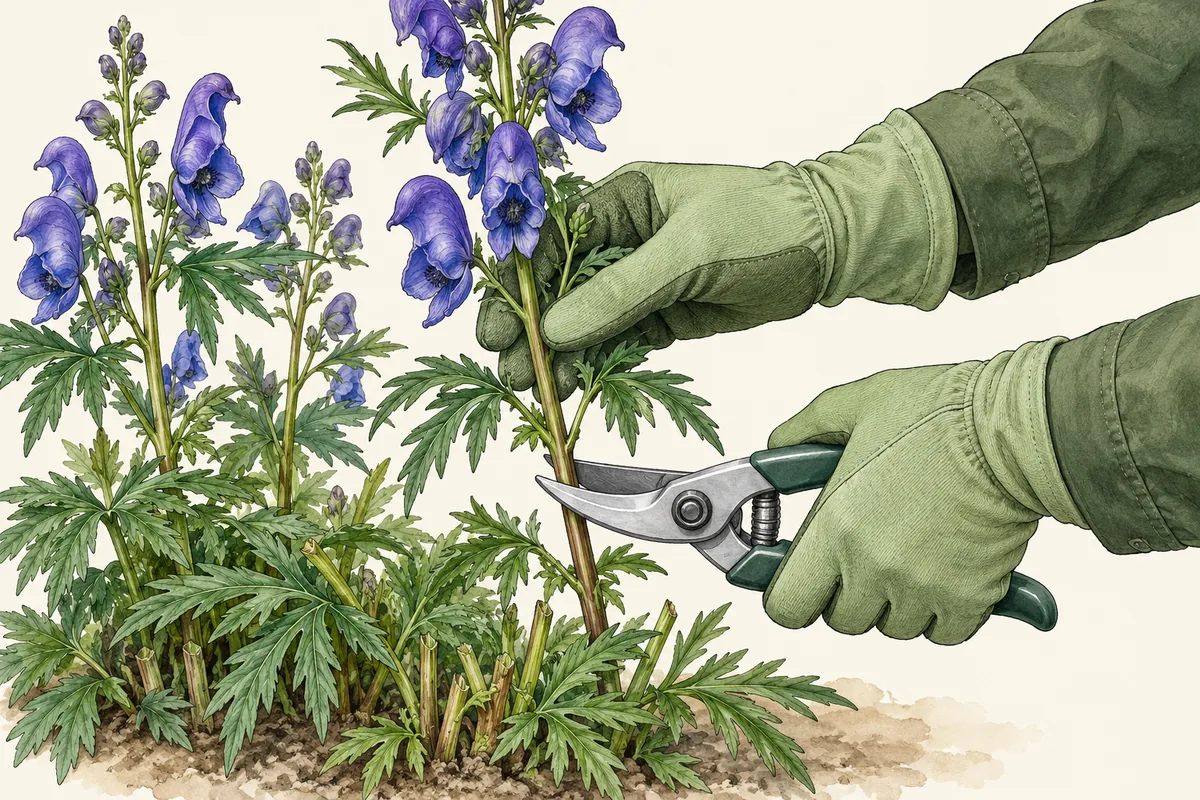
3Wear gloves and long sleeves when cutting monkshood. -
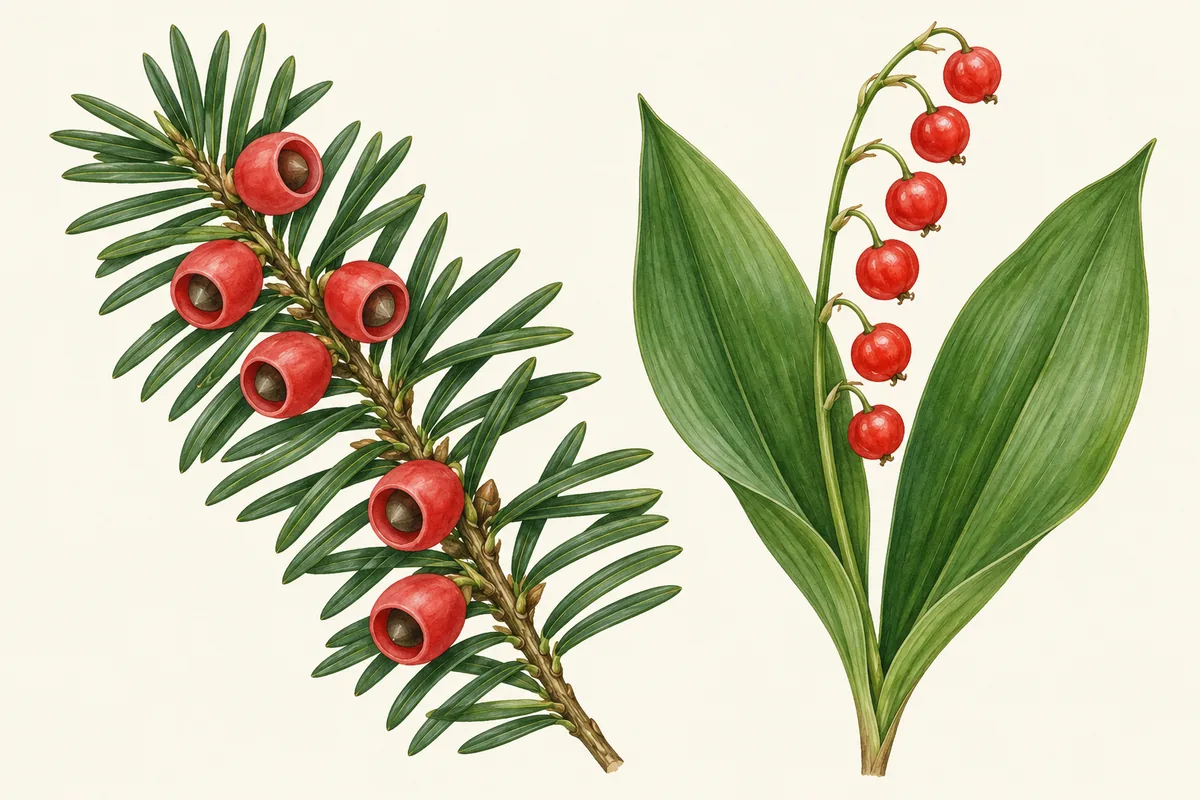
4Yew (left), with its red cup-shaped fruit, and lily of the valley berries (right).
01At a glance
- You don't need to rip them out. You need to know which plant is which.
- Wear gloves for monkshood always, and for the rest when pruning or weeding. That is standard RHS advice.
- Teach children that nothing in the garden is food unless a grown-up says so.
- Prunings are the real hazard for animals. Never leave them where pets or livestock can reach.
02The seven, plant by plant
- Foxglove. Every part contains cardiac glycosides, which act on the heart. Toxic to people, dogs, cats and horses, by eating. The ASPCA lists heart-rhythm problems, vomiting, weakness, cardiac failure and death in pets. The RHS says to wear gloves when handling plants and seeds.
- Laburnum. All parts contain cytisine, most of all the seeds. The risk is specific: the pods that follow the yellow flowers look like pea pods, which is why the seeds are the classic risk to children. It also affects dogs and grazing animals. The RHS classes it as "harmful if eaten", a step below the plants it labels "toxic". That is a label category, not reassurance: our profile rates it serious.
- *Monkshood (Aconitum).* The odd one out, because the route is not only eating. Every part contains aconitine, which veterinary references say is readily absorbed through the skin. The RHS wording is "toxic if eaten; avoid skin contact", with gloves for any handling. Roots, seeds and young shoots are the most toxic parts. It is dangerous to people, pets, horses and livestock.
- Delphinium and larkspur. Diterpene alkaloids, toxic by eating to dogs, cats and horses. The ASPCA lists drooling, muscle tremors and weakness, with heart and breathing failure in severe cases, and notes the plant becomes less toxic as it matures. The RHS adds that the foliage may irritate skin.
- Lily of the valley. Small plant, serious toxin: cardenolides that disrupt the heart, in every part. Toxic by eating to people, dogs, cats and horses. The white bells are followed by red berries, so it belongs on the "we don't eat berries" list.
- Oleander. In the UK this is mostly a pot plant. The RHS rates it H3, hardy only in mild and coastal areas (down to about -5°C), so it lives in conservatories and on sheltered patios. Every part contains cardiac glycosides, toxic to people, pets and livestock by eating. The smoke from burning it is harmful too.
- Yew. Taxine, which can stop the heart with little warning. The RHS says all parts are highly poisonous except the red flesh of the fruit, and the seed inside that flesh is highly toxic. Horses and cattle are the classic victims, often from clippings.
03What actually matters
Rank the risks by how they really happen, and the list gets shorter.
- Clippings and uprooted plants within reach of animals. A standing foxglove in a border is one thing. A barrow of yew trimmings by a paddock gate is another. The RHS rule is not to leave prunings or uprooted plants in reach of farm animals or pets.
- Bare hands on monkshood. Cutting it for a vase, dividing the roots, pulling up seedlings. This is the one border plant where handling is itself the exposure.
- Pods and berries at child height. Laburnum pods, lily of the valley berries, yew berries.
- A dog that chews everything. Cats Protection says most cats are wary of eating anything unusual, and monkshood poisoning is rarely reported in dogs or cats. A young dog that samples the whole border is a different matter. Plant accordingly.
On the RHS list, six of the seven are flagged chiefly for being eaten. Only monkshood carries the extra warning to avoid skin contact. Gloves are still sensible for the rest: delphinium foliage, for one, can irritate skin.
04Sensible precautions
- Label what you plant. In an emergency the name is the most useful thing you can give a doctor or vet.
- Gloves and long sleeves for monkshood. Wash your hands afterwards. Keep it away from anywhere children play or animals graze.
- Check plant labels. The RHS list mirrors the Horticultural Trades Association scheme, which sorts plants into categories with A the most toxic. Most of this list is in category B, "toxic if eaten". Laburnum and delphinium are in C, "harmful if eaten".
- Bag the prunings the same day. Sealed bag, green waste. Never burn oleander. Never tip yew over a field fence. Our autumn danger calendar covers the clippings problem in full.
- Sweep up fallen laburnum pods where children play.
- One rule for children: if it is not a food plant, do not eat it. That is the RHS's first line of advice and it covers every plant here.
05If someone, or something, eats one
- A person: the NHS says to call 999 or go to A&E if you think someone has swallowed, touched or breathed in something harmful, and NHS 111 if you are not sure whether it is harmful. Take a piece of the plant with you. Do not try to make them sick.
- A pet: remove access and phone your vet or the Animal PoisonLine on 01202 509000. Do not induce vomiting. With every plant on this list, ring before signs appear.
- A horse or livestock: call your vet at once. With yew there may be no warning signs at all.
How we checked this
Every care and safety claim on this page is verified against horticultural and veterinary sources.
Sources: RHS — Potentially harmful garden plants · RHS — Aconitum napellus · RHS — How to grow foxgloves · RHS — Laburnum × watereri · RHS — How to grow perennial delphiniums · RHS — Convallaria majalis · RHS — Nerium oleander · RHS — Yew growing guide · ASPCA — Foxglove · ASPCA — Larkspur (Delphinium) · ASPCA — Lily of the valley · ASPCA — Oleander · ASPCA — Yew · Pet Poison Helpline — Monkshood · IVIS Guide to Poisonous House and Garden Plants — Aconitum · BfR (German Federal Institute for Risk Assessment) — Common laburnum · Cats Protection — Plants poisonous to cats · NHS — Poisoning: what to do
Checked 3 October 2026. If our advice ever conflicts with the RHS, believe them and tell us.