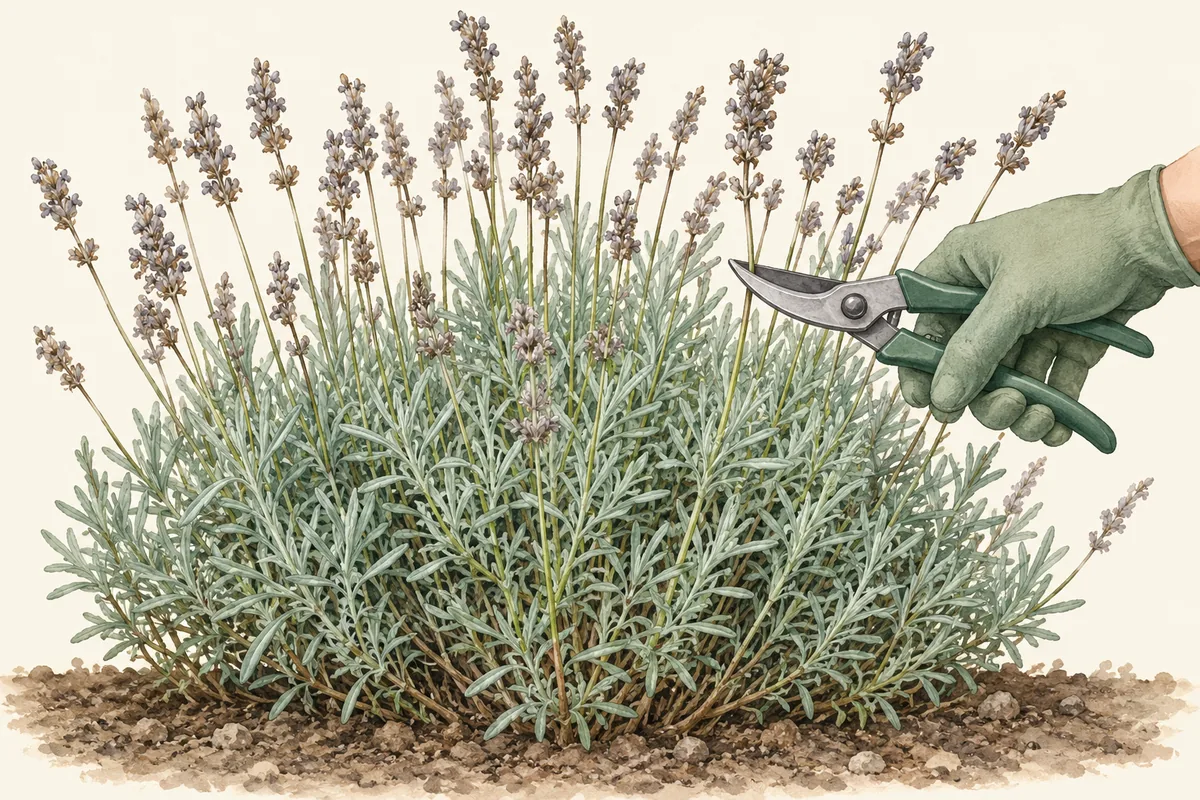
Lavender has one pruning rule that matters more than all the others: don't cut into the old, bare wood. Lavender rarely regrows from it, and a hard cut can kill the plant. The way to stop it going leggy in the first place is a quick, regular trim every year — and the time to do it is just after flowering.
In pictures
-
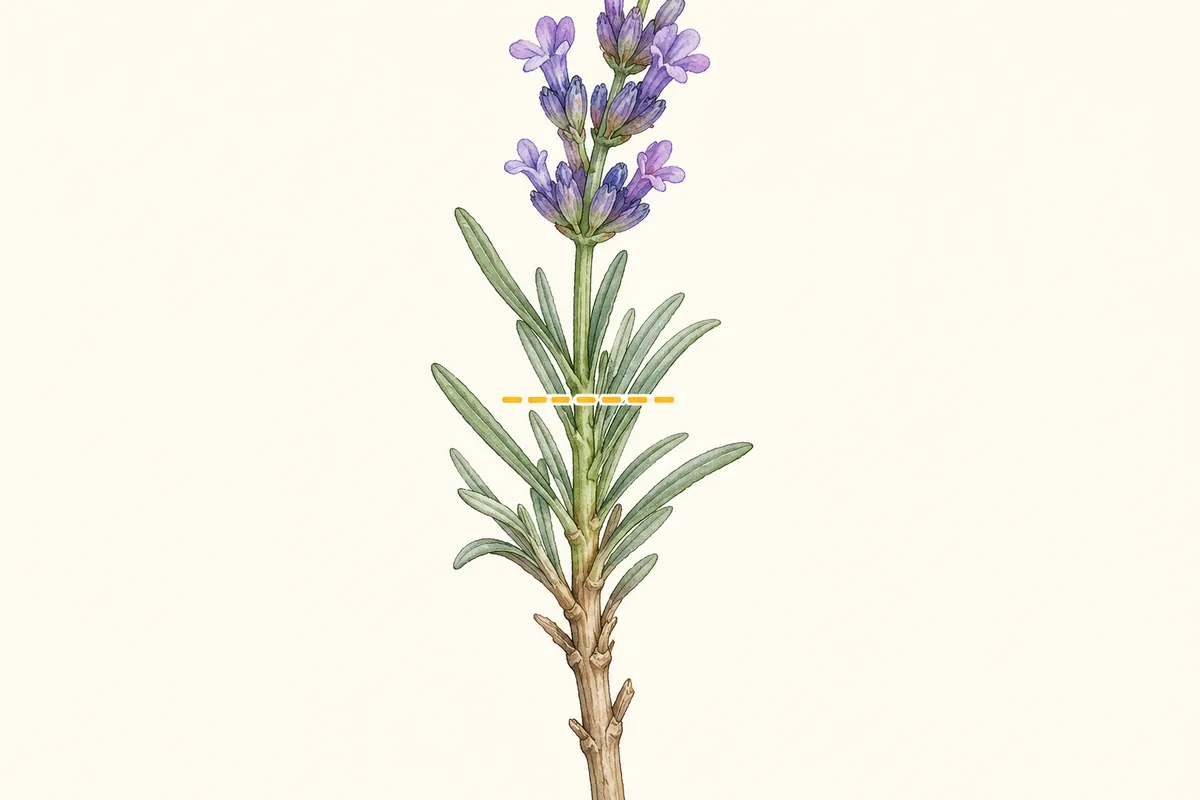
2Cut about 2.5cm into the leafy growth — stay well above the bare wood. -
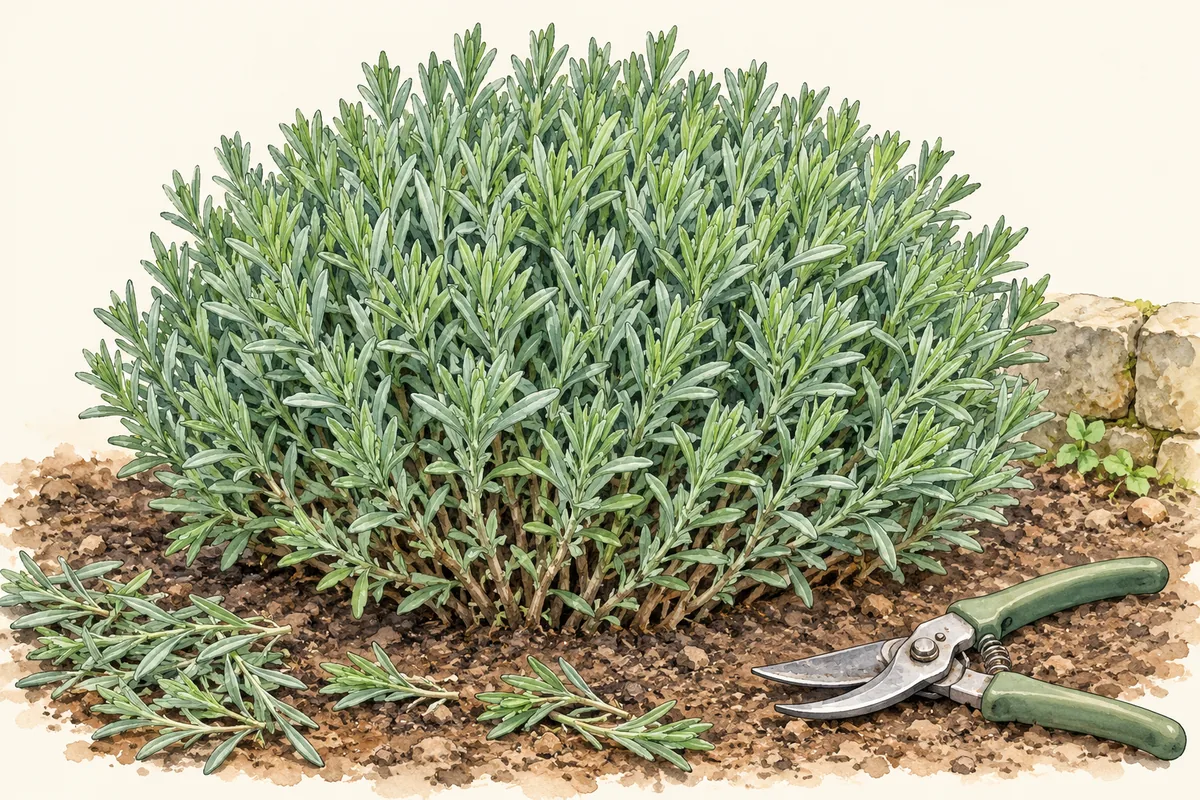
3The result: a neat, rounded mound with green leaf all over. -
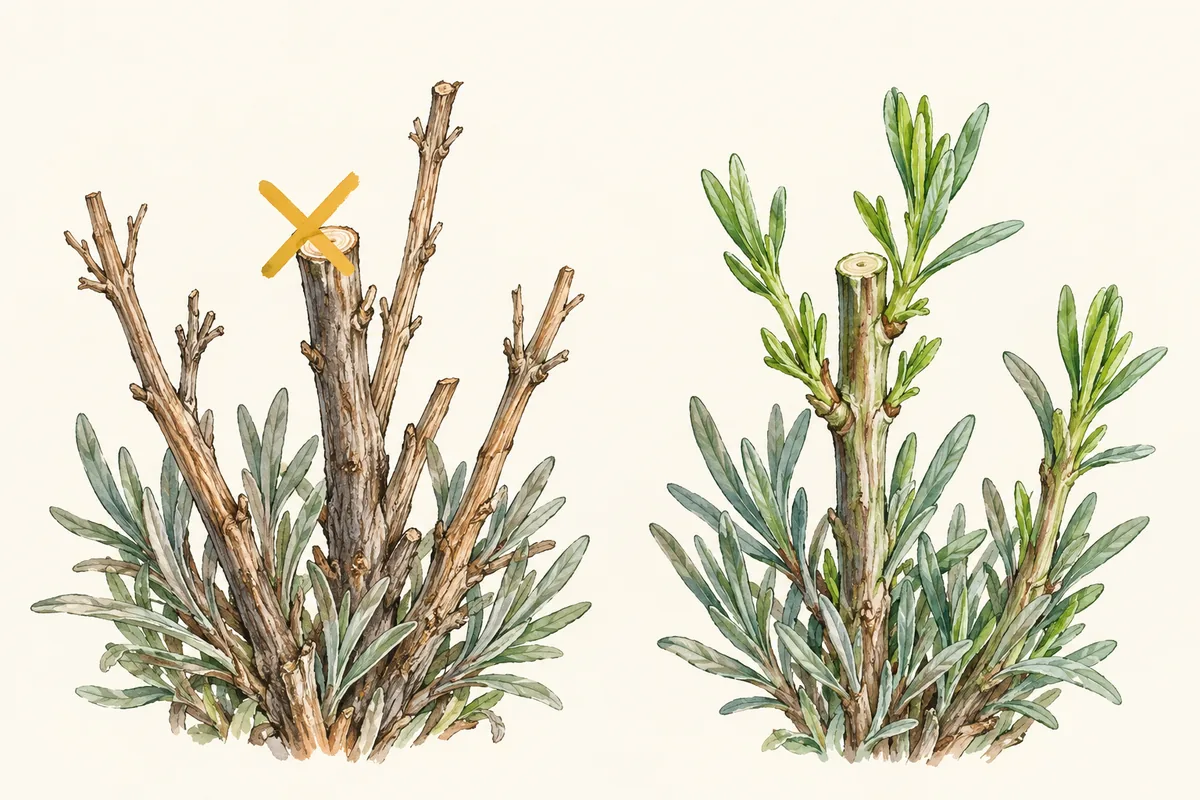
4Cut into bare wood (left) and it rarely regrows. Cut in the green (right) and it shoots.
01At a glance
- When: late summer, just after flowering finishes. An optional light tidy in spring.
- Time: five minutes a plant.
- Tools: sharp shears or secateurs.
- You'll know it worked when: you have a neat, rounded mound of grey-green leaves, with green growth still showing below every cut.
02Step by step (English lavender)
- Wait until flowering is over.
- Remove the spent flower stalks.
- Take off about 2.5cm of the leafy growth below them, shaping the plant into a rounded mound.
- Stop while there's still green leaf below the cut. If you can see bare, brown, woody stem, you've gone far enough — go no further.
- In spring, you can lightly clip over the foliage if it's untidy or frost-damaged. Same rule: stay in the green.
03French lavender and other tender types
French lavender (Lavandula stoechas) and the other tender types are less hardy and shorter-lived than English lavender (L. angustifolia). They're best grown in containers that can go somewhere frost-free over winter.
04When to give up
Old lavender gets woody and gappy whatever you do. The RHS suggests replacing lavender after ten years or so. Once a plant is mostly bare wood with tufts of leaf at the ends, replace it — a hard cut won't bring it back.
05Mistakes to avoid
- Cutting into the woody base to "rejuvenate" it.
- Skipping the annual trim. That's how it gets leggy.
- Pruning hard in autumn. Late-summer trim, light spring tidy — that's the rhythm.
How we checked this
Every care and safety claim on this page is verified against horticultural and veterinary sources.
Sources: RHS — How to grow lavender · RHS — Shrubs: pruning evergreens
Checked 1 October 2026. If our advice ever conflicts with the RHS, believe them and tell us.