Rose pruning has a reputation for being an exam you can fail. It isn't. Roses are tough, and most of the "rules" boil down to three things: prune at the right time, take out the wood that's past it, and know which kind of rose you're standing in front of. That last one is the bit most guides bury, and it's the one that actually decides how hard you cut.
In pictures
-
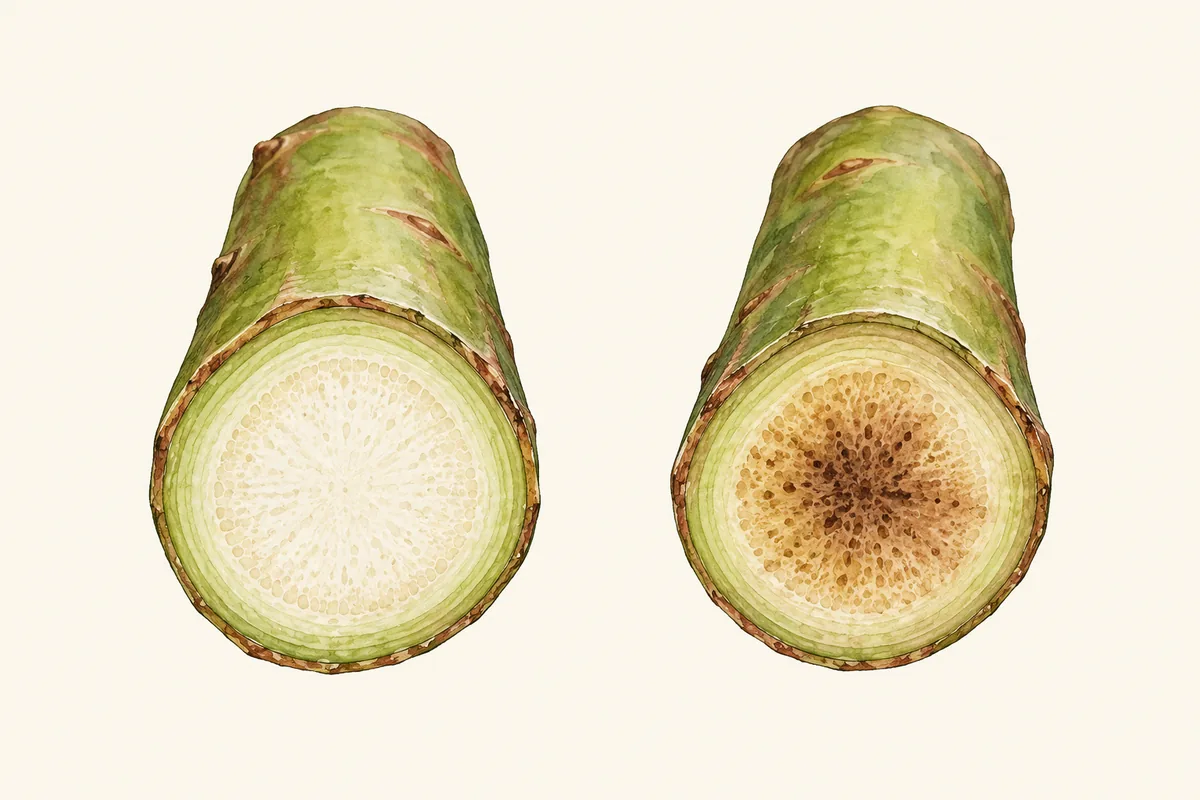
2Healthy wood has creamy-white pith (left). Brown pith means dieback — cut lower. -
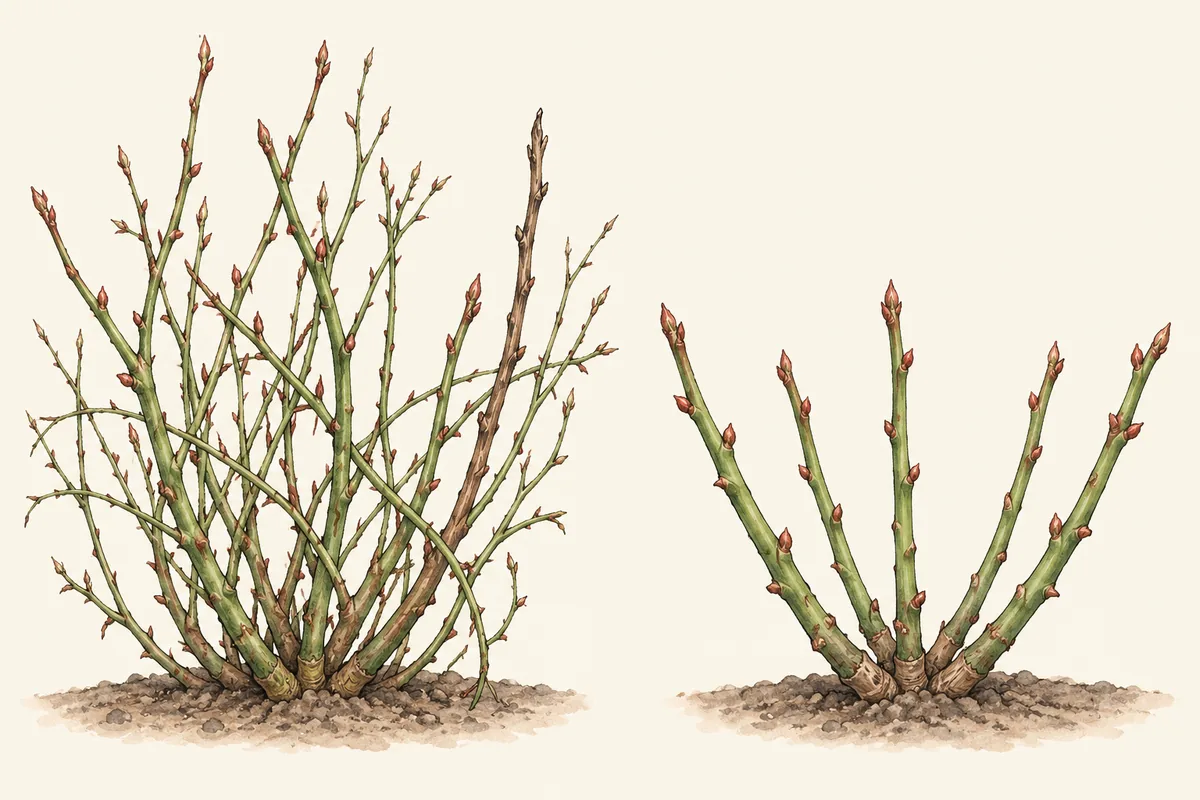
3Before and after: a hybrid tea cut low to an open goblet of strong stems. -
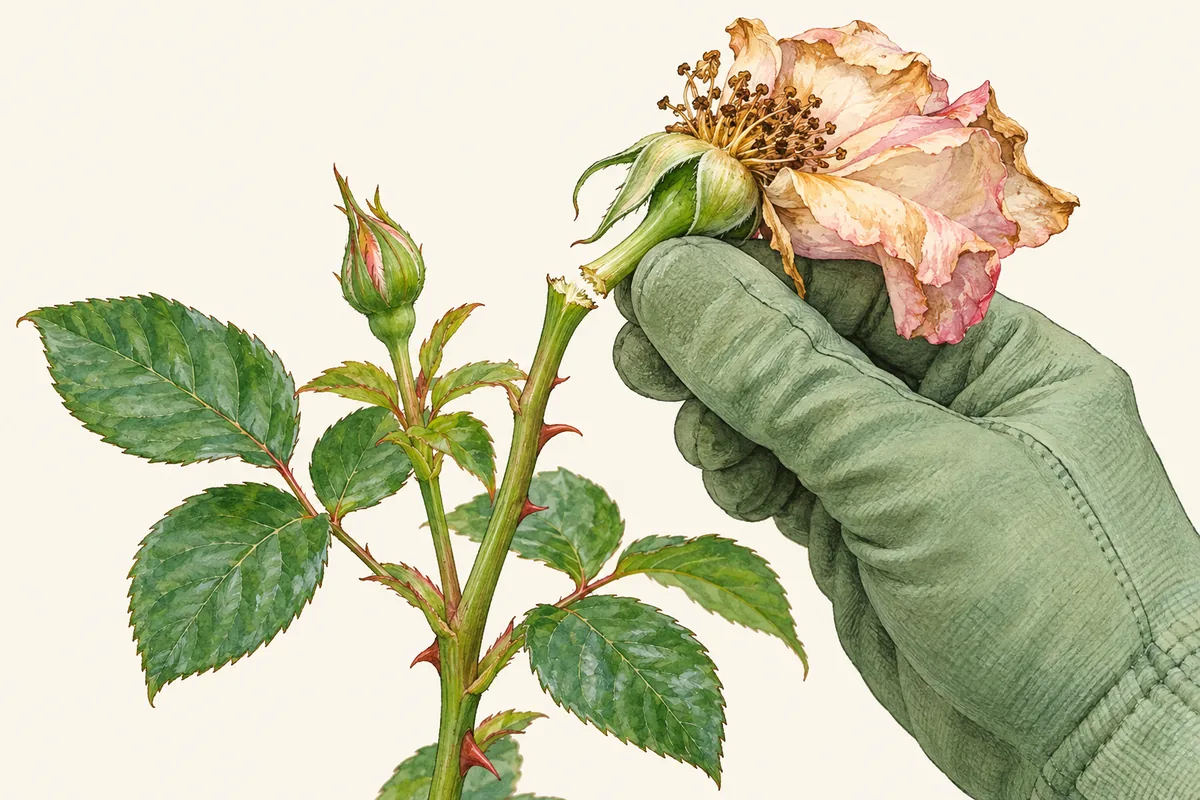
4In summer, snap faded hybrid tea flowers off just below the head.
01At a glance
- When: late winter to early spring — usually mid-February in the south, March in the north and colder gardens.
- Time: 10–20 minutes a plant.
- Tools: sharp bypass secateurs, a pruning saw or loppers for old stems, thick gloves.
- You'll know it worked when: strong new shoots break from the buds you cut to, pointing outwards, with an open centre.
02First: which rose have you got?
- Hybrid tea — one big, shapely flower per stem. Prune hardest.
- Floribunda — flowers in clusters. Prune moderately.
- Repeat-flowering shrub rose — a bigger, looser bush that flowers more than once. Prune lightly.
- Once-flowering shrub rose — one generous flush in early summer, then done. Don't prune these in winter — they flower on older wood. They get a light prune in late summer, straight after flowering, removing just one or two older stems.
Lost the label? Watch it for a season. Single blooms per stem or clusters, and whether it flowers again after June, tell you everything.
03Step by step
- Take out the dead, damaged and diseased. Cut back into healthy wood — you're looking for clean, white pith in the centre of the cut stem. Brown pith means keep going.
- Remove spindly and crossing stems. Anything thinner than a pencil, and any stem rubbing against another, goes. Saw off old stubs that haven't produced new shoots.
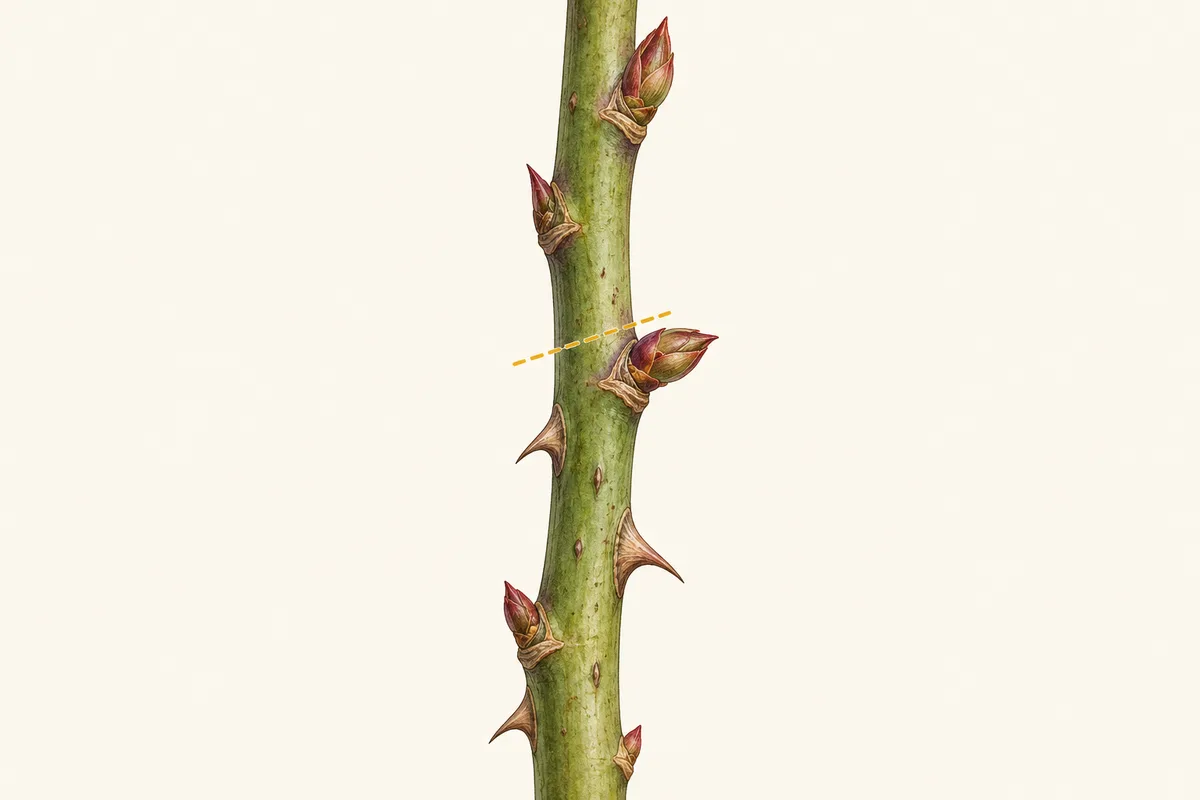
- Find an outward-facing bud. Buds sit just above where a leaf once joined the stem. Choose one pointing away from the centre of the bush, so the new shoot grows outwards and keeps the middle open.
- Make the cut. No more than 5mm above the bud, sloping down and away from it so rain runs off rather than sitting on the bud.
- Cut to the right height for the type (heights below).
- Feed and mulch. Once you've finished, give a rose or general fertiliser in spring and mulch around (not against) the stems.
How hard, by type:
- Hybrid tea: strongest stems back to 4–6 buds, about 10–15cm from the base; weaker stems harder, to 2–4 buds (about 5–10cm). Over time you're aiming to clear out any wood three years old or more.
- Floribunda: strongest stems to about 25–30cm from soil level; weaker ones harder. Every so often, cut one old stem right down to renew the plant.
- Repeat-flowering shrub roses: reduce strong growth by up to a third and shorten side-shoots to 2–3 buds.
04In summer: deadhead
On repeat-flowering roses, deadheading brings the next flush on faster. For hybrid teas, the RHS suggests simply snapping the faded flower off just below the head; for other roses, snip back to just above the next leaf. Leave the flowers on any rose you're growing for hips.
05Mistakes that cost you flowers
- Blunt secateurs. A crushed, ragged cut is an open door for disease. Clean cuts only.
- Winter-pruning a once-flowering rose. You'll cut off next summer's display.
- Cutting to an inward-facing bud by habit. Fine occasionally to pull a sprawling rose upright; as a default it crowds the centre.
How we checked this
Every care and safety claim on this page is verified against horticultural and veterinary sources.
Sources: RHS — Rose pruning: general tips · RHS — Rose pruning: floribunda and hybrid tea roses · RHS — Rose pruning: shrub roses · RHS — Deadheading · RHS — Silver leaf (on wound paint)
Checked 1 October 2026. If our advice ever conflicts with the RHS, believe them and tell us.