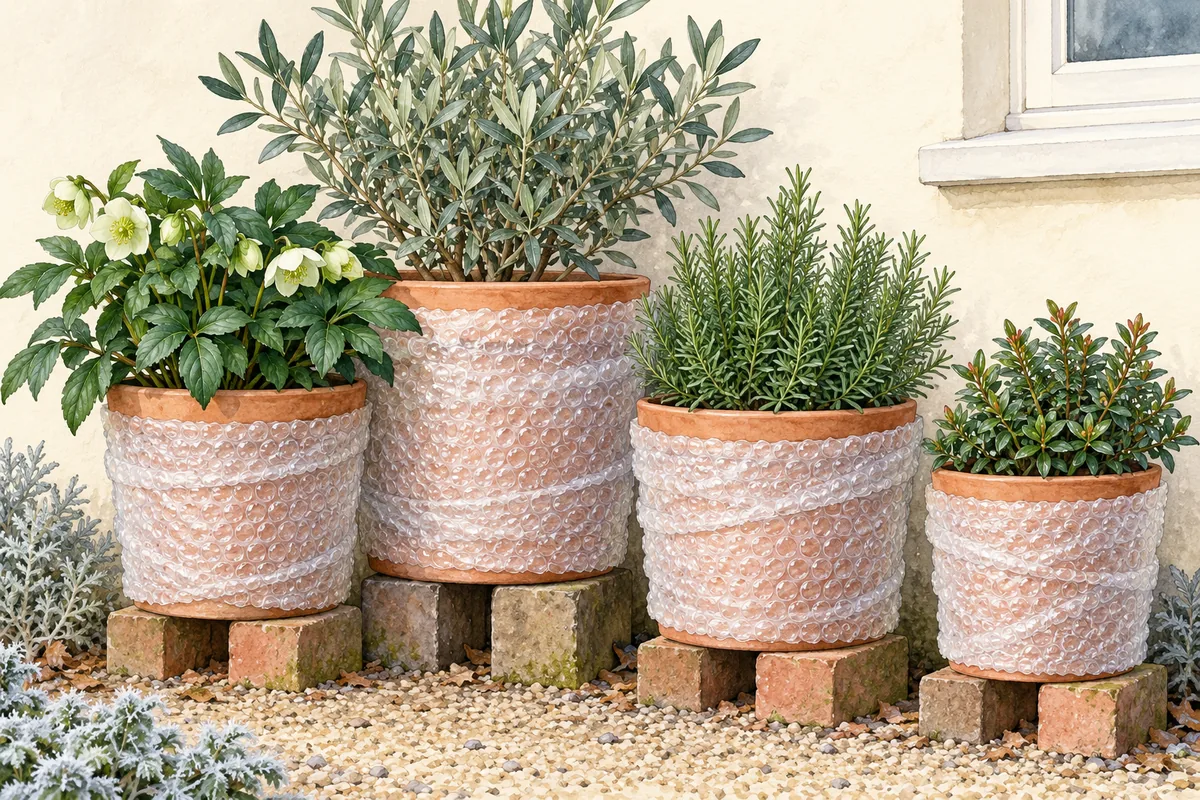
Most hardy plants don't need any help in a British winter. The ones that do are the borderline-tender ones, anything in a pot, and the ones caught out by a late spring frost. The good news is that almost all of the protection that works is cheap — and some of the most-sold winter products are optional.
In pictures
-
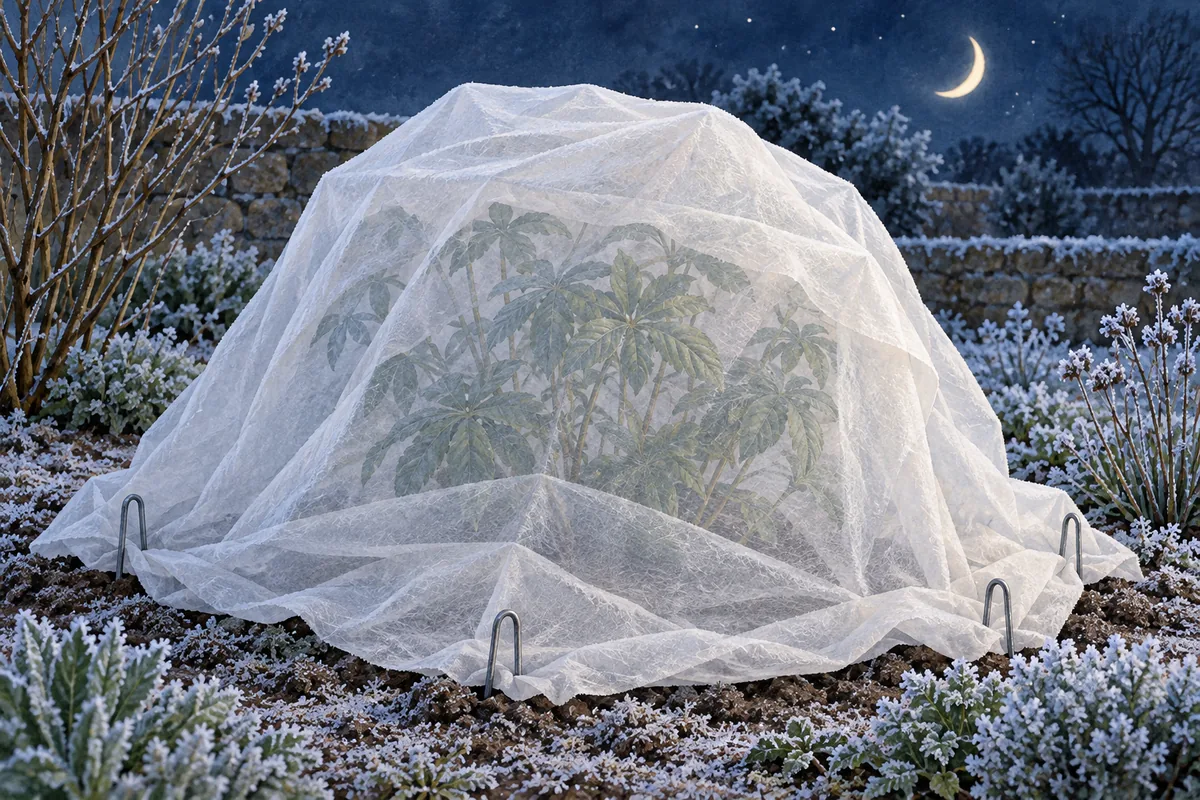
2A double layer of fleece on a frosty night. -
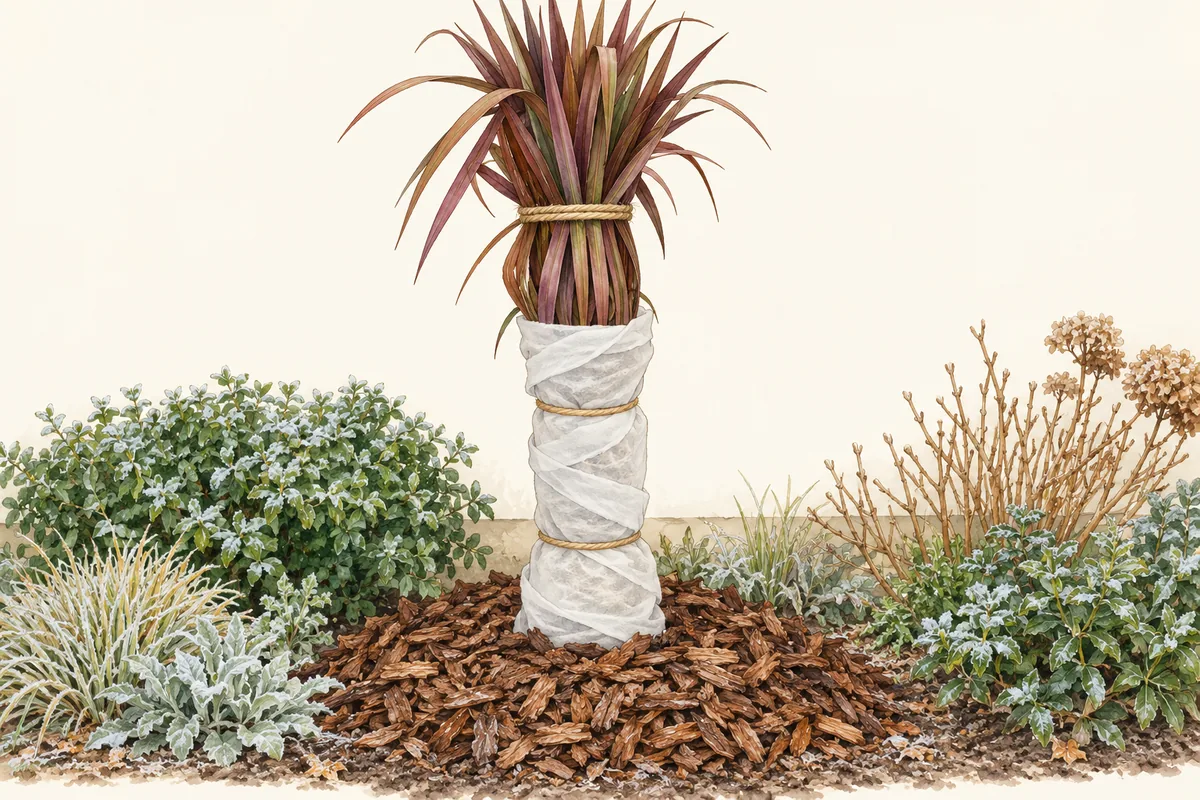
3Cordyline: leaves tied up, stem wrapped, roots mulched. -
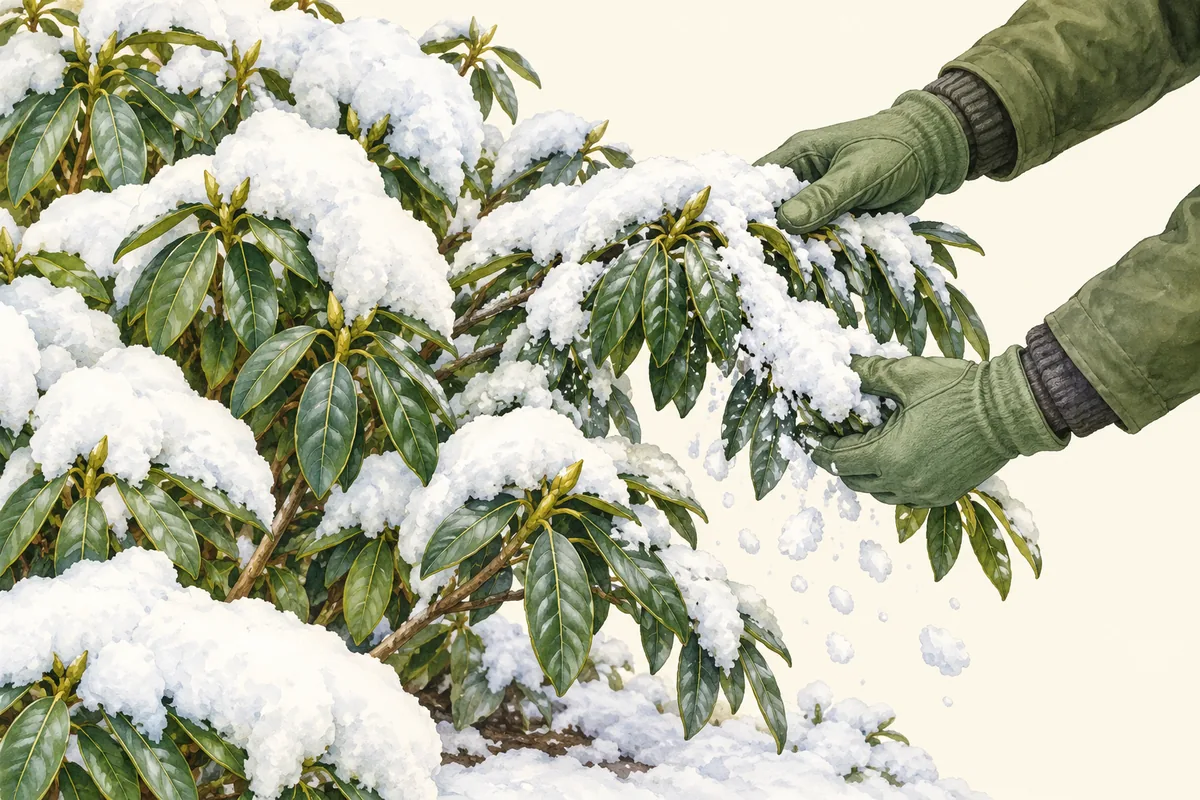
4Knock heavy snow off evergreens before it breaks branches.
01At a glance
- When: have wrapping in place by the first frost warning — usually September to November. Unwrap by May, ideally on an overcast day.
- Who needs it: tender plants, containers, early-flowering shrubs in exposed spots.
- Kit: horticultural fleece (or an old sheet), pot feet (or bricks), bubble wrap or hessian for pots, straw.
02Containers first — they're the most at risk
Roots in a pot are far more exposed than roots in the ground.
- Move pots somewhere sheltered, against the house wall, and group them together so they shelter each other.
- Raise them on pot feet or bricks so the drainage holes stay clear. Waterlogged compost in winter rots roots.
- Take away saucers and trays for the winter for the same reason.
- Wrap the pots, not the plant, with bubble wrap or straw to stop the rootball freezing. Or plunge the whole pot into the ground with just the rim showing.
- Buying new? Choose pots that are frost-proof, not just "frost-resistant".
03Fleece on cold nights
- Use a double layer of fleece, or an old sheet, over tender plants when frost is forecast. Heavier fleece gives roughly 2°C of protection.
- Wrappings on longer-term plants: take them off when mild weather is forecast and put them back if it turns cold.
- Avoid clear, unpierced polythene or bubble wrap over plants — on sunny days they overheat and trap moisture.
04Wrapping tender plants
- Cordylines: tie the leaves up into a bunch so water can't sit in the growing point and rot it, wrap the stem in fleece and mulch the roots about 15cm deep.
- Tree ferns: wrap the trunk in fleece, tie the fronds upright, pack the crown with straw, add a double layer of fleece and mulch the roots.
- Hardy bananas: cut back the top growth, build a chicken-wire frame round the stumps, pack it with straw and add a polythene "lid" to keep rain out.
- Whatever you wrap, keep the packing in the crown dry and clear damp debris from the base, or it rots.
05Around the garden
- Mulch borders thickly with organic matter to stop the ground freezing deeply.
- Knock heavy snow off hedges, conifers and evergreen shrubs before its weight breaks branches.
- Mind morning sun. Early-flowering plants such as camellias and magnolias get more frost damage where they thaw quickly in early morning sun.
06If frost damage happens
- On tender plants, leave the damaged growth in place until spring — it insulates what's underneath.
- Elsewhere, once no more frost is expected, cut back to an undamaged bud or side-shoot.
- Be patient. Plants may not show recovery until early summer. Don't dig them out because they look dead in April.
How we checked this
Every care and safety claim on this page is verified against horticultural and veterinary sources.
Sources: RHS — Overwintering tender plants: wrapping · RHS — Frost damage · RHS — Fleece and crop covers · RHS — Preventing winter damage · RHS — Growing plants in containers · RHS — How to grow cordyline
Checked 1 October 2026. If our advice ever conflicts with the RHS, believe them and tell us.