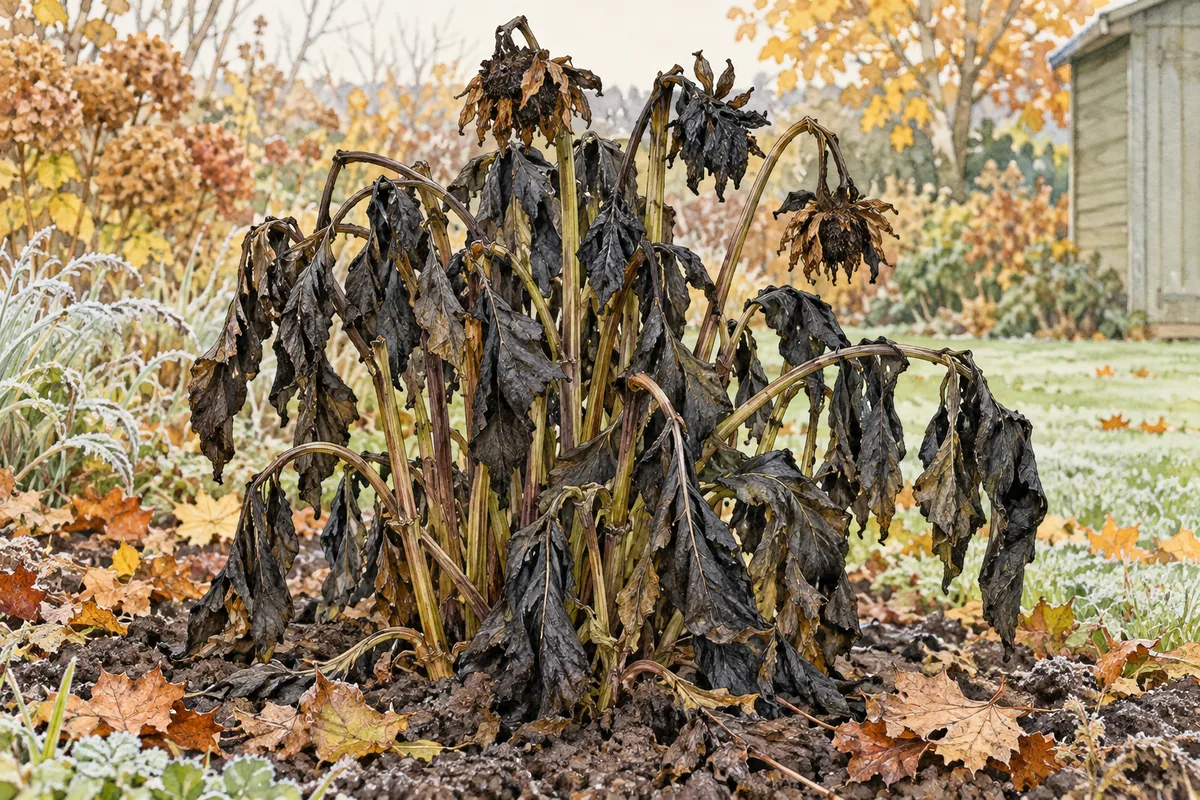
Dahlias, pelargoniums and tender fuchsias are often treated as bedding — bought in spring, binned in autumn. They don't have to be. With a little effort in October and November, the same plants can come back bigger next year. The question is which method suits your garden.
In pictures
-
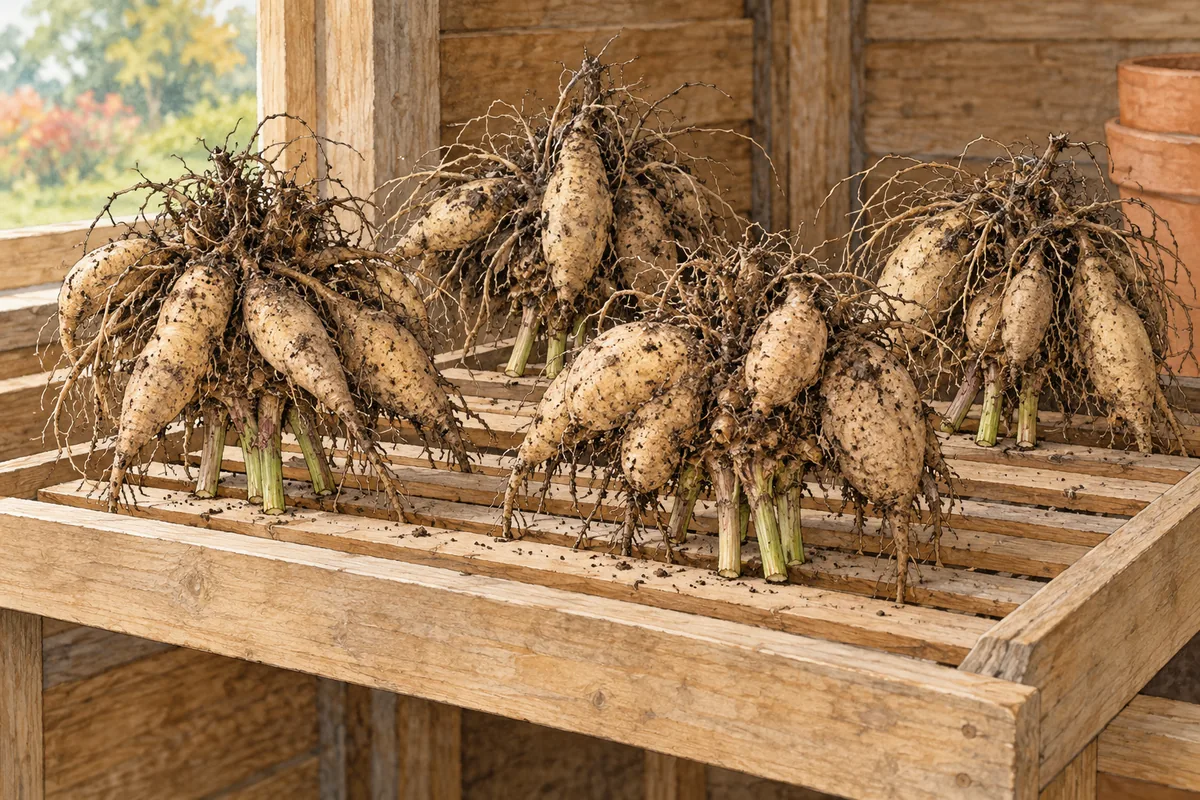
2Lifted tubers drain upside down for a few weeks. -
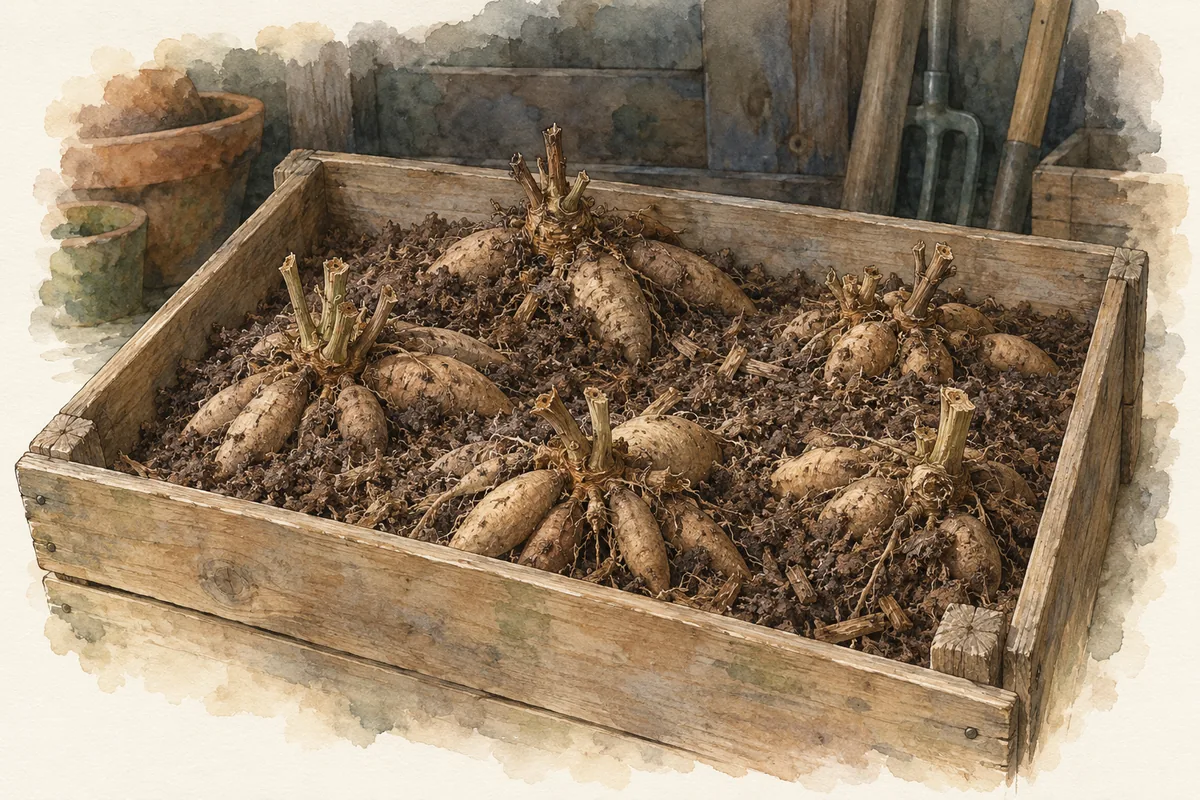
3Store them in dry compost somewhere dark, cool and frost-free. -
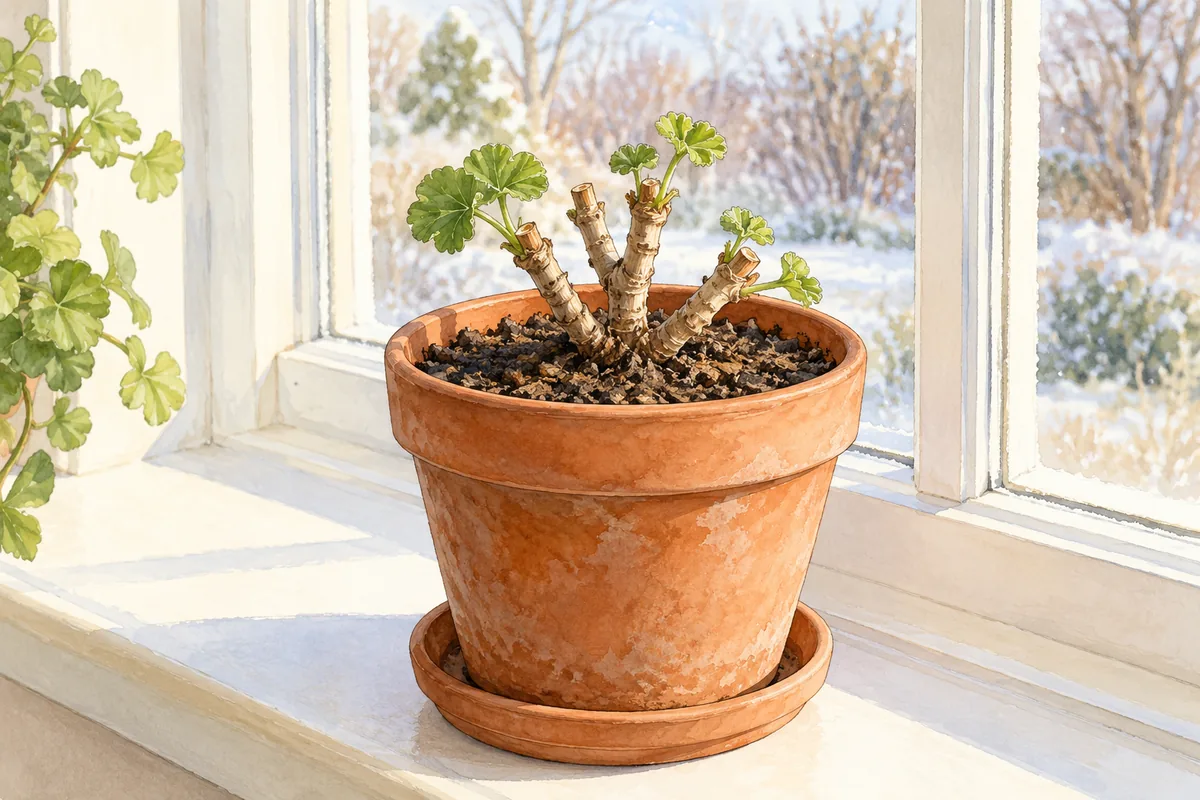
4A cut-back pelargonium overwintering on a bright windowsill.
01Dahlias: mulch or lift?
Option 1: leave them in the ground.
- Suits: milder areas and light, free-draining soil.
- How: once frost has blackened the foliage, cut the stems down and cover the crown with a dry mulch about 15cm deep — garden compost, chopped stems or bark chips.
- The risk: a harsh or very wet winter can still kill them.
Option 2: lift and store.
- Wait for the first frost to blacken the foliage — or lift by late November even if it hasn't come.
- Cut the stems down to about 5–15cm.
- Lift carefully with a fork, well away from the crown. Cuts and bruises rot in storage.
- Turn the tubers upside down for a few weeks somewhere dry and frost-free so water drains out of the hollow stems.
- Store them buried in dry compost or sand (or wrapped in newspaper or straw) in boxes or crates, somewhere dark, cool and frost-free, such as a shed or garage. Add old fleece or newspaper in severe cold.
- Check them regularly — we do it monthly — and remove any that are soft or rotting.
02Pelargoniums
- Bring them in before the first frost.
- Short of space? Cut them back to about 10cm. Cut-back plants need barely any water until spring.
- Keep them somewhere light, airy and frost-free. At about 7–10°C they'll even keep flowering.
- Ventilate on mild days to reduce rotting.
- Or take cuttings in late summer instead of keeping whole plants; rooted cuttings overwinter well at around 7°C, bright and on the dry side.
03Tender fuchsias
- Keep them frost-free. The most tender types (rated H1C) want a minimum of 5–10°C, so check the hardiness rating on the label.
- Cut back to a framework 7.5–15cm tall, and keep the compost just moist.
- In spring, pinch out the new shoots to make a bushier plant.
04Cannas, briefly
Lift after frost, cut the stems to about 5cm and store in sand, coir or vermiculite, kept just moist and frost-free.
05Mistakes to avoid
- Storing tubers damp or damaged. The main cause of mushy dahlias in March.
- Overwatering pelargoniums in winter. They want to be almost dry.
- Assuming a mild garden is safe in a very wet winter.
How we checked this
Every care and safety claim on this page is verified against horticultural and veterinary sources.
Sources: RHS — How to grow dahlias · RHS — Overwintering tender plants: lifting and mulching · RHS — How to grow pelargoniums · RHS — Tender perennials: cuttings · RHS — How to grow tender fuchsias
Checked 1 October 2026. If our advice ever conflicts with the RHS, believe them and tell us.