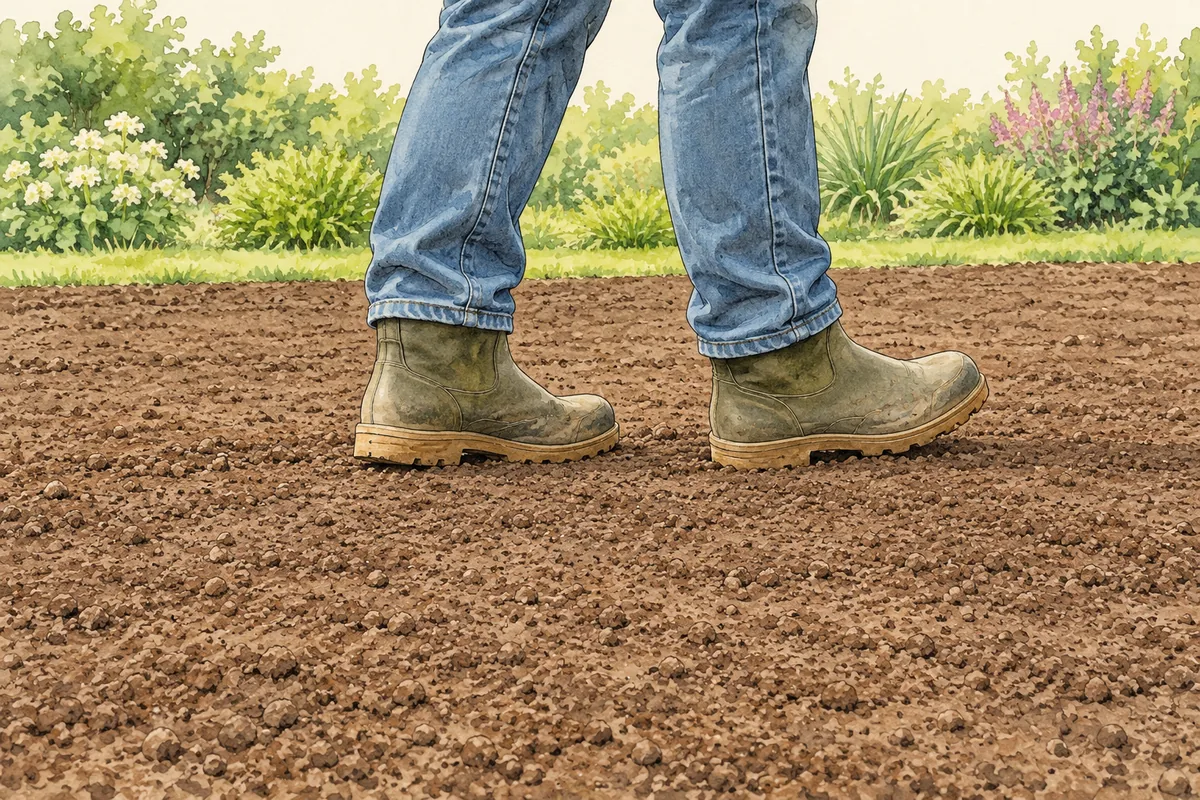
The seed-or-turf debate gets a lot of attention, but the RHS's verdict is the useful one: good soil preparation is the key. A lawn sown or laid on badly prepared ground will be patchy and uneven whichever you choose. Get the ground right and both work well. Autumn is one of the best times to do it.
In pictures
-
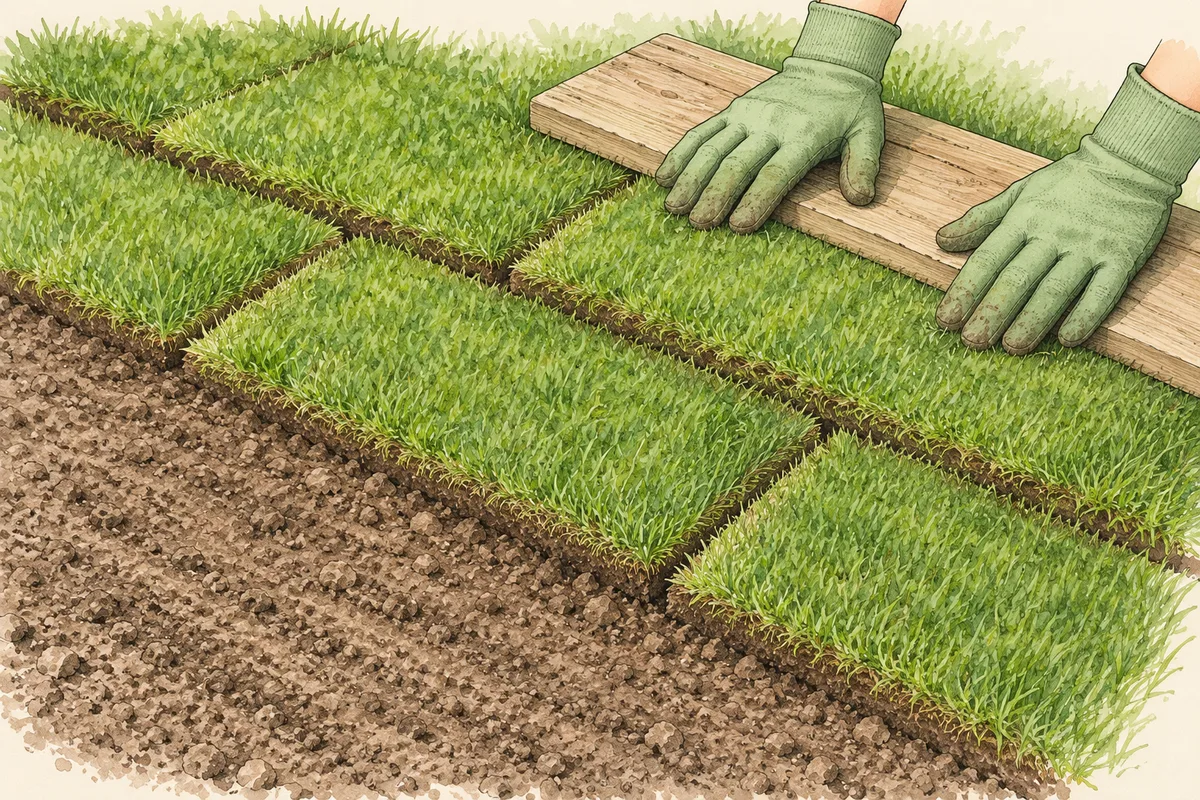
2Lay turf in staggered rows like brickwork, working from a plank. -
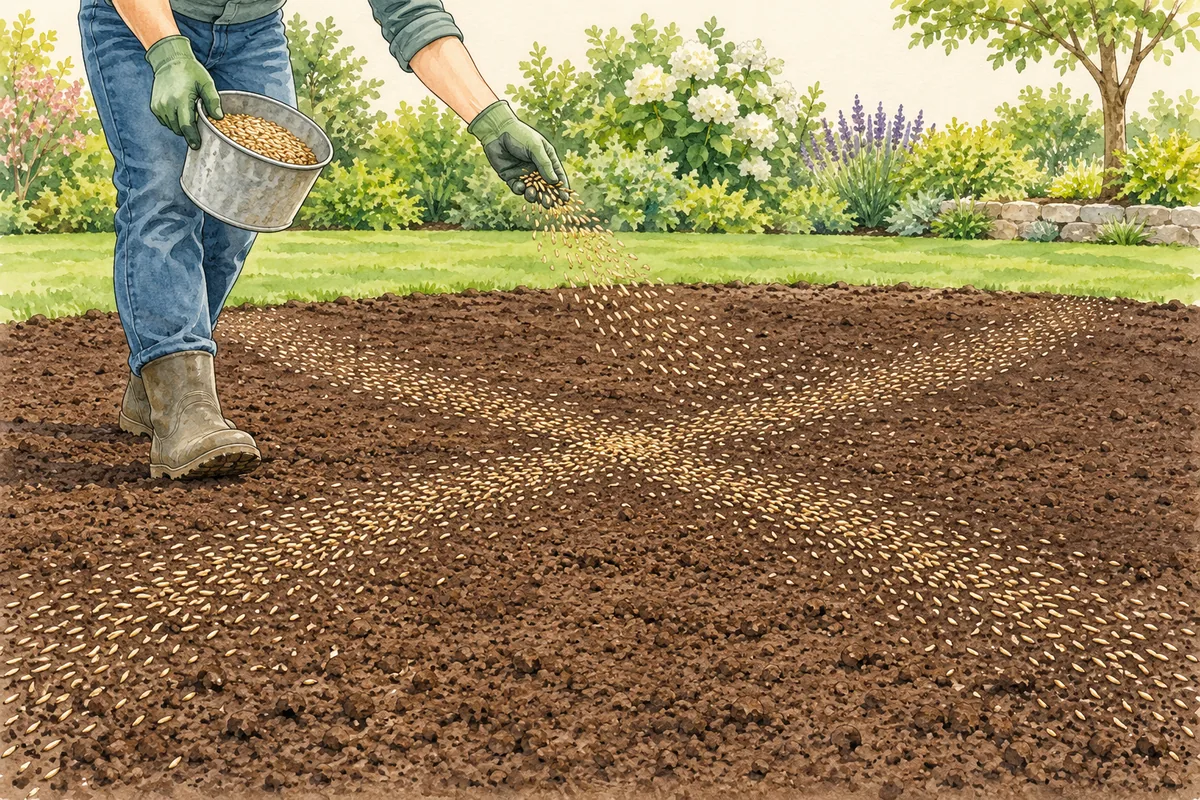
3Sow half the seed one way and half across for even cover. -
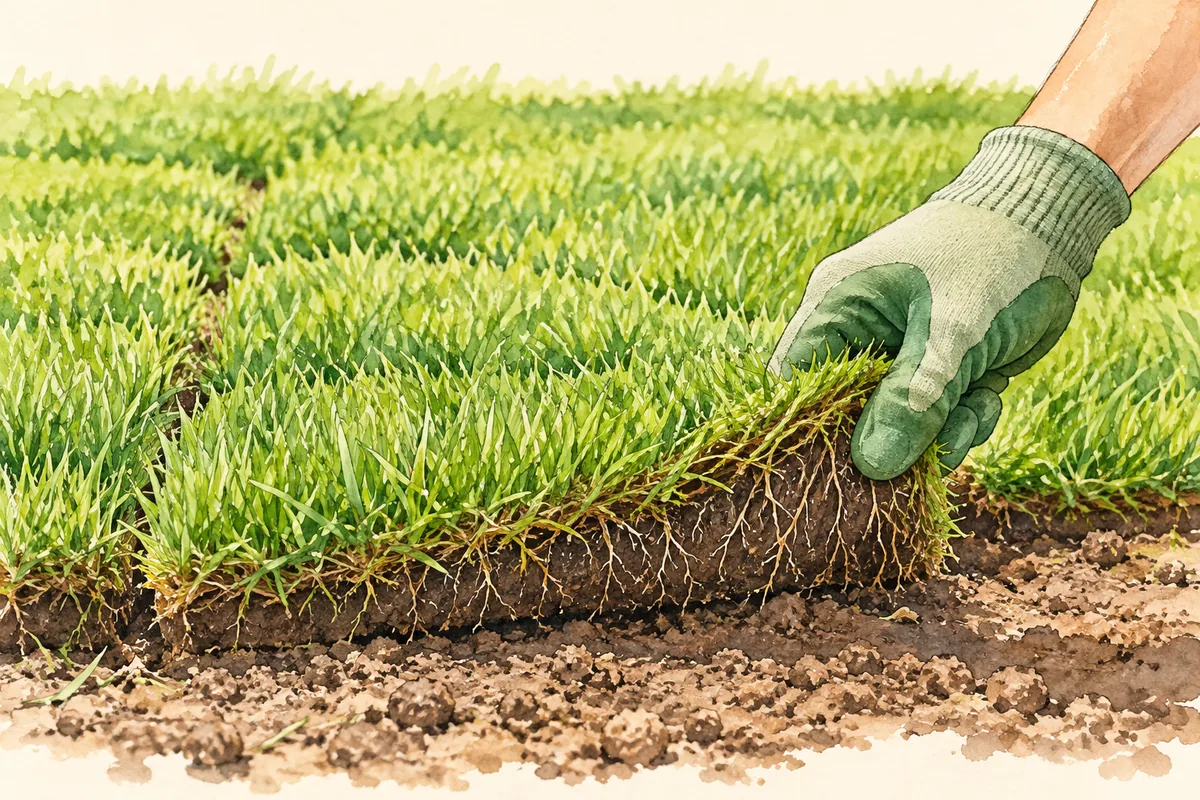
4If a piece doesn't lift when tugged, it has rooted.
01Seed or turf?
Seed is cheaper, comes in more mixes (shade, hard-wearing, fine), is easy to carry and can wait until conditions are right. It's slower to establish.
Turf gives an instantly attractive result, but costs more and should ideally be laid within 24 hours of delivery — if you can't, unroll it and keep it watered.
02When
- Sowing seed: September to November, or March to April. Early autumn is best — the soil is warm and roots establish over winter.
- Laying turf: mid-autumn (best) to early spring. Avoid mid-spring to early autumn; turf laid in spring needs much more watering through summer.
03Preparing the ground (both)
- Clear perennial weeds completely.
- Dig or cultivate to about 20cm, adding organic matter to light, sandy soil.
- Leave it to settle — ideally for five or six weeks.
- Level it, filling hollows and raking down bumps.
- Firm by treading — shuffle across the whole area on your heels.
- Rake in several directions to a fine, level surface.
04Sowing seed
- Sow at the rate on the packet, half one way and half across for even cover.
- Rake in lightly and water with a fine spray.
- Expect germination in about 7–10 days.
- First mow when the grass is 5–7.5cm tall: firm the surface again first, then take off only about a third.
- Keep heavy use off it for several months — the RHS suggests autumn-sown lawns aren't used properly until about the following June.
05Laying turf
- Lay the first row along a straight edge.
- Work forward from planks laid on the new turf, never on the prepared soil.
- Stagger the joints like brickwork and push each piece tight against its neighbours — no gaps, no stretching.
- Firm it down and water thoroughly.
- Don't let it dry out. In dry spells, water deeply rather than little and often — shallow wetting gives shallow roots.
- First mow about three weeks after laying, once a piece doesn't lift when you tug it. Use the highest setting.
How we checked this
Every care and safety claim on this page is verified against horticultural and veterinary sources.
Sources: RHS — Starting a lawn from seed · RHS — How to lay turf
Checked 1 October 2026. If our advice ever conflicts with the RHS, believe them and tell us.