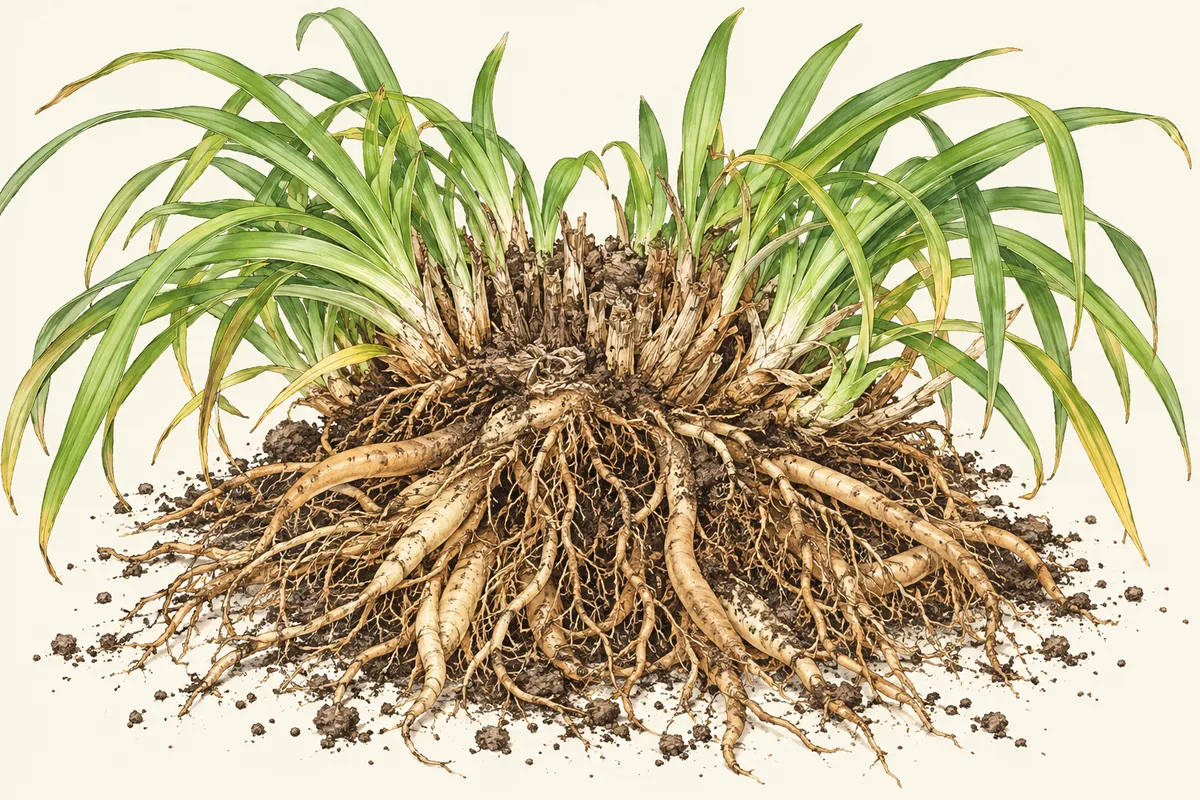
Most hardy perennials slow down after a few years. The clump gets congested, the middle goes bare and woody, and flowering tails off. The fix is to dig it up and split it — and the bonus is that one tired clump becomes three or four vigorous new plants, for nothing.
In pictures
-
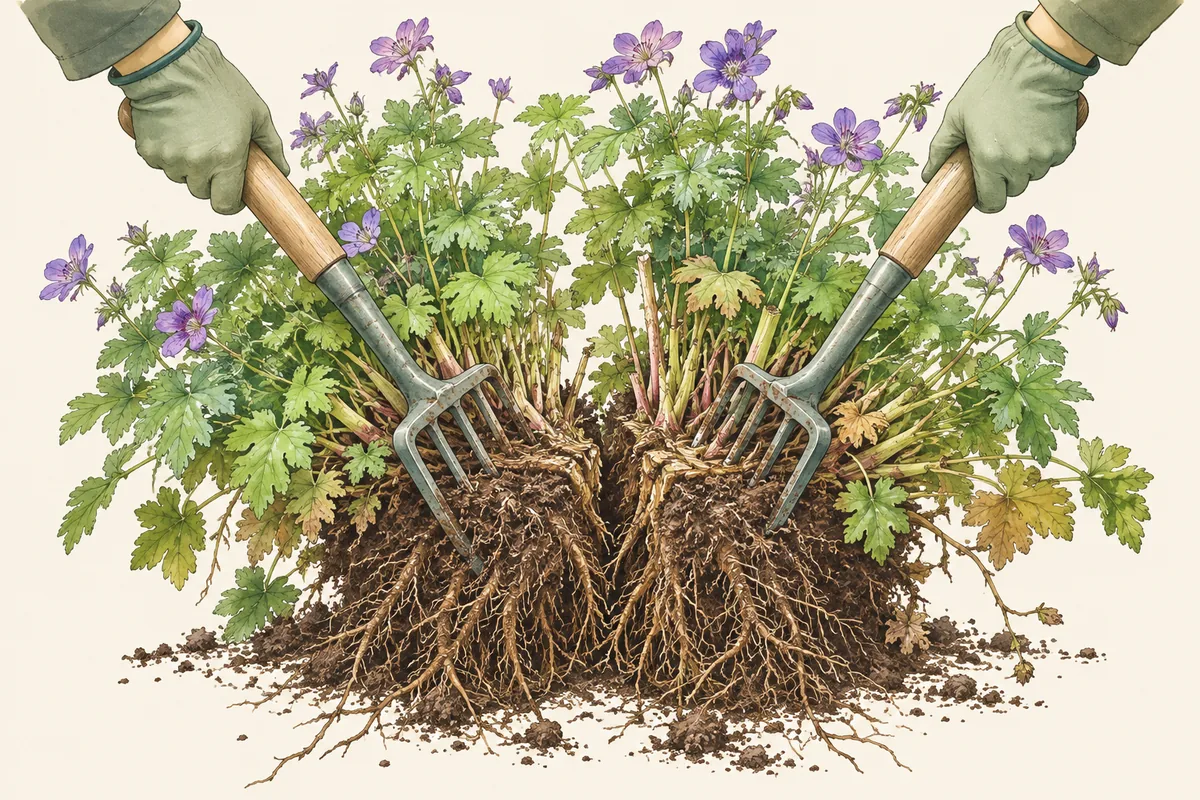
2Two forks pushed in back to back lever a big clump apart. -
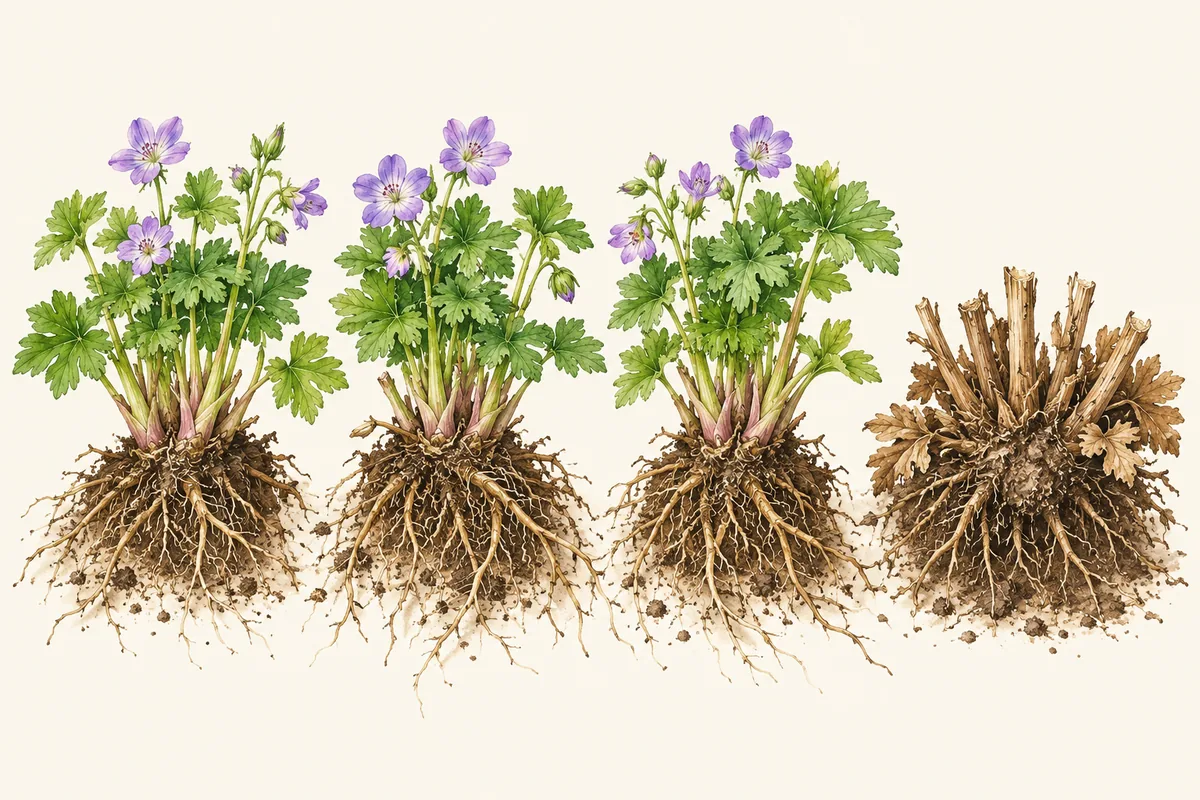
3Keep vigorous outer pieces with three to five shoots; bin the woody centre. -
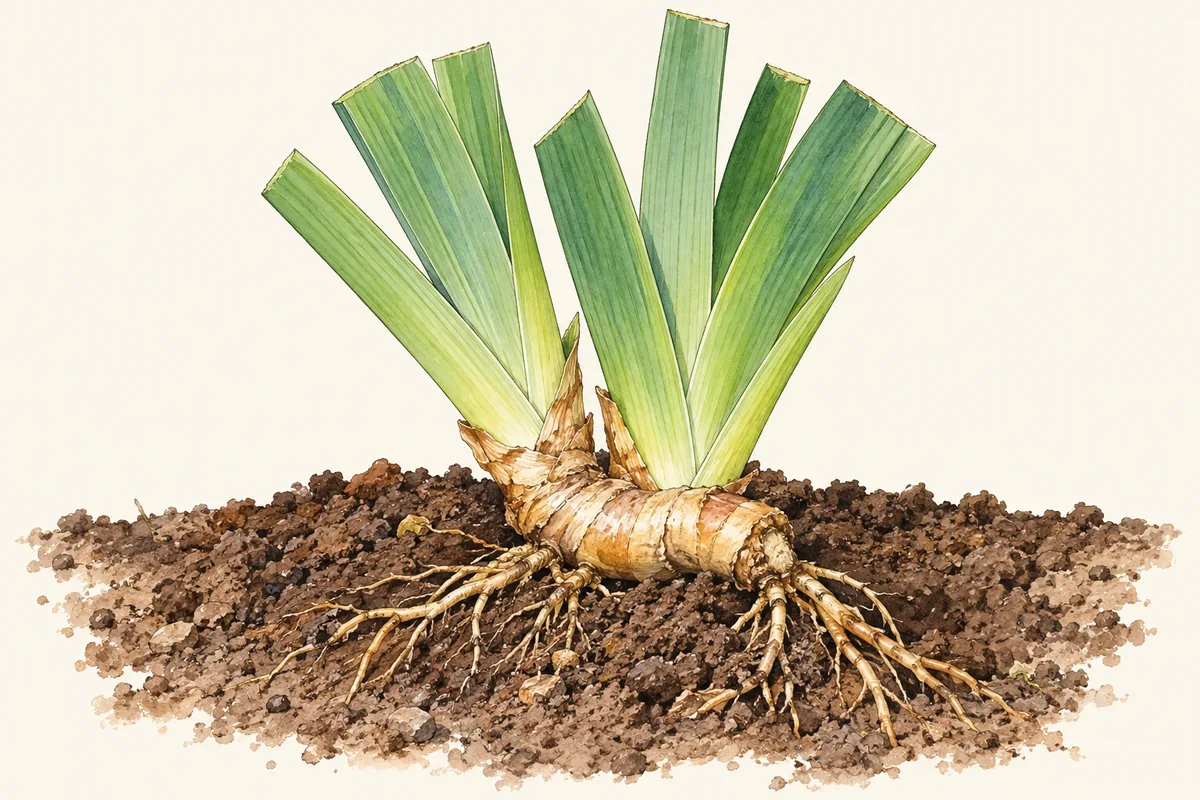
4Bearded iris: replant with the top of the rhizome at the surface.
01At a glance
- How often: most perennials every two to three years. Bearded iris every three to five.
- When:
- Summer-flowering perennials: spring (March–May) or autumn (September–November), while they're not in active growth.
- Spring-flowerers such as irises: in summer, after flowering.
- Tools: a spade, two garden forks, a sharp knife.
- You'll know it's time when: the clump is bare in the centre, overcrowded, or flowering less.
02Step by step
- Water the day before if the soil is dry.
- Dig up the whole clump, working round it with a fork or spade to keep as much root as you can.
- Split it — the method depends on the roots (see below).
- Keep the best bits. Each division should have three to five healthy shoots. Use the young, vigorous outer sections and discard the old, woody centre.
- Replant straight away at the same depth, and water in well.
How to split, by root type:
- Small, fibrous plants (heuchera, hosta, epimedium): pull apart by hand.
- Large, fibrous clumps (daylily and similar): push two forks into the centre back to back and lever them apart.
- Woody or fleshy crowns (hellebore and similar): cut through with a spade or sharp knife.
03Bearded irises
- When: about six weeks after flowering.
- How: keep up to 15cm of young rhizome on each piece with a fan of leaves; cut the leaves back to about 15cm. Discard old, leafless rhizome.
- Replant with the rhizome sitting at the surface on heavy soil, or just below it on light, sandy soil. Space tall varieties about 30cm apart, dwarf ones about 15cm.
04Leave these alone
- Peonies dislike disturbance. If they're flowering, let them be.
- Dierama resents disturbance and takes time to flower again.
- Crocosmia doesn't want dividing too often — every two to three years is plenty.
05Mistakes to avoid
- Dividing in active growth or a heatwave. Wait for the right season.
- Replanting the woody centre. It's the bit that stopped performing.
- Burying iris rhizomes on heavy soil.
Save your money
This is free propagation. Before you buy more of a plant you already have, divide it.
Two ordinary garden forks do what a "division tool" does.
How we checked this
Every care and safety claim on this page is verified against horticultural and veterinary sources.
Sources: RHS — Perennials: dividing · RHS — Irises: dividing · RHS — Herbaceous peonies
Checked 1 October 2026. If our advice ever conflicts with the RHS, believe them and tell us.