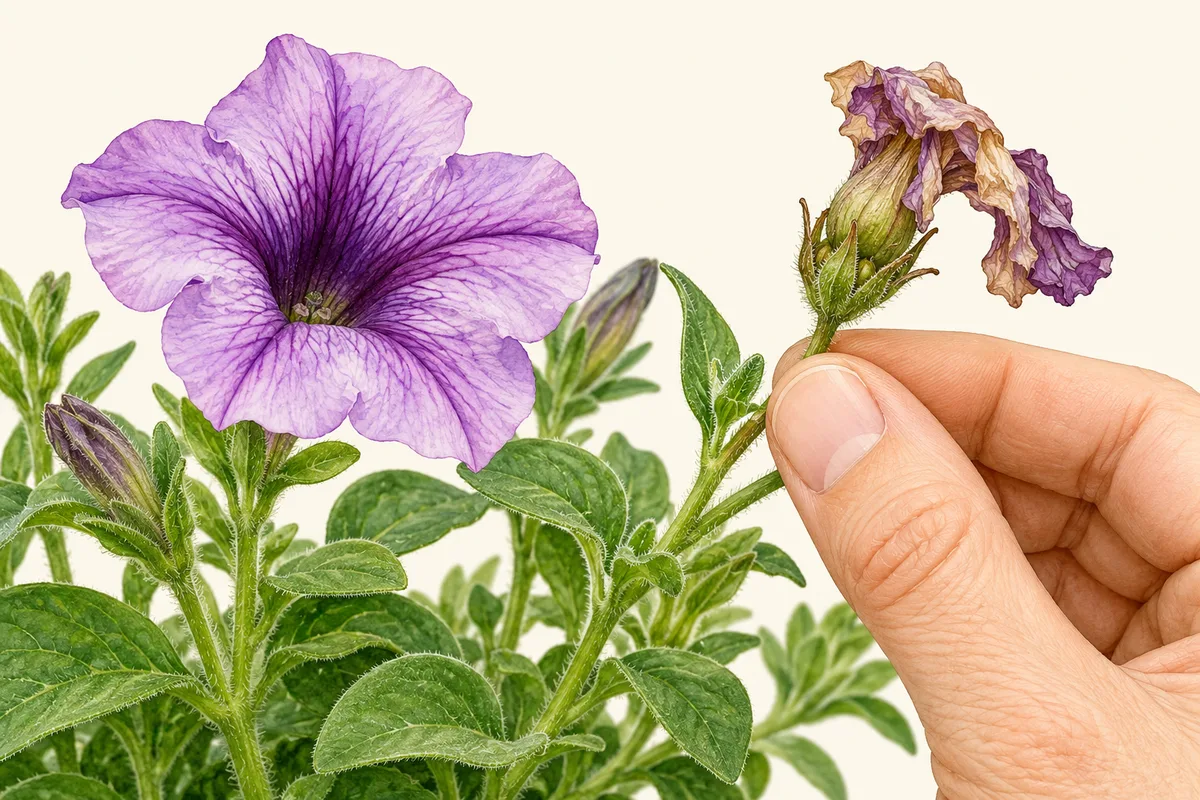
Deadheading is the cheapest way to get more flowers. A plant that's left to set seed thinks its job is done; take the faded flowers off and many will keep trying. It costs nothing but a few minutes and a thumbnail — and knowing when to stop is as useful as knowing when to start.
In pictures
-
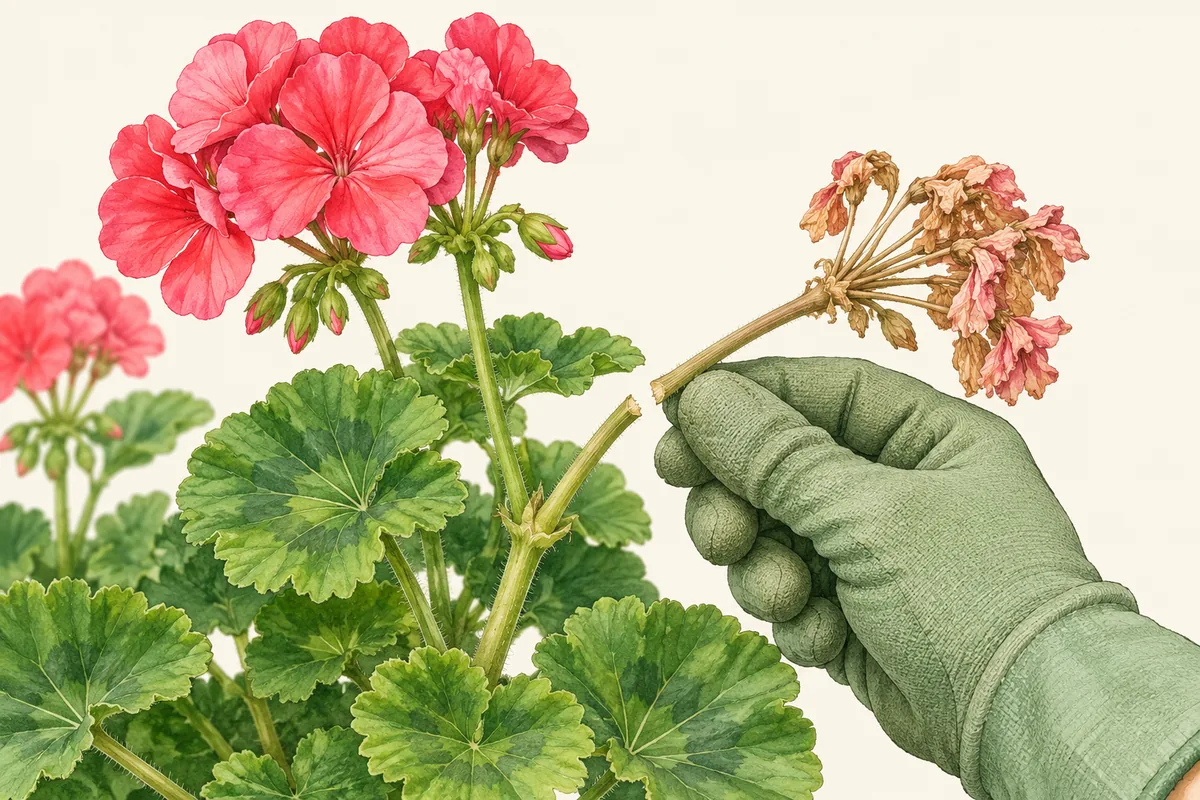
2Pull spent pelargonium flower stalks down and away from the stem. -
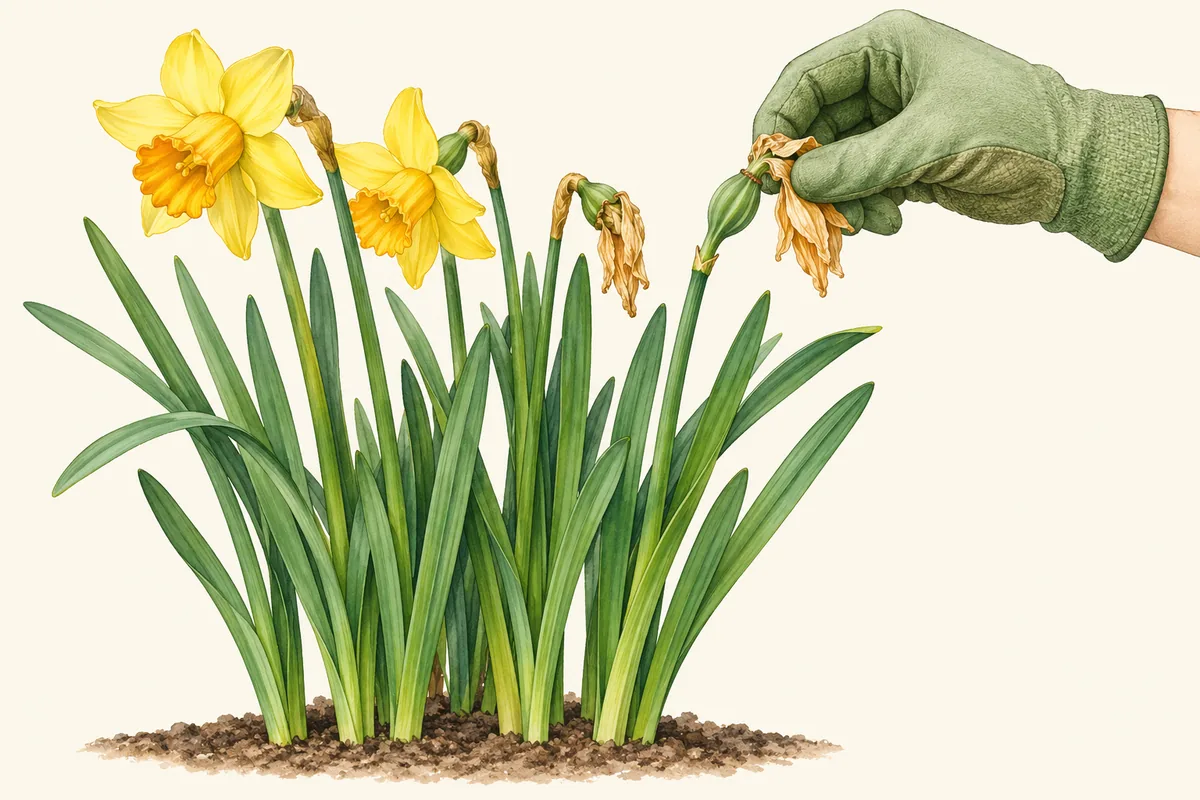
3Daffodils: snap off the spent flower, leave the leaves standing. -
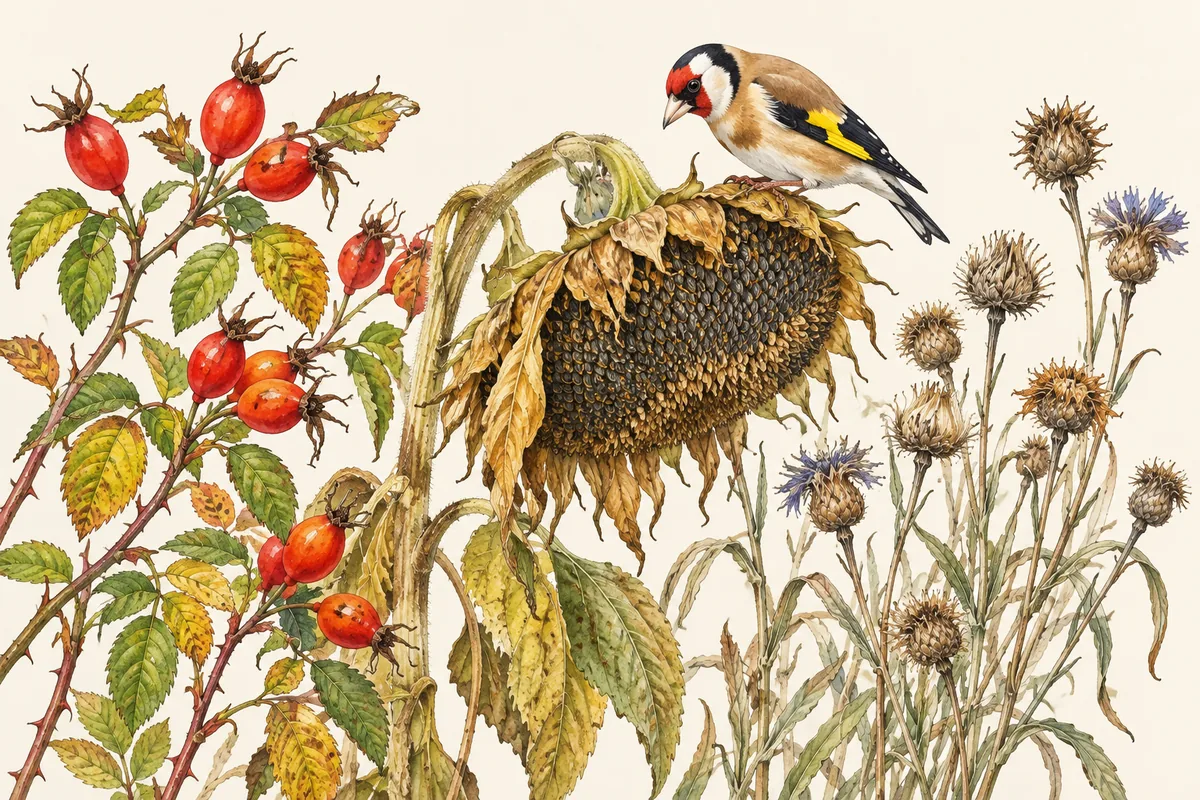
4Leave hips and seedheads for birds — a goldfinch on a sunflower head.
01At a glance
- When: whenever flowers look scruffy, whatever the time of year — little and often through the flowering season.
- Tools: finger and thumb for most; secateurs or scissors for tougher stems.
- You'll know it worked when: new buds keep opening for weeks after the first flush.
02How, plant by plant
- Bedding (petunias, pansies, argyranthemums and the like): pinch or snap off faded blooms between finger and thumb, taking the swelling seed pod behind the petals too.
- Pelargoniums: once a flower cluster has faded, pull its stalk downwards and away from the main stem so it snaps off cleanly.
- Hybrid tea roses: snap the stalk just below the faded head. Other repeat-flowering roses: snip back to just above the next leaf.
- Perennials and tougher stems: cut back to just above the next bud or leaf.
- Shrubs: rhododendrons and azaleas, camellias, lilacs and tree peonies all benefit from having faded flowers removed.
03Daffodils: deadhead the flower, keep the leaves
- Pinch through the stalk just behind the seed capsule, leaving the green stalk standing.
- Leave the leaves alone until they turn yellow — usually about six weeks after flowering. They're feeding next year's bulb.
- Don't knot or tie the leaves. The RHS is explicit about this one.
04When not to deadhead
- Plants grown for hips, berries or seedheads — rugosa roses, alliums, honesty.
- Plants whose seed feeds birds — rudbeckias, cornflowers and sunflowers.
- Anything you want to self-seed around the garden.
- Late in the season, when leaving seedheads standing gives birds food and insects shelter over winter.
05Mistakes to avoid
- Snapping off just the petals. Take the seed pod behind them, or the plant keeps putting energy into seed.
- Cutting daffodil leaves while they're green.
- Deadheading the plants you grow for winter interest.
Save your money
You don't need flower snips. Finger and thumb do most of it.
Don't buy feed to fix a plant that's stopped flowering mid-summer until you've tried deadheading. Only container daffodils really need a feed after flowering — a high-potash one such as tomato food.
How we checked this
Every care and safety claim on this page is verified against horticultural and veterinary sources.
Sources: RHS — Deadheading · RHS — How to grow daffodils
Checked 1 October 2026. If our advice ever conflicts with the RHS, believe them and tell us.