Autumn is the lawn's big repair season — warm soil, more rain, less foot traffic. It's also when garden centres sell the most lawn products. The honest version: most lawns need some of these jobs some years, not all of them every year. Here's how to tell.
In pictures
-
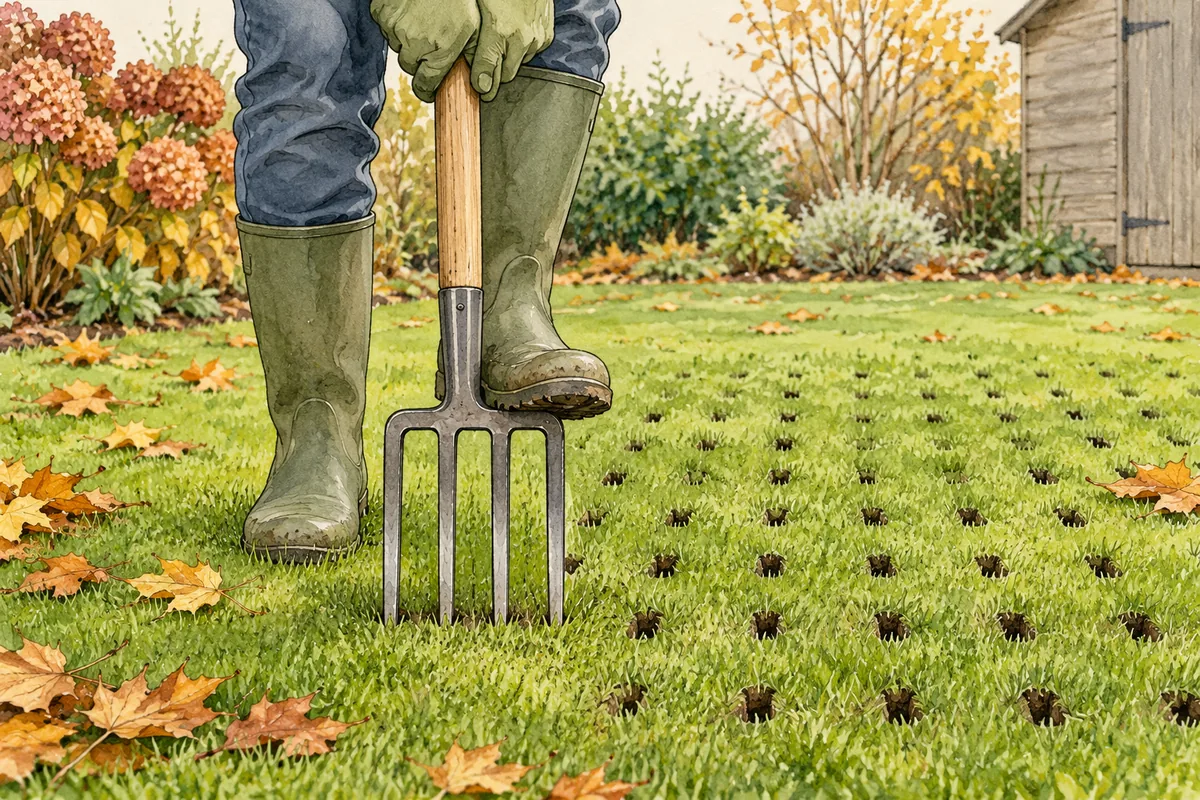
2Aerate: push a garden fork in at regular intervals. -
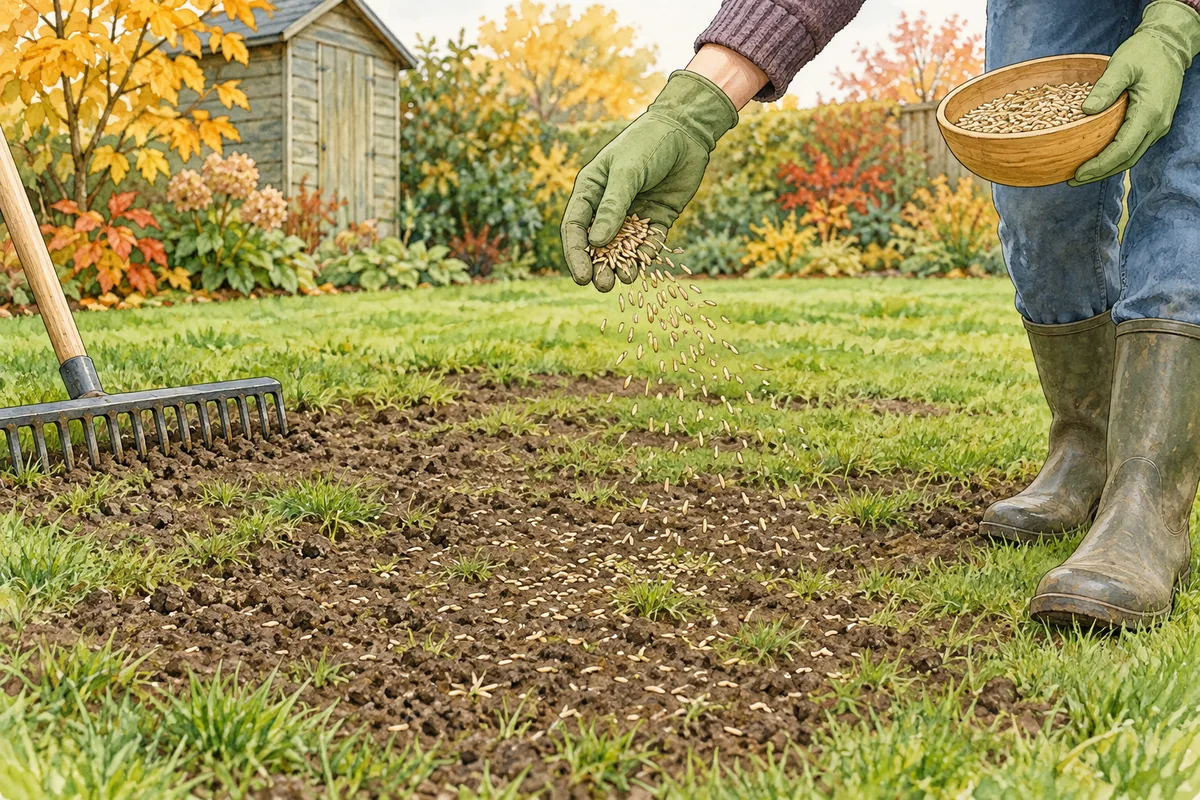
3Overseed thin patches on loosened soil. -
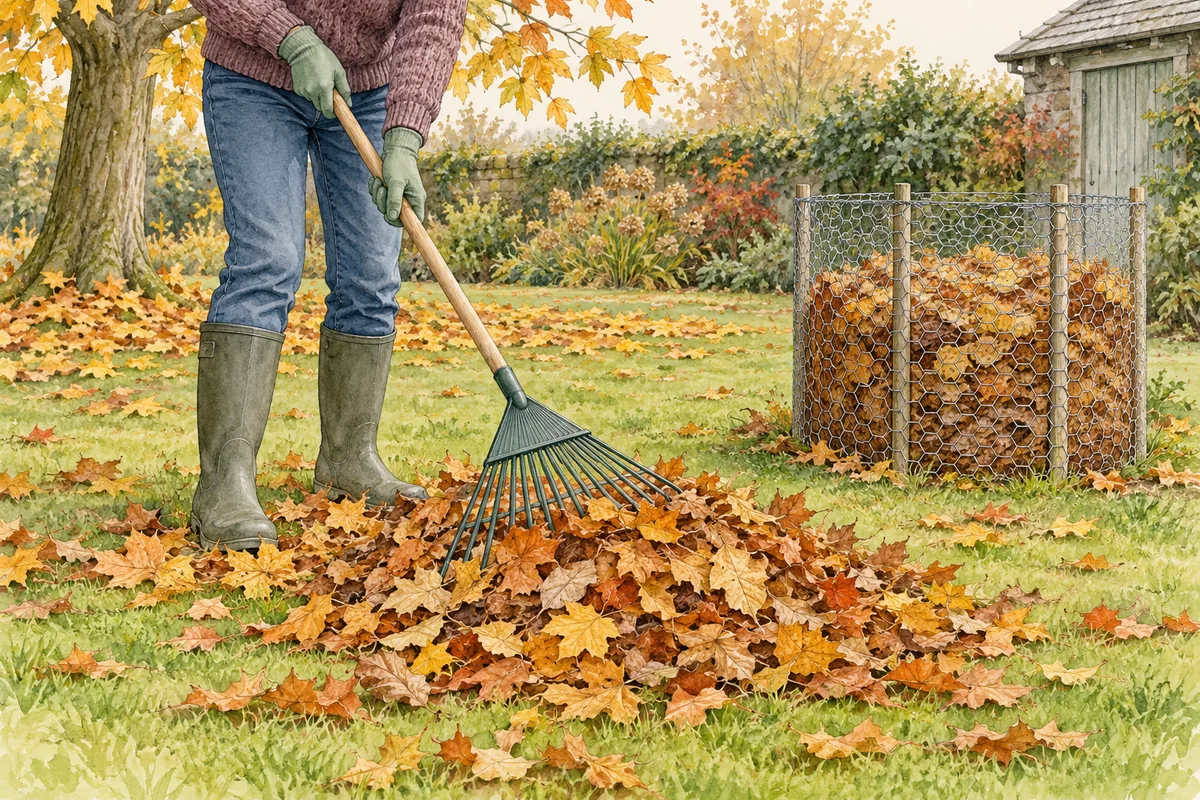
4Rake leaves off the lawn — and make leaf mould with them.
01At a glance
- When: September and October, while the soil is warm and moist but not waterlogged. Don't work on it when it's very wet, very dry or frosty.
- Tools: spring-tined rake, garden fork, a mower with an adjustable height.
021. Scarify — only if there's thatch
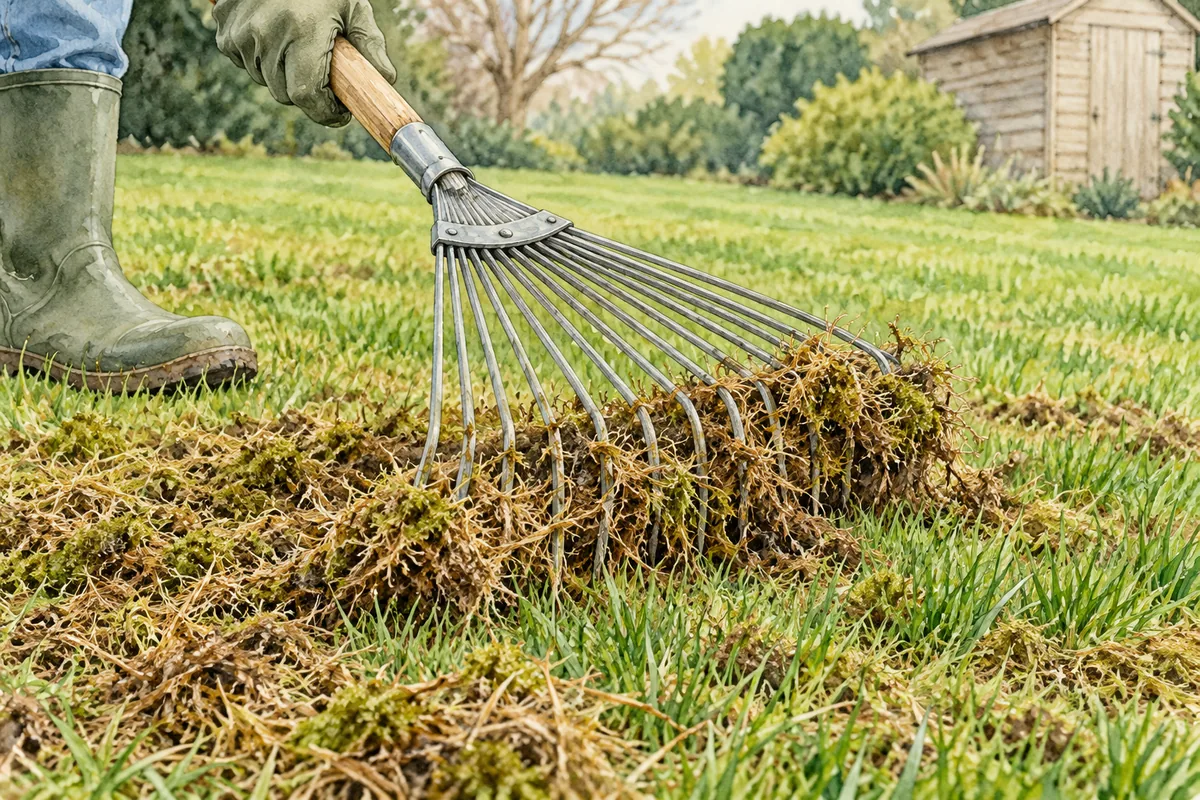
Thatch is the layer of dead grass and moss that builds up at the base of the lawn. The RHS test: if you can't see the soil between the grass blades, it's time to scarify. Rake firmly with a spring-tined rake to pull the thatch out. Mossy lawn? Scarifying in October or early November works well.
032. Aerate — every few years, not every year
- Spiking with a garden fork every two to three years is enough for most lawns. Push in as deep as you can, about 10–15cm apart, and wiggle.
- Hollow-tining (removing small cores of soil) is for compacted, clay or waterlogged lawns — every three to four years.
043. Top-dress
After aerating, brush a top dressing into the holes — about 2–3kg per square metre. The RHS mix is three parts sandy loam, six parts sharp sand and one part compost.
054. Overseed thin patches
- Rate: usually 15–25g of seed per square metre, or as the packet says.
- Timing: September is safest. October works in milder areas, as long as the soil is at least 7°C. In colder areas or a cold spell, wait until March or April.
065. Feed — only if it needs it
If the grass is growing poorly, an autumn feed rich in potassium and phosphorus helps hardiness and root growth. Don't use a summer feed now — too much nitrogen pushes soft growth into winter.
076. Mowing and leaves
- Raise the cutting height. Domestic lawns can be left up to about 40mm in autumn. Never take off more than a third of the height at once.
- Mow less often, only in dry spells — never when the grass is wet or frozen.
- Rake up fallen leaves. They block light and smother the grass. (Turn them into leaf mould.)
- Keep off frosty grass. Frozen blades break and leave brown footprints.
How we checked this
Every care and safety claim on this page is verified against horticultural and veterinary sources.
Sources: RHS — Lawn care in autumn · RHS — October: lawns · RHS — November: lawns · RHS — Repairing lawns · RHS — Lawn mowing · RHS — Moss on lawns
Checked 1 October 2026. If our advice ever conflicts with the RHS, believe them and tell us.