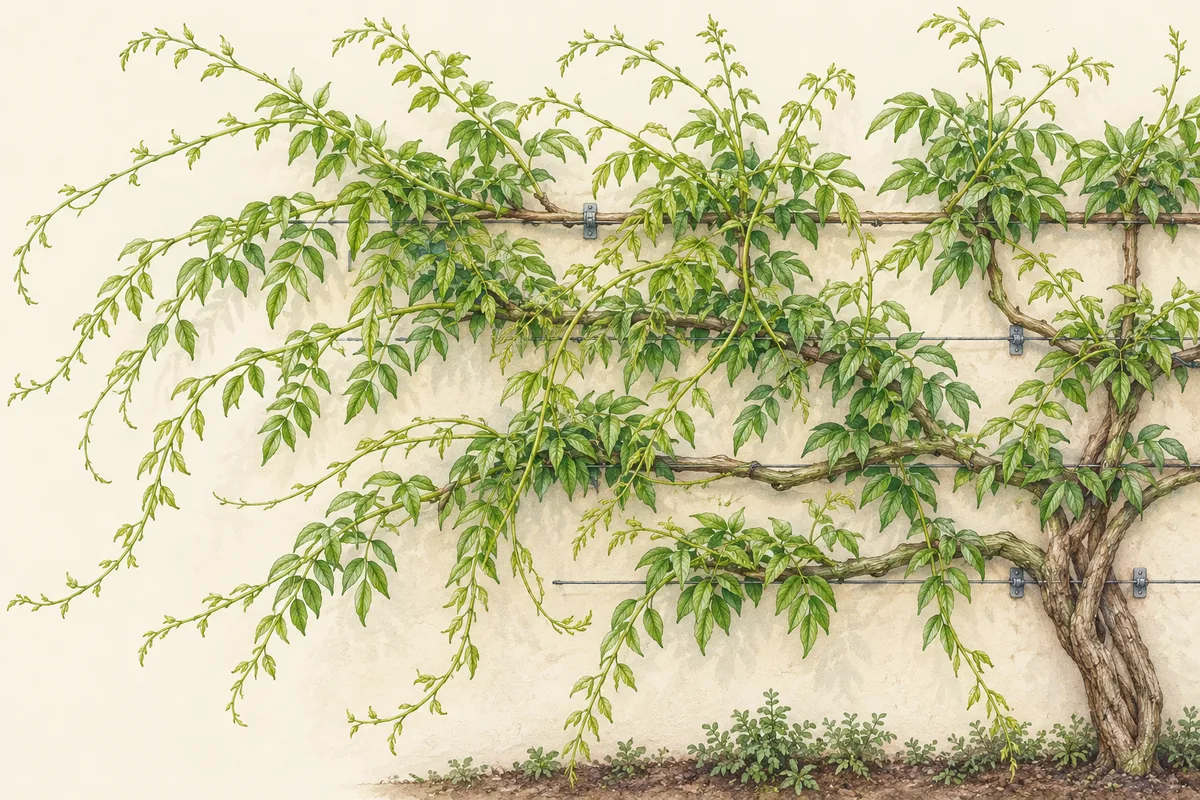
Wisteria has a reputation for being difficult. It isn't — it's just vigorous, and it needs two small, regular prunes rather than one big annual battle. Do both and you turn a tangle of whippy green growth into short, flower-packed spurs. Skip them and you get a lot of leaves.
In pictures
-
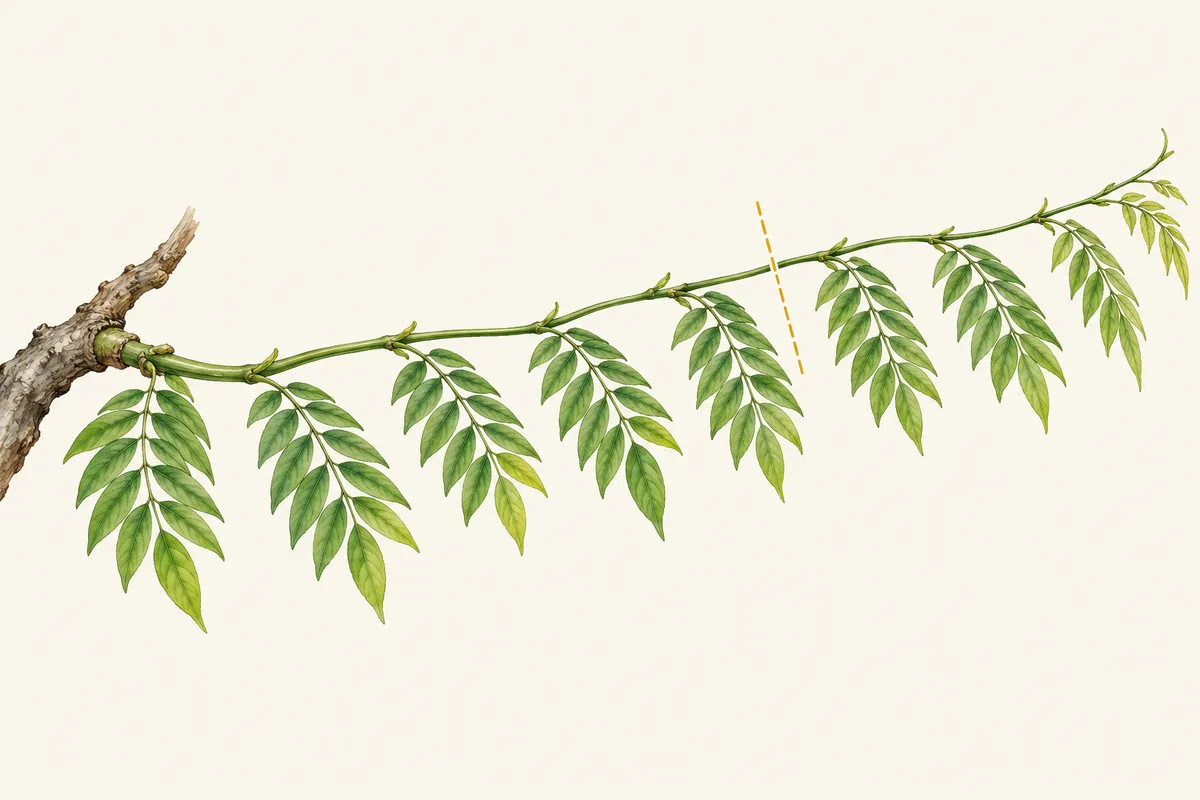
2July–August: cut each whippy shoot back to five or six leaves. -
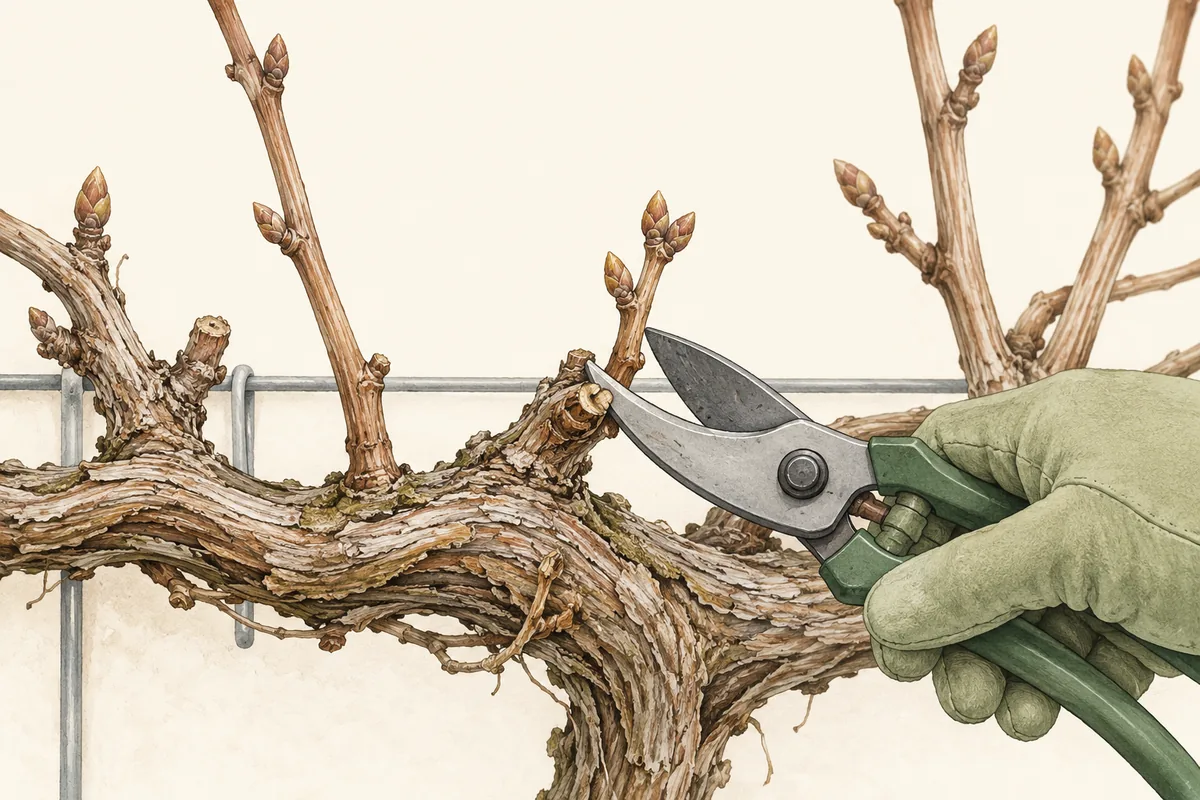
3January–February: cut the same shoots back to two or three buds. -
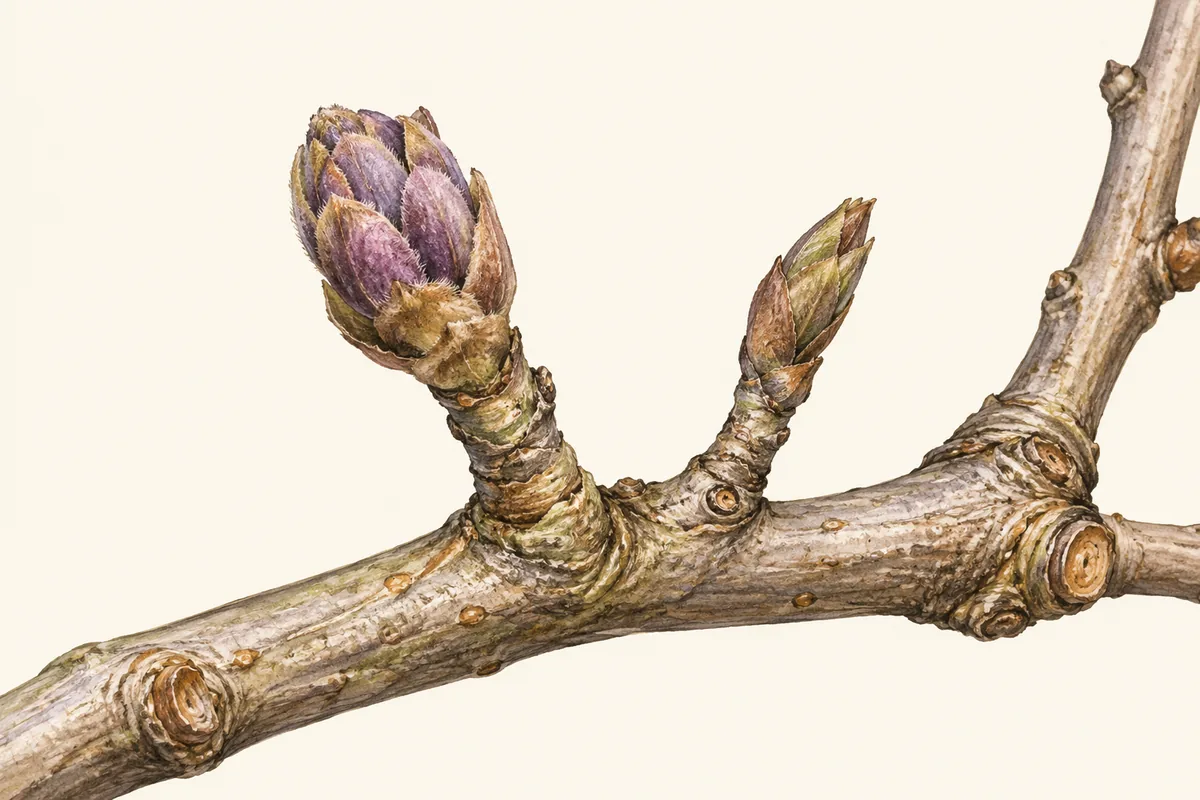
4Fat, rounded flower bud (left) beside a slimmer leaf bud (right). -
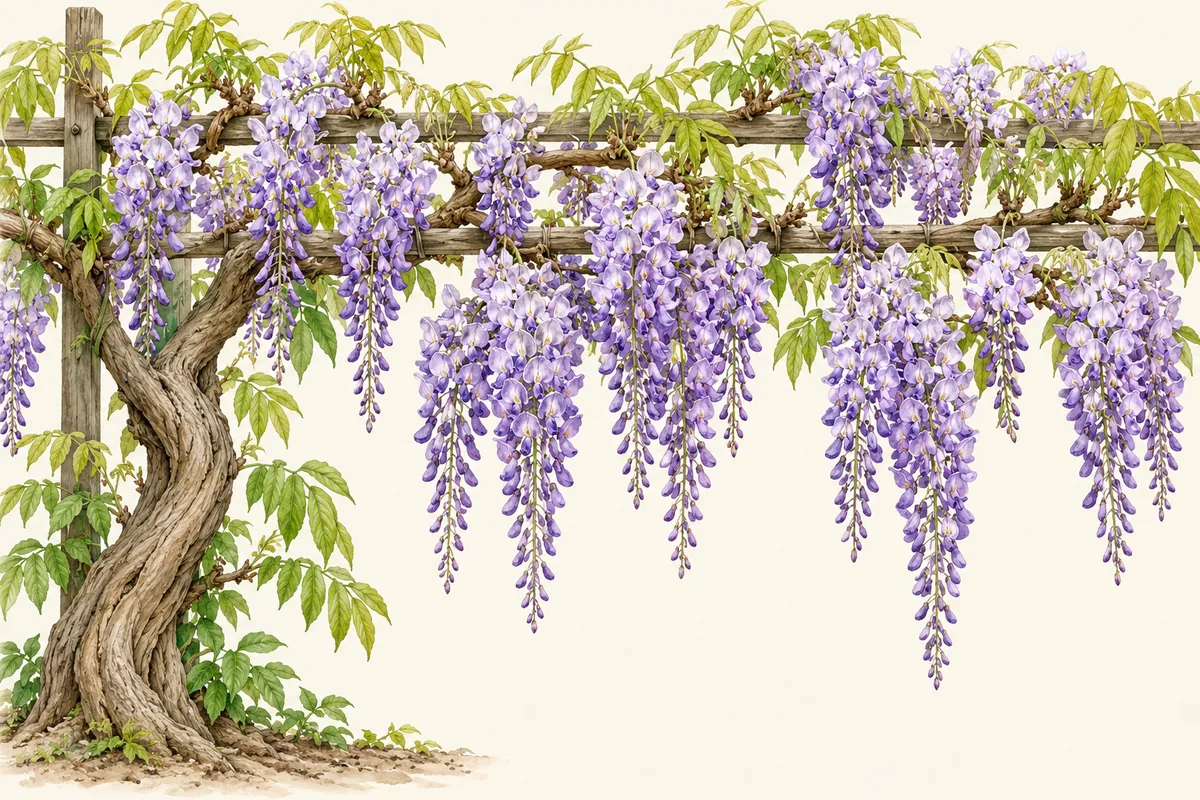
5The reward: flowers hanging from short spurs along the framework.
01At a glance
- Summer prune: July or August.
- Winter prune: January or February.
- Time: 10–30 minutes each, depending on size.
- Tools: secateurs, a stable ladder, soft twine.
- You'll know it worked when: you see fat, rounded flower buds clustered on short spurs by late winter.
02Summer prune (July–August)
- Find this year's growth — the long, whippy green shoots snaking off in all directions.
- Tie in any you need to extend the framework along wires or a pergola.
- Cut the rest back to five or six leaves from where they join the main branch.
This stops the plant pouring energy into leafy shoots and encourages flower buds to form.
03Winter prune (January–February)
- Find the same shoots you cut in summer (plus any later growth).
- Cut them back to two or three buds — roughly 2.5–5cm from the older wood.
- Now's the time to see the buds clearly. Flower buds are fat and rounded; leaf buds are slimmer and flatter. Keep the fat ones.
04Why isn't my wisteria flowering?
- It was grown from seed. Seed-raised plants can take up to twenty years to flower. Buy a named, grafted plant.
- It was dry in late summer. Dry soil between July and September makes the developing flower buds abort. Water in dry spells — the step most guides leave out.
- Spring frost hit the buds.
- Too much shade.
- It's being pruned at the wrong time — heavily, or in early summer.
- Low potassium on poor soil. The RHS suggests sulphate of potash in spring at about 20g per square metre — only on poor soils.
Save your money
Don't buy a "wisteria feed". Most soils don't need it; only poor soils benefit from a measured dose of potash.
Don't buy a bigger plant to get faster flowers. A grafted plant matters more than size.
Check the safety flags on our wisteria profile if children or pets use the garden.
How we checked this
Every care and safety claim on this page is verified against horticultural and veterinary sources.
Sources: RHS — Wisteria: pruning · RHS — Wisteria problems: FAQs
Checked 1 October 2026. If our advice ever conflicts with the RHS, believe them and tell us.