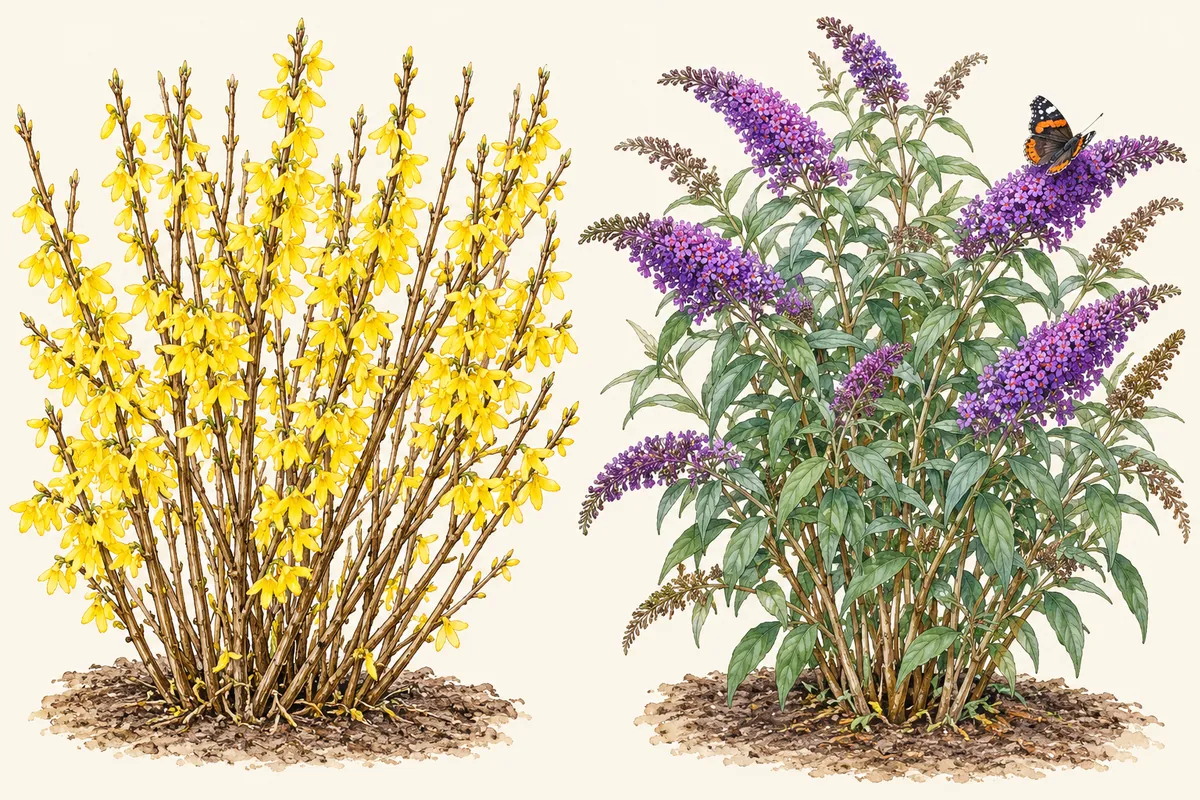
You don't need to memorise a pruning calendar for every shrub in the garden. You need to ask one question: does it flower on stems it grew last year, or on stems it grows this year? Get that right and the timing follows on its own. Get it wrong and you cut off next year's flowers before they've had a chance to open — which is why so many forsythias flower beautifully every other year at best.
In pictures
-
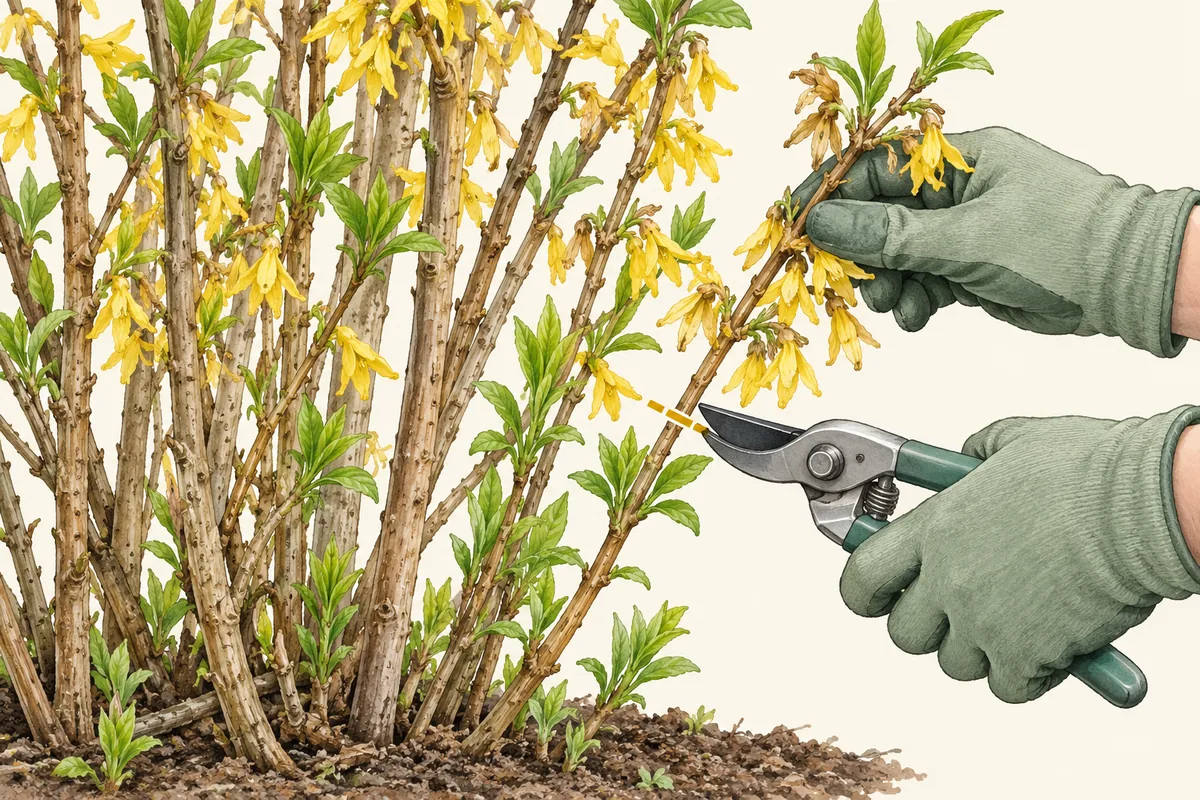
2Straight after flowering, cut forsythia stems back to strong young shoots. -
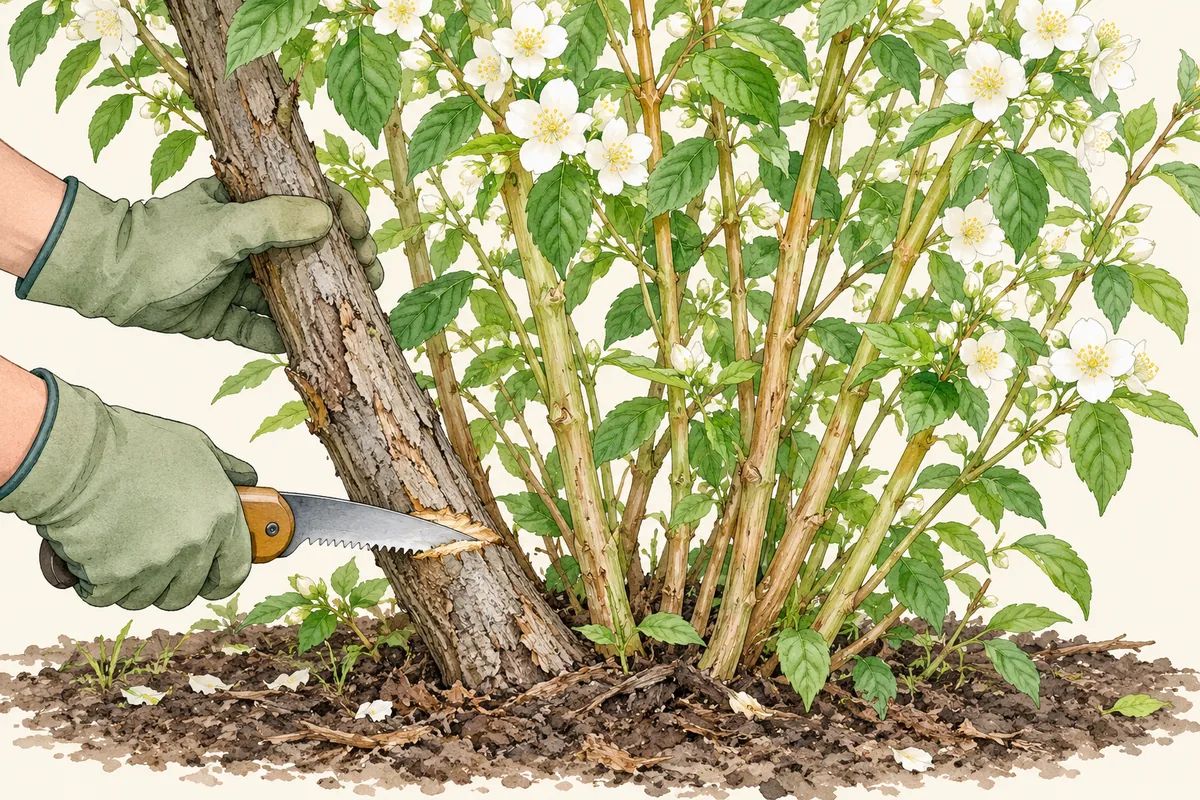
3On an established shrub, take out about one in five of the oldest stems at the base. -
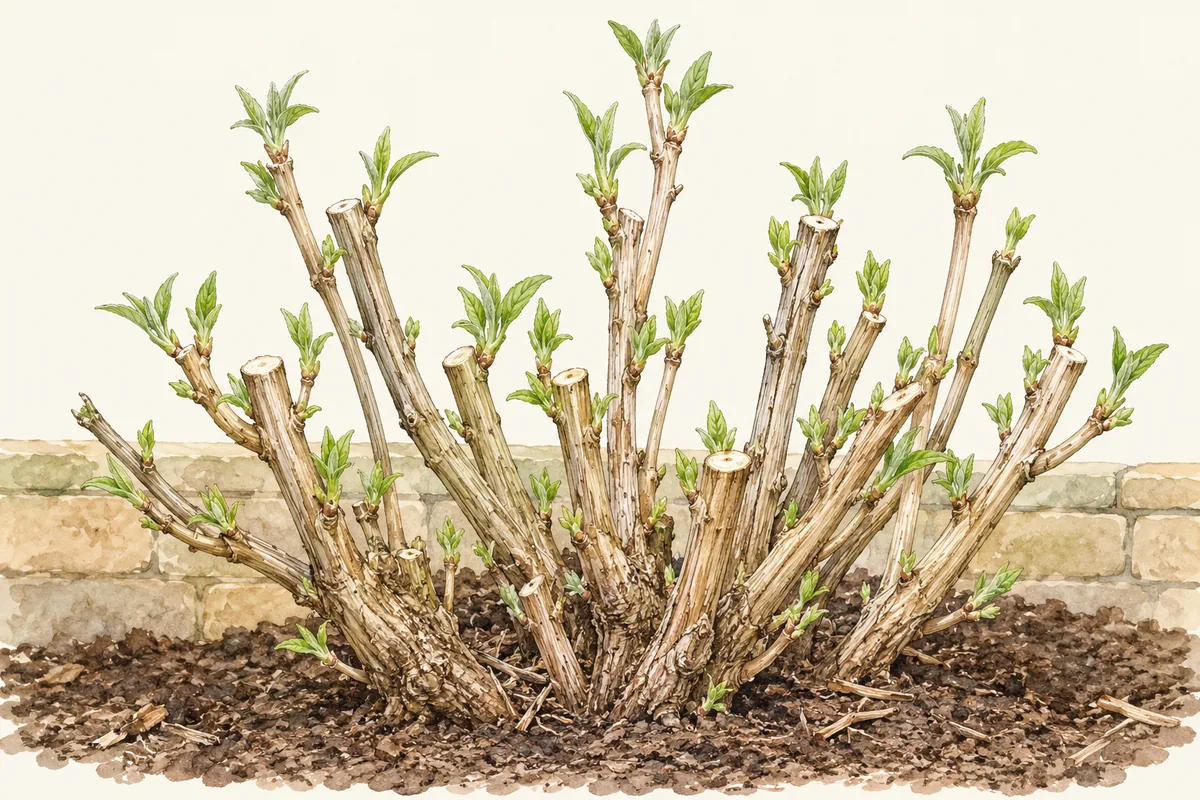
4Buddleja after its spring prune: a low framework with new shoots breaking.
01The rule of thumb
- Flowers in spring or early summer? It's flowering on last year's growth. Prune straight after flowering.
- Flowers from midsummer onwards? It's flowering on this year's growth. Prune in early to mid spring.
02Spring and early-summer flowerers
Forsythia, philadelphus (mock orange), weigela, flowering currant.
When: immediately after flowering.
- Cut the stems that have just flowered back to strong young shoots lower down.
- On an established shrub, also remove up to about a fifth of the oldest, tired stems near the base. This keeps a steady supply of young, free-flowering wood.
- Take out anything dead, thin or weak.
03Late-summer flowerers
Buddleja davidii, perovskia, Hydrangea paniculata.
- When: early to mid spring — for buddleja, roughly late March to mid-April. Avoid winter: frost can damage the new shoots the cut encourages.
- How: cut last year's flowering stems back hard, to within one or two buds of the older woody framework. Annual hard pruning keeps a buddleja davidii to around 1.8–2.4m.
- Watch the exceptions: Buddleja alternifolia flowers on last year's wood, so prune it after flowering in early to mid summer. Buddleja globosa needs little pruning — winter cuts reduce that summer's flowers.
04Evergreens
- Spring-flowering evergreens (camellia, rhododendron): prune, if at all, straight after flowering. Rhododendrons are best left unpruned except for removing unsightly shoots.
- Later-flowering evergreens (escallonia, hebe): mid to late spring, once the risk of frost has passed.
05Grown for stems, not flowers
Dogwoods (Cornus) and elders (Sambucus) grown for coloured stems or foliage are cut hard in late winter or early spring — the new shoots carry the best colour.
06After any prune
Mulch and feed in spring. That's it.
07Mistakes that cost you flowers
- Tidying everything in autumn because it's "the time for it". For spring flowerers, that removes next year's flower buds.
- Pruning late-summer flowerers in winter. Wait for spring.
- Pruning late in spring. It shortens the growing season the plant has to make new flowering wood.
How we checked this
Every care and safety claim on this page is verified against horticultural and veterinary sources.
Sources: RHS — Shrubs: pruning early-flowering · RHS — Shrubs: pruning summer- or autumn-flowering · RHS — Pruning groups · RHS — How to grow buddleja
Checked 1 October 2026. If our advice ever conflicts with the RHS, believe them and tell us.