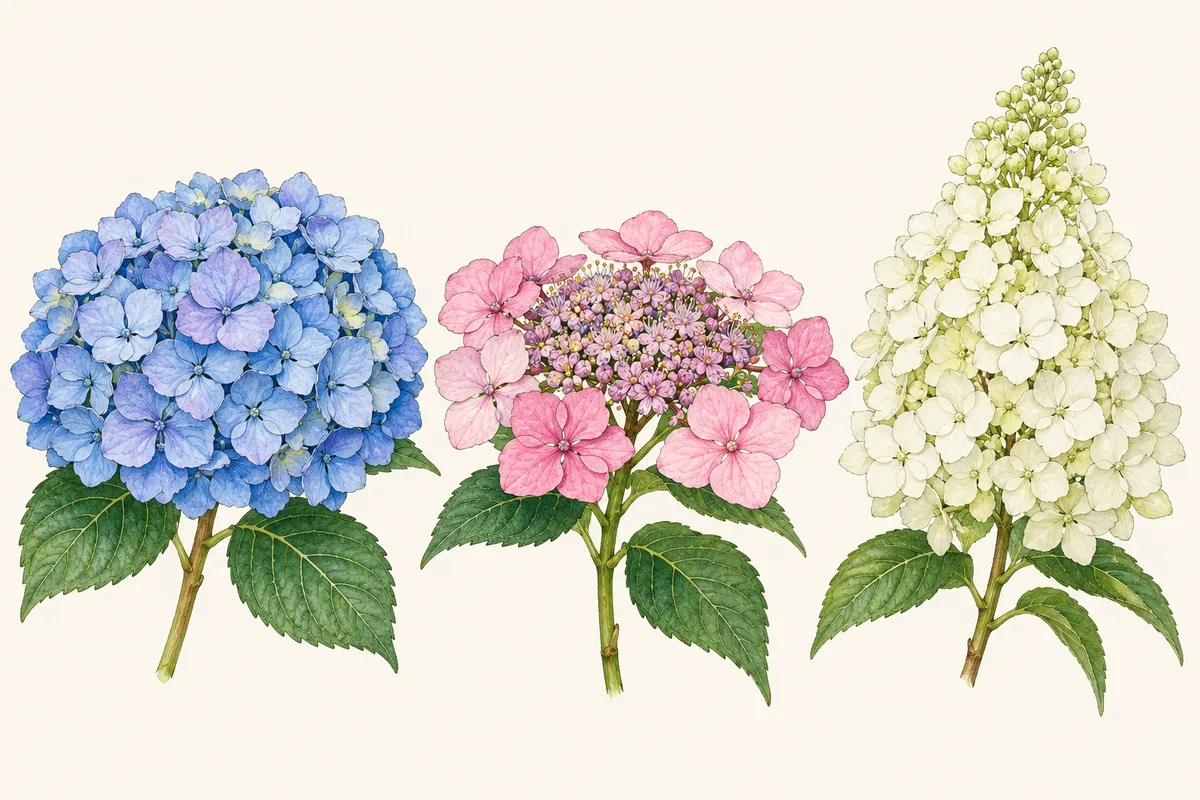
"I pruned my hydrangea and it didn't flower" is one of the most common garden complaints in Britain, and the answer is almost always the same: it was a mophead, and it got the haircut meant for a paniculata. Hydrangeas aren't one plant to prune; they're three or four. Find out which you've got and they're simple.
In pictures
-
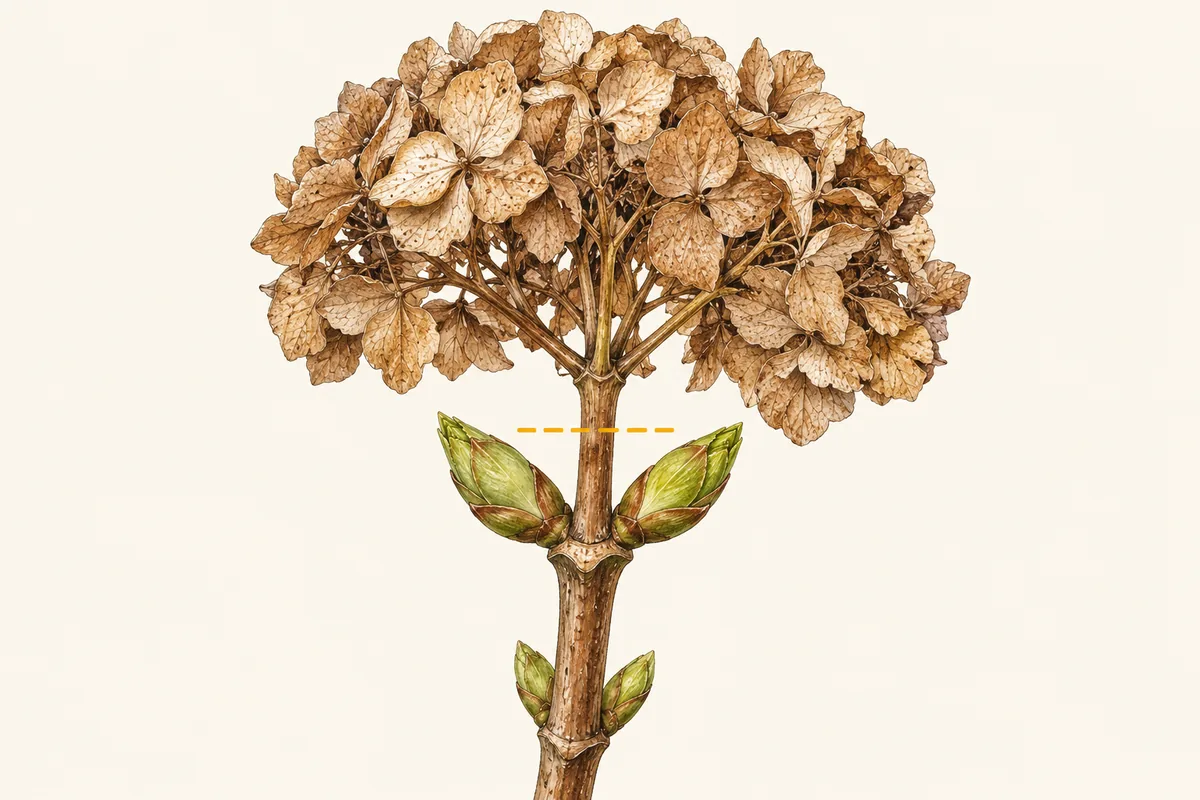
2Mopheads in spring: cut just above the first strong pair of buds below the old flower. -
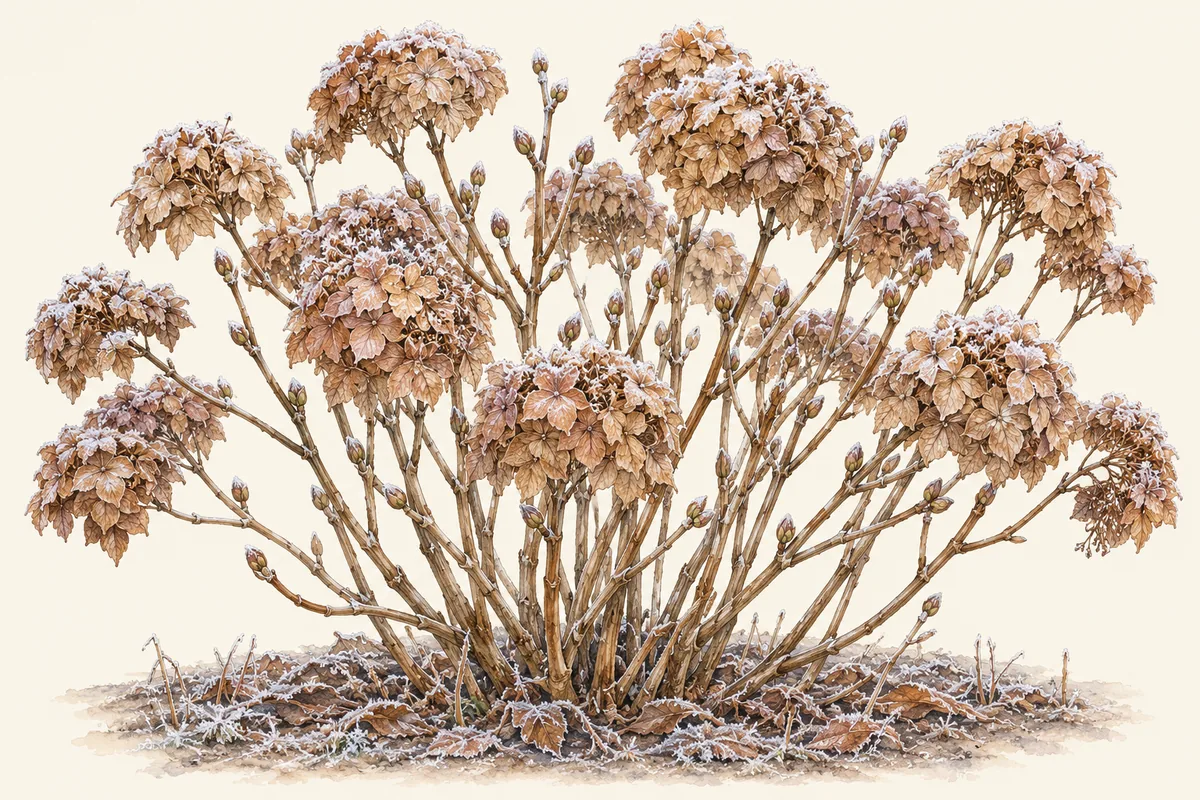
3Leave mophead flower heads on over winter — they protect the buds below. -
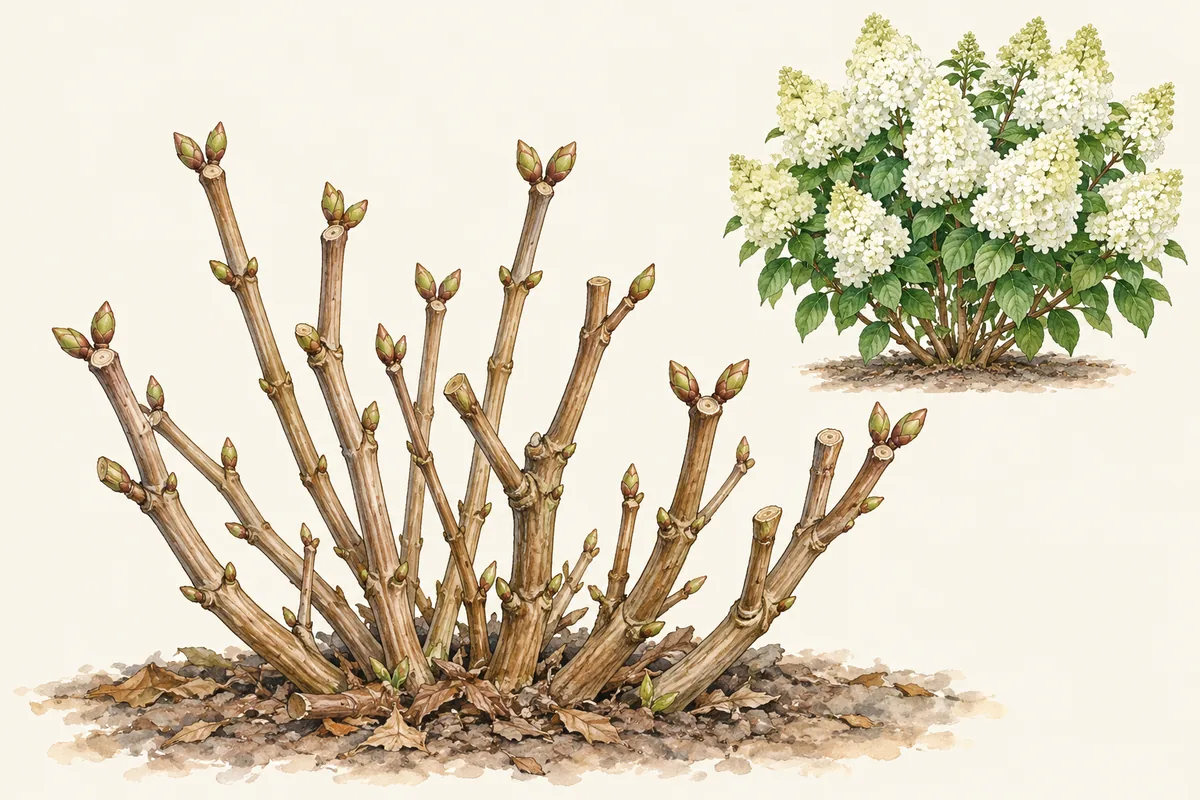
4Paniculata after its spring prune, and the same plant in flower that summer.
01First: which hydrangea?
- Mophead or lacecap (Hydrangea macrophylla) — big rounded heads or flat lacy discs, often pink or blue. Flowers on last year's wood. Prune lightly.
- Paniculata — cone-shaped flower heads, usually white, ageing to pink. Flowers on this year's growth. Prune hard.
- Arborescens — big round white heads (the 'Annabelle' type). Flowers on this year's growth. Prune hard.
- Climbing hydrangea — the self-clinging one on walls. Prune after flowering.
02Mophead and lacecap (macrophylla)
- Over winter: leave the faded flower heads on. They protect the buds below from frost — free insulation.
- When: usually late winter or early spring, once hard frosts are over.
- Follow each stem down from the old flower head to the first strong, healthy pair of buds, and cut just above them.
- On an established plant, also cut one or two of the oldest stems out at the base to keep it young.
- Frost damage? Cut back to just above the first undamaged pair of buds on healthy wood.
- Lacecaps: the RHS suggests cutting faded heads back to the second pair of leaves below the head after flowering, to stop seed forming.
- Renovating an old mophead: you can cut all stems to the base, but you lose that summer's flowers.
03Paniculata and arborescens
- When: early spring.
- How: cut last year's stems back to a pair of healthy buds, keeping a permanent low framework.
- For bigger flowers: cut to the lowest pair of healthy buds, giving a framework no more than about 25cm high.
- For a taller plant: cut to about 60cm.
04Climbing hydrangea
Prune after flowering, and leave the top alone — most of the flowers are up there. If it needs drastic reduction, spread it over three or four years.
05The ones that barely need pruning
Hydrangea aspera and the oakleaf hydrangea (H. quercifolia) need only minimal tidying in spring.
06Mistakes that cost you flowers
- Hard-pruning a mophead. The classic.
- Deadheading mopheads in autumn. You lose the frost protection.
- Trimming the top of a climbing hydrangea to tidy it.
Before handling or planting where children or pets play, check the safety flags on our hydrangea profile.
How we checked this
Every care and safety claim on this page is verified against horticultural and veterinary sources.
Sources: RHS — Hydrangea pruning
Checked 1 October 2026. If our advice ever conflicts with the RHS, believe them and tell us.