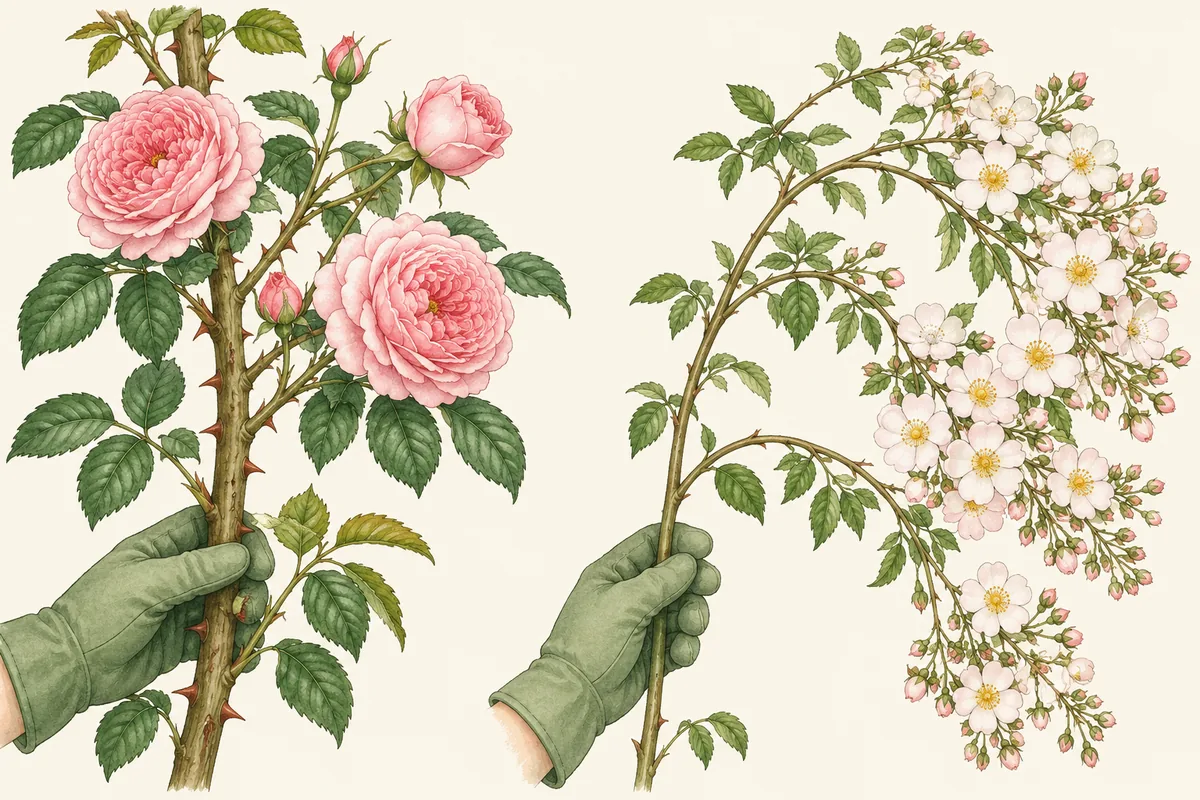
Climbers and ramblers both go up walls, both have thorns and both get lumped together on garden-centre labels. But they're pruned at opposite ends of the year, and pruning one as if it were the other is the most common reason a "climbing rose" goes years without a decent flower. So, before the secateurs come out, the one question that matters.
In pictures
-
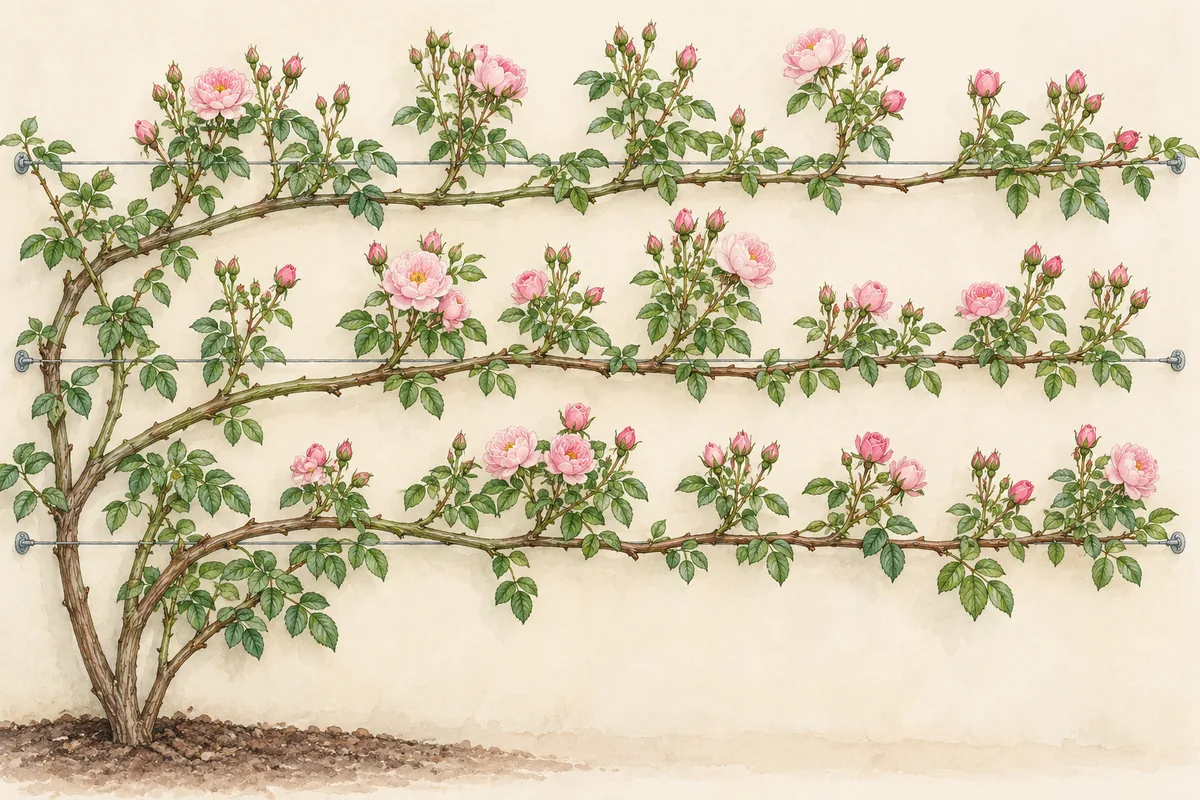
2Stems trained close to horizontal flower all along their length. -
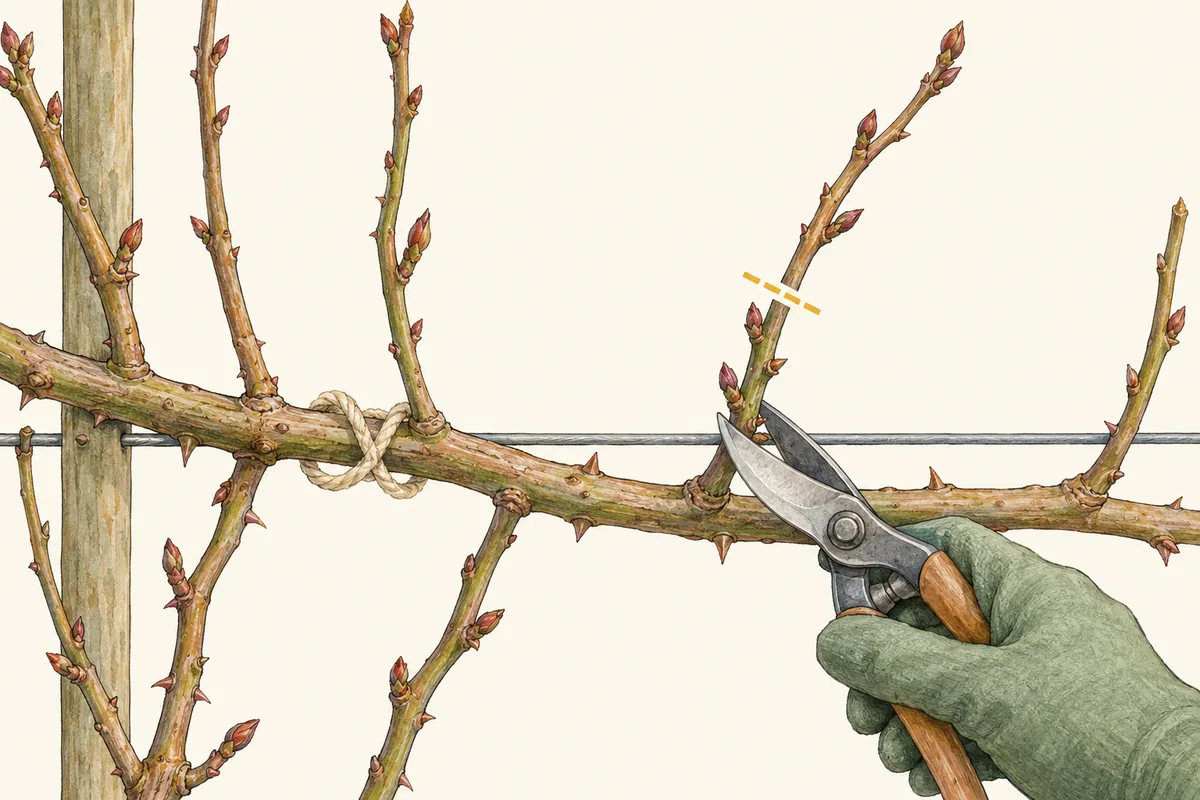
3In winter, shorten a climber's flowered side-shoots by about two-thirds. -
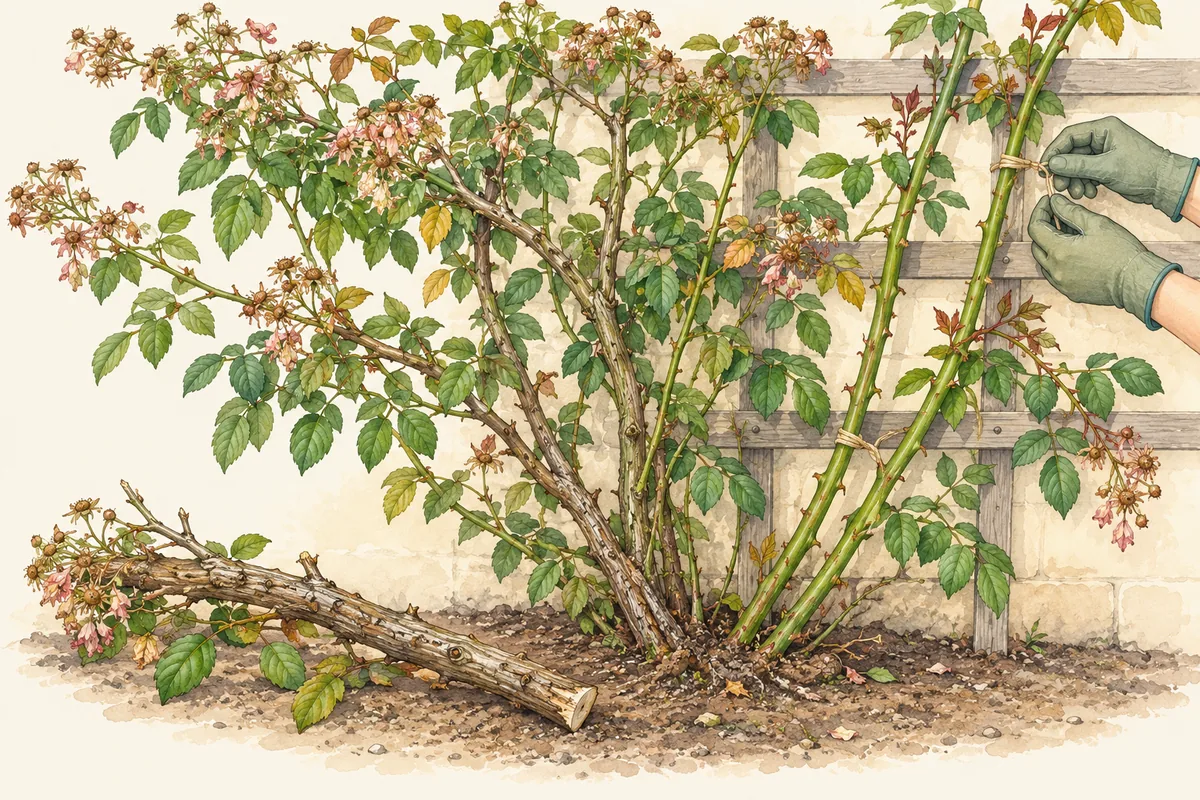
4After flowering, take one in three old rambler stems out at the base and tie in new ones.
01At a glance
- Climbers: main prune December–February. In autumn, just shorten or tie in long whippy shoots so wind doesn't thrash them.
- Ramblers: prune in late summer, straight after flowering.
- Time: 30–60 minutes per plant, more for an established rambler.
- Tools: secateurs, loppers, thick gloves, long sleeves, soft twine, a stable ladder.
- You'll know it worked when: flowering side-shoots break all along stems tied out sideways, not just at the top.
02First: climber or rambler?
As a rule of thumb:
- Climber — stiffer, thicker stems; larger flowers, often in small groups; many repeat-flower through summer.
- Rambler — long, flexible stems that can run many metres; masses of small flowers in big clusters; usually one big flush in early summer.
03The trick that works for both: go sideways
Roses flower far more on stems trained close to horizontal. A vertical stem flowers at the tip; a stem bent along a wire sends up flowering side-shoots along its whole length. Run wires on a wall or fence with the lowest at about 45cm and the rest roughly 30cm apart, and fan the main stems out along them. On a pillar or arch, twist the main stems around the uprights.
04Pruning a climber (December–February)
- Remove dead, diseased and damaged wood first.
- Tie in the framework. Keep the healthy main stems, spread as near horizontal as you can.
- Shorten the side-shoots that flowered by about two-thirds of their length.
- Renewing an old, bare-legged climber? Take a few of the oldest stems out at the base, keeping up to six young, vigorous ones to train in.
- Through summer, deadhead faded flowers to keep repeat-flowerers going.
05Pruning a rambler (late summer, after flowering)
- Take out about one in three of the oldest stems entirely, at the base.
- Tie in the new, long stems that have grown this year to replace them — these carry next summer's flowers.
- Shorten the remaining flowered side-shoots by about two-thirds.
- Short of space? You can remove all the flowered stems instead and tie in the new ones.
- Badly overgrown? Renovate in late autumn or winter: keep up to six young, vigorous stems and shorten their tips by a third to a half.
- Just planted one? Cut it back to about 40cm to encourage strong new stems from the base.
06Mistakes that cost you flowers
- Pruning a rambler in winter. You'll remove the wood that would have flowered.
- Leaving it all to grow straight up. You get a bare base and flowers out of sight at the top.
- Not pruning at all. The RHS's description of the result is fair: a tangled mess with very few flowers.
How we checked this
Every care and safety claim on this page is verified against horticultural and veterinary sources.
Sources: RHS — Rose pruning: climbing roses · RHS — Rose pruning: rambling roses · RHS — Rose pruning: general tips
Checked 1 October 2026. If our advice ever conflicts with the RHS, believe them and tell us.