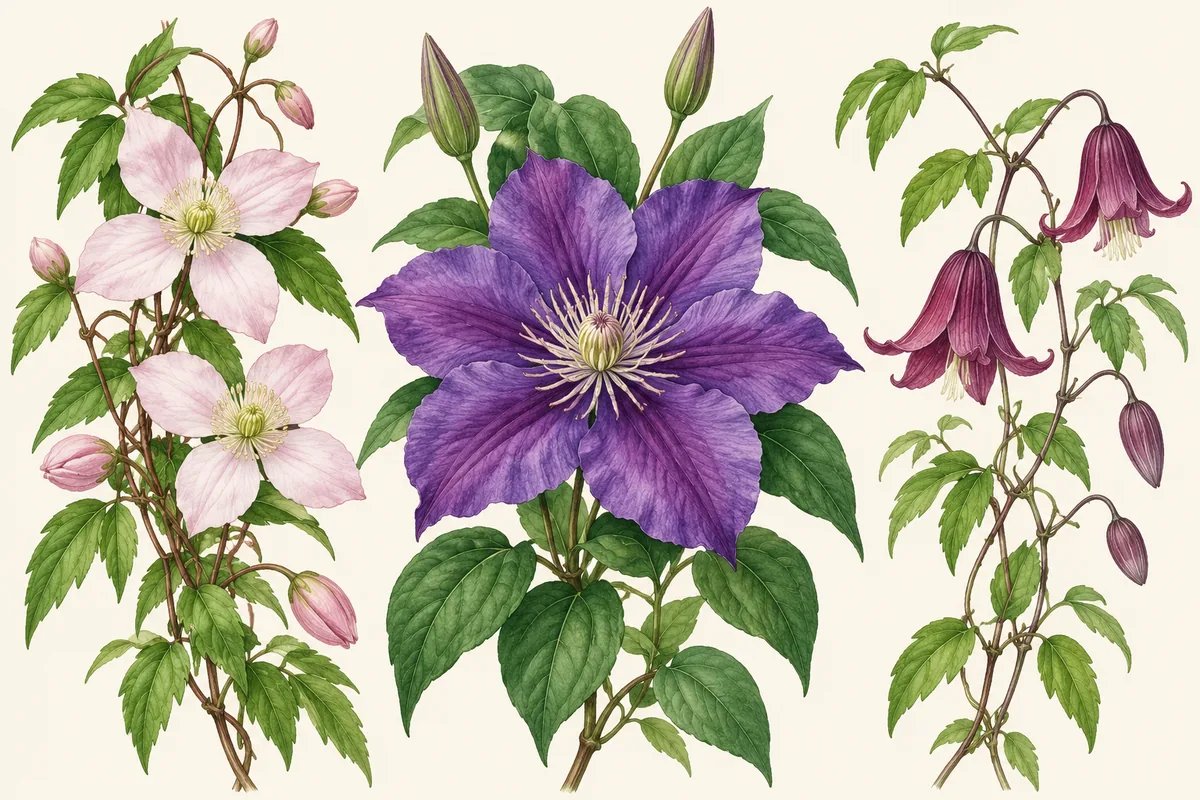
Clematis pruning "groups" put a lot of people off, but they're just a shorthand for one question: when does it flower? Answer that and you know what to do. Leave a clematis unpruned and you end up with a mass of tangled stems, a bare base and all the flowers above eye level.
In pictures
-
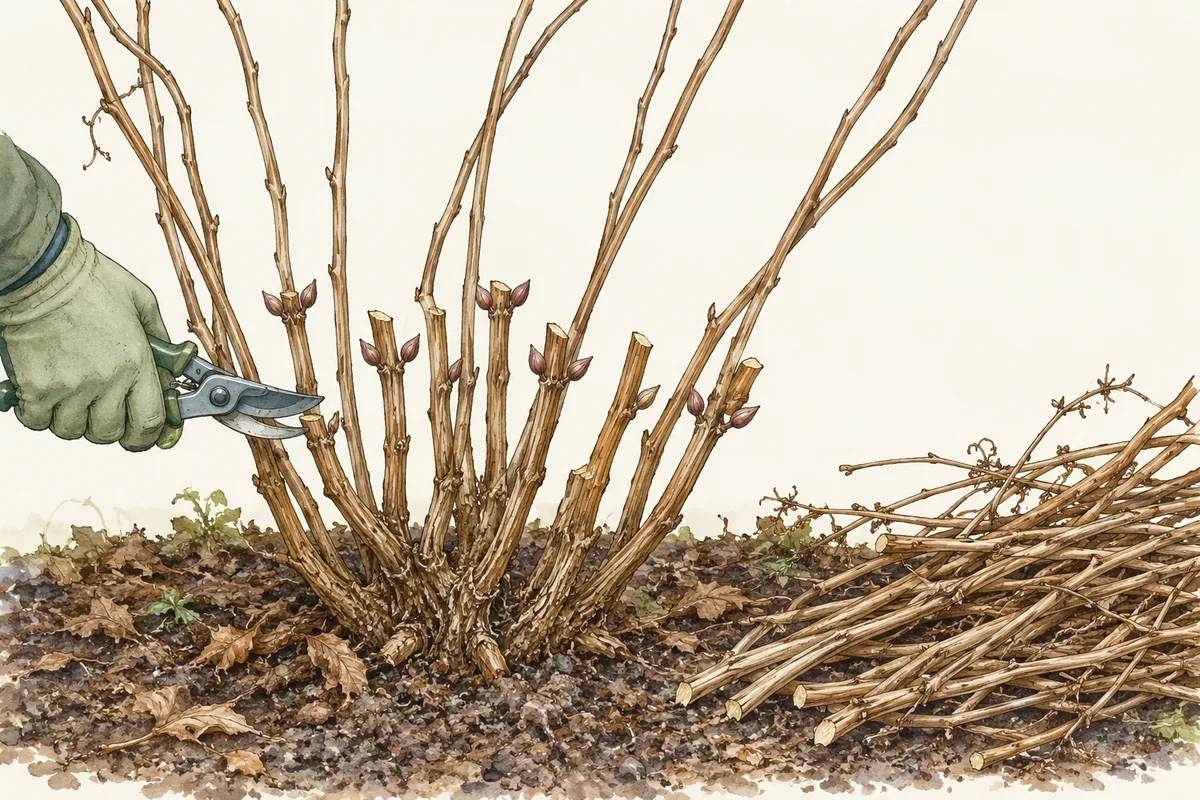
2Group 3 in February: every stem cut to the lowest healthy buds, 15–30cm up. -
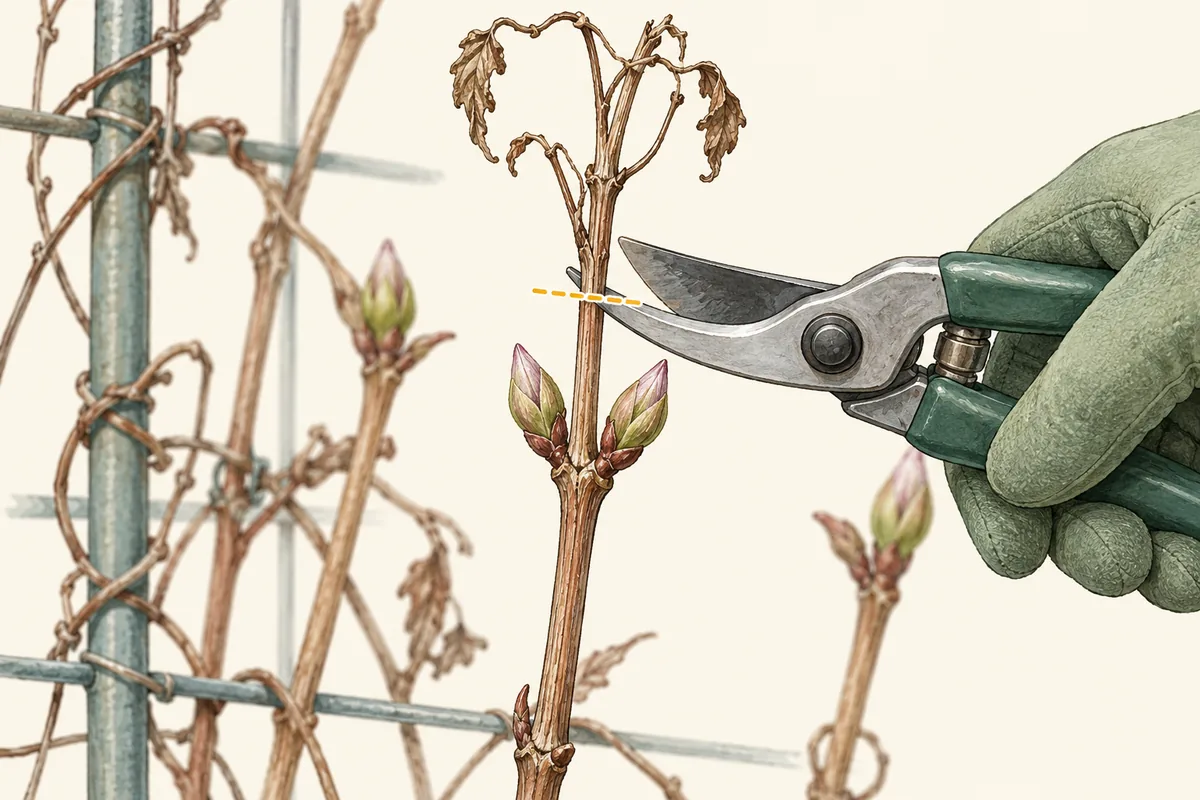
3Group 2 in February: a light trim to the first pair of fat buds. -
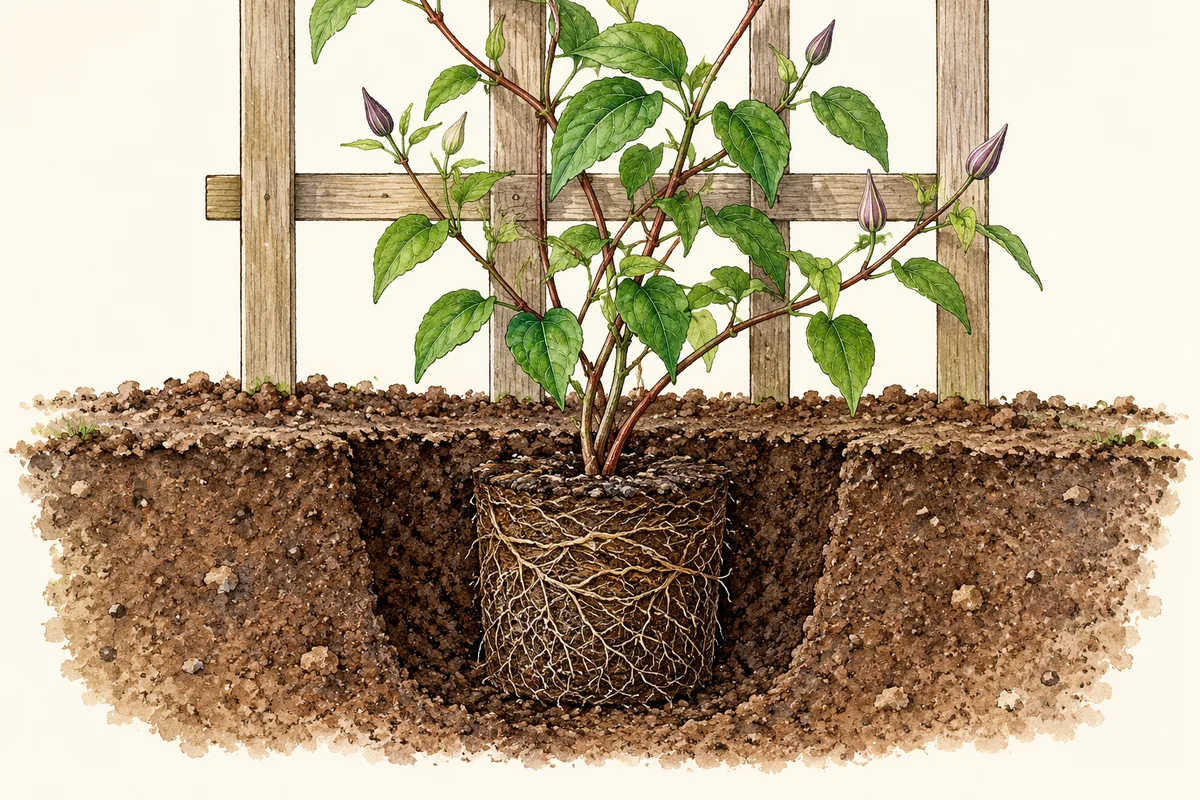
4Plant large-flowered clematis with the rootball top 5–7.5cm below the soil.
01Lost the label? Use this rule
The RHS's own rule of thumb: if it flowers before early June, don't prune it (beyond tidying after flowering). If it flowers from late June onwards, prune it hard in late winter (February). Anything in between with big flowers in early summer is probably Group 2.
02Group 1: early-flowering
Clematis montana, alpina, macropetala, armandii and cirrhosa.
- When: immediately after flowering, in mid to late spring, once frost has passed.
- How: only if needed — trim to keep it in its space and remove dead stems.
- Badly overgrown? You can cut almost to the base just after flowering, then leave it at least three years before doing it again. Not armandii — it doesn't usually respond well to renovation.
03Group 2: large-flowered, early summer
The big-flowered hybrids that bloom in May and June on short shoots from last year's growth — often with a second, smaller flush later.
When: February.
- Work down each stem from the top to the first pair of strong, fat buds, and cut just above them.
- Remove dead and weak stems.
- After the first flush in early summer, cut faded flowers back to a large growth bud just below the flower to encourage the second.
04Group 3: late-flowering
Clematis viticella and its hybrids, herbaceous clematis — flowering from midsummer on the top 60cm or so of this year's growth.
- When: February.
- How: cut every stem back to the lowest pair of healthy buds, 15–30cm above soil level. It looks brutal. It's correct.
05Every new clematis: a hard first-year prune
Whatever the group, the RHS advises pruning all newly planted clematis hard in their first spring — all stems to 15–30cm, just above a bud. Autumn-planted: do it in February or March. Spring-planted: do it straight after planting. It gives you a bushy plant with stems from the base instead of one bare, lanky stem.
06Plant deep, too
Plant large-flowered hybrids with the top of the rootball 5–7.5cm below the soil surface. If clematis wilt — a fungal disease of the large-flowered types — strikes, buried buds give the plant a chance to regrow from below.
07Mistakes to avoid
- Hard-pruning a Group 1 every year. You'll cut off the flowers.
- Skipping the first-year prune.
- Leaving a Group 3 unpruned. Flowers end up at the top of a bare tangle.
Wear gloves when handling fresh clematis growth, and see our clematis profile for its safety flags. Wondering about the clippings? Our guide to which clippings are safe to compost covers clematis.
How we checked this
Every care and safety claim on this page is verified against horticultural and veterinary sources.
Sources: RHS — Clematis pruning · RHS — Clematis pruning group one · RHS — Clematis pruning group three · RHS — How to grow clematis
Checked 1 October 2026. If our advice ever conflicts with the RHS, believe them and tell us.