A hedge is the most-pruned plant in most gardens, and the one with a legal angle most people don't know about. Before the timings and techniques: the birds.
In pictures
-
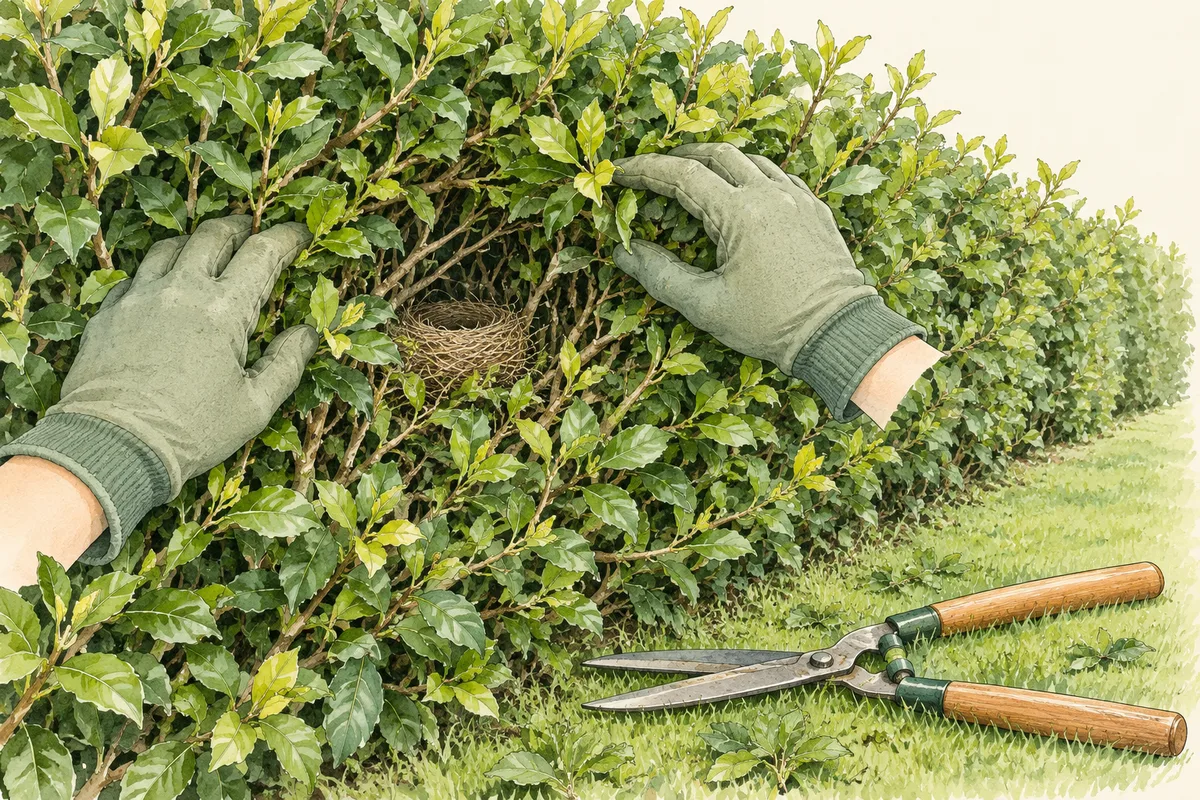
2Check for nests before you cut — every time. -
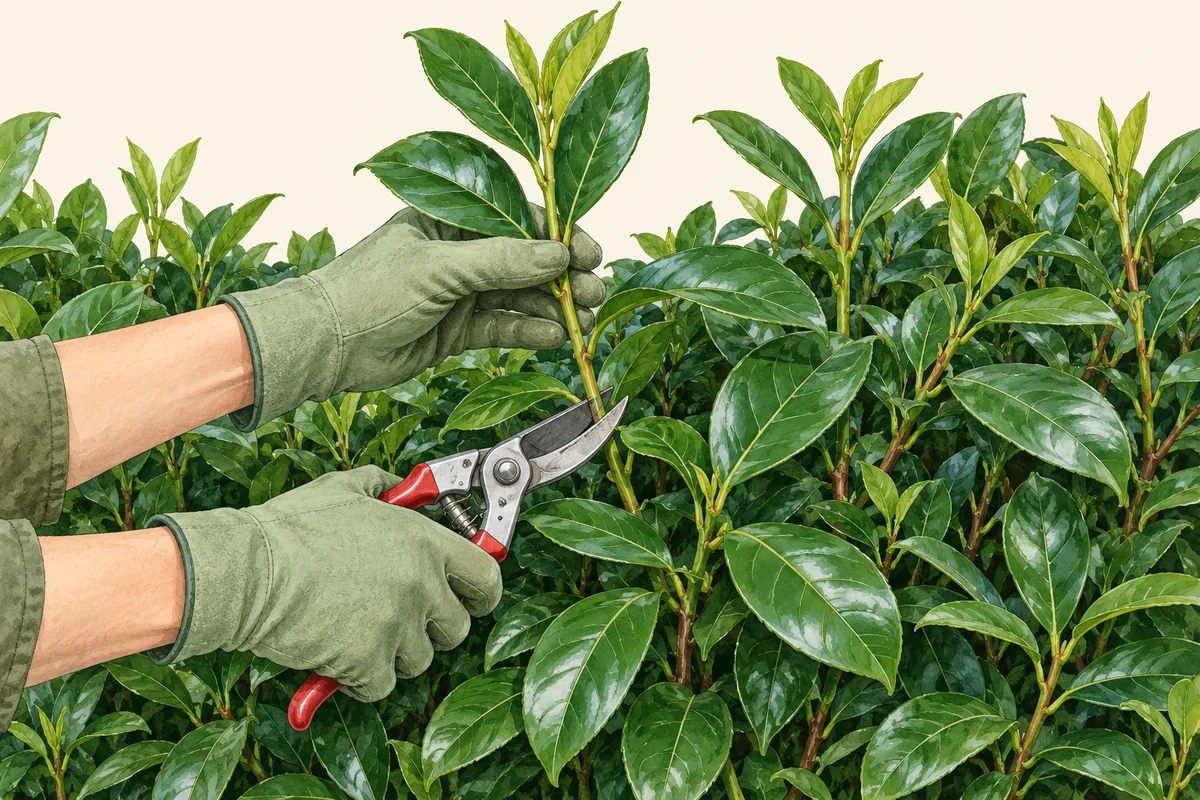
3Cut large-leaved laurel with secateurs, stem by stem. -
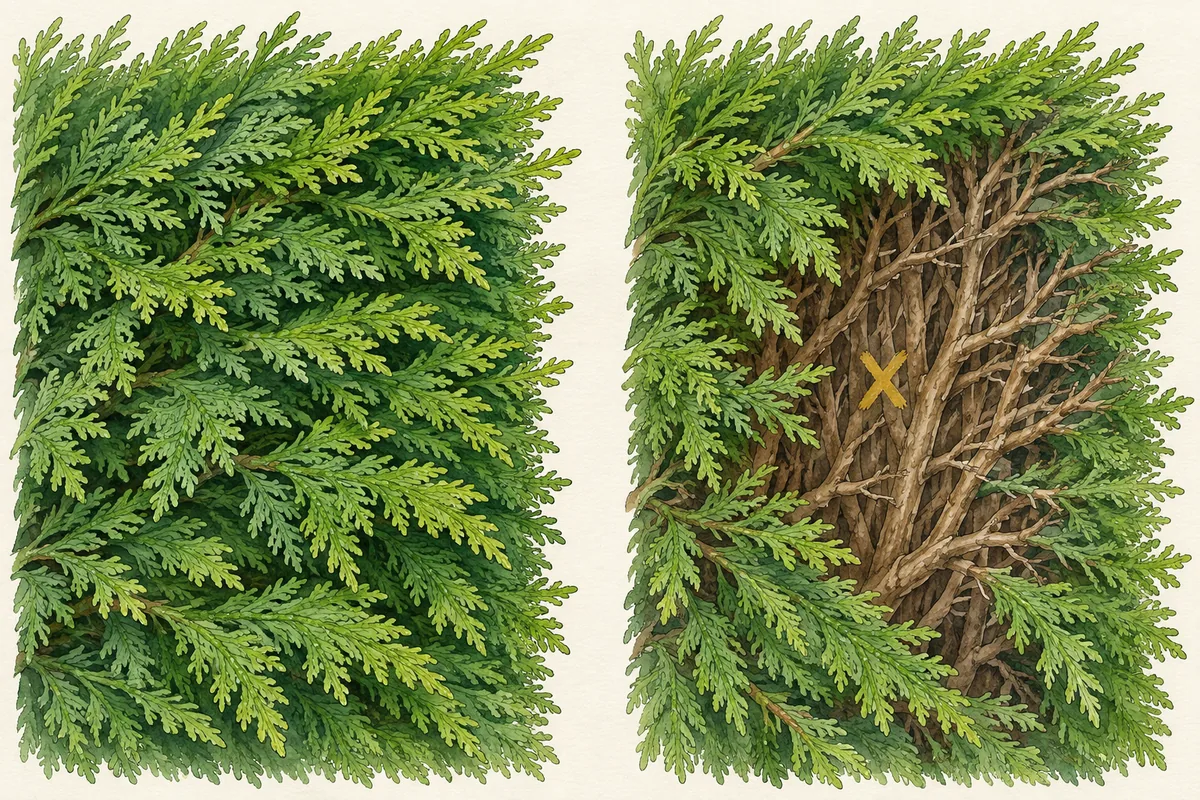
4Trim conifers in the green (left). Most won't regrow from bare brown wood (right).
01The law, in plain English
Across Great Britain, the Wildlife and Countryside Act 1981 makes it an offence to intentionally take, damage or destroy the nest of any wild bird while it's in use or being built. Garden hedges aren't exempt. In Scotland the Act has since been amended so that reckless damage is an offence too, and in Northern Ireland the Wildlife (Northern Ireland) Order 1985 likewise covers intentional or reckless damage. This isn't legal advice, but the practical upshot is simple: check before you cut, every time.
02When birds are nesting
- The RHS describes the nesting season as usually March to August — "but it can be longer".
- The RSPB treats March to September as the main nesting season and recommends cutting hedges only between 1 September and 28 February.
- The protection applies whenever a nest is active, whatever the month.
Before you start: watch the hedge for a few minutes for birds flying in and out, then gently look into the hedge in sections. If you find an active nest, leave that stretch until the young have fledged. The RSPB suggests hand tools if you're cutting near possible nests, because you have more control.
03How often to trim (formal hedges)
- Beech, hornbeam, holly: once, in late summer.
- Cherry laurel: twice.
- Yew: twice — summer and autumn.
- Privet, box, Lonicera: two to three times in the growing season.
- Leyland cypress: up to three times, between April and the end of August.
Where the RHS timing falls inside the nesting season, the check above matters most.
04Step by step
- Check for nests (see above).
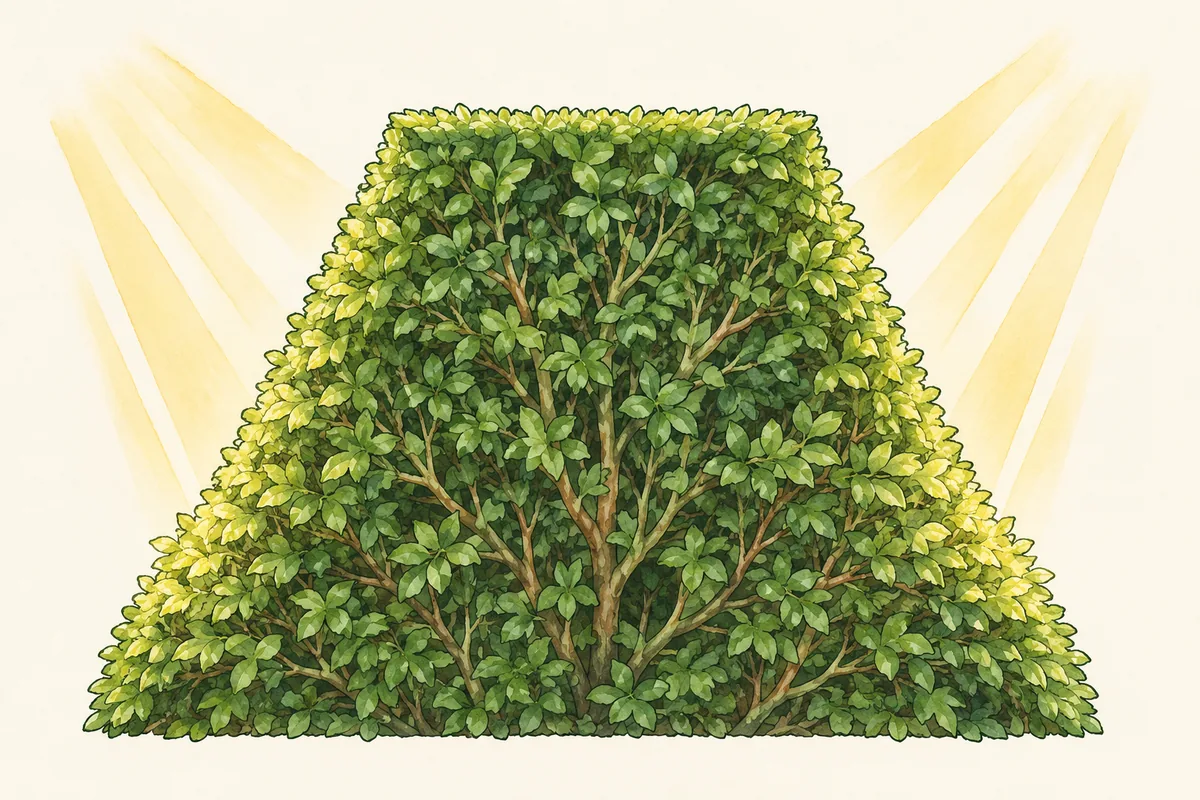
- Shape with a batter. Keep the base wider than the top — a flat-topped A-shape — so light reaches the bottom and it doesn't go bare at the base.
- Large-leaved hedges like cherry laurel: cut individual stems with secateurs. Shears and trimmers slice through leaves and leave them looking scruffy.
- Reducing an overgrown leylandii? Take off no more than a third of the height, ideally in early April. More risks bare patches or killing it.
05Clippings
Some hedge clippings — yew and laurel especially — need care with where they end up. Read which clippings are safe to compost before you fill the bin.
How we checked this
Every care and safety claim on this page is verified against horticultural and veterinary sources.
Sources: RHS — Pruning hedges · RHS — Leyland cypress: pruning · RSPB — Birds' nests and nestboxes · Wildlife and Countryside Act 1981, section 1 (current version) · DAERA — Standing advice: wild birds (Northern Ireland)
Checked 1 October 2026. If our advice ever conflicts with the RHS, believe them and tell us.